#1
A free, open-source, offline-first note-taking and to-do app with Markdown notes, end-to-end encrypted sync, plugins and apps for desktop and mobile.
- GitHub stars
- 57k
- Last commit
- today
- Latest release
- v3.7.22
- Self-hosted
- Yes
- Hosted version
- Available
joplinapp.org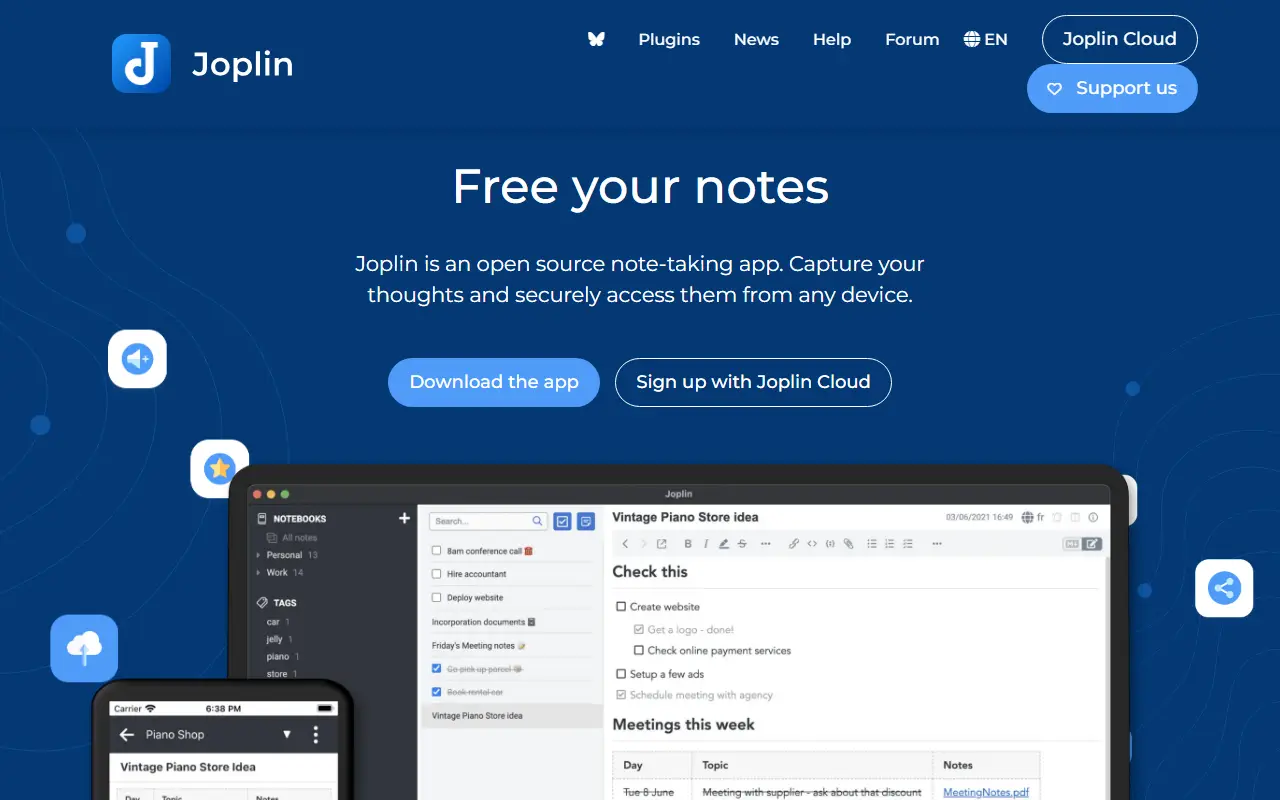
Joplin is a note-taking and to-do application, free and open source, that can manage large collections of notes organized into notebooks. Notes are written in Markdown, are searchable, can be tagged, and can be edited either in the app or in your own text editor. Apps are available for Windows, macOS, Linux, Android and iOS.
The app is offline first, so all your data lives on your phone or computer and stays accessible without a connection. Notes can be synchronized with end-to-end encryption through services such as Nextcloud, Dropbox, OneDrive and Joplin Cloud, and topics also mention WebDAV. Full-text search is available on every platform, and plugins and themes let you customize the app. A web clipper saves pages, and notes exported from Evernote can be imported with formatting, attachments and metadata intact; plain Markdown files can be imported as well.
The repository license is listed as 'Other', so check its terms if you plan to redistribute. Joplin is a popular choice for people who want an Evernote replacement that keeps data local or on storage they already control.
Key features
- Markdown notes organized into notebooks
- Offline-first storage on your own devices
- End-to-end encrypted sync via Nextcloud, Dropbox or OneDrive
- Evernote import with attachments and metadata
- Plugins and themes
- Web clipper for saving pages
- Apps for desktop and mobile
Pricing: Joplin Cloud costs 2.99€ (Basic), 5.99€ (Pro) or 9.99€ (Pro 100 GB) per month, and Teams 7.99€ per user per month. Self-hosted Server Business is 3.33€ per user per month; 14-day trial.
#2
A cross-platform hierarchical note-taking app for building large personal knowledge bases, with a rich editor, note cloning, versioning and scripting.
- GitHub stars
- 39k
- Last commit
- today
- Latest release
- v0.107.0
- Licence
- AGPL-3.0
- Self-hosted
- Yes
triliumnotes.org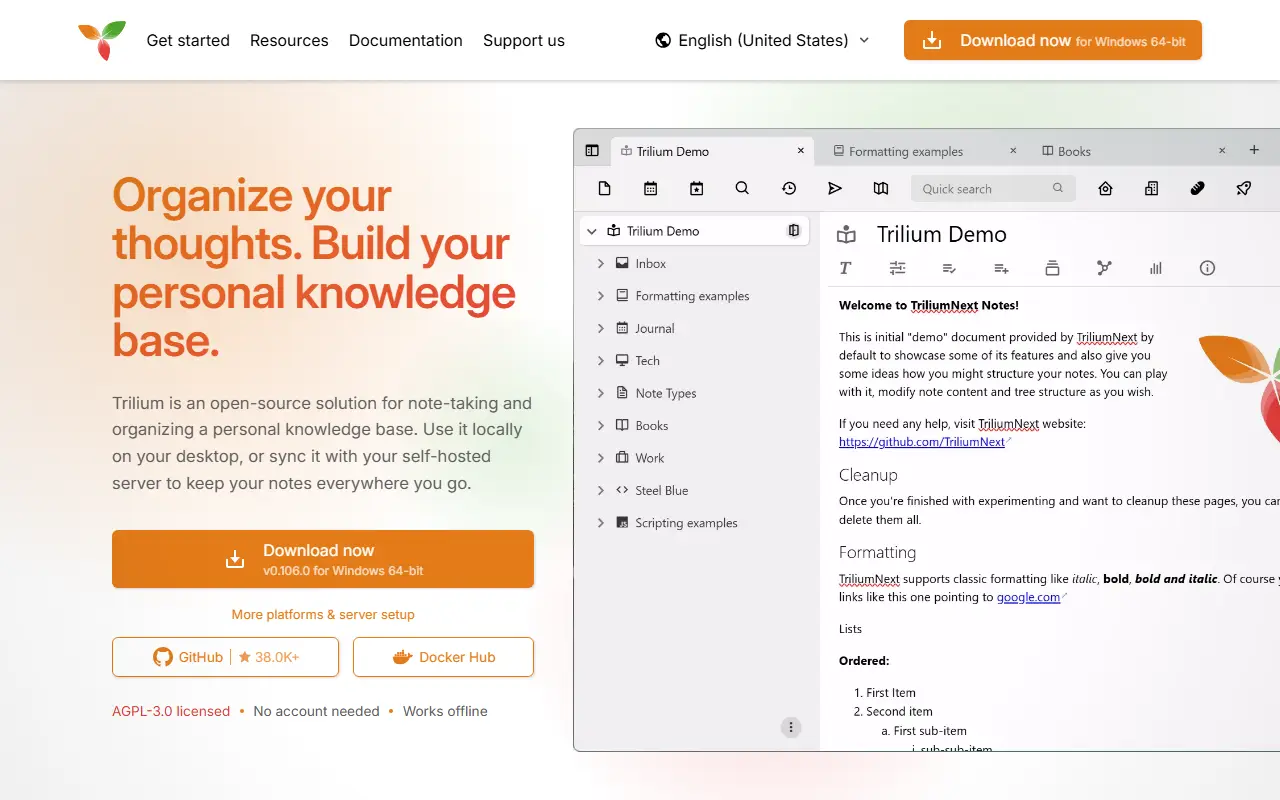
Trilium Notes is a free, open-source, cross-platform note-taking application focused on building large personal knowledge bases. Notes are arranged in a tree of arbitrary depth, and a single note can be cloned into several places in the tree, which lets you organize the same material along different lines without duplicating it.
The editor is a rich WYSIWYG one with tables, images, math and Markdown autoformatting, and there is also support for source code notes with syntax highlighting. Navigation relies on fast jumps between notes, full-text search and note hoisting. Notes are versioned automatically, and attributes can be used to organize, query and script notes. The interface is available in several languages, and built-in documentation opens with F1.
The project, now maintained as TriliumNext, is AGPL-3.0 licensed and built with TypeScript and Electron. It provides desktop builds as well as a server setup with Docker, so you can keep your notes on your own hardware. Stable releases are recommended, with nightly builds available for those who want the newest changes.
Key features
- Arbitrarily deep note tree with cloning
- WYSIWYG editor with tables, images and math
- Code notes with syntax highlighting
- Full-text search and note hoisting
- Automatic note versioning
- Attributes and scripting for advanced use
- Docker server setup
Pricing: Free and open source under the AGPL-3.0 license.
#3
A privacy-first, local-first knowledge management app built around linked, outliner-style notes in Markdown or Org-mode, with a graph view and plugin support.
- GitHub stars
- 46k
- Last commit
- today
- Latest release
- 2.0.2
- Licence
- AGPL-3.0
- Self-hosted
- Yes
logseq.com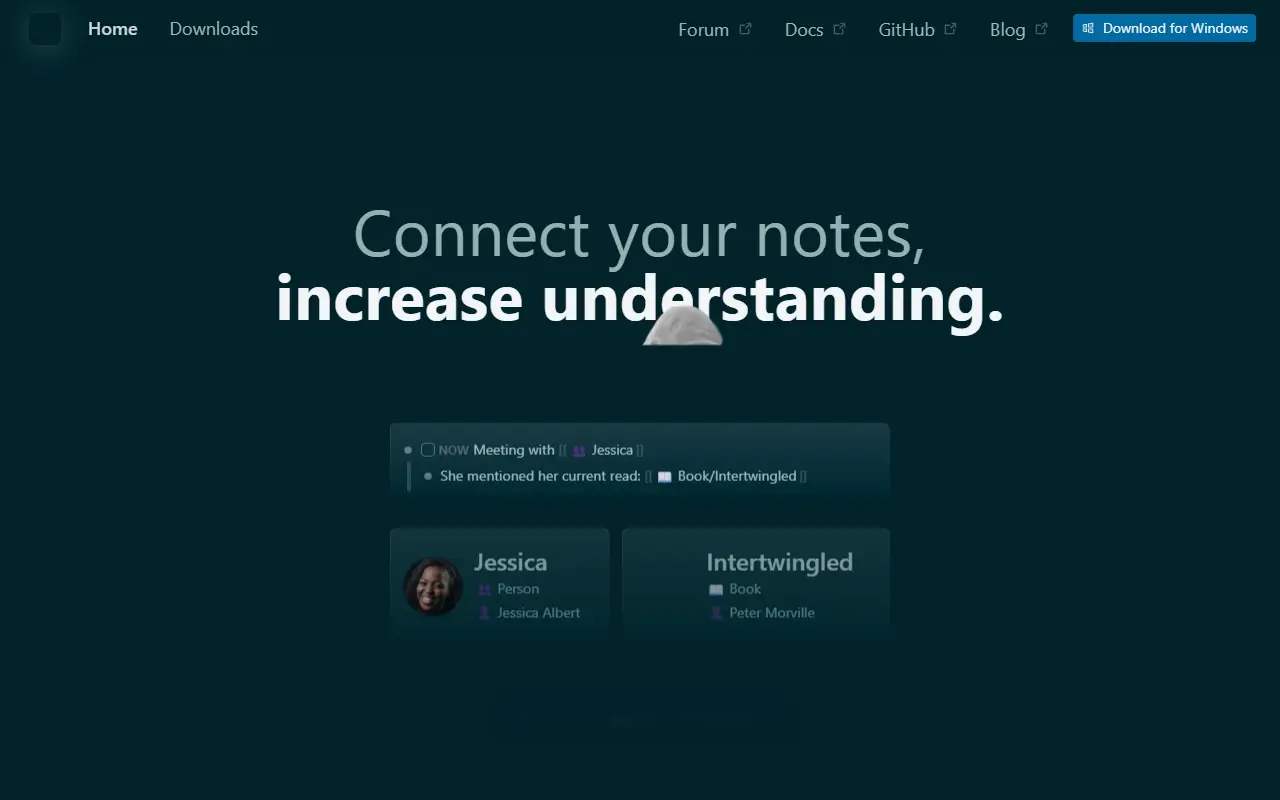
Logseq is an open-source platform for knowledge management and collaboration that puts privacy and local storage first. Notes are organized as linked blocks in an outliner, forming a knowledge graph, and topics show it works with both Markdown and Org-mode files and can be backed by Git.
The project is moving toward a database-backed version that introduces DB graphs. That version is in beta, comes with a new iOS mobile app in alpha and a Real Time Collaboration approach to syncing graphs across devices or working with others, also in alpha. Because data loss is possible while these features mature, the maintainers recommend automated backups. A plugin API, themes and a public roadmap round out the ecosystem.
Logseq is written in Clojure and ClojureScript under the AGPL-3.0 license, and desktop builds are available from the releases page. It appeals to researchers, students and knowledge workers who want a personal wiki with bidirectional links and full ownership of their files.
Key features
- Outliner-style linked notes
- Markdown and Org-mode support
- Knowledge graph of connected pages
- Local-first storage with Git compatibility
- Plugin API and themes
- Real Time Collaboration sync in alpha
Pricing: Free and open source under the AGPL-3.0 license.
#4
A collaborative team knowledge base and wiki with realtime editing and Markdown compatibility, built with React and Node.js and available hosted or self-run.
- GitHub stars
- 41k
- Last commit
- today
- Latest release
- v1.12.0
- Self-hosted
- Yes
- Hosted version
- Available
getoutline.com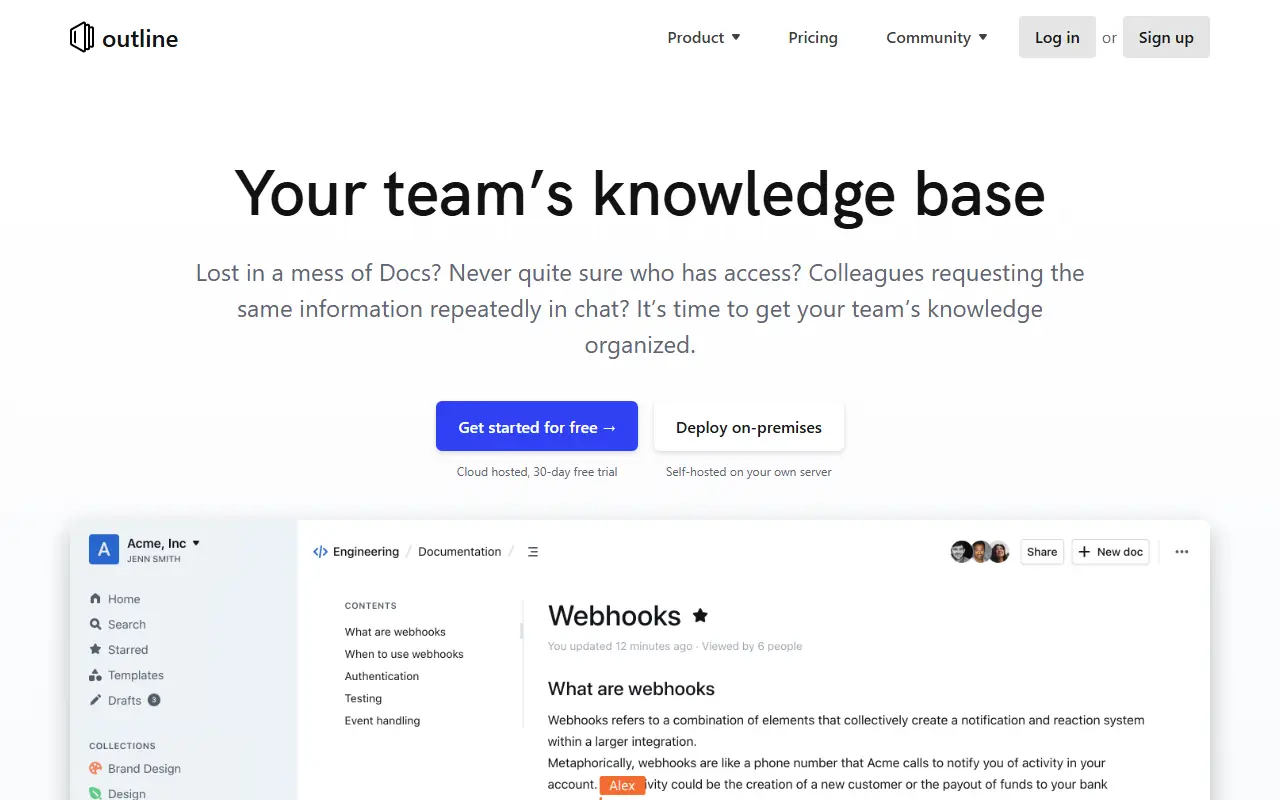
Outline is a knowledge base for teams, built with React and Node.js. It focuses on fast, collaborative writing: documents are edited together in realtime, stay compatible with Markdown, and are organized into collections so a growing team can find what it has written down.
The maintainers offer a hosted version at getoutline.com, and the repository contains the source that runs Outline and its associated services. If you only want to use Outline you do not need to run the code yourself, while teams that want their own copy can follow the documentation for a production configuration and use the published container images. Topics also mention a Slack integration.
The repository license is listed as 'Other', so review it before commercial redistribution. Outline suits teams looking for a wiki or internal documentation tool with a clean editor, as an alternative to products such as Confluence or Notion for company knowledge. The project does not accept AI-generated pull requests.
Key features
- Realtime collaborative editing
- Markdown-compatible document editing
- Collections for organizing a wiki
- Integration with Slack workspaces
- Hosted service at getoutline.com
- Container images for self-running
Pricing: Cloud pricing is by team size: $10 per month for 1-10 members, $79 for 11-100 and $249 for 101-200. The first 30 days are free; larger teams are quoted.
#5
Wiki.js is a Node.js-based open-source wiki; this repository holds the 3.0 beta, which is not intended for production use, while the stable 2.x line lives elsewhere.
- GitHub stars
- 29k
- Last commit
- yesterday
- Latest release
- 3.3.1
- Licence
- AGPL-3.0
- Self-hosted
- Yes
beta.js.wiki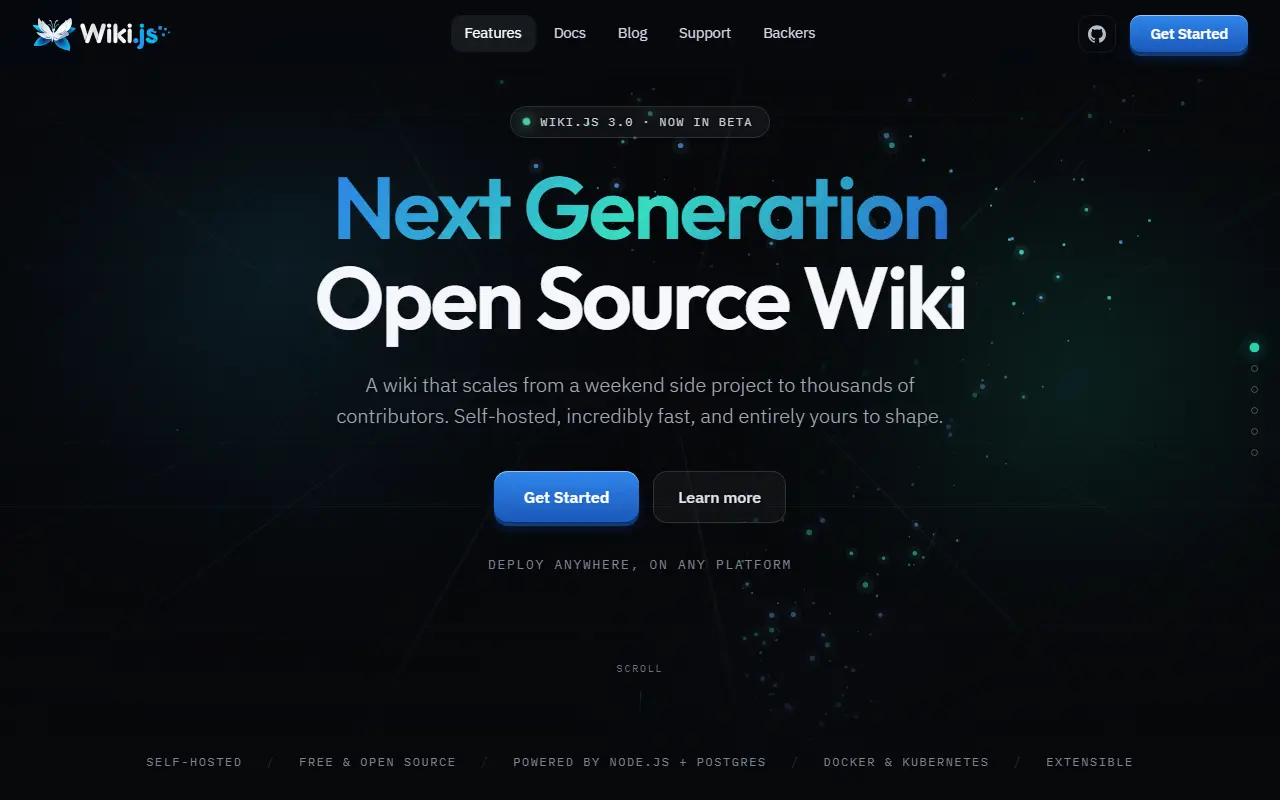
Wiki.js is a next-generation open-source wiki platform built on Node.js with a Vue front end. This repository contains the upcoming 3.0 release in beta, and the README is explicit that it is not for production use. The current stable 2.x release is published at js.wiki and in a separate repository.
The project is aimed at documentation and knowledge sharing for teams. Topics list Markdown editing, Git, cross-platform operation and documentation, and the beta is accompanied by installation requirements, a changelog and a feature request channel. Contributors can help with translations, and the project is supported by sponsors, patrons and donations from the community.
Wiki.js is AGPL-3.0 licensed. It is software you run on your own server, so it suits teams that want a self-hosted wiki they control. Anyone who needs a dependable wiki today should look at the 2.x stable version rather than this beta, and treat the 3.0 code as a preview of what is coming.
Key features
- Node.js wiki with a Vue front end
- Markdown content editing
- Git-friendly documentation workflow
- Installs on multiple platforms
- Community-driven translation effort
- 3.0 beta preview with changelog
Pricing: Free and open source under the AGPL-3.0 license.
#6
A simple, self-hosted wiki and documentation platform built with PHP and Laravel that organizes content into books, chapters and pages.
- GitHub stars
- 19k
- Last commit
- yesterday
- Latest release
- v26.09.3
- Licence
- MIT
- Self-hosted
- Yes
codeberg.org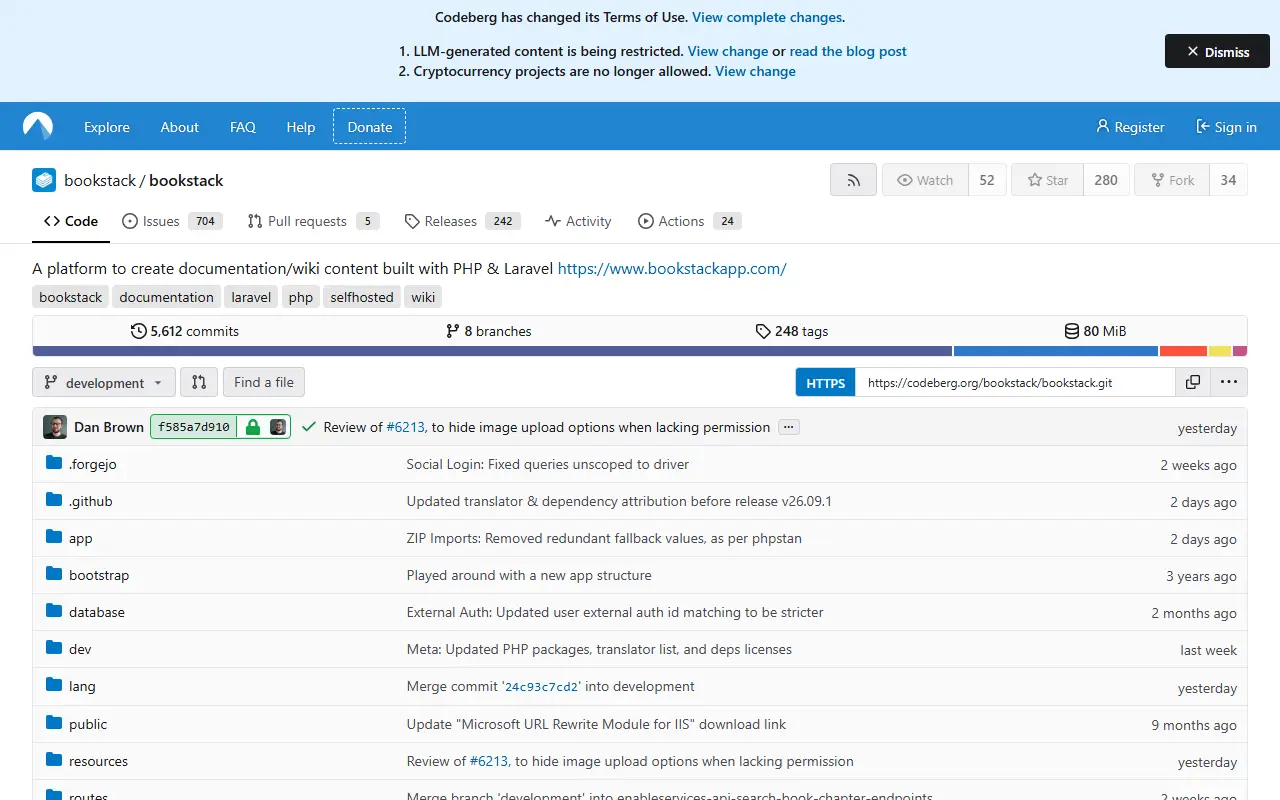
BookStack is a platform for storing and organizing information and documentation, built with PHP and the Laravel framework. It is deliberately opinionated: the aim is a pleasant, intuitive experience out of the box where only basic word-processing skills are needed to create content, so non-technical colleagues can contribute.
Content is organized in a book metaphor, with shelves, books, chapters and pages. Advanced capabilities are available for those who want them, but the project says they should never get in the way of the simple core experience, and it is not intended as a general extensible platform for unrelated purposes. Development is relaxed and positive, evolving slowly while keeping upgrades stable and easy. There is a demo instance, installation instructions, documentation and a blog.
BookStack is licensed under MIT and is now managed on Codeberg, which is where the primary repository and issue list live. You host it on your own server with PHP and a database. It suits teams, schools and small organizations that want an approachable internal wiki rather than a highly configurable knowledge system.
Key features
- Shelves, books, chapters and pages structure
- Simple editor for non-technical users
- Self-hosted PHP and Laravel application
- Stable and easy upgrade path
- Demo instance and documentation
- Advanced options that stay out of the way
Pricing: Free and open source under the MIT license.
#7
A non-linear personal web notebook and wiki written in JavaScript that runs as a single HTML file in a browser or as a Node.js application.
- GitHub stars
- 8.7k
- Last commit
- 2 days ago
- Latest release
- v5.4.1
- Self-hosted
- Yes
tiddlywiki.com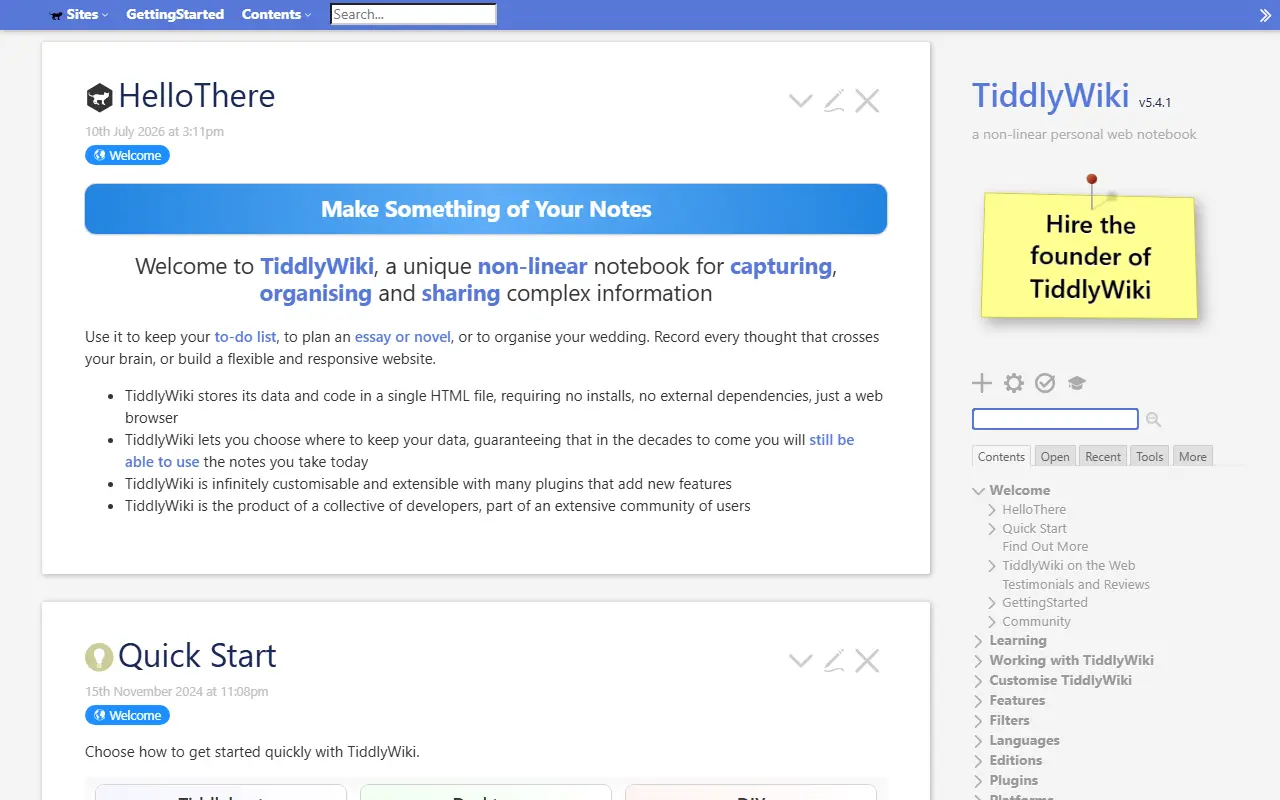
TiddlyWiki is a personal web notebook with a non-linear structure, usable by anyone and kept indefinitely without depending on any company. It is a complete interactive wiki written in JavaScript, in which content is stored as small units called tiddlers that can be linked, tagged and rearranged.
It can be used as one self-contained HTML file in the browser, or run as a Node.js application with a client and server setup for advanced users. The whole interface is implemented in WikiText, which makes it highly customizable, and there is a plugin ecosystem. The project description also mentions that it can run in places such as AWS Lambda.
The community talks on the Talk TiddlyWiki forum, a Google Group that dates back to 2005, GitHub Discussions, Reddit and Discord, and developer documentation is published on the project site. The repository lists the licence as Other. TiddlyWiki is suited to personal knowledge bases, journals, task lists and small documentation sets.
Key features
- Single-file HTML wiki
- Node.js client and server mode
- Non-linear linked notes called tiddlers
- User interface written in WikiText
- Plugins and community extensions
- Runs in browsers and on servers
Pricing: Free and open source; the repository lists the license as Other.
#8
An end-to-end encrypted note-taking app with sync across devices and a self-hostable server, available on web, desktop and mobile.
- GitHub stars
- 6.7k
- Last commit
- today
- Latest release
- @standardnotes/desktop@3.202.11
- Licence
- AGPL-3.0
- Self-hosted
- Yes
- Hosted version
- Available
standardnotes.com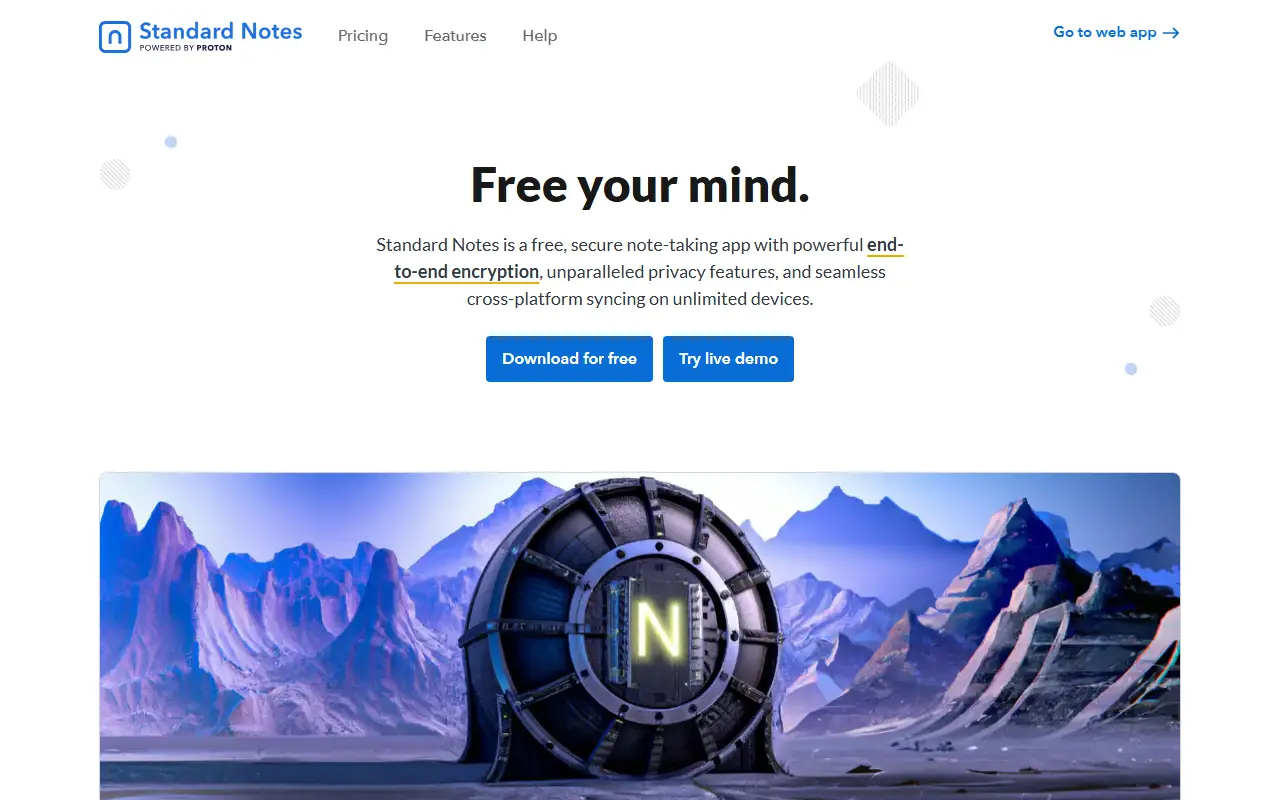
Standard Notes is a note-taking app with end-to-end encryption, built for digitalists and professionals, aiming to keep notes, files and life's work in one secure place. Only the user can read their notes, and sync across devices is encrypted by default.
You register for an account on the web app and install clients for Mac, Windows, Linux, iOS and Android. The README highlights fast, free and encrypted sync on an unlimited number of devices, public source code, the option of hosting your own server with a few steps, and a focus on longevity and sustainability. A companion service called Listed turns notes into an online publication with email newsletters, and developers can build and publish extensions.
The web app compiles to static HTML, JavaScript and CSS files that can be served from any web server, and the README includes build and development instructions. Standard Notes is written in TypeScript and licensed under AGPL-3.0, with a forum and help pages for support. It suits privacy-minded users who want encrypted notes with the option to host their own backend.
Key features
- End-to-end encrypted notes and files
- Sync across unlimited devices
- Apps for web, desktop and mobile
- Self-hostable sync server
- Listed publishing and newsletters
- Extensions published by developers
Pricing: Free Standard plan includes end-to-end encryption and device sync. Productivity costs $90 and Professional $120 per year; there is no trial, but refunds are offered.
#9
A self-hosted wiki shipped as a single Go binary that keeps pages as Markdown files on disk with SQLite, needing no external database.
- GitHub stars
- 1.2k
- Last commit
- 3 days ago
- Latest release
- v0.14.2
- Licence
- MIT
- Self-hosted
- Yes
leafwiki.com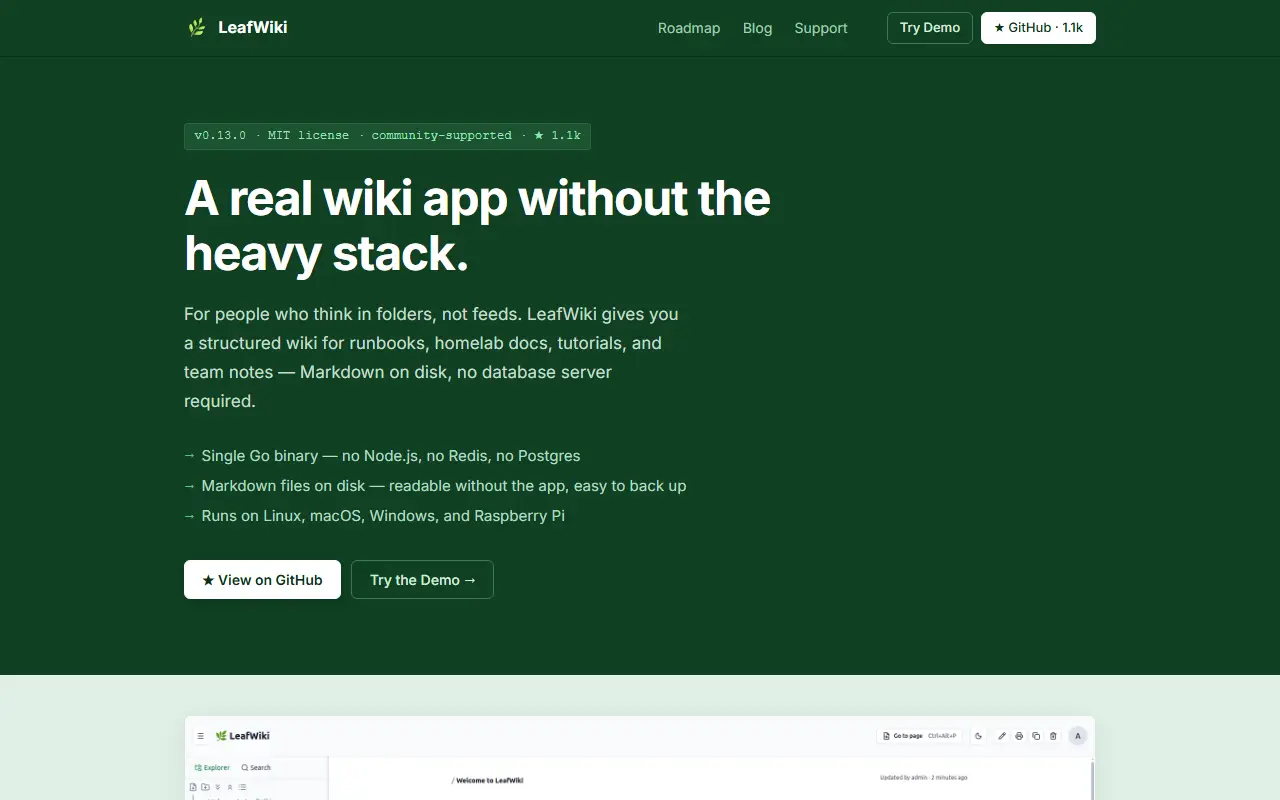
LeafWiki is a self-hosted wiki aimed at engineers and self-hosters who want structured, long-lived documentation without heavy infrastructure. It ships as a single Go binary with SQLite, stores page content as Markdown on disk, and needs no Node.js, Redis or Postgres. The README positions it for people who found tools like Wiki.js or Outline too much to operate.
Pages are organized in an explicit tree rather than a flat feed, and backup is as simple as copying the data directory once the app is stopped. It runs on Linux, macOS, Windows and Raspberry Pi, works behind reverse proxies with a base path and trusted-header authentication, and offers three access modes: fully internal, public read with login-only editing, or open editing. Roles include admin, editor and viewer, and Git backup and SMTP email are configurable.
LeafWiki is written in Go with a React front end and licensed under MIT. It can be installed with Docker, Docker Compose, Kubernetes, a Linux installer or a plain binary. A demo site resets hourly. It suits small teams and homelab users who want runbooks and documentation with minimal upkeep.
Key features
- Single Go binary with SQLite
- Markdown pages stored on disk
- Tree-based page navigation
- Admin, editor, and viewer roles
- Reverse-proxy and header authentication
- Git backup and SMTP email
Pricing: Free and open source under the MIT licence.
#10
MediaWiki is the free PHP wiki software that powers Wikipedia and other Wikimedia sites, extensible with hundreds of extensions and available in many languages.
- GitHub stars
- 5.2k
- Last commit
- today
- Self-hosted
- Yes
mediawiki.org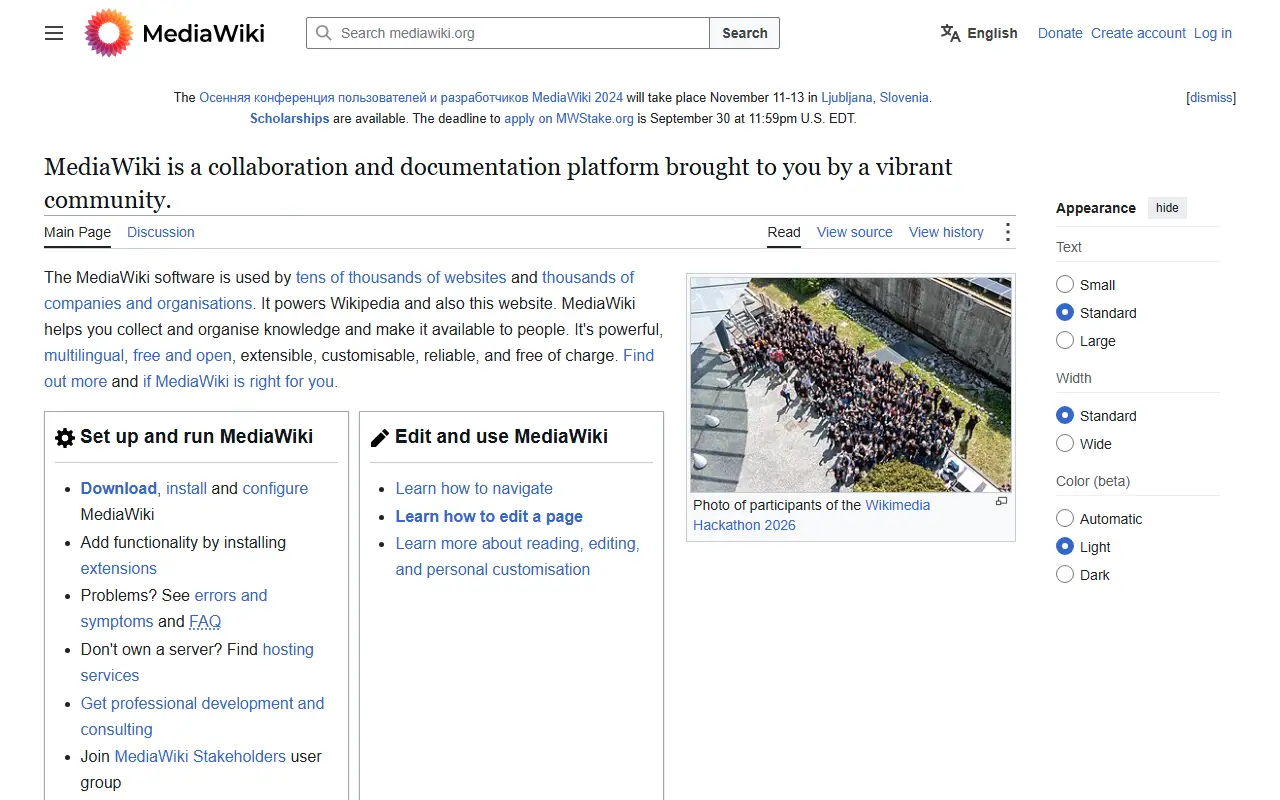
MediaWiki is free, open-source wiki software written in PHP. It was created for and still runs Wikipedia and the other Wikimedia projects, which gives it a long record at very large scale. Anyone can install it to host a knowledge base, documentation site or community encyclopedia.
The README describes it as extensible, with hundreds of extensions for both the on-wiki experience and the back end, and as scalable enough for small and large sites alike. It is simple to install on most hardware and software combinations and is localized in more than 350 languages, with a large community of third-party users and developers around it. System requirements and installation steps are documented on the project site.
The GitHub repository is a mirror of the code reviewed on Wikimedia's Gerrit server, and contributors are directed to the developer access page. MediaWiki is released under the GNU General Public License, which GitHub reports as 'Other'. You host it yourself, or use one of the many third-party wiki hosting providers.
Key features
- Collaborative wiki editing with page history
- Hundreds of extensions for added functionality
- Localized in more than 350 languages
- Scales from small sites to very large ones
- Simple installation on common hosting setups
- Powers Wikipedia and Wikimedia projects
Pricing: Free and open source software; hosting costs depend on where you run it.
6 more Nuclino alternatives
Commercial Nuclino alternatives
Hosted, closed-source products that compete with Nuclino. Showing 12 of 25.
- View tool
Team knowledge base with docs, channels and AI-assisted search
SaaS
- View tool
Team wiki with document branching, approvals and workflow templates
SaaS
- View tool
Documents that combine text, tables and automations with database-like views
SaaS
- View tool
Notion is an AI-enabled workspace for notes, docs, wikis and projects, with agents, meeting notes and search across connected apps.
SaaS
- View tool
Internal wiki with unified search across connected company tools
SaaS
- View tool
Confluence is Atlassian's team workspace for writing, organizing and sharing documentation and knowledge, with AI help for drafting, summarizing and finding answers.
SaaS
- View tool

Microsoft Loop
Docs & Wikis
Microsoft's workspace with portable components and shared pages
SaaS
- View tool
Shared notes app for teams with fast search and sync across devices
SaaS
- View tool
Collaborative document and wiki platform for teams with embeddable smart content
SaaS
- View tool
Company wiki that surfaces verified answers inside chat and the browser
SaaS
- View tool
Cloud intranet and company wiki builder for internal portals
SaaS
- View tool
GitBook is a documentation and knowledge platform that keeps product docs accurate for people and AI, with docs-as-code support and an MCP server.
SaaS
See every Nuclino alternative on its tool page
Nuclino alternatives: questions
- What is the best open-source alternative to Nuclino?
- Joplin is the top-ranked open-source alternative to Nuclino on Enlisted: A free, open-source, offline-first note-taking and to-do app with Markdown notes, end-to-end encrypted sync, plugins and apps for desktop and mobile. Other strong options are Trilium Notes, Logseq, Outline and Wiki.js.
- What are the best commercial alternatives to Nuclino?
- Slite, Almanac, Coda, Notion and Slab are among the hosted, closed-source alternatives to Nuclino listed on Enlisted, which lists 25 in total. Compare their pricing and features on each tool page.
- Are these Nuclino alternatives free?
- All 16 are open source, so the code is free to use under its licence, and all of them can be self-hosted on your own server or computer. 3 also offer a paid or managed cloud version if you'd rather not host it yourself.
- How is this list of Nuclino alternatives ranked?
- By a score built from GitHub stars, star growth over the last 30 days and how recently the code changed. 14 of these projects shipped code in the last 30 days. Data is refreshed daily, and nobody can pay to move up.
 TrackMedia
 TrackRev