7,363 open-source and SaaS tools, with GitHub stats refreshed every day.

10 alternatives ranked by real activity

Open-source Manus alternatives

A curated, ranked list of the 10 best open-source alternatives to Manus.

The best open-source alternative to Manus is OpenClaw. If that doesn't suit you, other good options are AutoGPT, OpenHands, Goose and AionUi.

Manus alternatives are mainly AI tools. 8 of them shipped code in the last 30 days, 10 can be self-hosted, and 6 use a permissive licence.

Last updated October 2, 2026 · ranked by GitHub stars, growth and recent commits

OpenClaw

An open-source personal AI assistant that runs on your own hardware and talks to you through chat apps such as Slack, Telegram and WhatsApp.

GitHub stars
391k
Last commit
today
Latest release
v2026.9.7
Self-hosted
Yes
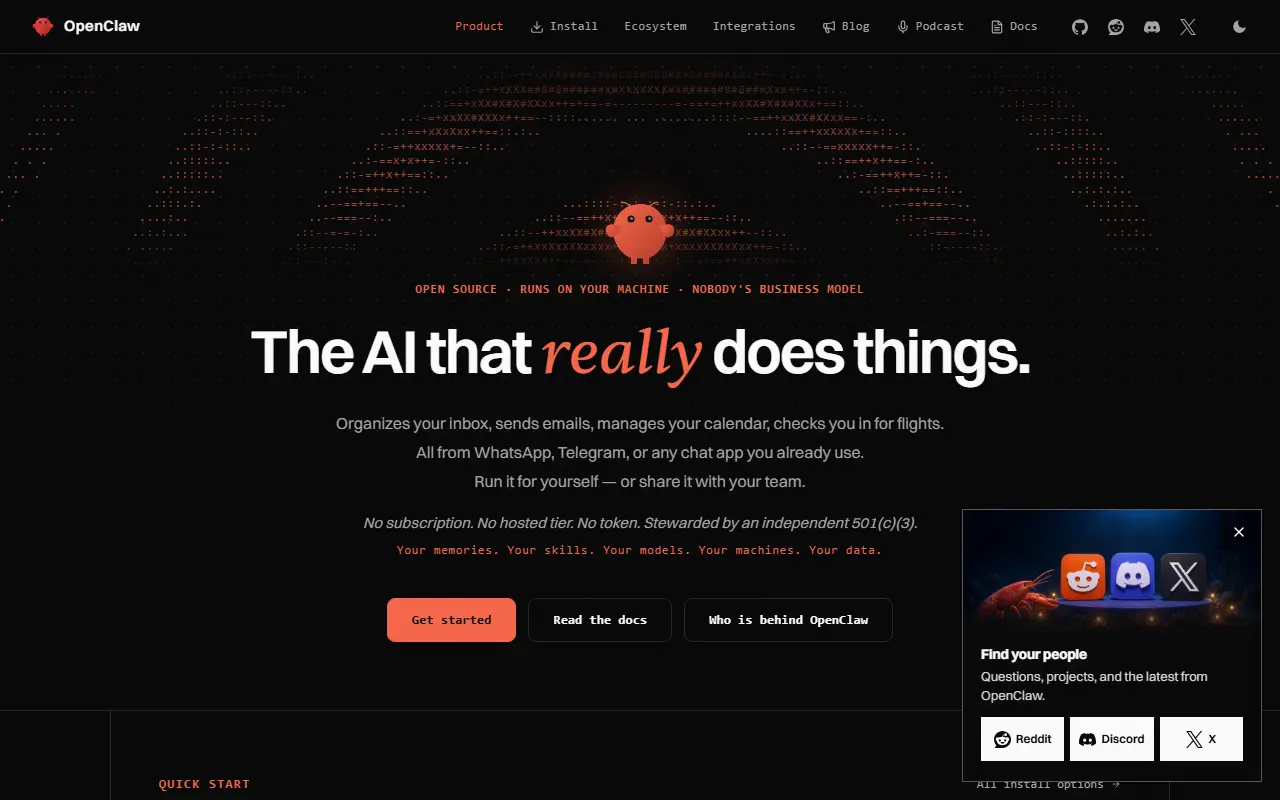
openclaw.aiOpenClaw homepage screenshot

OpenClaw is an AI assistant, open source, that you run on your own computer. Instead of living inside a single website, it connects to the messaging channels you already use, including Discord, iMessage, Slack, Teams, Telegram and WhatsApp, with more than twenty others supported according to the project. Native desktop and mobile apps cover macOS, iOS, Android, Windows and Linux.

A single Gateway process runs the assistant, either as a personal setup on one laptop or as a deployment shared across a team, with configuration being the main difference between the two. State, memory and credentials stay on your hardware, and the model or agent harness is a swappable plugin, so you can use hosted models such as Claude or Codex, or local models, without changing the rest of the setup.

OpenClaw is stewarded by an independent nonprofit foundation, and the project says it offers no paid plan, no hosted service and no token. By default it only contacts its servers for a daily version check, and anonymous statistics are opt-in. GitHub lists the license as 'Other', so check the repository for the exact terms. It suits people who want a private assistant they control themselves.

Key features

  • Connects to Discord, Slack, Telegram, WhatsApp and more
  • Native apps across desktop and mobile platforms
  • Swappable model providers and agent harnesses as plugins
  • Memory and credentials stored on your own hardware
  • Single gateway for personal or shared team use
  • Opt-in anonymous usage statistics

Pricing: Free and open source; the project says it has no paid plan, hosted offering or token.

AutoGPT

An open-source platform for building and running AI agents from plain-English prompts or a visual block builder, with hosted and self-hosted options.

GitHub stars
188k
Last commit
today
Latest release
autogpt-platform-beta-v0.8.2
Self-hosted
Yes
Hosted version
Available
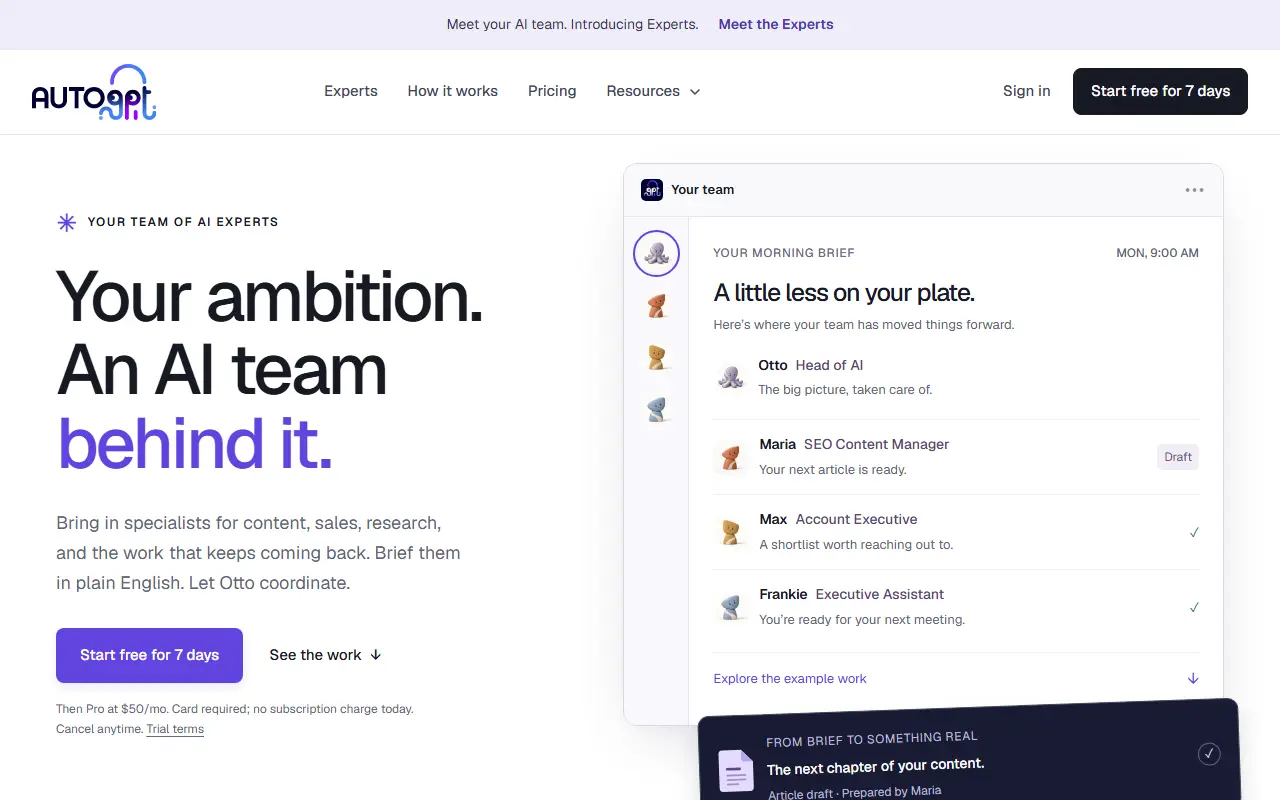
agpt.coAutoGPT homepage screenshot

AutoGPT is an open-source platform for building and running AI agents that carry out complete workflows. You can describe a desired outcome in plain English, or lay out each step yourself in a visual builder. Agents can then run whenever you ask, on a schedule or from a trigger. The project is written mainly in Python.

The platform is organized around four areas: AutoPilot, which turns a conversation into a working agent; Agents, which shows runs, costs and actions needing attention; a Marketplace of ready-made agents you can add to your library and customize; and Build, a block-based editor where you connect, branch and inspect steps for precise control.

A hosted platform is run by the vendor, who manages infrastructure, model access, credentials and updates, and it is a paid service. The code can also be self-hosted, and the README links a self-hosting guide. GitHub lists the license as 'Other', so review the repository terms before reuse. It suits teams automating repeatable tasks with agents.

Key features

  • Plain-English agent creation with AutoPilot
  • Visual block builder with branching
  • Agents that run on demand, schedules or triggers
  • Marketplace of ready-made agents
  • Dashboard of runs, costs and pending actions
  • Connections to many third-party platforms and models

Pricing: The open-source code can be self-hosted for free. Hosted Pro costs $50 per month with a 7-day free trial and Max $320 per month; a Team plan is listed as coming soon.

OpenHands

A self-hosted control center for running coding agents, including OpenHands, Claude Code and Codex, locally, in Docker or in the cloud, with automations.

GitHub stars
90k
Last commit
today
Latest release
v1.24.0
Licence
MIT
Self-hosted
Yes
Hosted version
Available
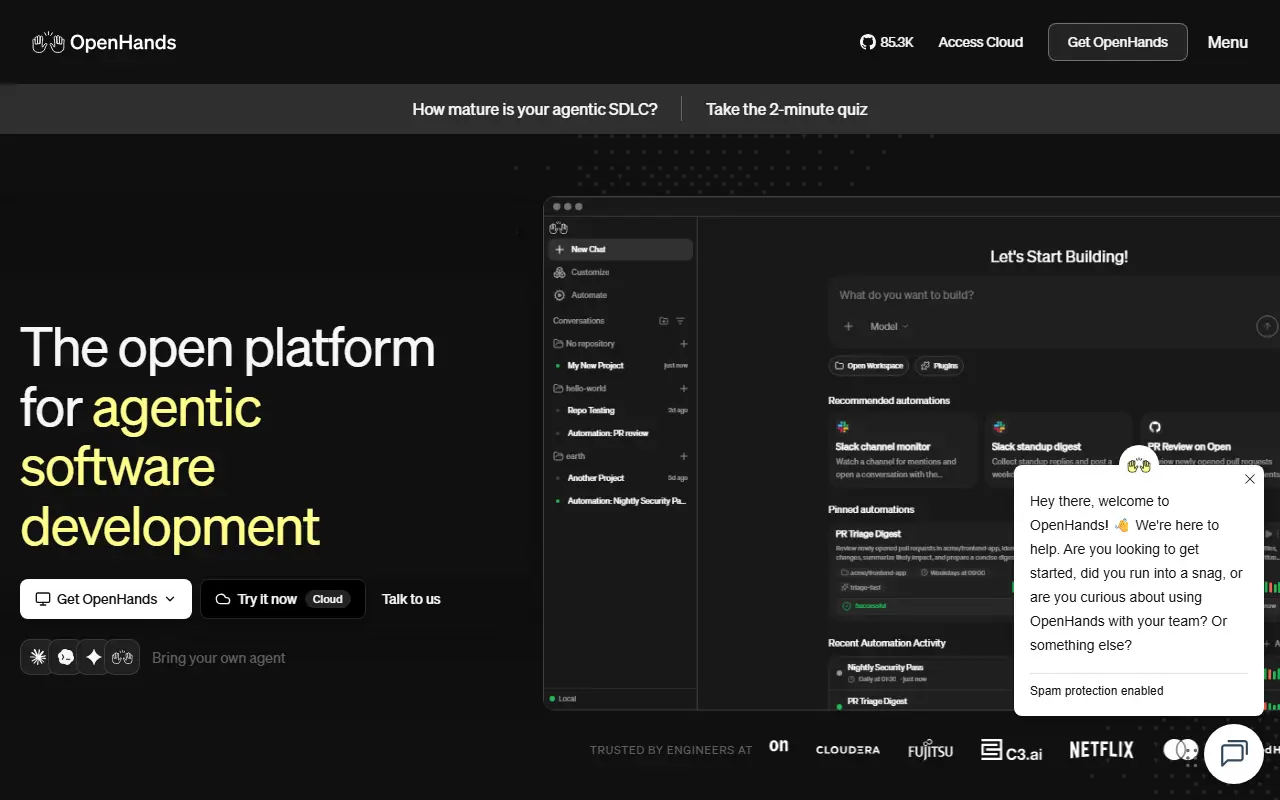
openhands.devOpenHands homepage screenshot

OpenHands is an open-source project for AI-driven software development. Its current README centers on Agent Canvas, a self-hosted developer control center for starting conversations with coding agents and automating everyday engineering tasks. It is written mainly in TypeScript and released under the MIT license.

By default Agent Canvas uses the open-source OpenHands agent, but it can also drive third-party agents such as Claude Code, Codex and Gemini, or any ACP-compatible agent. It runs locally by default and can connect to several agent backends, including Docker containers, virtual machines and company infrastructure, so agents can be moved between local, remote and cloud setups without interrupting your work.

Automations can be triggered on a timetable or by incoming webhook events and connect with tools such as Slack, GitHub, Linear and Notion, for example publishing reports to Slack or breaking GitHub issues into tasks. Agents can optionally run on OpenHands Cloud or OpenHands Enterprise. It suits engineering teams that want to coordinate several coding agents from one self-managed place.

Key features

  • Self-hosted control center for coding agents
  • Runs OpenHands, Claude Code, Codex and Gemini
  • Local, Docker, VM and cloud agent backends
  • Scheduled and webhook-triggered automations
  • Integrations with Slack, GitHub, Linear and Notion
  • Optional OpenHands Cloud and Enterprise hosting

Pricing: Local open-source use and the hosted Individual tier are free (model usage is passed through at cost). Enterprise, in the cloud or self-hosted in your VPC, has custom pricing.

Goose

An open-source, general-purpose AI agent written in Rust, available as a desktop app, CLI and API, that works with many model providers and MCP extensions.

GitHub stars
55k
Last commit
today
Latest release
v1.52.0
Licence
Apache-2.0
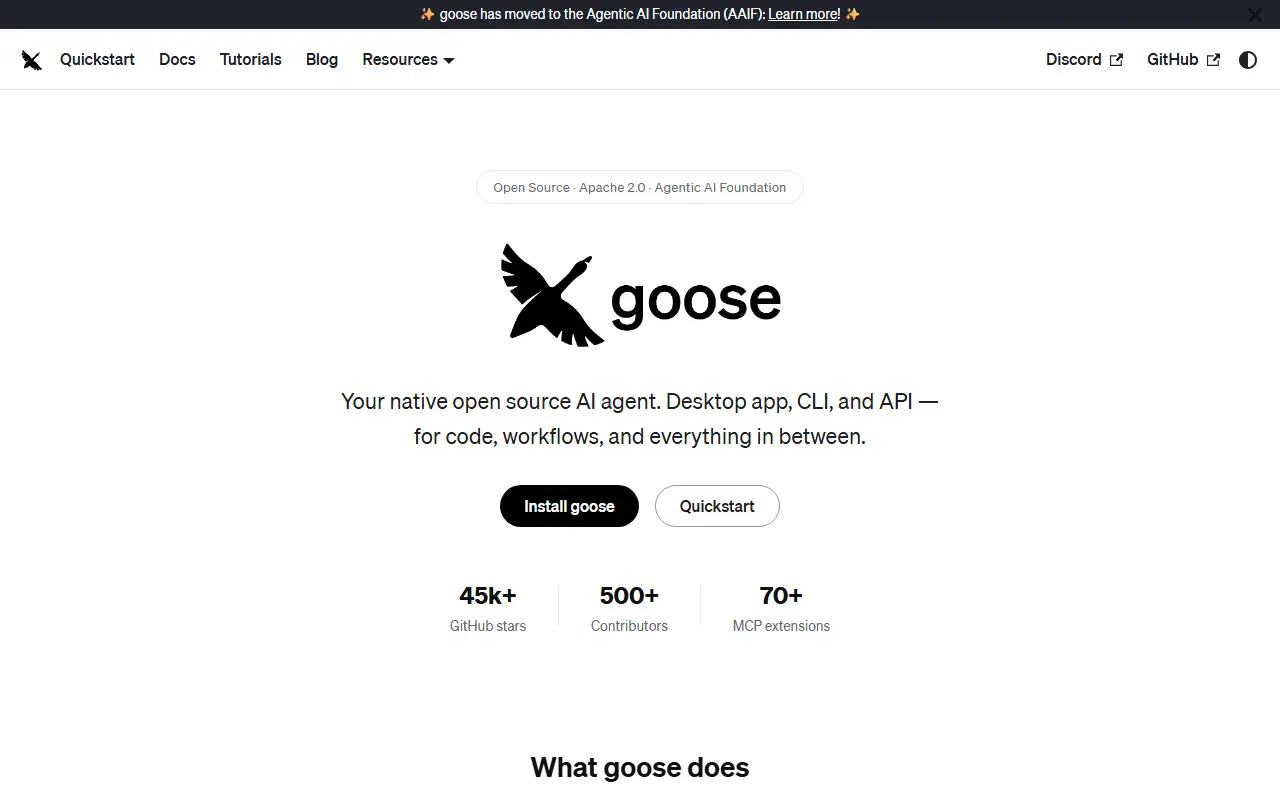
goose-docs.aiGoose homepage screenshot

goose is an AI agent for general tasks that runs locally on your own machine. It is not limited to coding: the project suggests using it for research, writing, automation, data analysis and similar tasks. It is built in Rust, released under the Apache-2.0 license, and available as a desktop application on Windows, Linux and macOS, a full CLI for terminal workflows, and an API for embedding it elsewhere.

goose works with more than a dozen model providers, including Anthropic, OpenAI, Google, Ollama, OpenRouter, Azure and Bedrock, and can use existing Claude, ChatGPT or Gemini subscriptions through ACP as an alternative to API keys. It connects to many extensions through the Model Context Protocol open standard, and custom distributions let teams ship their own goose build with preconfigured providers, extensions and branding.

The project is part of the Agentic AI Foundation at the Linux Foundation, and its documentation covers a quickstart, installation, tutorials and governance. It suits developers and knowledge workers who want a configurable local agent that is not tied to a single model vendor.

Key features

  • Desktop app for Windows, Linux and macOS
  • Full CLI for terminal workflows
  • API for embedding the agent elsewhere
  • Works with many model providers
  • Extensions through the Model Context Protocol
  • Custom distributions with preset providers and branding

Pricing: Free and open source under the Apache-2.0 license; model usage depends on the provider or subscription you connect.

AionUi

An open-source desktop and web app for working alongside AI agents that can read files, run tasks and automate on a schedule, including external CLI agents.

GitHub stars
33k
Last commit
23 days ago
Latest release
v2.2.2
Licence
Apache-2.0
Self-hosted
Yes
aionui.comAionUi homepage screenshot

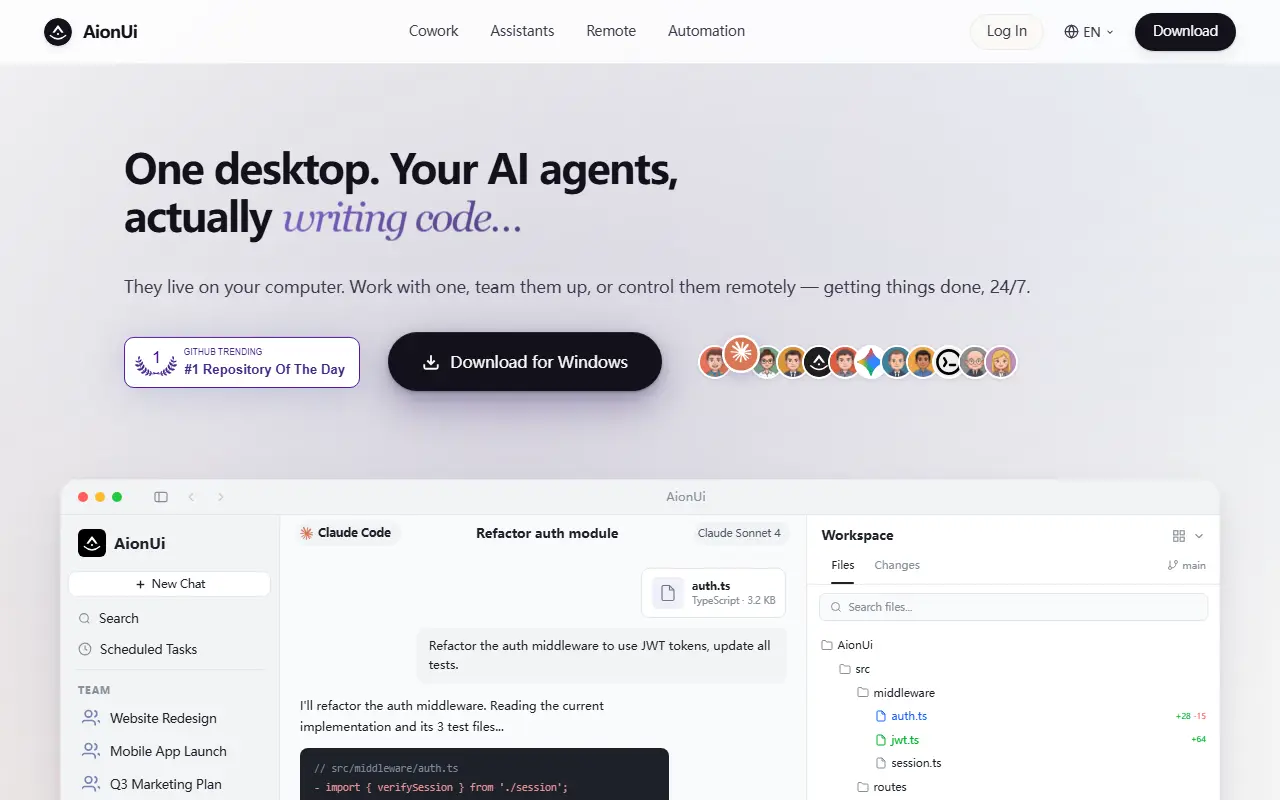
AionUi is an open-source app built around the idea of cowork rather than simple chat: AI agents share your computer with you, opening files, writing code, browsing the web and automating chores, while you can see everything the agent does and stay in control. It runs on multiple platforms.

A built-in agent works with zero setup, and you can bring any API key. For heavier use, AionUi can run many external CLI agents in one interface, including Claude Code, Codex, Qwen Code, Hermes Agent and Cursor Agent, with multi-agent teams and customizable assistants. Remote access is possible through a WebUI and through Telegram, Lark, DingTalk and WeChat, and cron-based scheduling lets automations run unattended around the clock. The project says this contrasts with traditional AI chat clients, which can rarely act on files or execute multi-step tasks.

AionUi is written in TypeScript and licensed under Apache-2.0. It is free and open source, and it fits developers and office users who want agents that act on local files and tools rather than only answering questions.

Key features

  • Built-in agent with file access
  • Runs external CLI agents such as Claude Code and Codex
  • Multi-agent teams and custom assistants
  • Remote access via WebUI and chat apps
  • Cron-based 24/7 scheduled automation
  • Cross-platform desktop app

Pricing: Free and open source under the Apache-2.0 license.

Suna

Suna, published as Kortix, is an open-source platform for running AI agents that produce finished work, with any model and your own infrastructure.

GitHub stars
20k
Last commit
today
Latest release
v0.13.47
Self-hosted
Yes
Hosted version
Available

Suna is the repository of Kortix, which describes itself as an open-source AI Management System. Instead of a single chatbot, it organizes AI agents that carry out tasks and deliver finished work such as reports, code and replies. Agents, the skills they share, company memory and connectors to other services are all kept as files in a git repository, so configuration is versioned and can be reviewed like code.

Each agent session runs in an isolated cloud sandbox on its own branch, and the result lands as a change request that a human approves before it is merged. The platform works with any model provider using your own API keys, rather than being tied to a single model vendor.

The project positions itself as an open alternative to closed, hosted agent products such as ChatGPT, offering source access and the option to run on your own cloud or on-premise network. The repository lists its license as 'Other', so check the license file before commercial use. A managed cloud edition is also available.

Key features

  • AI agents that deliver finished work
  • Isolated cloud sandbox for each session
  • Agents, skills and memory stored in git
  • Human-approved change requests
  • Works with any model provider and your API keys
  • Self-host or use the managed cloud

Pricing: Self-hosting is described as free; the README lists the managed cloud at $40 per seat per month plus usage.

LobsterAI

LobsterAI is an open-source desktop AI agent from NetEase Youdao that works on your local files and apps, and takes commands from phone chat apps.

GitHub stars
6.1k
Last commit
yesterday
Latest release
2026.9.23
Licence
MIT
Self-hosted
Yes

LobsterAI is a desktop AI agent built by NetEase Youdao that can work in your real computing environment, including local files, shell commands, browser workflows, office documents, spreadsheets, slides, scheduled jobs and project workspaces. It is aimed at office-style tasks such as data analysis, slide and document creation, video work and web research.

The app is organized around Cowork, its product and session layer, which keeps local persistence, permissions, interface state, artifacts, agents, memory and instant-messaging bindings. OpenClaw is the runtime and gateway beneath it that actually executes agent tasks. Users can send commands from their phone through WeChat, Feishu, DingTalk or Telegram, and MCP is among its repository topics.

LobsterAI is built with Electron, React and TypeScript, and it is licensed under MIT. It runs as a desktop application on your own computer rather than as a hosted service. It suits users who want an agent with real local access and mobile messaging control.

Key features

  • Desktop agent with local file and terminal access
  • Cowork sessions for long-running tasks
  • Command input via WeChat, Feishu and DingTalk
  • Telegram control from your phone
  • Document, spreadsheet and slide generation
  • OpenClaw runtime for agent execution

Pricing: Free and open source under the MIT license.

Poco Claw

A web-based AI coworker built on a Claude Code agent, with channels, sandboxed task execution, MCP and skills support, positioned as an OpenClaw alternative.

GitHub stars
1.4k
Last commit
10 days ago
Latest release
0.5.7
Licence
MIT
Self-hosted
Yes
poco-docs.vercel.appPoco Claw homepage screenshot

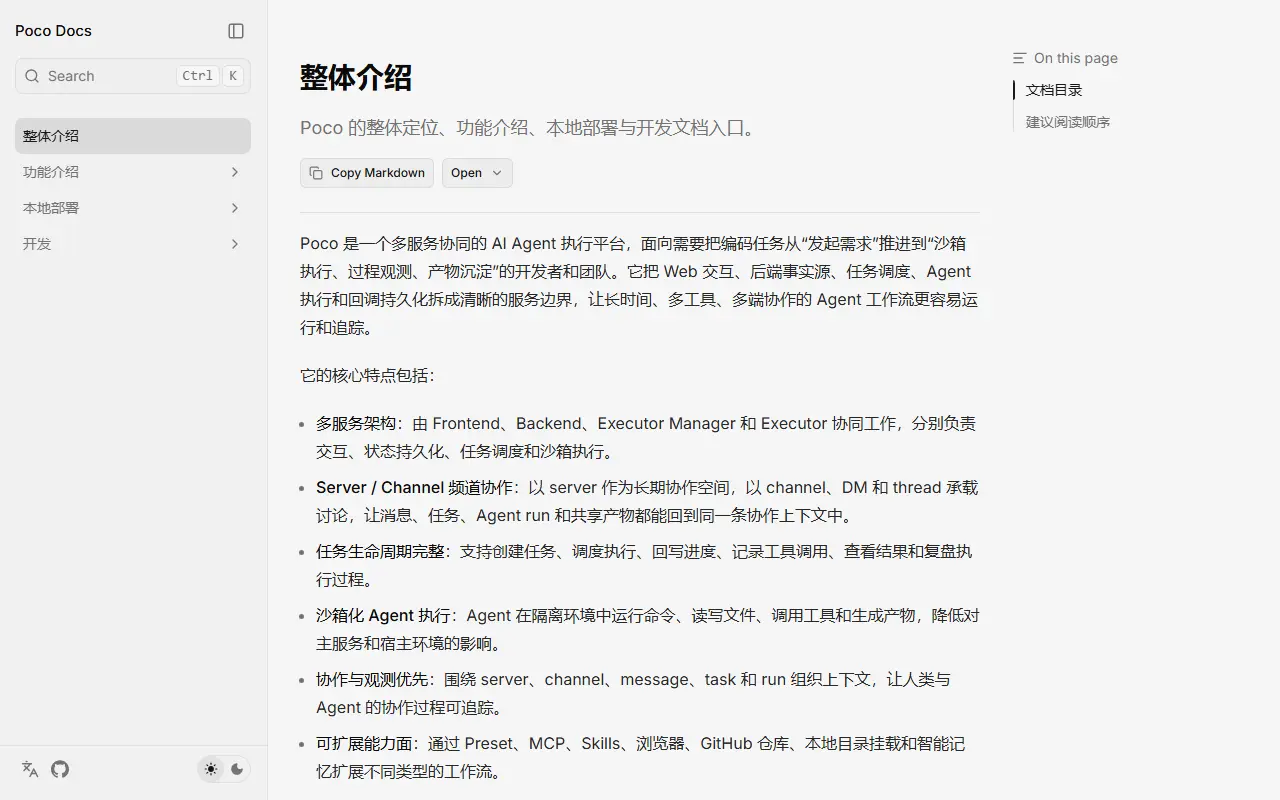
Poco, or Poco Claw, is an open-source AI agent workspace powered by a Claude Code-based agent. It is presented as a more polished and safer alternative to OpenClaw, with a web interface, built-in messaging support and a sandboxed runtime that keeps tasks isolated from the host machine.

Teams work in long-lived servers with channels, direct messages and reply threads, can mention persistent agents, turn messages into trackable tasks and publish outputs to shared files. Every task runs in an isolated container, with optional mounting of local directories when self-hosting. Other features include plan mode, conversation queueing, project settings for model and Git repository, an artifacts view for HTML, PDF, Markdown and diagrams, a playback view for commands and browser sessions, MCP and skills import, a built-in browser and scheduled background runs.

The project is written in Python, licensed under MIT, and has documentation hosted separately. It can be self-hosted, and the README notes that local directory mounting is available only in that mode. It suits developers and small teams who want to delegate coding and research work to a shared, observable agent.

Key features

  • Channels, DMs, and threads with agents
  • Isolated container sandbox for tasks
  • Artifacts viewer for many file formats
  • Playback of commands and browser sessions
  • MCP and Skills import
  • Scheduled background execution

Pricing: Free and open source under the MIT licence.

LemonAI

Open-source general-purpose AI agent that runs locally with a Docker sandbox for research, coding and data analysis, as an alternative to Manus and Genspark.

GitHub stars
1.6k
Last commit
8 mo ago
Latest release
v0.5.1
Self-hosted
Yes
lemonai.ccLemonAI homepage screenshot

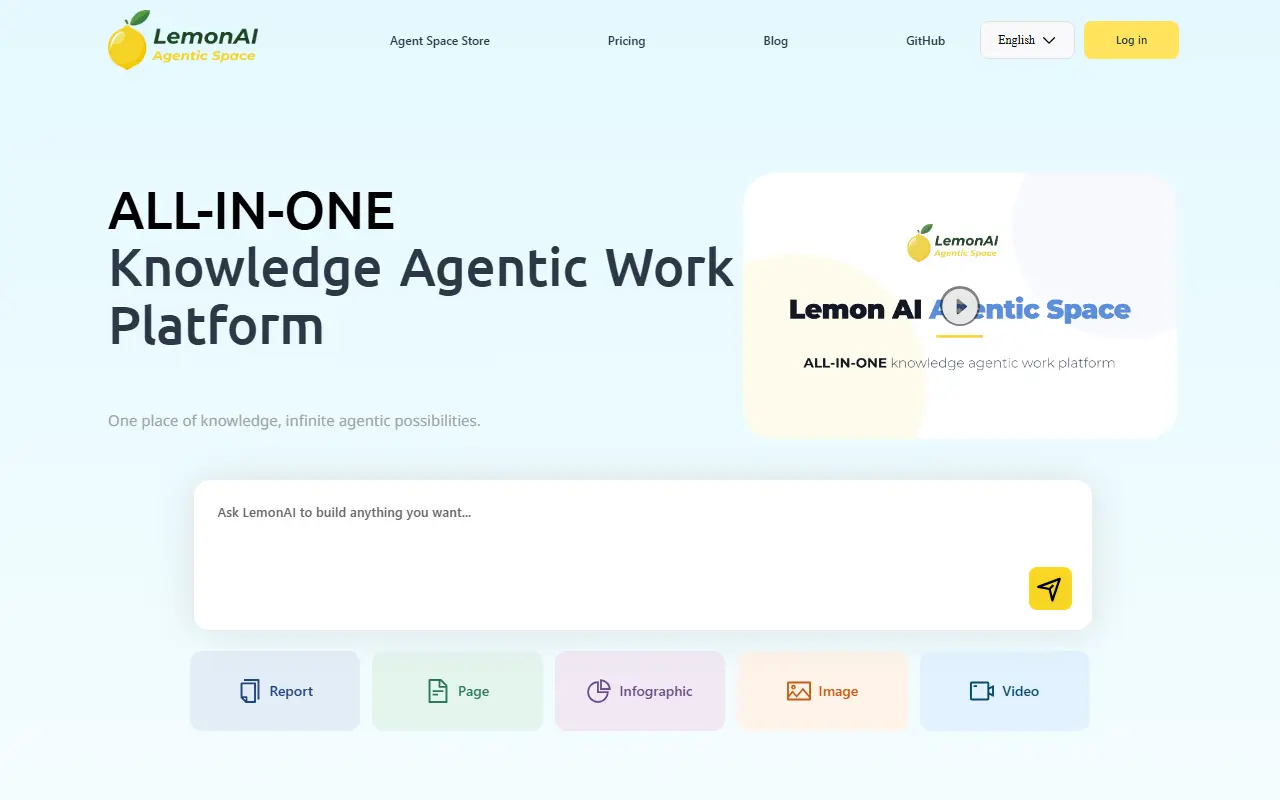
Lemon AI is an open-source general AI agent designed to run on your own hardware. It is presented as a local alternative to agent platforms such as Manus and Genspark AI, and it includes a code-interpreter virtual machine sandbox so code can be written and executed without touching your own files or operating system. It targets users who want deep research, web browsing, coding and data analysis with privacy.

The agent supports planning, action, reflection and memory using local models such as DeepSeek, Kimi, Qwen, Llama, Gemma and GPT-OSS through Ollama or vLLM. For stronger results you can also configure APIs from cloud models including Claude, GPT, Gemini and Grok. Supported tasks include research reports, code generation, data analysis, content creation and document processing. An experience repository lets the agent learn and be customized for an organization.

The sandbox runs inside Docker, and a quick-deployment guide, documentation and a desktop build are available. The codebase is JavaScript running on Node.js with Vue 3. The repository metadata lists the license as Other, so review the license file before commercial use.

Key features

  • Local general-purpose AI agent
  • Docker virtual machine code sandbox
  • Works with Ollama and vLLM local models
  • Optional cloud model APIs
  • Deep research and report generation
  • Planning, reflection and memory
  • Experience repository for customization

Pricing: A free plan gives new users 1,000 credits. Pro costs $19 and Business $99 per month, with yearly options of $190 and $999.

Open-Agent

Self-hostable multi-agent AI system that coordinates OpenAI, Claude, Gemini and open-source models to complete tasks, as an open alternative to Manus.

GitHub stars
1k
Last commit
11 mo ago
Licence
Apache-2.0
Self-hosted
Yes
open-agent.ioOpen-Agent homepage screenshot

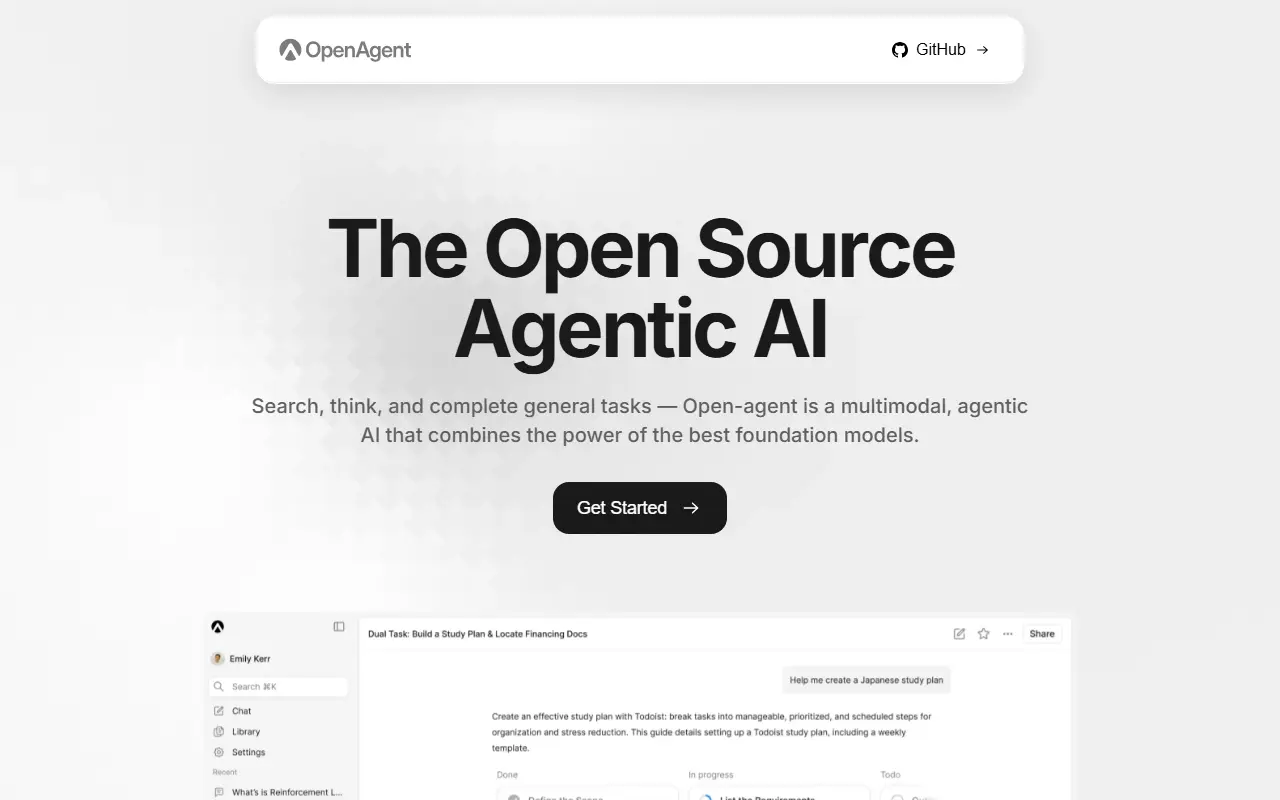
Open-Agent is an open-source agentic AI project presented as an alternative to the Claude Agent SDK, ChatGPT Agents and Manus. The idea is that agentic systems can do meaningful work by operating computers, browsers and phones like a person, and that opening them up lets others modify and extend them. You chat with leading models while a multi-agent system works on your tasks, and you can use the project as the foundation for your own dedicated agent.

The key features are a customizable agent setup that integrates OpenAI, Claude, Gemini and open-source models, spec and context engineering that helps agents plan, score and surface options while you keep the final decision, and multi-agent collaboration in which several frontier models work together on a task. The project is open source and free to modify.

Deployment uses Docker Compose: you copy the example configuration and compose file into a folder, add your API keys to the configuration and start the stack. The code is TypeScript and licensed under Apache-2.0. The project welcomes contributions and has a Discord community, and the website open-agent.io provides more details.

Key features

  • Multi-agent collaboration across several AI models
  • Integrates OpenAI, Claude, Gemini and open models
  • Spec and context engineering for planning
  • Docker Compose deployment
  • Configurable through a JSON file
  • Open source and customizable

Pricing: Free and open source under the Apache-2.0 license. You supply your own model API keys.

Manus alternatives: questions

What is the best open-source alternative to Manus?
OpenClaw is the top-ranked open-source alternative to Manus on Enlisted: An open-source personal AI assistant that runs on your own hardware and talks to you through chat apps such as Slack, Telegram and WhatsApp. Other strong options are AutoGPT, OpenHands, Goose and AionUi.
Are these Manus alternatives free?
All 10 are open source, so the code is free to use under its licence, and all of them can be self-hosted on your own server or computer. 3 also offer a paid or managed cloud version if you'd rather not host it yourself.
How is this list of Manus alternatives ranked?
By a score built from GitHub stars, star growth over the last 30 days and how recently the code changed. 8 of these projects shipped code in the last 30 days. Data is refreshed daily, and nobody can pay to move up.

People also look for alternatives to…

View all