5 open-source alternatives ranked by real activity

Open-source Lightning AI alternatives

A curated, ranked list of the 5 best open-source alternatives to Lightning AI.

The best open-source alternative to Lightning AI is MLflow. If that doesn't suit you, other good options are Kubeflow, beta9, Polyaxon and Backend.AI.

Commercial alternatives to Lightning AI include Paperspace, Anyscale, Domino Data Lab and IBM watsonx. See all 18.

Lightning AI alternatives are mainly AI infrastructure tools, but some are also AI tools and workflow automation tools. 4 of them shipped code in the last 30 days, 5 can be self-hosted, and 3 use a permissive licence.

Last updated November 13, 2026 · ranked by GitHub stars, growth and recent commits

MLflow

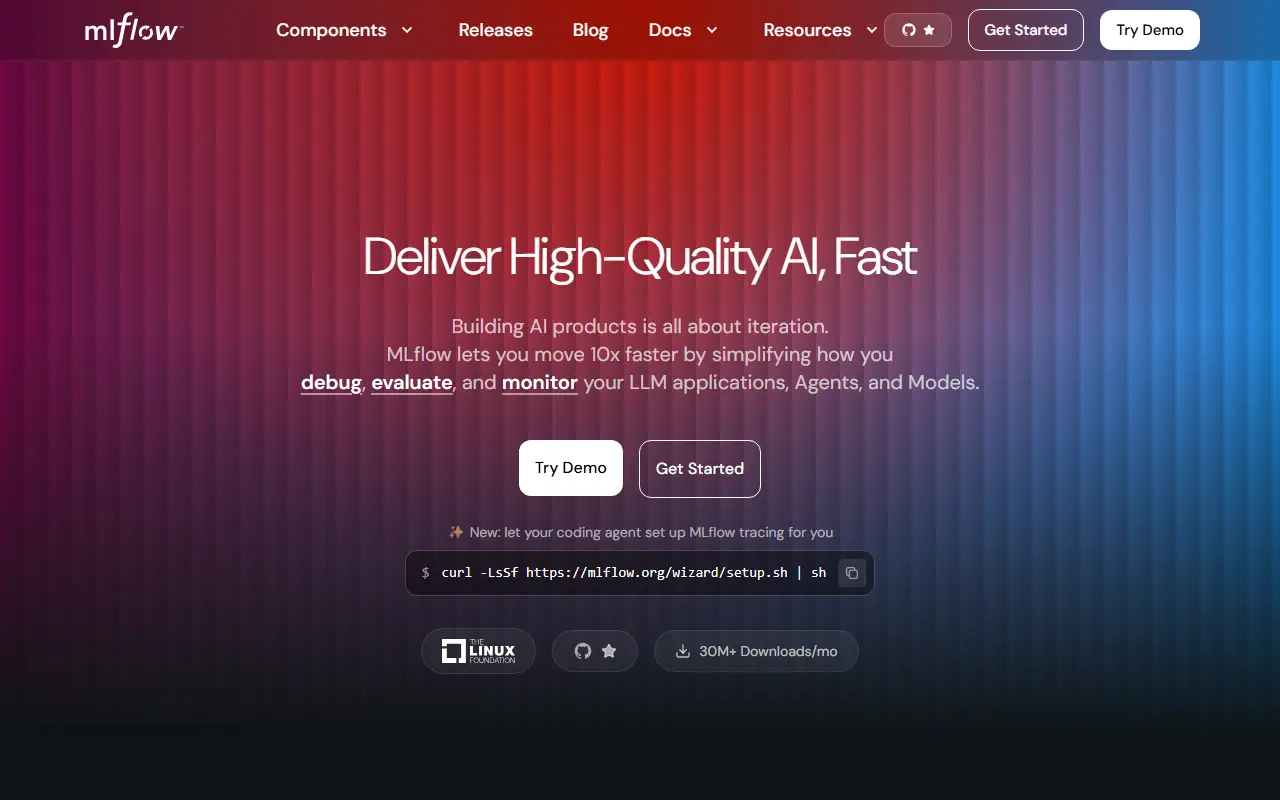
MLflow is an open-source platform for debugging, evaluating and monitoring AI agents, LLM applications and machine learning models.

GitHub stars
29k
Last commit
yesterday
Latest release
v3.18.0
Licence
Apache-2.0
Self-hosted
Yes
Hosted version
Available
mlflow.orgMLflow homepage screenshot

MLflow is an open-source AI engineering platform for agents, LLM applications and ML models. It helps teams debug, evaluate, monitor and optimize AI applications in production while keeping control of costs and access to models and data. It is written in Python, released under the Apache-2.0 license, and has been developed since 2018, with topics covering MLOps, model management and LLMOps.

For LLM and agent work it offers production observability with traces, plus evaluation, prompt management and prompt optimization, and an AI Gateway that governs costs and model access. It works with Python, TypeScript and JavaScript, Java and other languages, and integrates with OpenTelemetry and MCP. Getting started means starting an MLflow server, enabling logging in your code and running it, then exploring traces and metrics in the web UI on port 5000. A setup wizard can connect to an MLflow server or a Databricks workspace and add tracing with a coding agent.

Key features

  • Tracing and observability for LLM apps and agents
  • Evaluation tools for models and agents
  • Prompt management and prompt optimization
  • AI Gateway for cost and model access control
  • OpenTelemetry and MCP integration
  • Web UI for exploring traces and metrics

Pricing: Free and open source under the Apache-2.0 license; the README also mentions connecting to a Databricks workspace.

Read more about MLflowWebsiteGitHub#1 Lightning AI alternative

Kubeflow

Kubeflow is an open source platform for deploying ML workflows on Kubernetes.

GitHub stars
16k
Last commit
1 mo ago
Latest release
redirect
Licence
Apache-2.0
Self-hosted
Yes
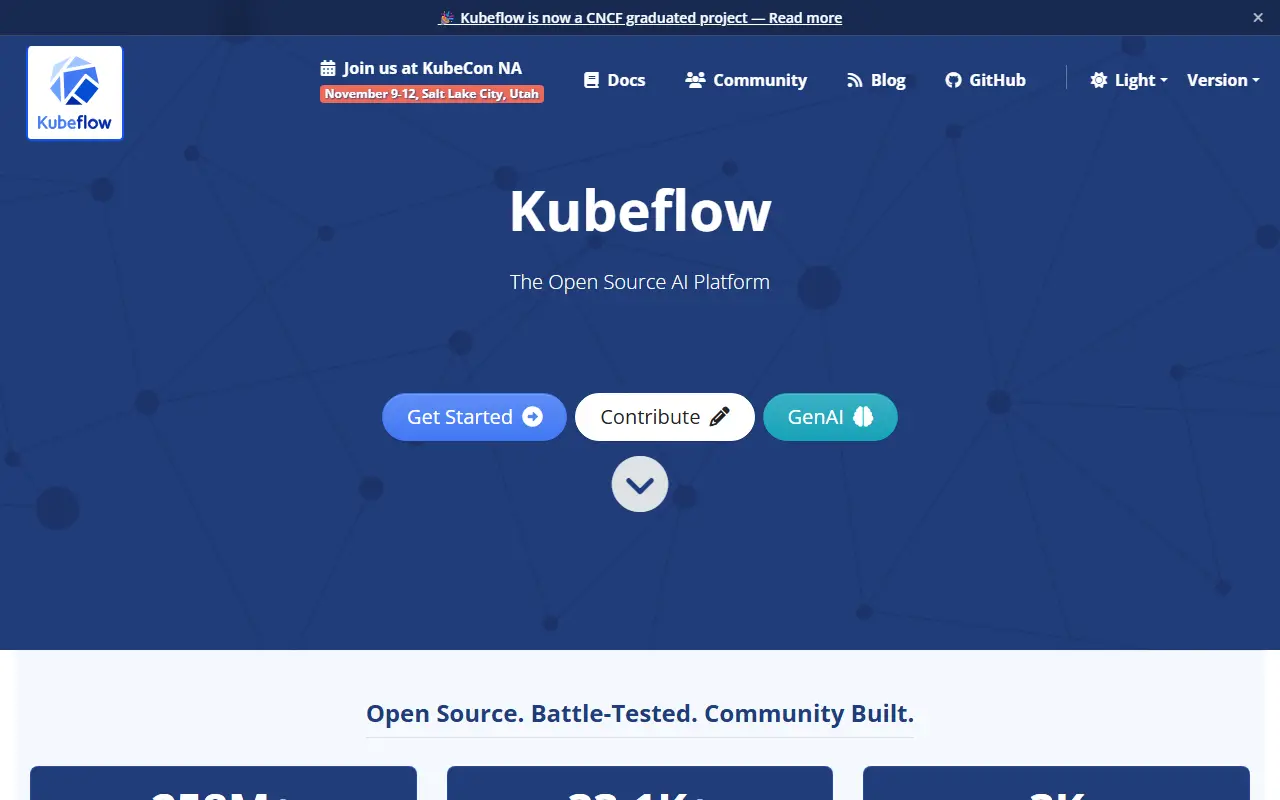
kubeflow.orgKubeflow homepage screenshot

Kubeflow is the Cloud Native AI platform composed of modular, open source projects that form a Kubernetes-native stack for data and AI workloads. It is designed for AI practitioners, platform administrators, and decision-makers who need modular, scalable, and extensible tools for data, AI/ML, and HPC use-cases.

The platform's mission is to bridge the Data, AI, and Cloud Native ecosystems, enabling teams to deliver more models, agents, and AI applications into production across the AI lifecycle. It is built by an open global community and aims to be the standard for Data & AI workloads on Kubernetes.

Key features

  • Runs workloads at any scale without requiring Kubernetes expertise
  • Portable across local laptops, on-premises, and any cloud
  • Manages hyperscale training jobs and high-throughput AI agents
  • Composable tools that can be mixed and matched across the AI lifecycle
  • Includes subprojects: Spark Operator, Notebooks, Trainer, Katib, and Hub
Read more about KubeflowWebsiteGitHub#2 Lightning AI alternative

beta9

Open-source runtime for serverless AI workloads that deploys and scales GPU inference, sandboxes, and background jobs from a Python interface.

GitHub stars
1.9k
Last commit
yesterday
Latest release
worker-0.1.834
Licence
AGPL-3.0
Self-hosted
Yes
Hosted version
Available
beam.cloudbeta9 homepage screenshot

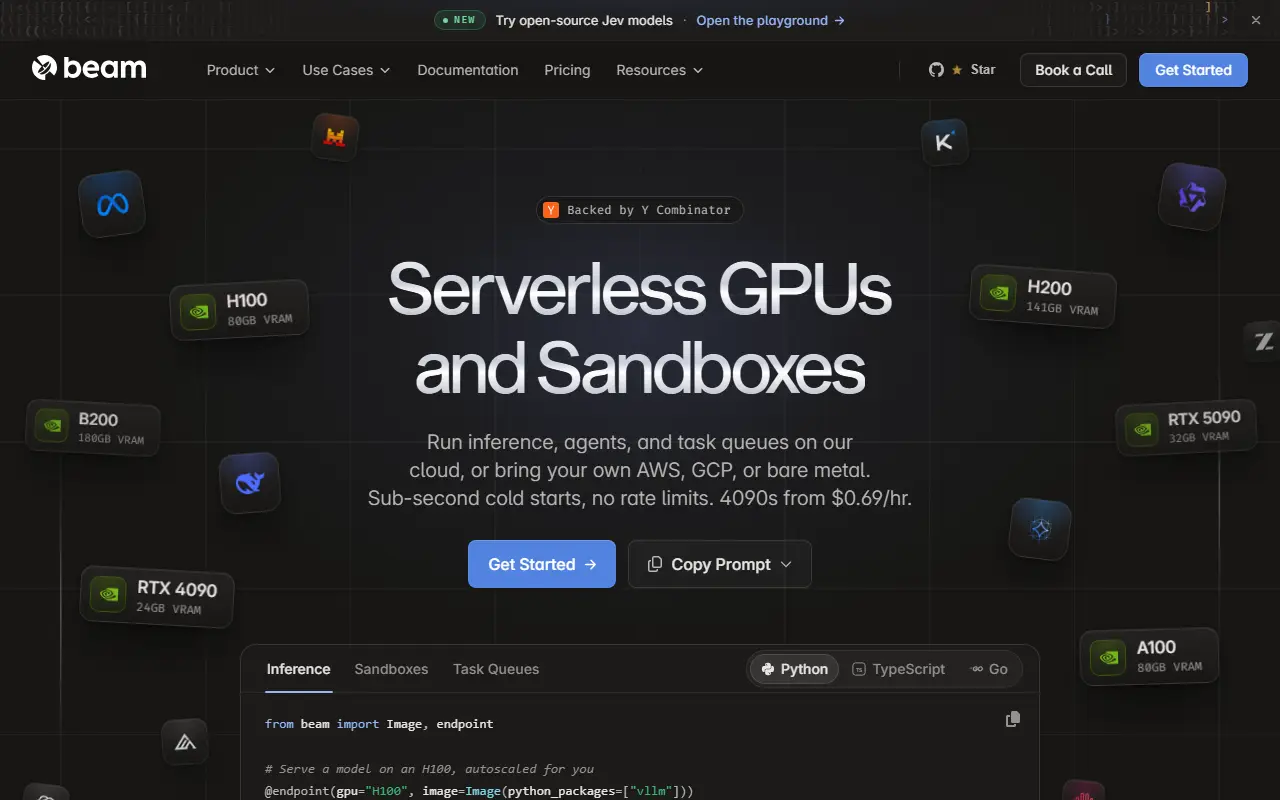
Beam, whose open-source engine lives in the beta9 repository, is a fast runtime for serverless AI workloads. It gives developers a Pythonic interface to deploy and scale AI applications without managing infrastructure. The code is written in Go and released under the AGPL-3.0 license, and topics include GPU, LLM inference, autoscaling, and functions as a service.

Features include sub-second container cold starts using a custom runtime, scheduler, and embedded caching, parallel fan-out to hundreds of containers, hot reloading, webhooks and scheduled jobs, scale-to-zero by default, and mounted distributed storage volumes. GPU support runs on the Beam cloud, with cards such as the RTX 4090 and H100 mentioned, or on your own GPUs.

The project can be self-hosted or used through the hosted platform, which requires creating an account. Beam suits machine learning engineers and startups that want to serve models, run batch jobs, or sandbox untrusted code without operating a Kubernetes GPU cluster themselves.

Key features

  • Serverless GPU inference
  • Sub-second container cold starts
  • Scale-to-zero workloads
  • Parallel fan-out to many containers
  • Webhooks and scheduled jobs
  • Volume storage and bring-your-own GPUs

Pricing: The Developer plan is $0 per month plus usage and Team is $89 per month plus usage; Growth is custom. Usage is billed by the millisecond, with H100 machines from $1.83 per hour.

Read more about beta9WebsiteGitHub#3 Lightning AI alternative

Polyaxon

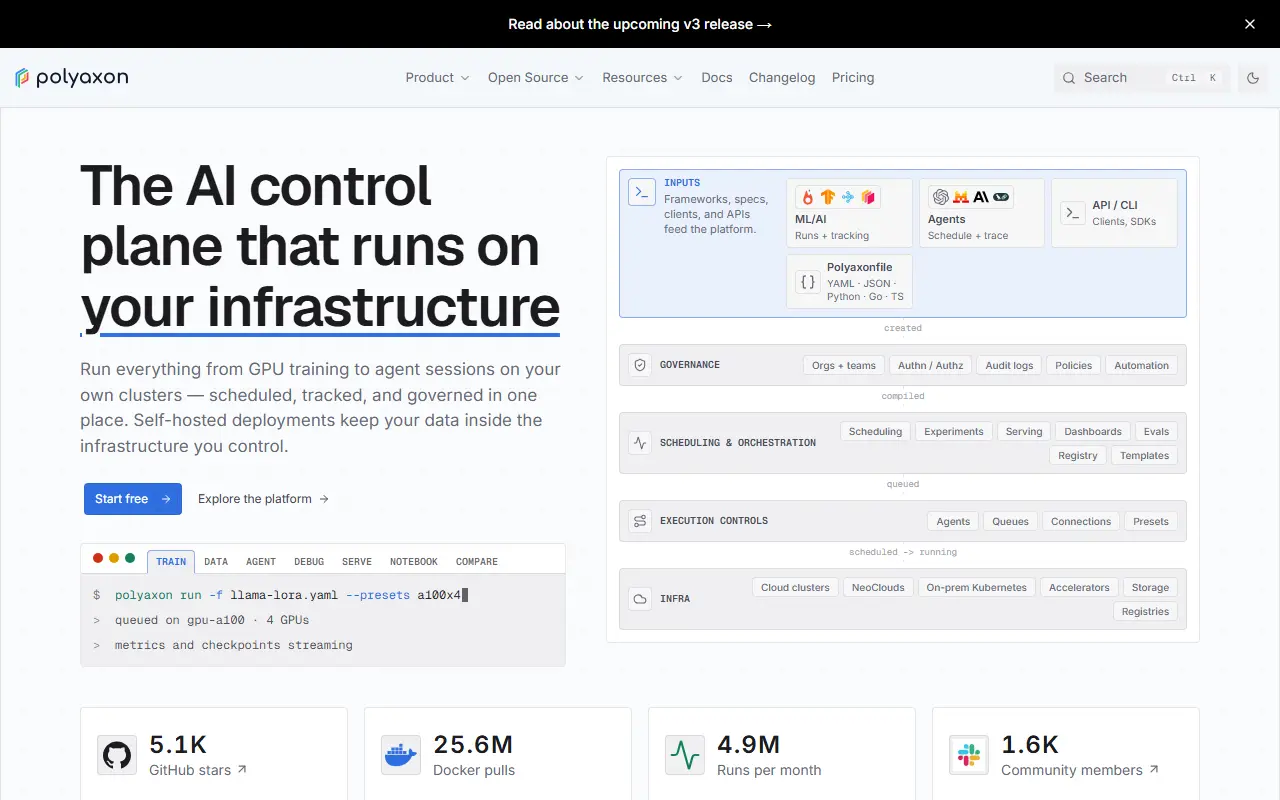
Polyaxon is an open-source AI control plane for Kubernetes that schedules, runs, debugs, observes, and automates AI/ML workloads, agents, and sandboxes on your own infrastructure.

GitHub stars
3.7k
Last commit
yesterday
Licence
Apache-2.0
Self-hosted
Yes
polyaxon.comPolyaxon homepage screenshot

Polyaxon is an open-source AI control plane designed to run on Kubernetes. It enables scheduling, tracking, and governance of AI/ML workloads, including GPU training, agent sessions, and sandboxes, all within self-hosted deployments. The platform supports training, services, and sandboxes using shared specs, queues, governance, and data connections.

It provides a unified interface for training and fine-tuning models, serving inference, running notebooks, and managing interactive sessions. Polyaxon integrates with various frameworks, clients, and APIs, and offers governance features such as organizations, teams, authentication, audit logs, and policies. It is suitable for teams that need to manage AI workloads on their own clusters and storage backends.

Key features

  • Scheduling and orchestration of runs, experiments, and batch jobs
  • Training and fine-tuning with support for LoRA and SFT
  • Services for serving, inference, notebooks, TensorBoard, and ML apps
  • Sandboxes with SSH, tmux, interactive, and background modes
  • Governance with organizations, teams, authn/authz, audit logs, and policies
  • Execution controls via agents, queues, connections, and presets
Read more about PolyaxonWebsiteGitHub#4 Lightning AI alternative

Backend.AI

Backend.AI is a container-based computing cluster platform that allocates GPUs and other accelerators for multi-tenant ML sessions through REST and GraphQL APIs.

GitHub stars
680
Last commit
2 days ago
Latest release
26.4.19
Licence
LGPL-3.0
Self-hosted
Yes
backend.aiBackend.AI homepage screenshot

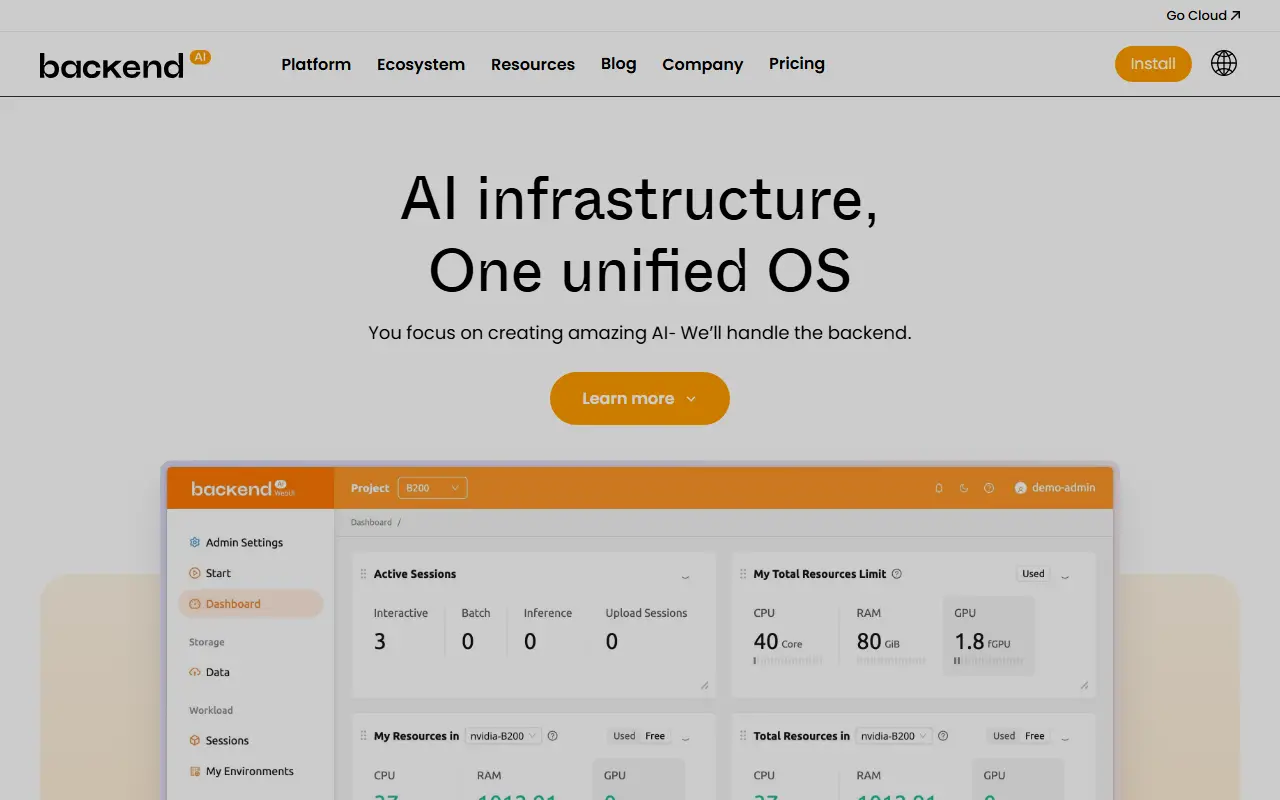
Backend.AI, from Lablup, is a streamlined, container-based computing cluster platform that hosts popular machine learning frameworks and many programming languages. Its distinguishing feature is pluggable support for heterogeneous accelerators, including CUDA and ROCm GPUs, Intel Gaudi, Google TPU, Graphcore IPU and NPUs from vendors such as Rebellions, FuriosaAI, HyperAccel and Tenstorrent.

It allocates and isolates computing resources for multi-tenant sessions on demand or in batches, using customizable job schedulers and its own orchestrator named Sokovan. All functions are exposed through REST and GraphQL APIs. The README lists requirements including Python 3.13 with Pantsbuild, Docker 20.10 or newer or Podman 5.4 or newer, Docker Compose v2, PostgreSQL 16 or newer, Valkey (Redis-compatible), etcd and Prometheus, with Grafana recommended for observability.

Backend.AI is written in Python and licensed under LGPL-3.0. It is aimed at organizations running shared GPU or accelerator clusters for research and ML workloads, and you operate it on your own infrastructure.

Key features

  • Container-based compute sessions
  • Support for many accelerator types
  • Multi-tenant resource isolation
  • Sokovan job scheduler and orchestrator
  • REST and GraphQL APIs
  • Docker and Podman container engines

Pricing: The open-source version is free to install. On-premise and cloud Enterprise editions are priced by quote, and a limited-time cloud try-out can be requested.

Read more about Backend.AIWebsiteGitHub#5 Lightning AI alternative

Commercial Lightning AI alternatives

Hosted, closed-source products that compete with Lightning AI. Showing 12 of 18.

See every Lightning AI alternative on its tool page

Lightning AI alternatives: questions

What is the best open-source alternative to Lightning AI?
MLflow is the top-ranked open-source alternative to Lightning AI on Enlisted: MLflow is an open-source platform for debugging, evaluating and monitoring AI agents, LLM applications and machine learning models. Other strong options are Kubeflow, beta9, Polyaxon and Backend.AI.
What are the best commercial alternatives to Lightning AI?
Paperspace, Anyscale, Domino Data Lab, IBM watsonx and Amazon SageMaker are among the hosted, closed-source alternatives to Lightning AI listed on Enlisted, which lists 18 in total. Compare their pricing and features on each tool page.
Are these Lightning AI alternatives free?
All 5 are open source, so the code is free to use under its licence, and all of them can be self-hosted on your own server or computer. 2 also offer a paid or managed cloud version if you'd rather not host it yourself.
How is this list of Lightning AI alternatives ranked?
By a score built from GitHub stars, star growth over the last 30 days and how recently the code changed. 4 of these projects shipped code in the last 30 days. Data is refreshed daily, and nobody can pay to move up.

People also look for alternatives to…

View all