7,363 open-source and SaaS tools, with GitHub stats refreshed every day.

5 alternatives ranked by real activity

Open-source JFrog alternatives

A curated, ranked list of the 5 best open-source alternatives to JFrog.

The best open-source alternative to JFrog is Gitea. If that doesn't suit you, other good options are Harness, Harbor, GitLab and OneDev.

JFrog alternatives are mainly CI/CD & DevOps tools. 5 of them shipped code in the last 30 days, 5 can be self-hosted, and 4 use a permissive licence.

Last updated October 2, 2026 · ranked by GitHub stars, growth and recent commits

Gitea

A lightweight self-hosted software development service combining Git hosting, code review, issues, wiki, package registry and CI/CD that can reuse GitHub Actions.

GitHub stars
58k
Last commit
yesterday
Latest release
v28.0.0
Licence
MIT
Self-hosted
Yes
Hosted version
Available
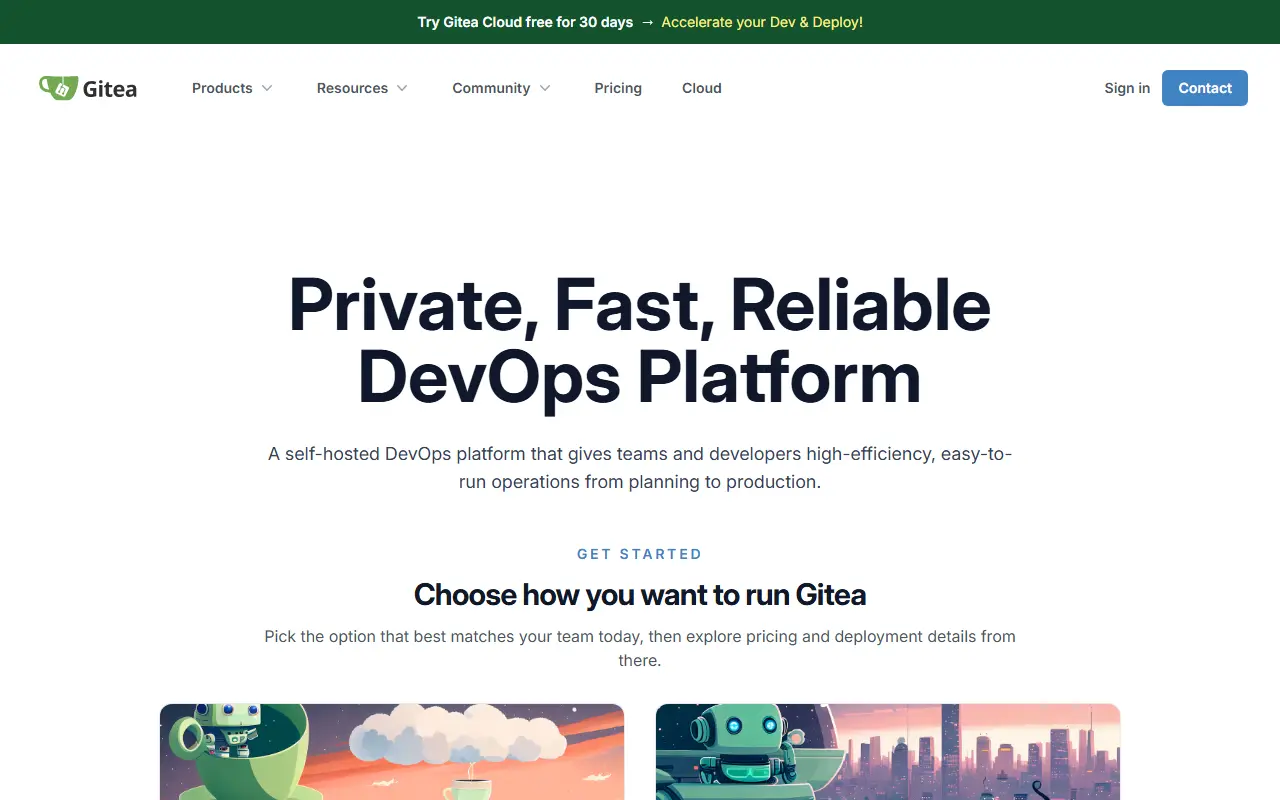
gitea.comGitea homepage screenshot

Gitea is a software development service written in Go that you host yourself and that brings the usual tooling together in one place. It combines Git hosting, code management and review, issue tracking, project kanban boards, a wiki, team collaboration, a package registry and CI/CD, with the aim of being the easiest and least painful way to run your own code platform. Its topics place it in the same space as GitHub and GitLab.

Because it is written in Go, Gitea runs on any platform Go supports: Linux, macOS, the BSDs and Windows, across x86, amd64, ARM, RISC-V 64 and PowerPC processors. Package registries such as Maven, npm and Docker are mentioned in its topics, and its CI/CD system can reuse GitHub Actions workflows, which eases migration of existing pipelines. Documentation covers installation, administration and development.

The project is MIT licensed. You can try a public demo at demo.gitea.com, use the free service at gitea.com with a limited number of repositories, start a trial of the managed Gitea Cloud, or deploy the official container image on your own server. It suits teams and individuals who want control over their source code hosting.

Key features

  • Git hosting with code review
  • Issue tracking and project kanban boards
  • Wiki and team collaboration
  • Package registry for common ecosystems
  • CI/CD that can reuse GitHub Actions
  • Official container image and cross-platform binaries

Pricing: The open-source edition is free to self-host. Enterprise is listed at $19 per user per month (a $9.5 price also appears, with a one-year commitment) and has a 30-day free trial.

Harness

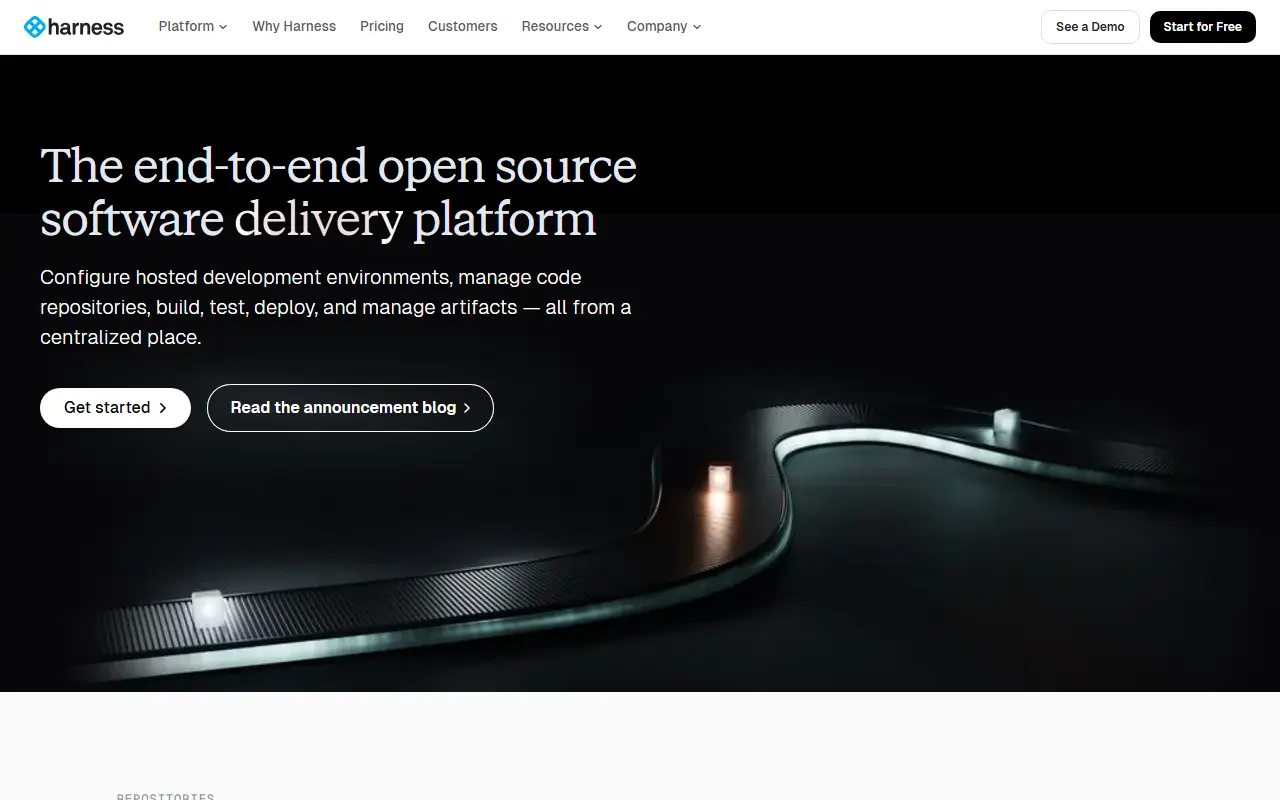
An open-source developer platform combining Git hosting, CI/CD pipelines, cloud development environments called Gitspaces and artifact registries, the successor to Drone.

GitHub stars
38k
Last commit
2 days ago
Latest release
v2.28.2
Licence
Apache-2.0
Self-hosted
Yes
harness.ioHarness homepage screenshot

Harness Open Source is a developer platform written in Go that bundles source code hosting, automated pipelines, hosted development environments and artifact registries in one product. The idea is to give a team a complete, self-run DevOps toolchain rather than separate services for repositories, builds and package storage.

Its hosted development environments are called Gitspaces, and the platform also includes registries for build artifacts. Harness is presented as the next generation of Drone: Drone focused only on continuous integration, whereas Harness adds code hosting and developer environments. The maintainers say the goal is eventual parity with Drone's pipeline capabilities so users can migrate, and a snapshot of Drone lives on a separate branch so it can keep developing.

You can run Harness locally from the published Docker image and open it on port 3000. The image stores its database and repositories in a volume, so a bind mount or named volume is strongly recommended to avoid losing data when the container stops. The project is Apache-2.0 licensed, with documentation at developer.harness.io.

Key features

  • Git repository hosting
  • CI/CD pipelines for build automation
  • Gitspaces hosted development environments
  • Artifact registries for build outputs
  • Docker image for quick local setup
  • Migration path from Drone

Pricing: A free plan covers individual developers and small teams. The Essentials bundle and the modular Enterprise plan have no published prices and are quoted through sales.

Harbor

Harbor is an open-source cloud native registry that stores, signs and scans container images and Helm charts with access control.

GitHub stars
29k
Last commit
today
Latest release
v2.15.2
Licence
Apache-2.0
Self-hosted
Yes
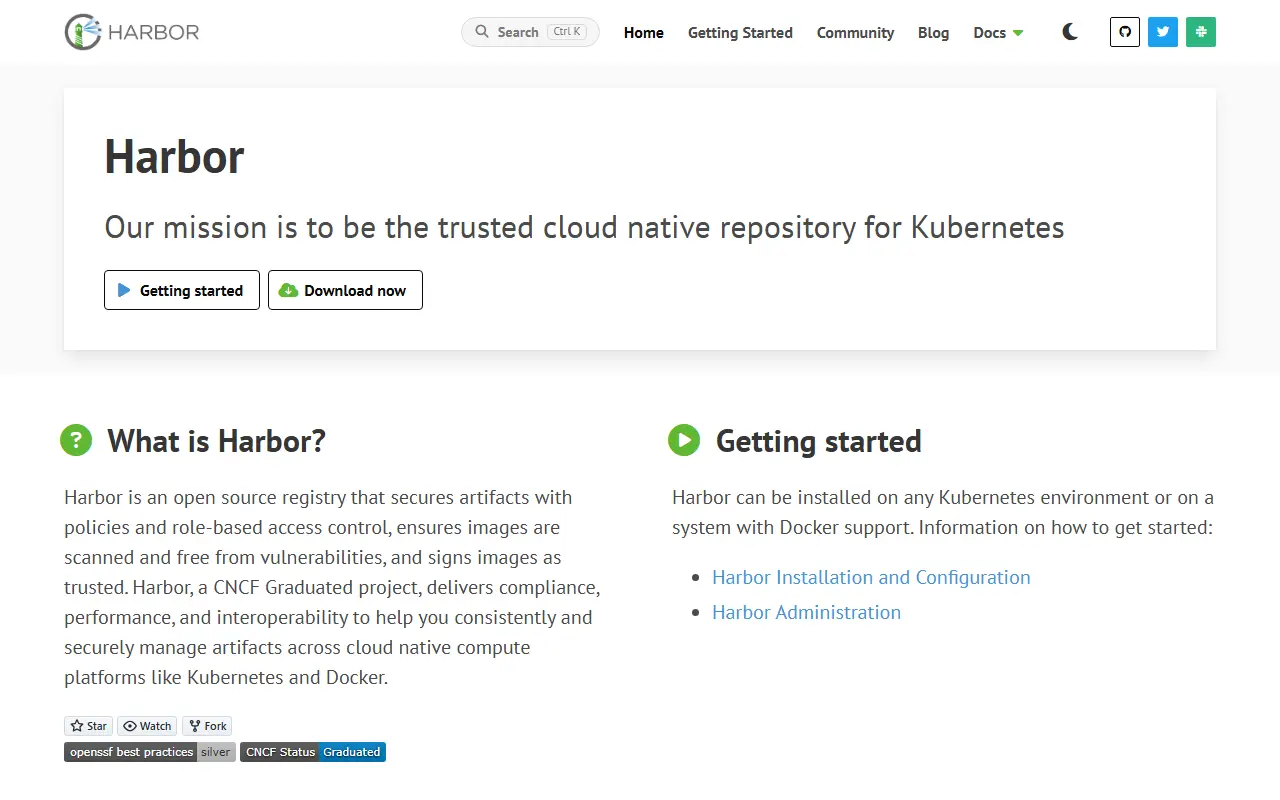
goharbor.ioHarbor homepage screenshot

Harbor is an open-source, trusted cloud native registry for storing, signing and scanning content. It extends the open-source Docker Distribution with the security, identity and management features organizations usually need, and a registry close to the build and run environment can speed up image transfers. Harbor is a Cloud Native Computing Foundation project, is written in Go, and is released under the Apache-2.0 license.

It stores both container images and Helm charts for container runtimes and orchestration platforms. Role-based access control works through projects, where users have different permissions for images or charts. Policy-based replication synchronizes content between registry instances using filters on repository, tag and label, with automatic retries. Other capabilities include user management, access control and activity auditing. The project warns that the main branch may be unstable during development, so use tagged releases.

Key features

  • Registry for container images and Helm charts
  • Role-based access control through projects
  • Policy-based replication between registries
  • Image signing and vulnerability scanning
  • User management and activity auditing
  • CNCF-hosted open-source project

Pricing: Free and open source under the Apache-2.0 license.

GitLab

GitLab is a web platform for Git repositories, code review, CI/CD pipelines and issue tracking; this repository is its Community Edition mirror.

GitHub stars
25k
Last commit
today
Self-hosted
Yes
Hosted version
Available
about.gitlab.comGitLab homepage screenshot

GitLab is a platform for collaborating on code. This GitHub repository is a mirror of the Community Edition, written in Ruby on Rails, while the canonical source and all development take place on GitLab.com. Issues should be opened on the GitLab.com tracker rather than here. The platform manages Git repositories with fine-grained access controls, merge requests for code review, and per-project issue trackers, boards and wikis.

GitLab includes continuous integration and delivery pipelines to build, test and deploy applications. It follows an open-core model: most of the code is MIT-licensed, while files in the ee directory are proprietary but source-available. Three editions exist: Community Edition, free under the MIT Expat license; Enterprise Edition, with extra features aimed at organizations with more than 100 users and sold by subscription; and JiHu Edition for the Chinese market. A free trial of the Ultimate tier is available.

Key features

  • Git repository hosting with access controls
  • Merge requests for code review
  • Built-in CI/CD pipelines
  • Issue tracker, boards and wiki per project
  • Community Edition under the MIT Expat license
  • Enterprise Edition with subscription support

Pricing: Free for personal projects with usage limits. Premium costs $29 per user per month billed annually; Ultimate and the single-tenant Dedicated offering are quoted. Free trials are offered for paid tiers.

OneDev

A self-hosted development platform that combines Git hosting, issues, pull requests, CI/CD, package registries, a wiki and workspaces, with AI assistance.

GitHub stars
15k
Last commit
yesterday
Latest release
v16.8.3
Licence
MIT
Self-hosted
Yes
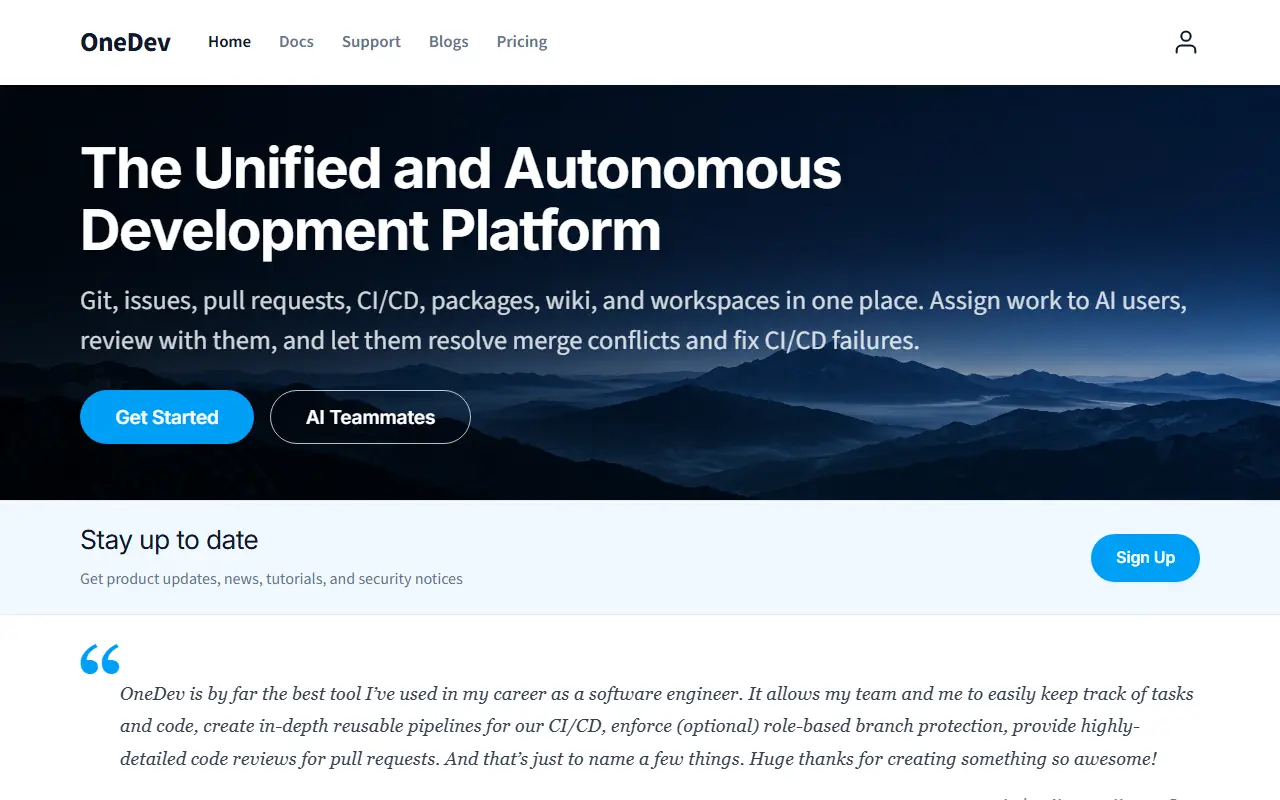
onedev.ioOneDev homepage screenshot

OneDev is a self-hosted platform that gathers Git hosting, issue tracking, pull requests, CI/CD, packages, a wiki and workspaces in one place. It is described as unified and autonomous, with AI teammates available to help with development work. The team develops OneDev on its own instance at code.onedev.io, where issues and pull requests are submitted.

The feature set emphasizes code review and quality. There is language-aware symbol search and navigation within any commit, fast code search with regular expressions, a Renovate integration that updates dependencies through pull requests which can merge automatically after approval or passing tests, and code annotated with coverage and problems found in the CI/CD pipeline. Discussions can be started on any code selection or diff and stay attached to the code, and versatile protection rules can require reviews or CI verification when particular users change particular files on particular branches. Topics also mention kanban boards.

OneDev is written in Java and licensed under MIT. You host it yourself, which suits teams wanting an all-in-one alternative to stitching together GitHub-like hosting, CI and project tools. Tutorials and demos on the project site show features such as dependency updates and protection rules in action.

Key features

  • Git hosting with pull requests
  • Built-in CI/CD pipelines
  • Issue tracking and kanban boards
  • Language-aware code search and navigation
  • Package registry and wiki
  • Branch protection rules and Renovate integration

Pricing: The Community Edition is free. The Enterprise Edition costs $6 per user per month with a 12 user-month minimum per order and a free trial.

JFrog alternatives: questions

What is the best open-source alternative to JFrog?
Gitea is the top-ranked open-source alternative to JFrog on Enlisted: A lightweight self-hosted software development service combining Git hosting, code review, issues, wiki, package registry and CI/CD that can reuse GitHub Actions. Other strong options are Harness, Harbor, GitLab and OneDev.
Are these JFrog alternatives free?
All 5 are open source, so the code is free to use under its licence, and all of them can be self-hosted on your own server or computer. 2 also offer a paid or managed cloud version if you'd rather not host it yourself.
How is this list of JFrog alternatives ranked?
By a score built from GitHub stars, star growth over the last 30 days and how recently the code changed. 5 of these projects shipped code in the last 30 days. Data is refreshed daily, and nobody can pay to move up.

People also look for alternatives to…

View all