7,363 open-source and SaaS tools, with GitHub stats refreshed every day.

7 alternatives ranked by real activity

Open-source Google Classroom alternatives

A curated, ranked list of the 7 best open-source alternatives to Google Classroom.

The best open-source alternative to Google Classroom is Open edX. If that doesn't suit you, other good options are Moodle, Frappe Learning, Sakai and Kolibri.

Google Classroom alternatives are mainly education & LMS tools. 6 of them shipped code in the last 30 days, 7 can be self-hosted, and 1 uses a permissive licence.

Last updated October 2, 2026 · ranked by GitHub stars, growth and recent commits

Open edX

Open edX is the open-source learning management system and course authoring tool, with LMS and Studio, used to run online education sites.

GitHub stars
8.2k
Last commit
today
Latest release
named-release/birch
Licence
AGPL-3.0
Self-hosted
Yes
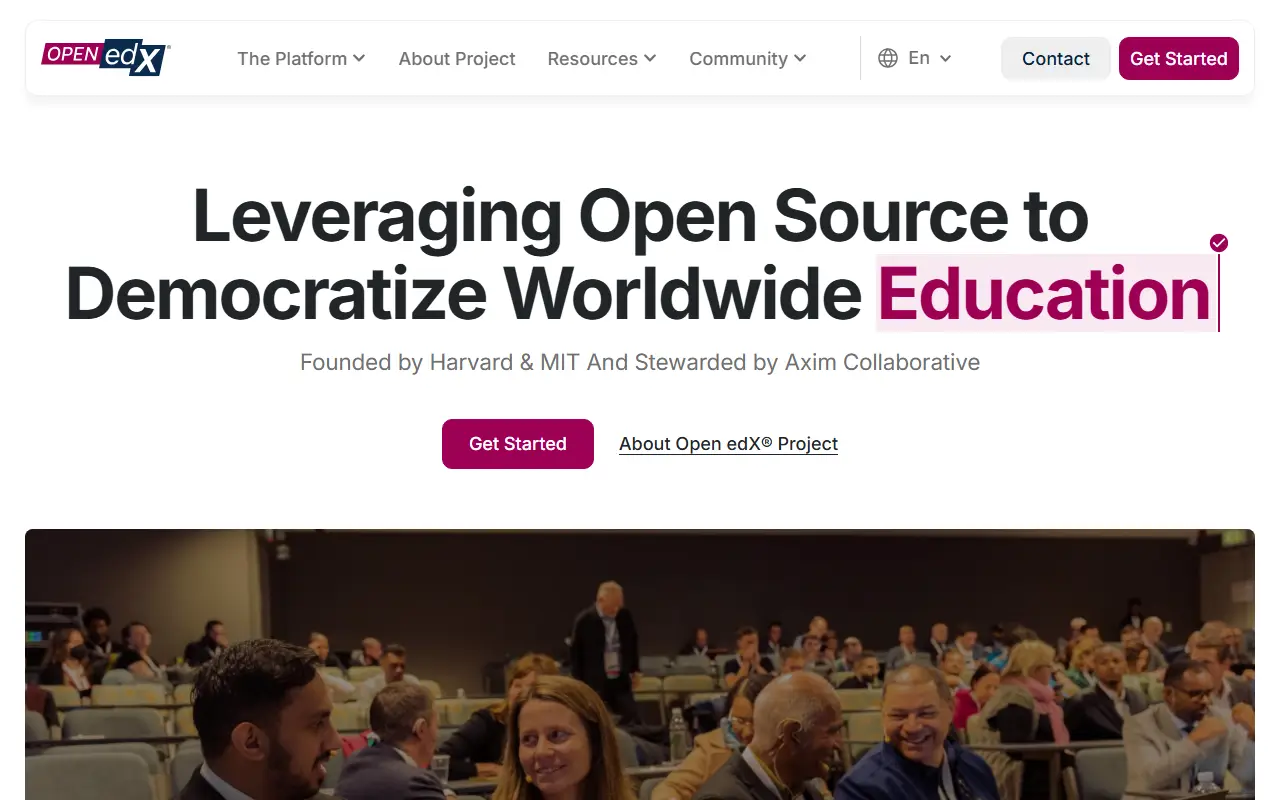
openedx.orgOpen edX homepage screenshot

Open edX Platform is the core code of the Open edX project, which provides an LMS, where learners take courses, and Studio, where course authors build them. The maintainers describe it as powering education sites around the world, and it is aimed at institutions and companies that run their own online courses.

The repository is a Python backend service released under the AGPL-3.0 licence, with named releases such as the Birch release. The project website could not be read when this entry was written, so details beyond the repository description are limited. Deployments are typically operated by the organization or by a hosting provider, rather than as a single downloadable application.

Key features

  • Learning management system for courses
  • Studio tool for authoring course content
  • Python backend service
  • Named community releases
  • AGPL-3.0 licensed code
Read more about Open edXWebsite GitHub

Moodle

Moodle is an open-source learning management system that educators and organizations use to build online courses and personalized learning environments.

GitHub stars
7.5k
Last commit
yesterday
Licence
GPL-3.0
Self-hosted
Yes
Hosted version
Available

Moodle is an open-source learning platform used by universities, schools, companies and other organizations. It is designed so that educators, administrators and learners can create personalized learning environments within a single integrated system.

The project is written in PHP and released under the GNU GPL v3. The Moodle site is the hub for a community that includes spaces for educators, administrators and developers, along with Moodle Moot events, developer meetings and the Moodle User Association. User documentation, developer documentation and a demo site let you evaluate it before committing.

You can download Moodle and run it on your own web server, or work with one of the Moodle Partners. Hosting is also offered through MoodleCloud and the partner network, so organizations without technical staff have a managed route.

Key features

  • Learning management for courses
  • Personalized learning environments
  • User and developer documentation
  • Demo site to try the platform
  • Hosting through MoodleCloud and partners

Pricing: Free and open source under GPL-3.0; managed hosting is available through MoodleCloud and Moodle Partners.

Read more about MoodleWebsite GitHub

Frappe Learning

Frappe Learning is an open-source learning management system for building courses, running live classes, setting quizzes and issuing certificates.

GitHub stars
3.3k
Last commit
today
Latest release
v2.64.0
Licence
AGPL-3.0
Self-hosted
Yes
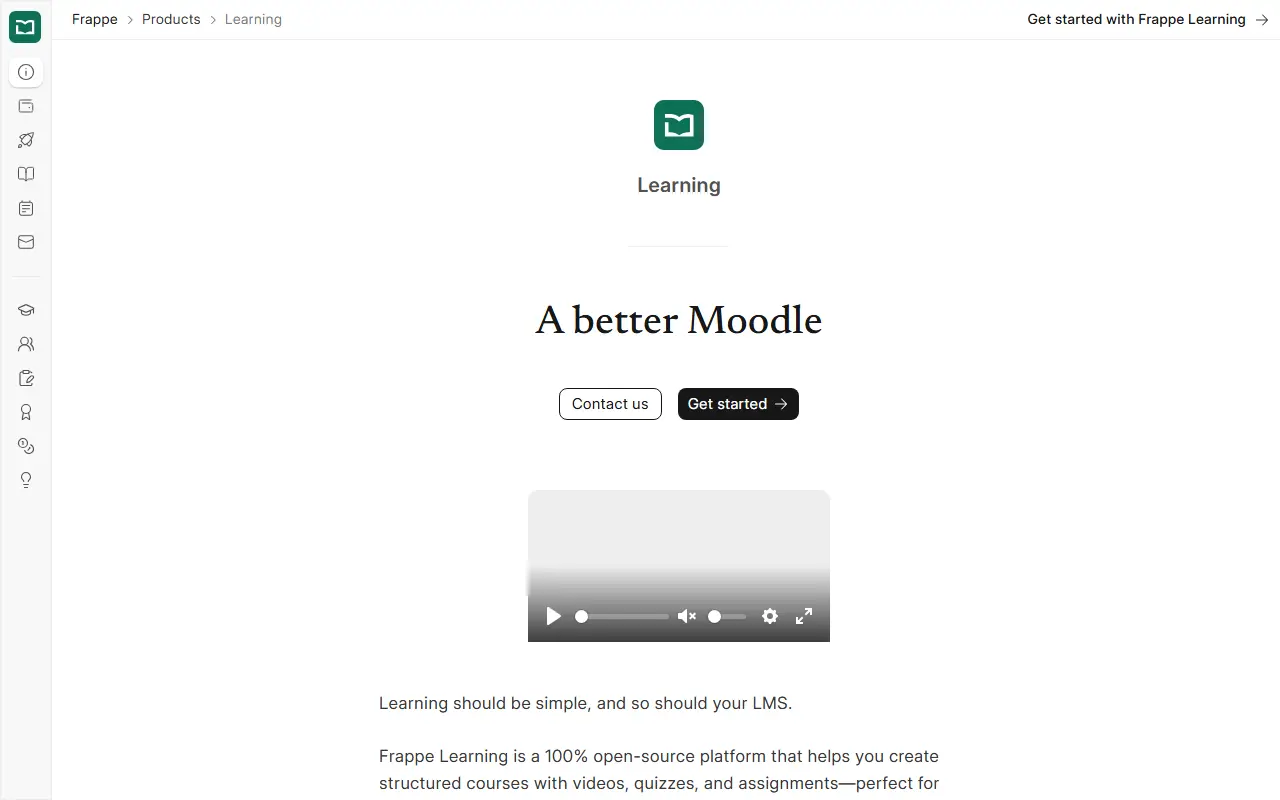
frappe.ioFrappe Learning homepage screenshot

Frappe Learning is an open-source learning management system designed to be simple to use. It started in 2021 when the authors needed a platform for Mon.School at FOSS United and found existing options such as Moodle too cumbersome for creating a course. It grew into a standalone product aimed at anyone who wants to publish a course and share knowledge.

Courses follow a three-level structure: a course holds chapters and chapters group lessons, so each lesson has context. Learners can be grouped into batches, and Zoom live classes can be created from within the app for each batch. Instructors can build quizzes with single-choice, multiple-choice or open-ended questions, and set assignments that learners submit as PDFs or documents.

When a learner finishes a course or batch, instructors can grant a certificate using the built-in template or one of their own. The application is built on the Frappe Framework with TypeScript, JavaScript and Python, and it is licensed under AGPL-3.0. Documentation and a project website are available, and the codebase welcomes contributions.

Key features

  • Courses organized into chapters and lessons
  • Batches for grouping learners
  • Zoom live classes created inside the app
  • Quizzes with single, multiple and open answers
  • Assignments submitted as PDFs or documents
  • Certificates with built-in or custom templates

Pricing: Self-hosting is free. Managed hosting on Frappe Cloud starts at $5 per month for a site and $20 per month for a server, with no per-user fees and a 14-day trial; enterprise plans are by quote.

Read more about Frappe LearningWebsite GitHub

Sakai

Sakai is an open-source learning management and collaboration environment for teaching, learning and research, developed by a global community.

GitHub stars
1.2k
Last commit
today
Licence
ECL-2.0
Self-hosted
Yes
sakailms.orgSakai homepage screenshot

Sakai is a freely available suite for learning, teaching, research and collaboration, developed by a diverse and global adopter community. The repository contains the source for the Sakai Collaboration and Learning Environment, with the master branch tracking the most current development release, Sakai 24. It is written in Java and is an Apereo Foundation project.

Building from source needs Java 1.8 and Maven, or the included wrapper. Sakai runs on Apache Tomcat 9, and the README warns that it does not work with Tomcat installed from a distribution package manager, so it must be configured by hand following the wiki guide. After startup, which takes around thirty seconds, the portal is reachable on port 8080 of the local machine.

Sakai is licensed under the Educational Community License version 2.0. Bugs are filed in the project's Jira, the community runs nightly servers for testing the latest builds, and a developer mailing list is available. Branches other than master correspond to currently or previously supported releases, and the README describes the release plan and support schedule.

Key features

  • Learning management and collaboration suite
  • Runs on Apache Tomcat 9
  • Built with Java and Maven
  • Nightly test servers
  • Supported release branches with a published schedule

Pricing: Free and open source under the Educational Community License 2.0.

Read more about SakaiWebsite GitHub

Kolibri

Kolibri is an offline-first learning platform from Learning Equality that supports teaching and learning without requiring an internet connection.

GitHub stars
1.1k
Last commit
today
Latest release
v0.19.5
Licence
MIT
Self-hosted
Yes
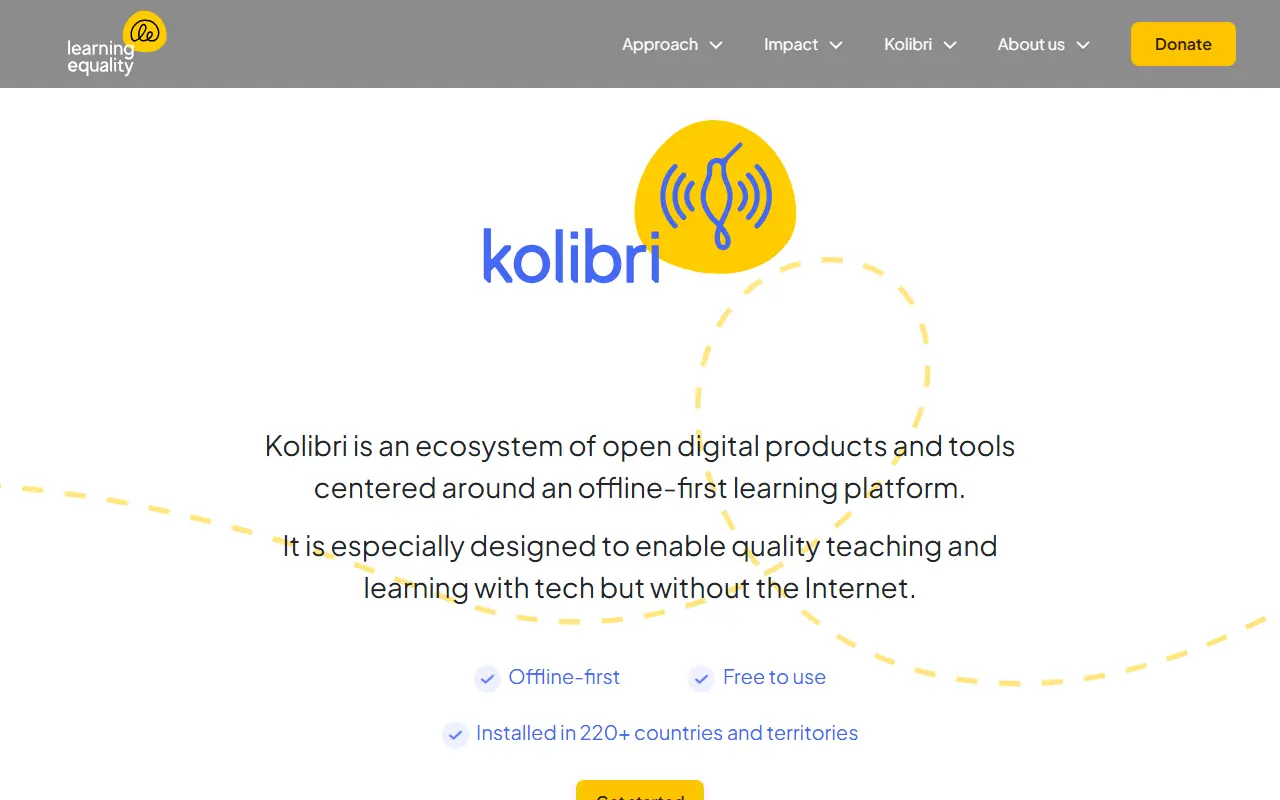
learningequality.orgKolibri homepage screenshot

Kolibri is an offline-first platform for teaching and learning with technology, built so it does not require the internet. It is developed by Learning Equality together with its community, is written in Python and is licensed under MIT. Project topics include education, edtech, open educational resources and the UN Sustainable Development Goal for quality education.

This repository is intended for software developers who want to contribute. People who need to install, configure or use Kolibri are directed to the User Guide and to the download page on the Learning Equality website. Questions, suggestions and issues can be posted in the community forums, and confirmed bugs can be filed as GitHub issues using the issue template.

The project welcomes contributors and explains how to join in through its contributing guide. The latest release listed in the data is v0.19.5. Kolibri fits schools, educators and organizations that serve learners in places where connectivity is limited or unreliable.

Key features

  • Offline-first learning platform
  • Teaching and learning without internet access
  • Open educational resource focus
  • User guide and community forums
  • Developed by Learning Equality

Pricing: Free and open source under the MIT license.

Read more about KolibriWebsite GitHub

Canvas LMS

Canvas LMS is the open-source learning management system developed and maintained by Instructure, released under the AGPLv3 license.

GitHub stars
6.9k
Last commit
5 mo ago
Licence
AGPL-3.0
Self-hosted
Yes
Hosted version
Available

Canvas is a modern, open-source learning management system developed and maintained by Instructure Inc. It is released under the AGPLv3 license for use by anyone interested in learning more about or using learning management systems. The codebase is written in Ruby, and the repository topics describe it as a mirror of the Gerrit-based development work.

The README itself is short and defers to the project's wiki for detailed installation and configuration instructions. It points to a quick start path for trying Canvas and a separate production start path for real deployments, and it directs readers to the main wiki page for more information about the product.

Canvas suits institutions and organizations that want to run a learning management system from source. Instructure also offers Canvas as a commercial hosted service, though the repository does not describe that offering or its pricing.

Key features

  • Open-source learning management system
  • Developed and maintained by Instructure
  • Quick start and production start guides
  • Installation documentation on a project wiki
Read more about Canvas LMSGitHub

Chamilo LMS

Open-source learning management system for publishing courses, assignments and attendance tracking, built around ease of use and accessibility.

GitHub stars
1k
Last commit
today
Latest release
v3.0.1
Licence
GPL-3.0
Self-hosted
Yes
chamilo.orgChamilo LMS homepage screenshot

Chamilo is an open-source e-learning platform, also called a learning management system, for publishing courses and tracking learners. It is released under the GPL-3.0 license and aims for ease of use and accessibility for teachers, trainers and administrators. The current major version in the repository is Chamilo 3.

The feature list covers announcements, assignments that can be created, submitted and graded, with AI-assisted co-grading and plagiarism checking integrations, and attendance tracking with reporting and signing. Calendar events support reminders and subscriptions. Course administration includes creating, publishing, exporting and importing courses, including content coming from Moodle, and there is a course catalogue with an e-commerce module and filtering by user groups.

Chamilo also offers content management pages and menus, document management with OnlyOffice integration for viewing and collaboration, and support for multimedia learning modules. An API lets it connect to HR systems, student information systems, ERP tools and online shops. The application is built with PHP and Twig templates.

Key features

  • Course creation, publishing, export and import
  • Import of existing Moodle courses
  • Assignments with grading and plagiarism-check integration
  • Attendance tracking with reporting
  • Course catalogue with e-commerce module
  • OnlyOffice integration for shared documents
  • API for HR, ERP and student information systems

Pricing: Free and open source under the GPL-3.0 license.

Read more about Chamilo LMSWebsite GitHub

Google Classroom alternatives: questions

What is the best open-source alternative to Google Classroom?
Open edX is the top-ranked open-source alternative to Google Classroom on Enlisted: Open edX is the open-source learning management system and course authoring tool, with LMS and Studio, used to run online education sites. Other strong options are Moodle, Frappe Learning, Sakai and Kolibri.
Are these Google Classroom alternatives free?
All 7 are open source, so the code is free to use under its licence, and all of them can be self-hosted on your own server or computer. 2 also offer a paid or managed cloud version if you'd rather not host it yourself.
How is this list of Google Classroom alternatives ranked?
By a score built from GitHub stars, star growth over the last 30 days and how recently the code changed. 6 of these projects shipped code in the last 30 days. Data is refreshed daily, and nobody can pay to move up.

People also look for alternatives to…

View all