8 open-source alternatives ranked by real activity

Open-source Beeceptor alternatives

A curated, ranked list of the 8 best open-source alternatives to Beeceptor.

The best open-source alternative to Beeceptor is Pipedream. If that doesn't suit you, other good options are Mockoon, MockServer, DummyJSON and Microcks.

Commercial alternatives to Beeceptor include Mockaroo, Webhook.site, WireMock Cloud and Mockerito. See all 13.

Beeceptor alternatives are mainly API tools, but some are also workflow automation tools and AI tools. 6 of them shipped code in the last 30 days, 7 can be self-hosted, and 5 use a permissive licence.

Last updated November 13, 2026 · ranked by GitHub stars, growth and recent commits

Pipedream

A hosted integration platform for developers to connect apps and build event-driven workflows using pre-built actions plus custom Node.js, Python, Go or Bash code.

GitHub stars
12k
Last commit
today
Self-hosted
No
Hosted version
Available
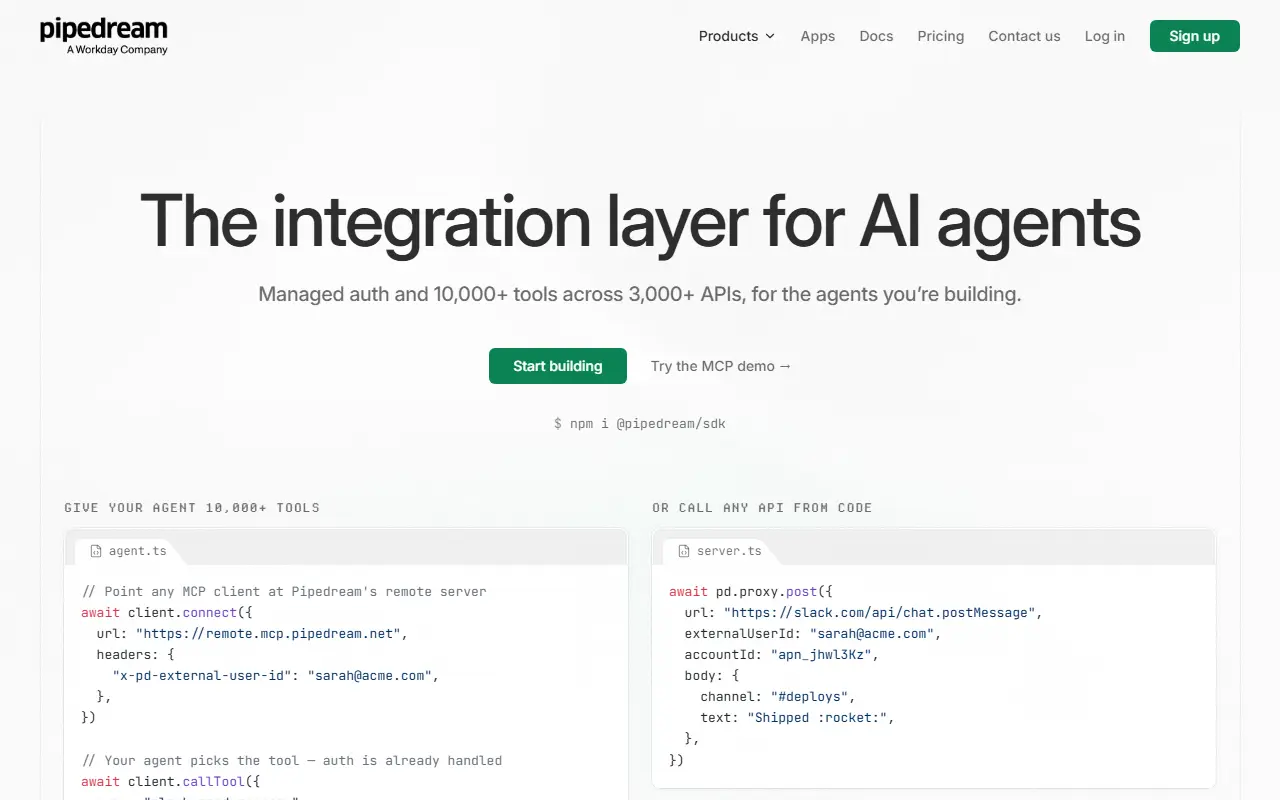
pipedream.comPipedream homepage screenshot

Pipedream is an integration platform for developers. It is a hosted platform, advertised as free for developers, for connecting applications and building event-driven automations. The GitHub repository holds the code for the pre-built integration components, the product roadmap and the documentation.

Workflows are sequences of steps, which can be pre-built actions or custom code, and each workflow is started by an event such as an HTTP request, a timer or a new row in a spreadsheet. Event sources emit events from services like GitHub, Slack, Airtable and RSS, while actions cover common operations such as sending a message or adding a spreadsheet row. More than 1,000 integrated applications are available, and any Node.js, Python, Go or Bash code can be run for custom logic.

The README says the company has demonstrated SOC 2 compliance. Because the platform itself is run by Pipedream, this is mostly a hosted service with an open repository of components rather than software you install, and the repository lists its license as Other. It suits developers who want webhook-driven glue code without managing servers.

Key features

  • Workflows triggered by HTTP, timers or app events
  • Event sources for GitHub, Slack and Airtable
  • Pre-built actions across 1,000+ apps
  • Custom code in Node.js, Python, Go or Bash
  • Import of packages from language ecosystems
  • Open repository of integration components

Pricing: Free to build and test. Startup, for production, is $150 per month ($99 billed annually) and includes 100 users and 10,000 usage credits; Business is custom.

Mockoon

Mockoon is a free, open-source desktop app and CLI for designing and running mock REST APIs locally, with an optional cloud for teams.

GitHub stars
8.5k
Last commit
yesterday
Latest release
v9.10.0
Licence
MIT
Self-hosted
Yes
Hosted version
Available
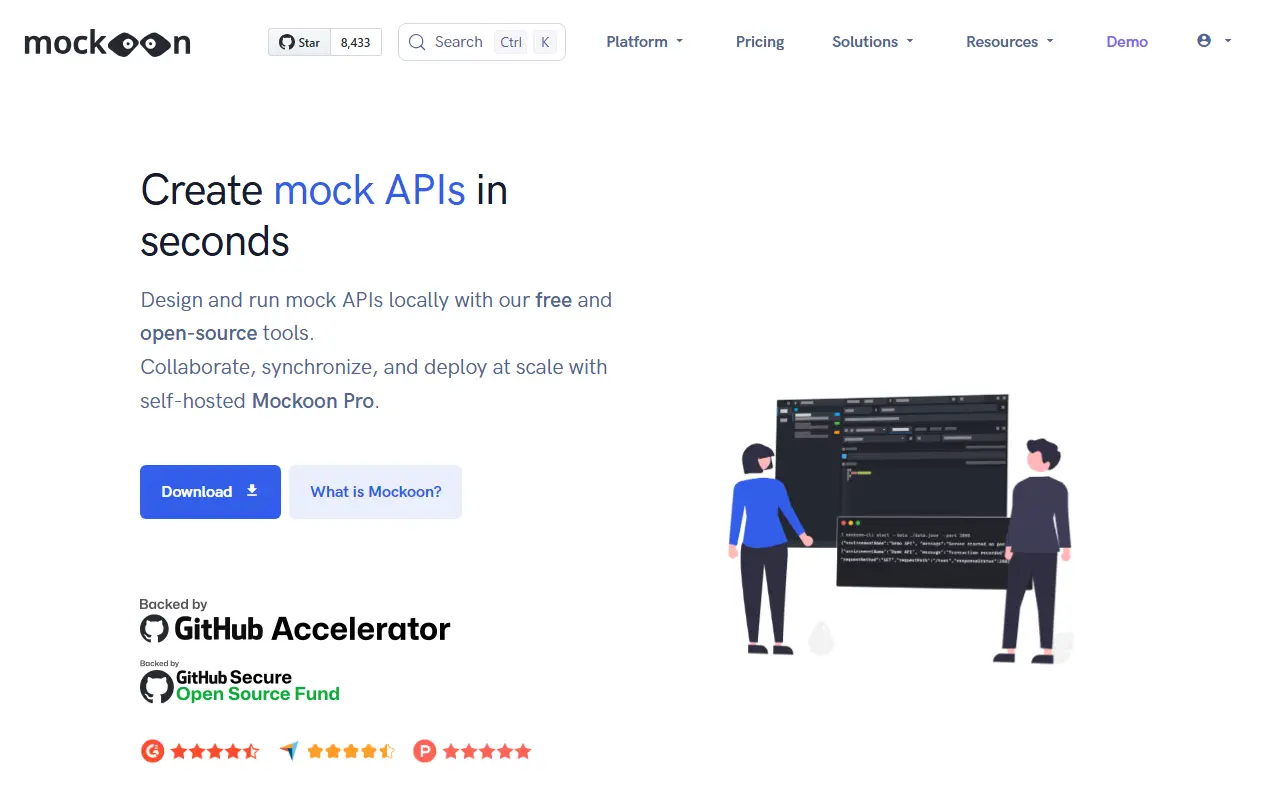
mockoon.comMockoon homepage screenshot

Mockoon is an open-source tool for designing and running mock APIs. It combines a desktop application for building mock servers locally with a command-line tool for running those mocks in headless environments, and it requires no remote deployment or account.

API mocking reduces dependence on external services and their limits such as rate limits, costs and availability. Mockoon lets you control routes in detail, including HTTP methods and statuses, regex paths, file serving and custom headers. It supports OpenAPI import, JSON templating, HTTPS, a proxy forwarding mode and logs of incoming and forwarded requests. Teams can simulate errors and latencies and onboard new members with a consistent test environment.

The desktop app is built with Electron and TypeScript under the MIT licence and installs through Homebrew, winget, Chocolatey, the Windows Store, Snap or AUR. The CLI is also available as a Docker image for self-hosting mock APIs, and a separate cloud offering supports team collaboration, data sync and deployment of mock APIs.

Key features

  • Unlimited local mock servers and routes
  • Control over methods, statuses and regex paths
  • OpenAPI compatibility
  • JSON templating and proxy forwarding
  • Request logs and HTTPS support
  • CLI and Docker image for CI

Pricing: Mockoon Pro Team costs €10 per license per month, billed annually and excluding tax, with a 14-day free trial. Enterprise is quoted on request.

Read more about MockoonWebsiteGitHub#2 Beeceptor alternative

MockServer

MockServer is an open-source HTTP(S) mock server and proxy for testing that mocks APIs, inspects and modifies live traffic, and injects failures.

GitHub stars
5k
Last commit
yesterday
Latest release
mockserver-9.2.0
Licence
Apache-2.0
Self-hosted
Yes
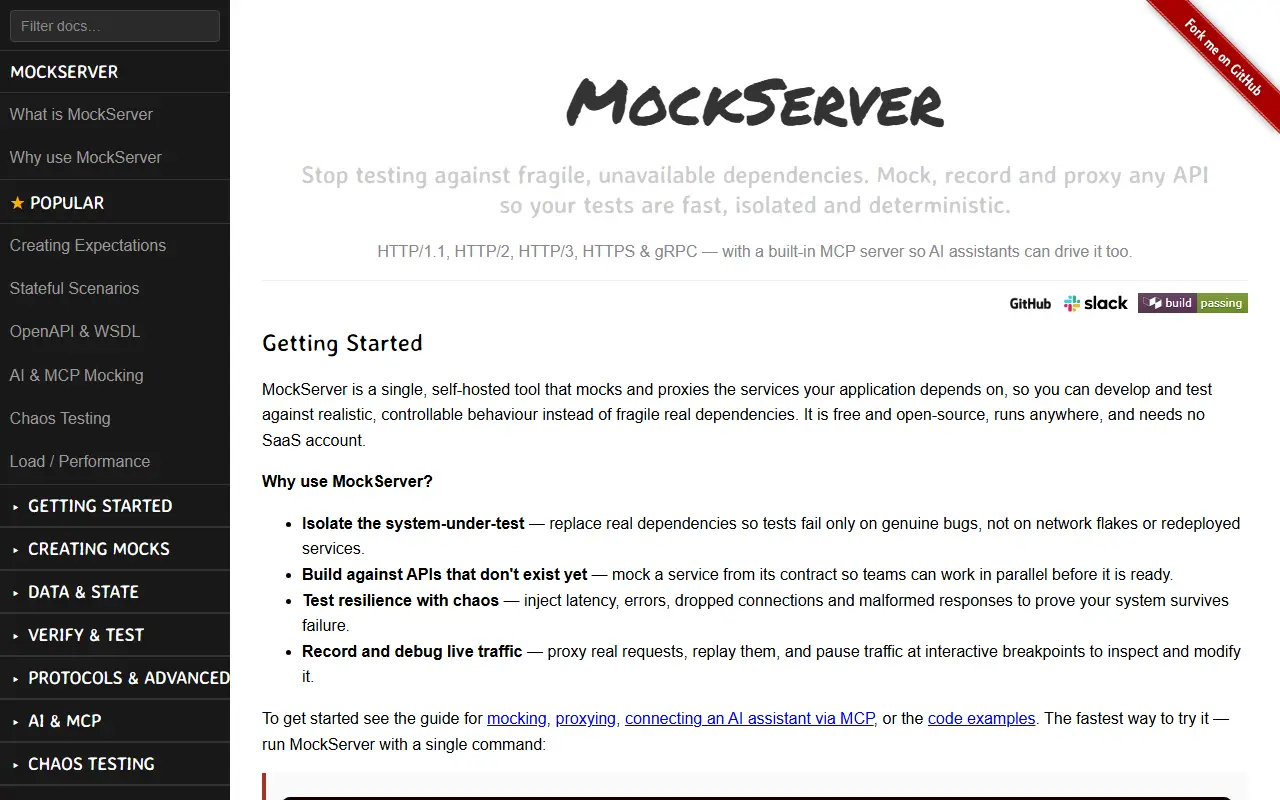
mock-server.comMockServer homepage screenshot

MockServer is an HTTP(S) mock server and proxy designed for testing. It allows mocking APIs, inspecting and modifying live traffic, and injecting failures. It supports multiple protocols including HTTP/1.1, HTTP/2, gRPC, WebSockets, TCP, and more on a single port, with additional support for HTTP/3, message brokers, and AI/LLM APIs.

The tool is open-source and can be used for various testing scenarios such as creating expectations, stateful scenarios, chaos testing, load/performance testing, and contract testing. It also provides features for recording and replaying traffic, verifying requests, and integrating with AI assistants via MCP.

Key features

  • Mock any HTTP service and record traffic
  • Support for HTTP/1.1, HTTP/2, HTTP/3, HTTPS, gRPC, WebSockets, TCP, and more
  • Inspect and modify live traffic
  • Inject failures for chaos testing
  • Record and replay traffic
  • MCP server for AI assistants

DummyJSON

Free REST API serving placeholder JSON data for products, users, carts, posts, recipes, and more, so front-end developers can build and test without a backend.

GitHub stars
3k
Last commit
1 mo ago
Hosted version
Available
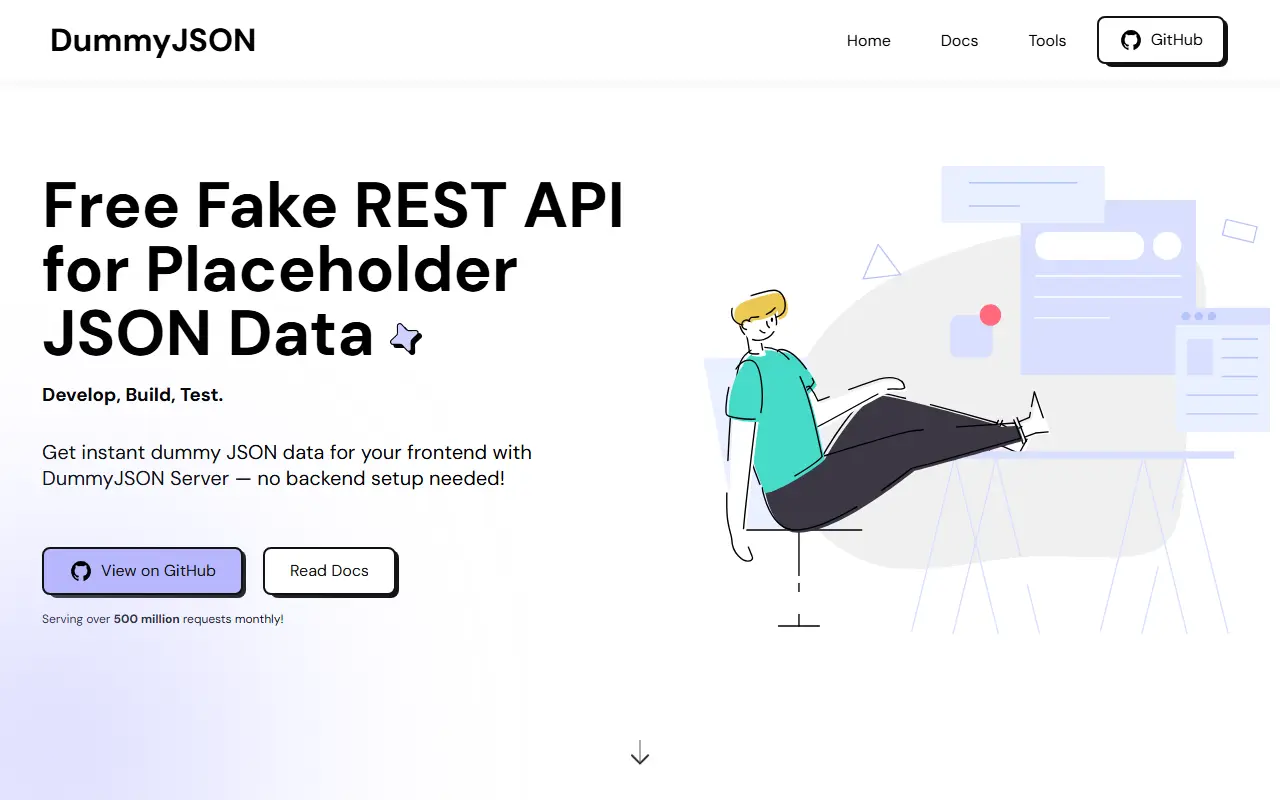
dummyjson.comDummyJSON homepage screenshot

DummyJSON is a free REST API that returns realistic placeholder data in JSON, with no setup or authentication required. Front-end developers use it to prototype, test, and learn without building a backend, and to avoid unreliable or rate-limited public APIs. The input lists its license only as other.

The data sets include products, users, carts, posts, comments, quotes, recipes, and todos, and all standard HTTP methods are supported, with pagination available for lists. Extra utilities include an auth endpoint, custom HTTP responses, a dummy image generator, identicon generation, and mock HTTP responses, and the service has recently added a way to generate your own custom responses.

Because it is plain HTTP, it works with any framework or library, whether you use fetch, Axios, or jQuery. The hosted service lives at dummyjson.com with documentation at dummyjson.com/docs, and the repository holds the Node.js and EJS source behind it. It suits students, tutorial authors, and front-end teams who need dependable sample data.

Key features

  • Placeholder data for products, users, and carts
  • Posts, comments, quotes, recipes, and todos endpoints
  • Support for all HTTP methods
  • Pagination on list endpoints
  • Auth, custom response, and mock endpoints
  • Dummy image and identicon generators

Pricing: Free to use as a public API at dummyjson.com.

Microcks

Microcks is an open source, cloud native tool for mocking and testing APIs defined with OpenAPI, AsyncAPI, gRPC, GraphQL or SOAP.

GitHub stars
2.1k
Last commit
4 days ago
Latest release
1.16.0-rc1
Licence
Apache-2.0
Self-hosted
Yes
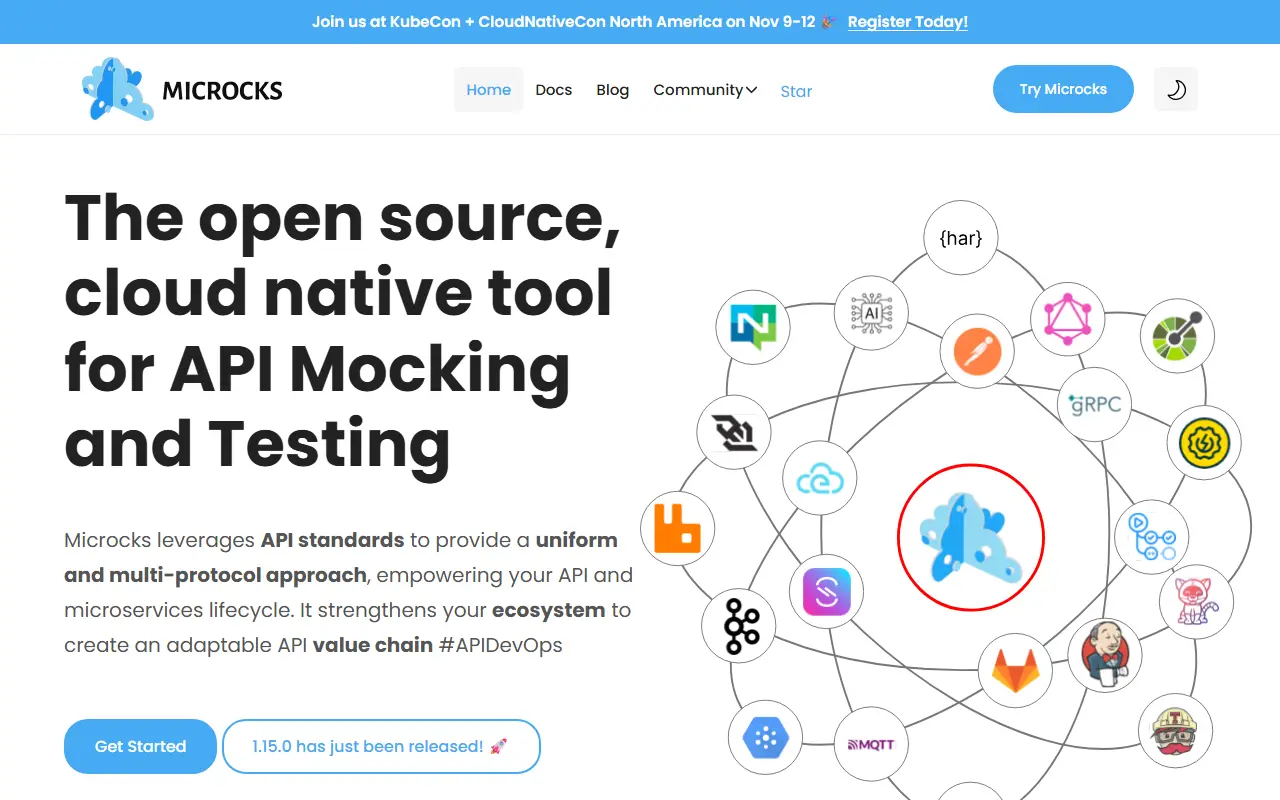
microcks.ioMicrocks homepage screenshot

Microcks is a cloud native tool for API mocking and testing, released under the Apache-2.0 licence. It works from API standards and handles synchronous and event-driven APIs from one place, with support for OpenAPI, AsyncAPI, gRPC/Protobuf, GraphQL schemas and SOAP. It is listed as a Cloud Native Computing Incubating project.

On the mocking side, mock data and responses can be reused, generated as realistic examples or transformed on the fly, so that application and microservice dependencies can be simulated. On the testing side, it runs provider and consumer contract tests against live implementations and can automate those checks in CI/CD pipelines. Its containerized architecture can be deployed on-premises, in the cloud or on a laptop.

Key features

  • Mocks for OpenAPI, AsyncAPI, gRPC, GraphQL and SOAP
  • Customizable mock data and responses
  • Provider and consumer contract testing
  • Generated code snippets and CI/CD checks
  • Deployable on-premises, in the cloud or locally

Hoverfly

Hoverfly Cloud is a lightweight, hosted API simulation platform that allows teams to create API mocks and simulations.

GitHub stars
2.5k
Last commit
yesterday
Latest release
v1.12.17
Licence
Apache-2.0
Hosted version
Available
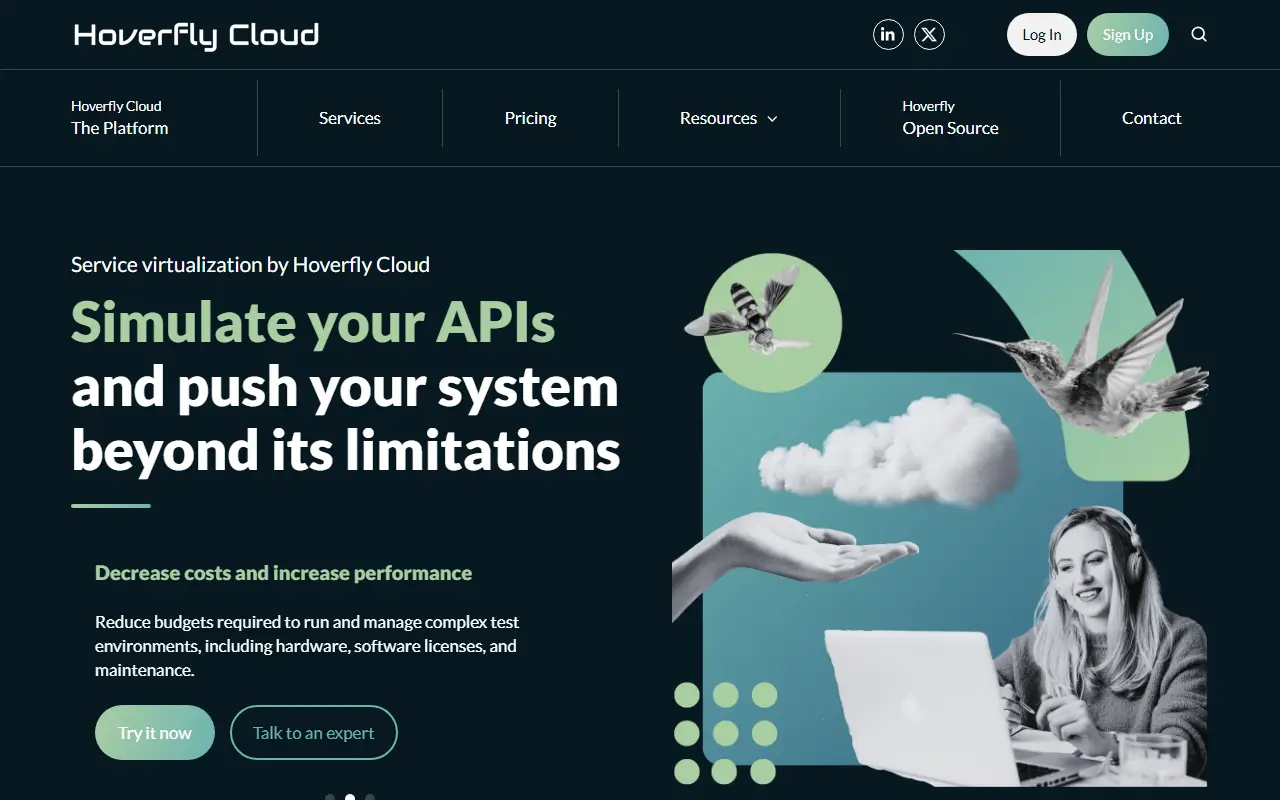
hoverfly.ioHoverfly homepage screenshot

Hoverfly Cloud is a hosted API simulation and service virtualization platform. It enables users to create API mocks and simulations to support parallel development and early functional testing. The platform is designed to reduce wait times for unavailable systems and lower the costs of managing complex test environments.

The platform aims to help teams test earlier in the development cycle without needing the end system ready. It offers simplicity, scalable performance (up to 2,000 API requests per second), and cost-effective running costs. It is suited for businesses looking to reduce dependencies on external services and live system constraints.

Key features

  • Create API mocks and simulations in minutes
  • Supports up to 2,000 API requests per second
  • Reduces need for hardware, software licenses, and maintenance of test environments
  • Enables parallel development and early functional testing
  • Removes dependence on availability or stability of actual APIs
  • Allows simulation of various scenarios and conditions

Insomnia Mockbin

Backend for Insomnia's API mocking feature, maintained by Kong, that echoes and mocks HTTP requests in HAR format; source-visible rather than open source.

GitHub stars
2.1k
Last commit
9 days ago
Latest release
v2.0.2
Self-hosted
Yes
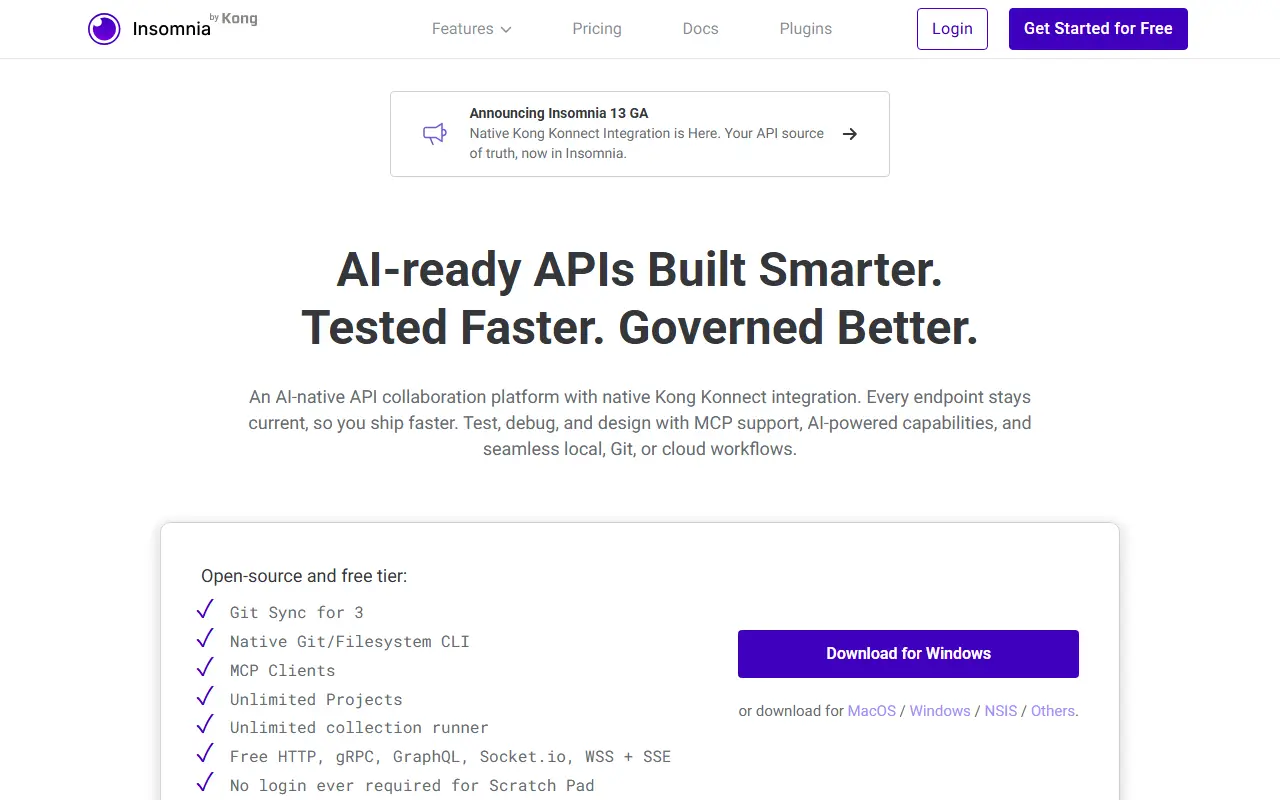
insomnia.restInsomnia Mockbin homepage screenshot

Insomnia Mockbin is the service behind the API mocks capability of the Insomnia API client. It is built and maintained by Kong, the company behind the open-source Kong Gateway. The README states plainly that the repository is source-visible but not open source, so the LICENSE file should be read before using it.

The tool uses the HAR format and can return responses as JSON, YAML, XML, or HTML. It works well behind proxies by respecting the usual forwarding headers. Topics cover API mocking, testing, and API management. The repository documents how to run it with Node or with Docker Compose, and publishes API docs, a software bill of materials, and instructions to verify container image signatures and provenance.

Mockbin suits developers and QA engineers who need a quick endpoint for generating, inspecting, and mocking HTTP requests during API development and testing, and teams that want to host the same backend that powers Insomnia's mocks.

Key features

  • HTTP request mocking and echoing
  • Uses the HAR format
  • JSON, YAML, XML, and HTML output
  • Runs with Node or Docker Compose
  • Signed container images with SBOM
  • API documentation

Pricing: Free Essentials plan. Pro costs $12 per user per month. Enterprise is $45 per user per month for smaller teams or custom pricing for scale.

Mocky

Mocky lets developers generate custom HTTP responses so they can test web services and clients before a real backend exists.

GitHub stars
2.1k
Last commit
3 yr ago
Latest release
V3.0.5
Licence
Apache-2.0
Hosted version
Available

Mocky is a small application that produces custom HTTP responses on demand. Developers use it when the backend they depend on is still being built, when a single app needs a mocked backend reply, or when they want to exercise a web service client against a known response.

The project runs as a free online service at mocky.io. Its README points to an FAQ for allowed usage and states plainly that the author does not guarantee the sustainability or stability of the hosted application, so it suits testing and prototyping rather than anything that must stay up.

Under the hood the API is written in Scala on the HTTP4s server, and mocks are stored in a PostgreSQL database through Doobie. The frontend is a React and Redux application written in TypeScript. The code is released under the Apache License 2.0. The section on hosting your own instance is still marked as work in progress.

Key features

  • Generate custom HTTP responses
  • Mock a backend that is still being built
  • Mock backend responses inside a single app
  • Test web service clients against set responses
  • API written in Scala with HTTP4s
  • Mocks stored in PostgreSQL
  • React and Redux frontend in TypeScript

Pricing: The README describes the hosted service at mocky.io as free and unlimited.

Read more about MockyWebsiteGitHub#8 Beeceptor alternative

Commercial Beeceptor alternatives

Hosted, closed-source products that compete with Beeceptor. Showing 12 of 13.

See every Beeceptor alternative on its tool page

Beeceptor alternatives: questions

What is the best open-source alternative to Beeceptor?
Pipedream is the top-ranked open-source alternative to Beeceptor on Enlisted: A hosted integration platform for developers to connect apps and build event-driven workflows using pre-built actions plus custom Node.js, Python, Go or Bash code. Other strong options are Mockoon, MockServer, DummyJSON and Microcks.
What are the best commercial alternatives to Beeceptor?
Mockaroo, Webhook.site, WireMock Cloud, Mockerito and Apidog are among the hosted, closed-source alternatives to Beeceptor listed on Enlisted, which lists 13 in total. Compare their pricing and features on each tool page.
Are these Beeceptor alternatives free?
All 8 are open source, so the code is free to use under its licence, and 7 of them can be self-hosted on your own server or computer. 5 also offer a paid or managed cloud version if you'd rather not host it yourself.
How is this list of Beeceptor alternatives ranked?
By a score built from GitHub stars, star growth over the last 30 days and how recently the code changed. 6 of these projects shipped code in the last 30 days. Data is refreshed daily, and nobody can pay to move up.

People also look for alternatives to…

View all