8 open-source alternatives ranked by real activity

Open-source Azure Static Web Apps alternatives

A curated, ranked list of the 8 best open-source alternatives to Azure Static Web Apps.

The best open-source alternative to Azure Static Web Apps is Coolify. If that doesn't suit you, other good options are Dokploy, Openship, Zeabur and Tau.

Commercial alternatives to Azure Static Web Apps include Netlify, Vercel, Cloudflare Pages and AWS Amplify. See all 17.

Azure Static Web Apps alternatives are mainly hosting & PaaS tools. 8 of them shipped code in the last 30 days, 7 can be self-hosted, and 5 use a permissive licence.

Last updated November 13, 2026 · ranked by GitHub stars, growth and recent commits

Coolify

A self-hostable platform for deploying apps, databases and one-click services to your own servers over SSH, an open-source alternative to Heroku, Vercel and Netlify.

GitHub stars
66k
Last commit
today
Latest release
v4.7.5
Licence
Apache-2.0
Self-hosted
Yes
Hosted version
Available
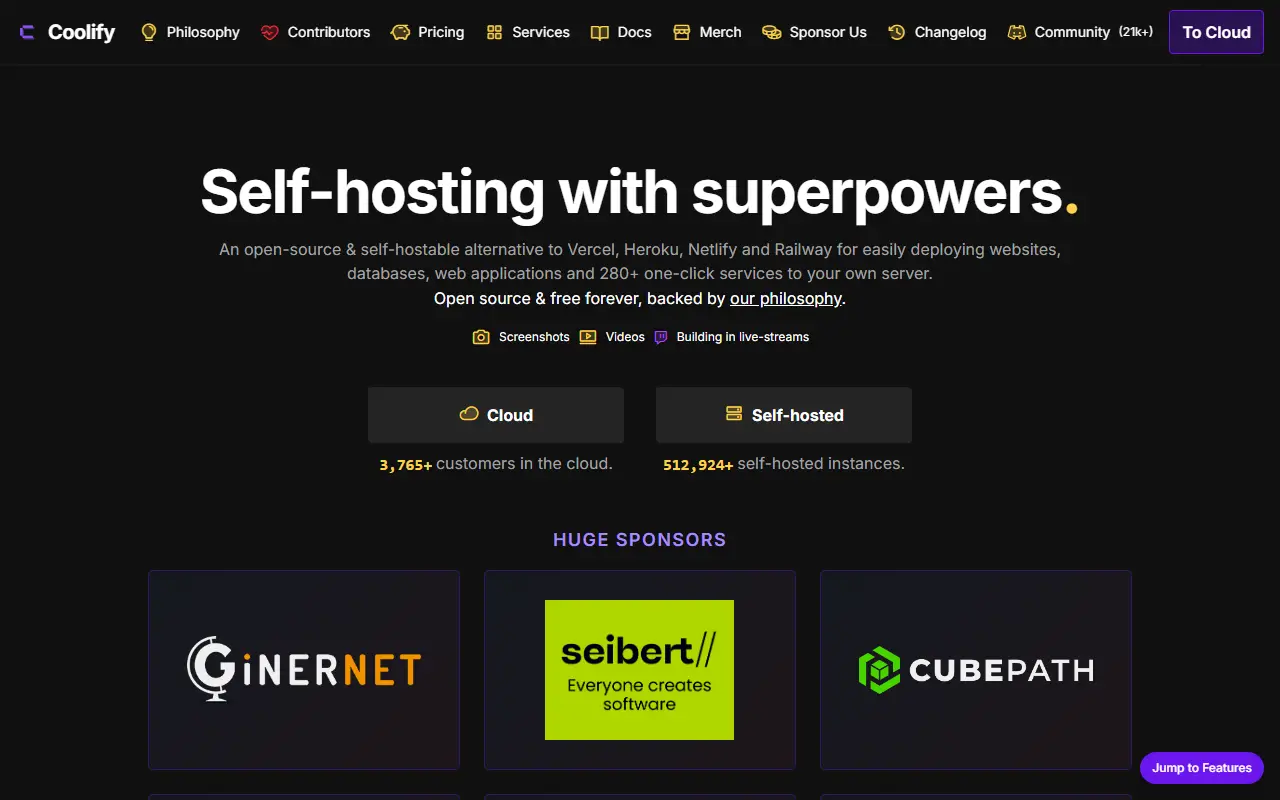
coolify.ioCoolify homepage screenshot

Coolify is an open-source, self-hostable alternative to Heroku, Vercel and Netlify. It manages servers, applications and databases on hardware you control, and the only requirement is SSH access, so a VPS, a bare-metal machine or even a Raspberry Pi can serve as a target. Your configuration stays on your own servers, and if you stop using Coolify the resources it deployed keep running.

Applications can be built from GitHub, GitLab, Bitbucket or Gitea using Nixpacks, Railpack, a Dockerfile, Docker Compose or a prebuilt image. Hundreds of one-click services and managed-style databases come with persistent storage and generated credentials. Deployments can run on every push, create pull-request previews, call webhooks and roll back to retained images. Custom domains, automatic HTTPS, reverse proxies and health checks cover networking, while logs, container terminals and resource monitoring help with operations.

Backups, scheduled tasks, secrets, environment variables and notifications are built in, and resources can be managed through the dashboard, an API, a CLI or MCP, with team-based access controls. Coolify is Apache-2.0 licensed and built mainly with PHP; a hosted Coolify Cloud option exists for people who prefer not to run the control plane themselves.

Key features

  • Deploy from Git with Nixpacks, Dockerfile or Compose
  • Hundreds of one-click services and databases
  • Pull-request previews and rollbacks
  • Automatic HTTPS and custom domains
  • Database and storage backups
  • Multi-server management with team access controls
  • Dashboard, API, CLI and MCP management

Pricing: Self-hosting is free with no feature limits. Coolify Cloud is $5 per month including two connected servers, plus $3 per month for each additional server.


Read more about CoolifyWebsiteGitHub#1 Azure Static Web Apps alternative

Dokploy

A free, self-hostable platform as a service for deploying apps, databases and Docker Compose stacks on your own servers, an alternative to Vercel, Netlify and Heroku.

GitHub stars
38k
Last commit
today
Latest release
v0.31.1
Self-hosted
Yes
Hosted version
Available
dokploy.comDokploy homepage screenshot

Dokploy is an open-source, self-hostable platform as a service that simplifies deploying and managing applications and databases. It is positioned as an alternative to Heroku, Vercel and Netlify, and it runs on a VPS you control, installed with a single command.

It can deploy apps in languages such as Node.js, PHP, Python, Go and Ruby, create and manage MySQL, PostgreSQL, MongoDB, MariaDB, libsql and Redis databases, and schedule database backups to external storage. Docker Compose is supported natively, and multiple nodes can be clustered with Docker Swarm or managed as remote servers. One-click templates cover open-source apps such as Plausible, PocketBase and Cal.com, Traefik handles routing and load balancing, and live monitoring shows CPU, memory, storage and network usage per resource.

A CLI and API allow automation, and notifications about deploy success or failure can go to Slack, Discord, Telegram or email. The license is listed as 'Other', so check the repository terms before redistribution. For people who want to skip installation there is a hosted Dokploy Cloud.

Key features

  • Deploy apps in many languages
  • Managed databases with automated backups
  • Native Docker Compose support
  • Multi-node scaling with Docker Swarm
  • One-click open-source templates
  • Traefik routing and load balancing
  • Real-time resource monitoring

Pricing: Hobby costs $4.50 per server per month and Startup starts at $15 per month for up to 3 servers. Enterprise (cloud or self-hosted) and Agency plans are quoted by sales; there is a 7-day free trial.

Read more about DokployWebsiteGitHub#2 Azure Static Web Apps alternative

Openship

A self-hostable, open-source deployment platform with built-in CI/CD that builds, ships and routes apps from a repository, driven by a desktop app, web dashboard or CLI.

GitHub stars
15k
Last commit
today
Latest release
v0.9.11
Licence
Apache-2.0
Self-hosted
Yes
Hosted version
Available
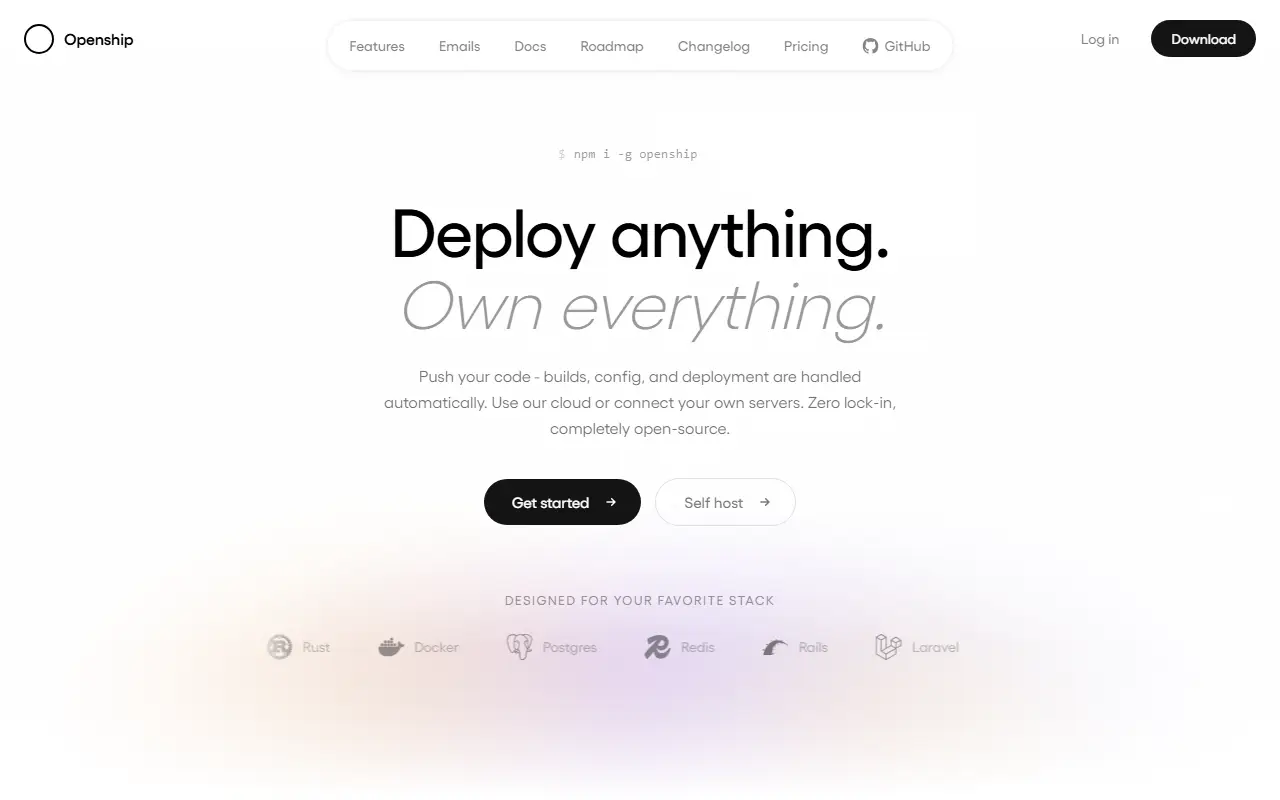
openship.ioOpenship homepage screenshot

Openship is an open-source deployment platform that you can host yourself. You point it at a repository and it builds the app, ships it to a server, routes traffic to it and terminates TLS, with CI/CD built in so that pushes to a repository can trigger new deployments.

You can drive it from a desktop app, a web dashboard or a command-line tool. The desktop app runs the control plane on your own machine while it is open and connects to a server over SSH, which suits solo use. A self-hosted server started with the openship up command adds push-to-deploy and team access. Applications can run on that same machine, on another server, or on Openship Cloud, a managed option based on sandboxes.

The project is licensed under Apache-2.0 and written in TypeScript. Its tagline stresses owning your infrastructure, and the repository lists AI agents among its themes. It fits individuals and small teams that want a self-run alternative to managed deployment platforms.

Key features

  • Builds and deploys apps from a repository
  • Built-in CI/CD with push-to-deploy
  • Automatic routing and TLS termination
  • Desktop app, web dashboard and CLI
  • Deploys to servers over SSH
  • Optional managed Openship Cloud
  • Team access on self-hosted servers

Pricing: Self-hosting is free. Openship Cloud costs $5 (Hobby), $20 (Starter), $39 (Pro) or $99 (Scale) per month for the whole team, with no per-seat fees; Enterprise is custom.

Read more about OpenshipWebsiteGitHub#3 Azure Static Web Apps alternative

Zeabur

Zeabur is a deployment platform that builds and runs services in one click and can be driven from AI tools through a Claude Code plugin and MCP server.

GitHub stars
750
Last commit
8 days ago
Licence
MPL-2.0
Self-hosted
No
Hosted version
Available
zeabur.comZeabur homepage screenshot

Zeabur is a platform for deploying services with one click, presented as an AI DevOps engineer that handles deployment work so developers can focus on code. Through natural language in an AI agent, it can deploy services, rent servers, manage domains, configure databases and troubleshoot issues.

It analyzes your code to detect the language and framework, so no Dockerfile or compose file is required, and builds and redeploys on every push to a connected repository. Deployment options include GitHub integration, Dockerfiles, Docker images, a CLI and a Chrome extension. AI-focused tools include an official Claude Code plugin, an MCP server for assistants such as Claude Desktop and Cursor, and a VS Code and Cursor extension. Infrastructure can be single servers, either bought from Zeabur or brought from providers like AWS, GCP and Hetzner, or clusters.

The repository is under MPL-2.0 and has docs-related topics, but Zeabur itself is a managed commercial platform with its own documentation, templates and community forum. It is relevant to teams that want a hosted PaaS rather than software they run themselves.

Key features

  • One-click deployment with automatic detection
  • Claude Code plugin and MCP server
  • VS Code and Cursor extension
  • GitHub, Docker and CLI deployment
  • Servers you buy or bring yourself
  • Template marketplace

Pricing: A free plan exists. Dev costs $5 and Pro $19 per month with the first 14 days free; Team is $79 per month including 3 seats, plus $24 per extra seat; Enterprise is custom.

Read more about ZeaburWebsiteGitHub#4 Azure Static Web Apps alternative

Tau

Taubyte's open-source cloud platform that combines development environment, build, and deployment so you can run a serverless, WebAssembly-based cloud on your own servers.

GitHub stars
5.2k
Last commit
yesterday
Latest release
v1.3.0
Licence
BSD-3-Clause
Self-hosted
Yes
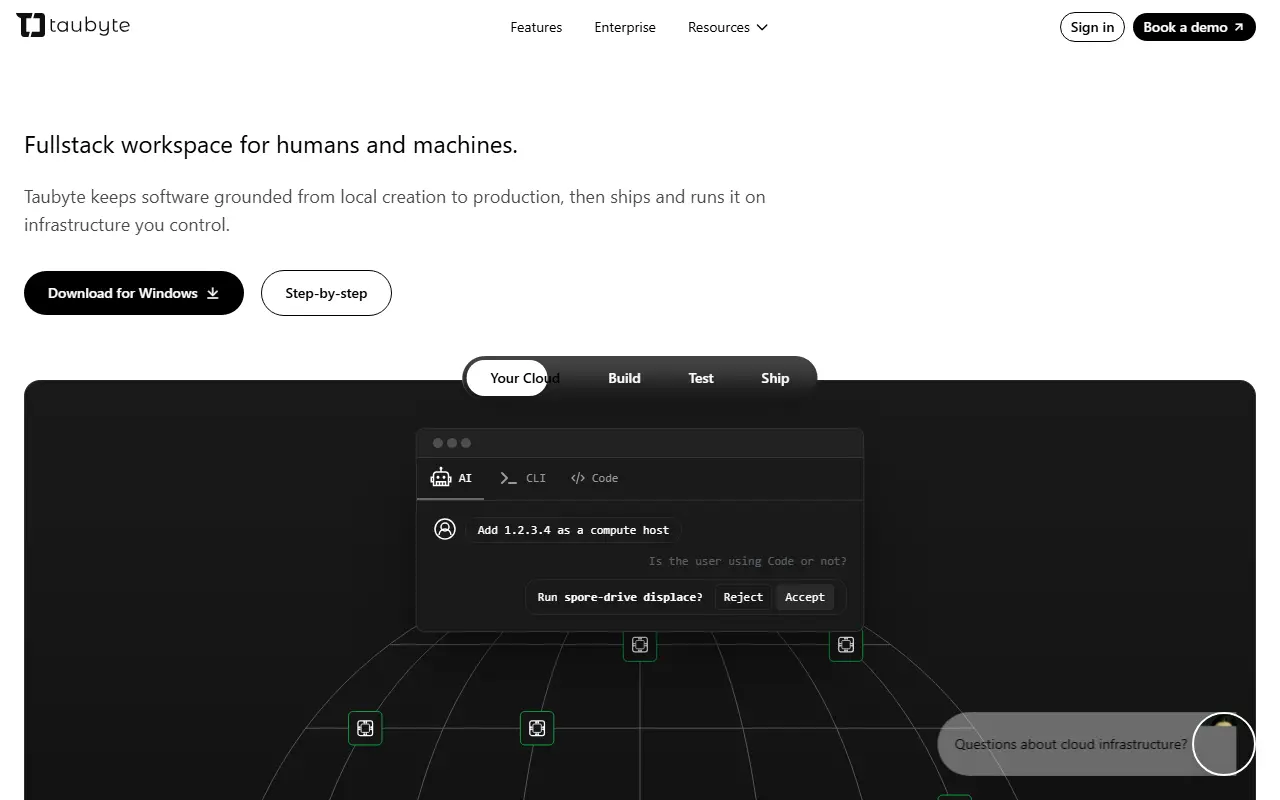
taubyte.comTau homepage screenshot

Tau is the open-source core of Taubyte, described as a fullstack workspace for humans and machines. It is a cloud platform written in Go that spans the development environment, building applications, and deploying and running them. Topics place it in serverless computing, WebAssembly, peer-to-peer distributed systems, CDN, and cloud-native platform-as-a-service. It is released under the BSD-3-Clause license.

The quickest way to try it is to start a local cloud with the dream tool. For real use, you deploy Taubyte to your own servers or VMs, either manually or with the automated Spore Drive tool, and the documentation at tau.how covers the platform, deployment, and getting started. A video series called the Hitchhiker's Guide to Taubyte provides guided demos.

The project welcomes contributions through a standard fork, branch, test, and pull request workflow, with good first issues labeled. Tau suits developers and platform teams that want to run their own cloud-like environment, avoid dependence on a single hyperscaler, and experiment with a WebAssembly-based serverless model.

Key features

  • Self-hosted cloud platform written in Go
  • Serverless functions with WebAssembly
  • Local cloud with the dream tool
  • Automated deployment with Spore Drive
  • Peer-to-peer distributed architecture
  • Guides and video walkthroughs

Pricing: Free and open source under the BSD-3-Clause license.

Read more about TauWebsiteGitHub#5 Azure Static Web Apps alternative

Surge

A command-line tool for publishing static sites to a CDN in one command, with a free tier and a $30 per month Professional plan.

GitHub stars
3.1k
Last commit
10 days ago
Latest release
v0.19.0
Hosted version
Available
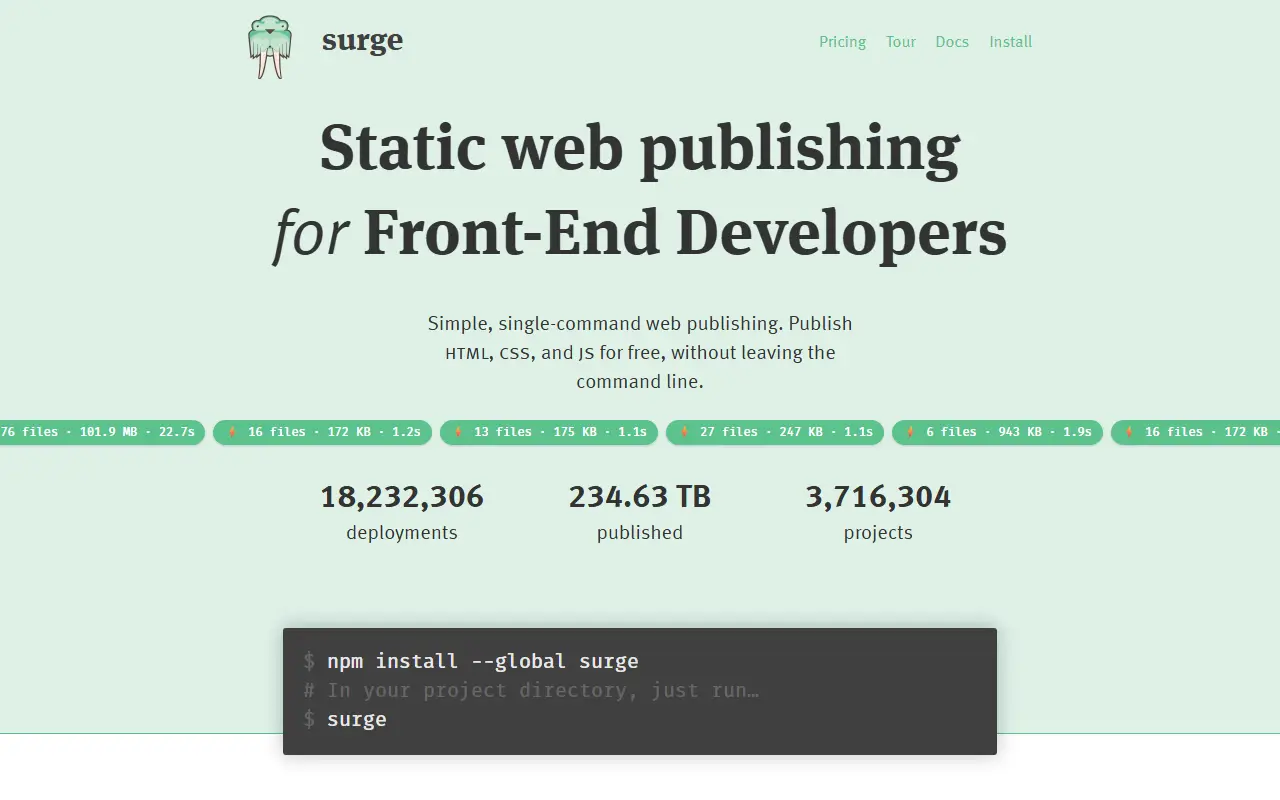
surge.shSurge homepage screenshot

Surge is a command-line publishing tool for static web projects. Running surge in a project directory uploads the HTML, CSS and JS and serves them on a surge.sh subdomain or a custom domain. It installs through npm, and the homepage counts 16,883,233 deployments, a figure the vendor publishes itself.

It is designed to fit existing build tooling, with guidance for Grunt, Gulp, npm run scripts, Git hooks, Jekyll, static site generators and CI services such as Travis CI and CircleCI. Collaborators can be added through the CLI. Every project includes custom domain support, free SSL for surge.sh subdomains, pushState support for single page apps and custom 404 pages.

Key features

  • Single-command publishing of HTML, CSS and JS
  • Deploys to a production-quality CDN
  • Custom domains, SSL and single page app support
  • Works with Grunt, Gulp and npm run scripts
  • Team collaborators added through the CLI
  • Automatic deployment from CI services

Pricing: Free: unlimited publishing, custom domain, basic SSL. Surge Professional is $30/mo and adds unlimited projects, custom SSL, forced https, CORS, custom redirects and password protection.

Read more about SurgeWebsiteGitHub#6 Azure Static Web Apps alternative

ZaneOps

ZaneOps is a self-hosted platform-as-a-service for deploying web apps, databases and static sites, built on Docker Swarm and Caddy as a Heroku alternative.

GitHub stars
1.4k
Last commit
yesterday
Latest release
v1.15.2
Self-hosted
Yes
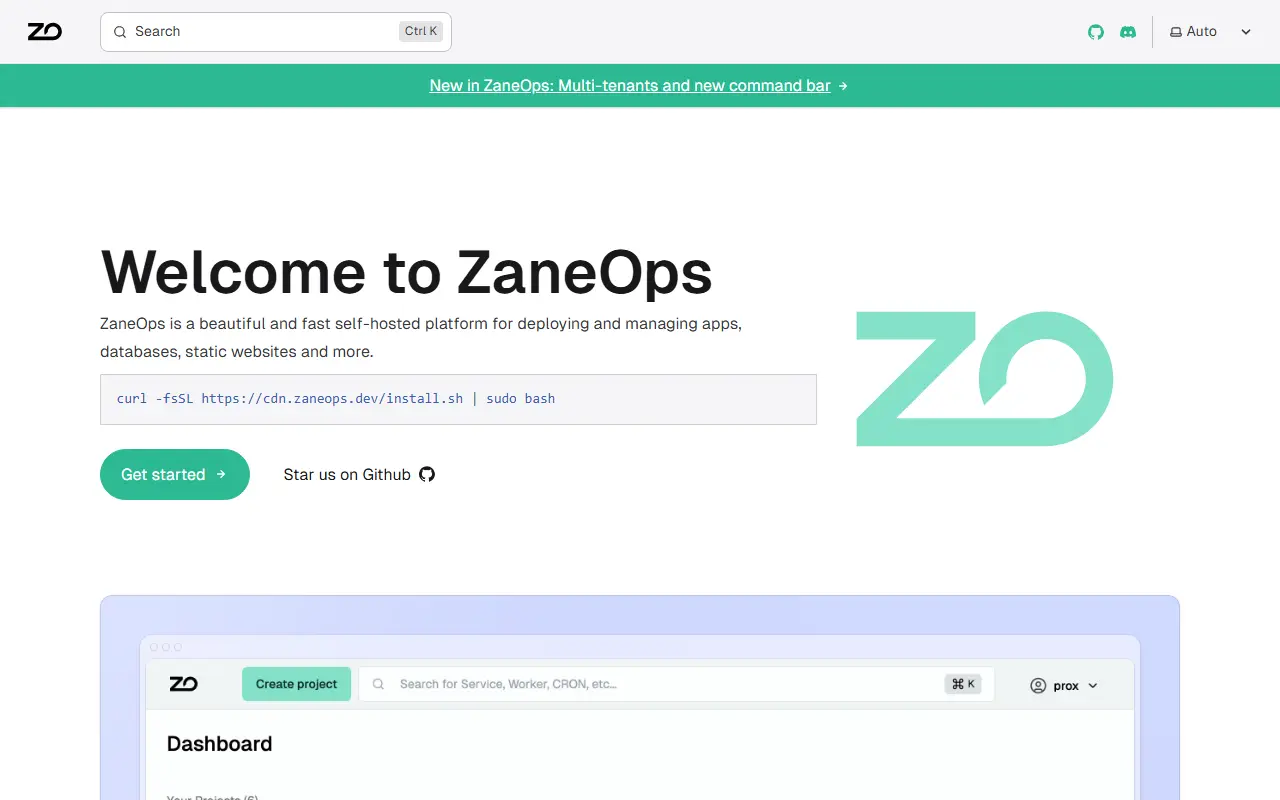
zaneops.devZaneOps homepage screenshot

ZaneOps is an open-source, self-hosted platform for deploying and managing applications on your own servers. It can host static sites, web apps, databases, workers and prepackaged services such as Supabase, WordPress or Ghost, and it is positioned as a free alternative to Heroku, Railway and Render.

Under the hood it uses Docker Swarm for scalability and Caddy for routing, and it presents a dashboard with onboarding, project views, HTTP logs and runtime logs. Projects group related services together, and the documentation covers installation steps and further setup. The project says it was inspired by Plane for its contribution guidelines and by Coolify and Dokploy as other self-hosted deployment tools.

ZaneOps is written in Python, and its licence is listed as other, so review the repository terms before relying on it. It is installed on a server you control, with a milestone-based public roadmap. It suits solo developers, startups and teams that want a Heroku-style workflow without paying for a managed PaaS or giving up control of their infrastructure.

Key features

  • Deploy web apps, databases, and static sites
  • Docker Swarm based scaling
  • Caddy for routing and HTTPS
  • Dashboard with HTTP and runtime logs
  • Projects grouping related services
  • One-command server installation
Read more about ZaneOpsWebsiteGitHub#7 Azure Static Web Apps alternative

SwiftWave

SwiftWave is a self-hosted, lightweight PaaS for deploying and managing applications on any server, positioned as an alternative to Heroku, Netlify and Render.

GitHub stars
911
Last commit
2 days ago
Latest release
2.23.1-1
Licence
Apache-2.0
Self-hosted
Yes
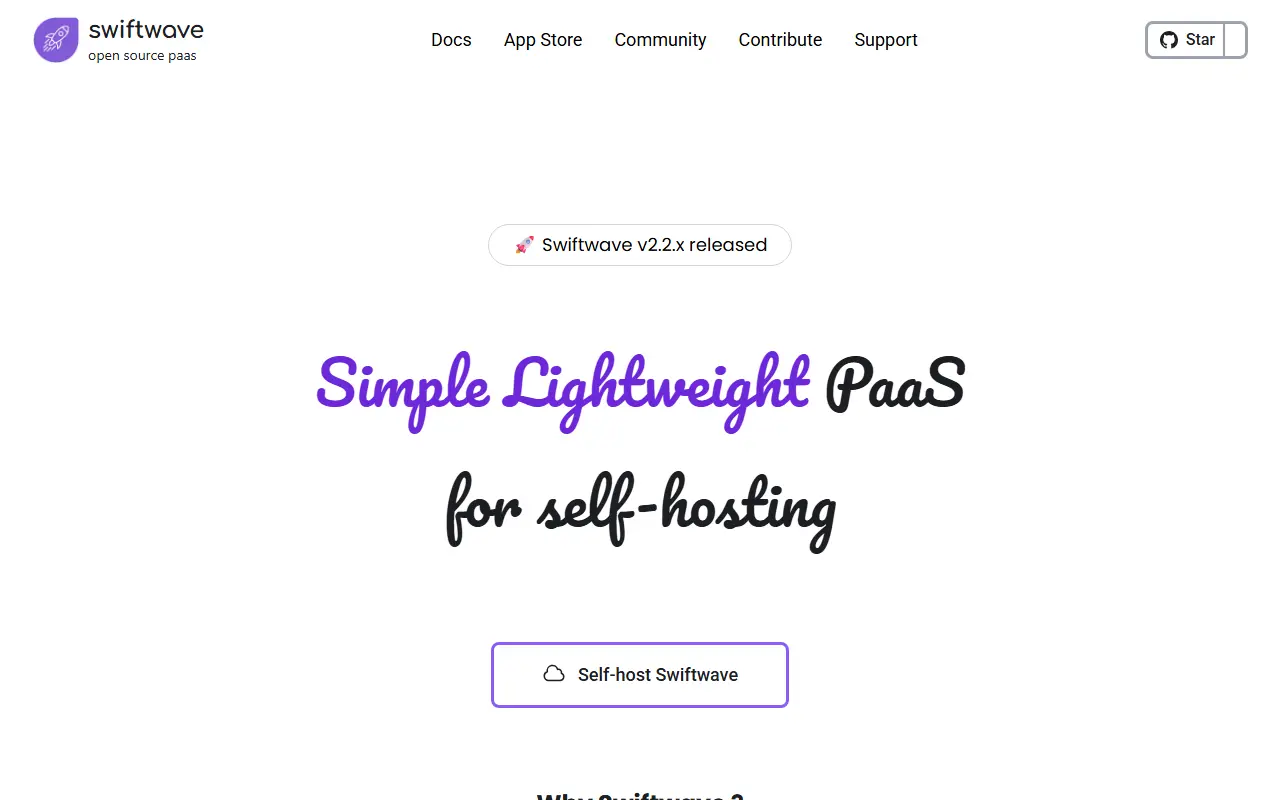
swiftwave.orgSwiftWave homepage screenshot

SwiftWave is an open-source platform as a service that you run on your own server. It lets you deploy and manage applications on a bare-metal machine, a Raspberry Pi or any VPS, giving a Heroku-like workflow without relying on a managed platform.

The project positions itself as an open-source alternative to Heroku, Netlify and Render. It uses Docker, with Swarm mode among its topics, and is described as lightweight. SwiftWave and its dependencies support AMD64, ARM64 and ARMv7 architectures and run on Debian, Ubuntu, Raspbian, Fedora, CentOS, AlmaLinux, Rocky Linux and similar distributions.

It can be installed on providers such as Hetzner, DigitalOcean, Linode, AWS or GCP following the guide on swiftwave.org, and it is released under the Apache-2.0 license. The team runs a community Slack channel and accepts sponsorship through GitHub Sponsors.

Key features

  • Deploy apps on any VPS or bare metal
  • Docker-based application management
  • Runs on AMD64, ARM64 and ARMv7
  • Works on Raspberry Pi
  • Docker Swarm mode support
  • Installs on common Linux distributions

Pricing: Free and open source under the Apache-2.0 license.

Read more about SwiftWaveWebsiteGitHub#8 Azure Static Web Apps alternative

Commercial Azure Static Web Apps alternatives

Hosted, closed-source products that compete with Azure Static Web Apps. Showing 12 of 17.

See every Azure Static Web Apps alternative on its tool page

Azure Static Web Apps alternatives: questions

What is the best open-source alternative to Azure Static Web Apps?
Coolify is the top-ranked open-source alternative to Azure Static Web Apps on Enlisted: A self-hostable platform for deploying apps, databases and one-click services to your own servers over SSH, an open-source alternative to Heroku, Vercel and Netlify. Other strong options are Dokploy, Openship, Zeabur and Tau.
What are the best commercial alternatives to Azure Static Web Apps?
Netlify, Vercel, Cloudflare Pages, AWS Amplify and Render are among the hosted, closed-source alternatives to Azure Static Web Apps listed on Enlisted, which lists 17 in total. Compare their pricing and features on each tool page.
Are these Azure Static Web Apps alternatives free?
All 8 are open source, so the code is free to use under its licence, and 7 of them can be self-hosted on your own server or computer. 5 also offer a paid or managed cloud version if you'd rather not host it yourself.
How is this list of Azure Static Web Apps alternatives ranked?
By a score built from GitHub stars, star growth over the last 30 days and how recently the code changed. 8 of these projects shipped code in the last 30 days. Data is refreshed daily, and nobody can pay to move up.

People also look for alternatives to…

View all