7,363 open-source and SaaS tools, with GitHub stats refreshed every day.

3 alternatives ranked by real activity

Open-source Tanium alternatives

A curated, ranked list of the 3 best open-source alternatives to Tanium.

The best open-source alternative to Tanium is osquery. If that doesn't suit you, other good options are Wazuh and Fleet.

Tanium alternatives are mainly security tools. 3 of them shipped code in the last 30 days, 3 can be self-hosted, and none uses a permissive licence.

Last updated October 3, 2026 · ranked by GitHub stars, growth and recent commits

osquery

A SQL-powered framework that exposes an operating system as a relational database for monitoring, security investigation and analytics on Linux, macOS and Windows.

GitHub stars
24k
Last commit
yesterday
Latest release
5.23.1
Self-hosted
Yes
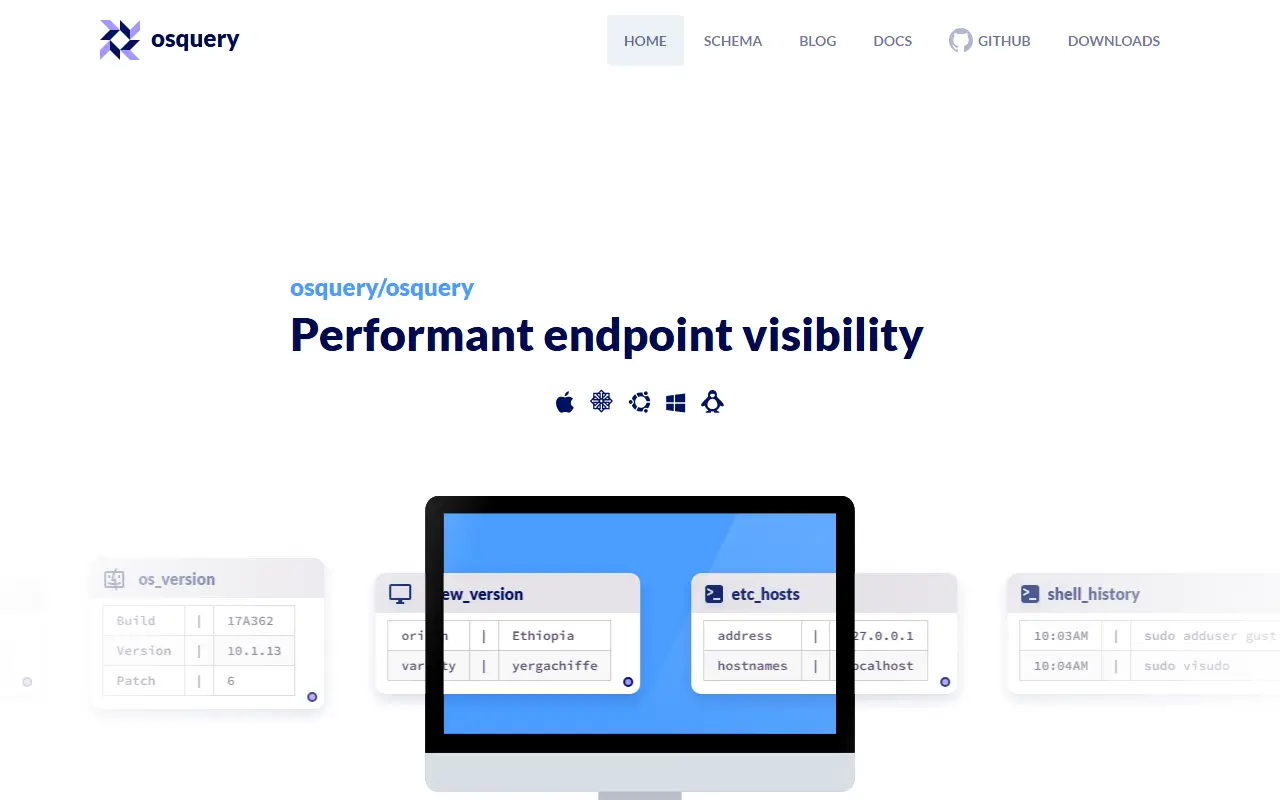
osquery.ioosquery homepage screenshot

osquery is an instrumentation, monitoring and analytics framework that lets you ask questions about an operating system using SQL. It makes the machine look like a high-performance relational database, so instead of writing scripts for each platform you query tables describing things like processes, kernel modules, network sockets, browser extensions, hardware events and file hashes.

It works on Linux, macOS and Windows. New tables are added through a simple plugin and extensions API, and a public schema reference documents the available tables. The README illustrates its expressiveness with sample queries such as listing users or finding processes whose binaries were deleted from disk. Resources include documentation on ReadTheDocs, downloads, Stack Overflow and a Slack community, and topics tag it for security, intrusion detection and monitoring.

osquery is written in C++ and its license is listed as 'Other' on GitHub, so check the repository for the exact terms. It runs locally on each endpoint, and organizations typically deploy it across a fleet and collect results with their own tooling. It suits security teams, IT administrators and detection engineers who want consistent endpoint visibility.

Key features

  • SQL queries over operating system data
  • Tables for processes, network connections and kernel modules
  • Linux, macOS and Windows support
  • Plugin and extensions API for new tables
  • Public schema documentation
  • Suitable for fleet-wide endpoint monitoring

Wazuh

Wazuh is a free, open-source security platform combining XDR and SIEM capabilities for endpoints, servers and cloud workloads.

GitHub stars
17k
Last commit
today
Latest release
v4.14.8
Self-hosted
Yes
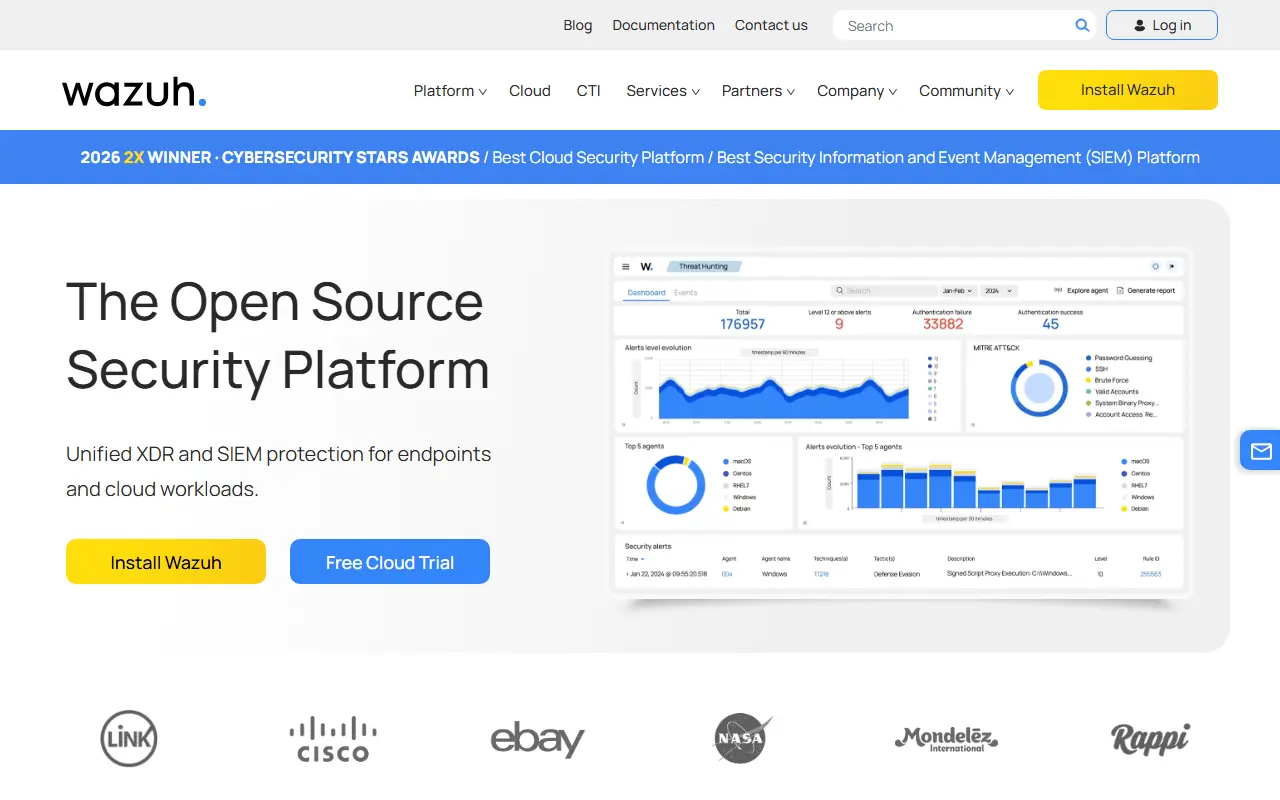
wazuh.comWazuh homepage screenshot

Wazuh is a free and open-source platform for threat prevention, detection and response. It protects workloads across on-premises, virtualized, containerized and cloud environments and combines XDR and SIEM functions in one product. The code is written mainly in C++.

The solution consists of an endpoint security agent installed on monitored systems and a management server that collects and analyzes the agents' data. It is integrated with the Wazuh Indexer, which offers a search engine and visualization for navigating security alerts. Agents scan for malware, rootkits and suspicious anomalies, read system and application logs, and monitor files for changes to content, permissions, ownership and attributes.

Rule-based analysis of collected logs, including data received from network devices through syslog, helps surface misconfigurations, policy violations and attempted or successful attacks. Repository topics also cover vulnerability detection, configuration assessment, incident response and compliance such as PCI DSS. The repository lists its license as 'Other', so review the license files for the exact terms.

Key features

  • Endpoint agents with a central management server
  • Intrusion and malware detection
  • Log data analysis with rule-based alerts
  • File integrity monitoring
  • Vulnerability detection and configuration assessment
  • Cloud and container workload coverage

Fleet

Fleet is an open-source device management platform for IT and security teams, combining MDM, patching, software deployment and osquery-based visibility.

GitHub stars
6.9k
Last commit
today
Latest release
fleet-v4.92.2
Self-hosted
Yes
Hosted version
Available
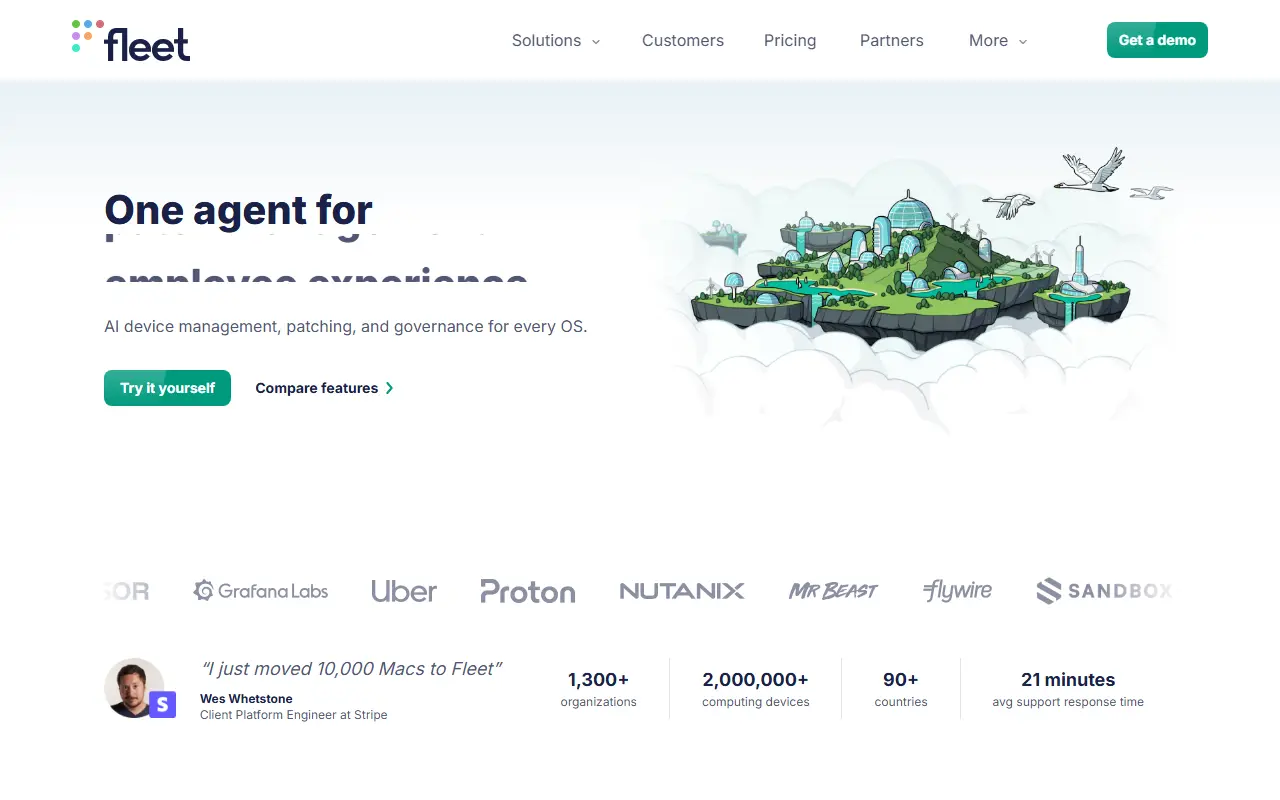
fleetdm.comFleet homepage screenshot

Fleet is an open-source platform for IT and security teams that manage large numbers of computers. It gives a single system to secure and maintain devices over the air, covering mobile device management, patching, software deployment and verification across all the operating systems an organization uses.

It gathers data and events straight from each device's operating system using osquery, and can report on hundreds of device attributes. It ships with CIS benchmarks for macOS and Windows. Platforms include Linux, macOS, Windows, Chromebooks, iOS and Android, as well as cloud and container environments. Fleet is built for infrastructure as code, so it can be managed with GitOps, a graphical interface, a REST API, webhook events or the fleetctl command-line tool.

Fleet is written in Go. The repository lists its licence as other, so check the project for the exact terms of its open-source and commercial components. Documentation, a demo and the option to talk to maintainers are linked from the README.

Key features

  • Mobile device management
  • Patching and software deployment
  • osquery-based device visibility
  • CIS benchmarks for macOS and Windows
  • GitOps, REST API and webhooks
  • Linux, macOS, Windows and mobile support

Pricing: Free tier at $0 per host per month with basic features and no support. Premium costs $7.00 per host per month; large deployments are quoted through sales.

Tanium alternatives: questions

What is the best open-source alternative to Tanium?
osquery is the top-ranked open-source alternative to Tanium on Enlisted: A SQL-powered framework that exposes an operating system as a relational database for monitoring, security investigation and analytics on Linux, macOS and Windows. Other strong options are Wazuh and Fleet.
Are these Tanium alternatives free?
All 3 are open source, so the code is free to use under its licence, and all of them can be self-hosted on your own server or computer. 1 also offers a paid or managed cloud version if you'd rather not host it yourself.
How is this list of Tanium alternatives ranked?
By a score built from GitHub stars, star growth over the last 30 days and how recently the code changed. 3 of these projects shipped code in the last 30 days. Data is refreshed daily, and nobody can pay to move up.

People also look for alternatives to…

View all