7,363 open-source and SaaS tools, with GitHub stats refreshed every day.

3 alternatives ranked by real activity

Open-source Simplify3D alternatives

A curated, ranked list of the 3 best open-source alternatives to Simplify3D.

The best open-source alternative to Simplify3D is OrcaSlicer. If that doesn't suit you, other good options are PrusaSlicer and UltiMaker Cura.

Simplify3D alternatives are mainly CAD & 3D tools. 3 of them shipped code in the last 30 days, 3 can be self-hosted, and none uses a permissive licence.

Last updated October 3, 2026 · ranked by GitHub stars, growth and recent commits

OrcaSlicer

OrcaSlicer is an open-source slicer that turns 3D models into G-code for printers from Bambu, Prusa, Voron, Creality and others.

GitHub stars
16k
Last commit
today
Latest release
v2.4.2
Licence
AGPL-3.0
Self-hosted
Yes
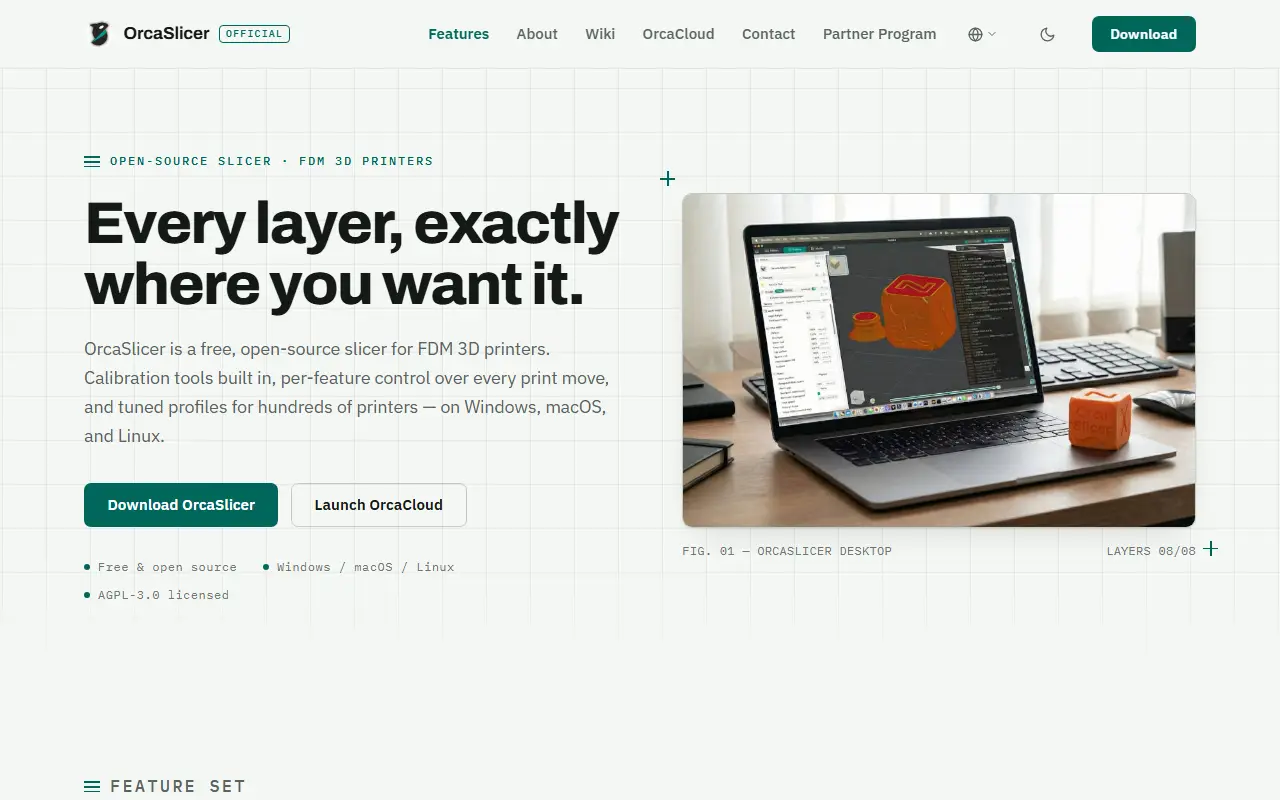
orcaslicer.comOrcaSlicer homepage screenshot

OrcaSlicer is slicing software for 3D printing. It converts 3D models into G-code instructions for a printer, with profiles for printers from makers such as Bambu, Prusa, Voron, VzBot, RatRig and Creality. It is written in C++, released under the AGPL-3.0 license and developed with a community of makers.

Features include a suite of calibration tools such as temperature towers, flow rate and retraction tests, precise wall and seam control with scarf seams, sandwich mode and polyholes support, overhang and support optimization, and granular control over speed, layer height, pressure and temperature. Mouse ear brims and adaptive bed mesh calibration help first-layer adhesion.

Network printer support covers Klipper, PrusaLink and OctoPrint for remote control, and the interface offers drag-and-drop with pre-made printer profiles. The project warns that several look-alike websites impersonate it and names orcaslicer.com as the only official site, so downloads should come from there or the GitHub repository.

Key features

  • G-code generation for many 3D printers
  • Calibration tools for temperature and flow
  • Wall and seam control with scarf seams
  • Support and overhang optimization
  • Klipper, PrusaLink and OctoPrint support
  • Pre-made profiles for popular printers

Pricing: Free and open source under the AGPL-3.0 license.

PrusaSlicer

3D printing slicer that turns models into printer instructions for FDM and mSLA printers from Prusa and many other makers.

GitHub stars
9.4k
Last commit
11 days ago
Latest release
version_2.9.6
Licence
AGPL-3.0

PrusaSlicer takes 3D models and generates printing instructions that it can send to a 3D printer. It supports both FDM and mSLA printers and, although developed by Prusa Research, works with machines from a wide variety of manufacturers. It is originally based on Slic3r by Alessandro Ranellucci and the RepRap community.

Users can set printing parameters from whole-print settings down to single-layer adjustments, and modify objects before printing by painting, cutting and arranging them. Multiple projects can be open at once, each with several beds that may use different settings. Multi-material printing is supported, there are several ways to send jobs to the printer, and an advanced 3D preview shows the generated instructions.

A command-line interface supports headless automation, and integration with PrusaConnect and Printables can simplify the workflow. PrusaSlicer is written in C++ and licensed under AGPL-3.0. Windows and macOS builds come from the project page or GitHub releases, while Linux is distributed through Flathub, and building from source is documented.

Key features

  • G-code generation for FDM and mSLA printers
  • Per-layer and per-object print settings
  • Painting, cutting and arranging models
  • Multi-material printing support
  • 3D preview of print instructions
  • Command-line interface for automation

Pricing: Free and open source under the AGPL-3.0 license.

UltiMaker Cura

Ultimaker Cura is an open-source slicer application that prepares 3D models for printing, with many settings and community-managed printer profiles.

GitHub stars
7k
Last commit
yesterday
Latest release
5.13.0
Licence
LGPL-3.0

Ultimaker Cura is a 3D printer slicing application built on the Uranium framework. A slicer converts 3D models into G-code instructions that a printer can follow, and Cura is used to prepare models for printing on a wide range of machines.

The README highlights hundreds of settings and print profiles that are managed by the community, and the project documents how to add machine profiles, translate the interface and develop plugins. The application is written in Python with a QML and PyQt6 interface. Build instructions, a Conan-based dependency setup and a settings reference are kept in the project wiki.

Cura is released under the LGPL-3.0 licence. Releases are published on GitHub, and the project asks contributors to look at its guides before submitting printer profiles or translations. It runs as a desktop application rather than a hosted service.

Key features

  • 3D model slicing to G-code
  • Hundreds of print settings
  • Community-managed printer profiles
  • Plugin support
  • Python application with a QML interface

Pricing: Free and open source under the LGPL-3.0 licence.

Read more about UltiMaker CuraGitHub

Simplify3D alternatives: questions

What is the best open-source alternative to Simplify3D?
OrcaSlicer is the top-ranked open-source alternative to Simplify3D on Enlisted: OrcaSlicer is an open-source slicer that turns 3D models into G-code for printers from Bambu, Prusa, Voron, Creality and others. Other strong options are PrusaSlicer and UltiMaker Cura.
Are these Simplify3D alternatives free?
All 3 are open source, so the code is free to use under its licence, and all of them can be self-hosted on your own server or computer.
How is this list of Simplify3D alternatives ranked?
By a score built from GitHub stars, star growth over the last 30 days and how recently the code changed. 3 of these projects shipped code in the last 30 days. Data is refreshed daily, and nobody can pay to move up.

People also look for alternatives to…

View all