7,363 open-source and SaaS tools, with GitHub stats refreshed every day.

5 alternatives ranked by real activity

Open-source Recurly alternatives

A curated, ranked list of the 5 best open-source alternatives to Recurly.

The best open-source alternative to Recurly is Lago. If that doesn't suit you, other good options are Flexprice, Kill Bill, OpenMeter and Meteroid.

Recurly alternatives are mainly finance & accounting tools. 5 of them shipped code in the last 30 days, 5 can be self-hosted, and 2 use a permissive licence.

Last updated October 2, 2026 · ranked by GitHub stars, growth and recent commits

Lago

Open-source metering and usage-based billing infrastructure for subscriptions, credits, invoices and payments, with an API, CLI and MCP server for AI products.

GitHub stars
11k
Last commit
yesterday
Latest release
v1.53.0
Licence
AGPL-3.0
Self-hosted
Yes
Hosted version
Available
getlago.comLago homepage screenshot

Lago is an open-source billing and monetization platform that meters product usage and turns it into pricing, credits, entitlements, invoices, payments and revenue. It is positioned as infrastructure for AI products, where tokens, compute and API calls need to be measured and charged, but it also handles classic subscriptions and hybrid pricing.

It offers consumption tracking, subscription management, pricing iterations, payment orchestration and revenue analytics. Companies can use Lago Direct to bill their own customers or Lago Embedded to power monetization for their own customers. Integration is through a REST API and SDKs, a CLI for inspecting billing data and running diagnostics, and an MCP server that gives assistants tools to work with live billing data. A local demo prices sample AI requests.

The stack includes Go, Ruby, React and ClickHouse. Lago is licensed under AGPL-3.0 and can be self-hosted, and a managed Lago Cloud is available through the vendor. It suits SaaS and AI companies that want to own their billing logic rather than rely on a closed billing vendor.

Key features

  • Usage metering and event ingestion
  • Subscription and hybrid pricing management
  • Invoices and payment orchestration
  • Revenue analytics and reporting
  • REST API and SDKs
  • CLI and MCP server for AI assistants
  • Credits and entitlements

Pricing: The open-source version is free to self-host. Lago Premium, available as Cloud or self-hosted, has no published price and is arranged through a demo or sales contact.

Flexprice

Flexprice is an open-source billing and metering platform for usage-based, credit-based and hybrid pricing, available as cloud or self-hosted.

GitHub stars
6.9k
Last commit
yesterday
Latest release
v2.1.33
Licence
AGPL-3.0
Self-hosted
Yes
Hosted version
Available
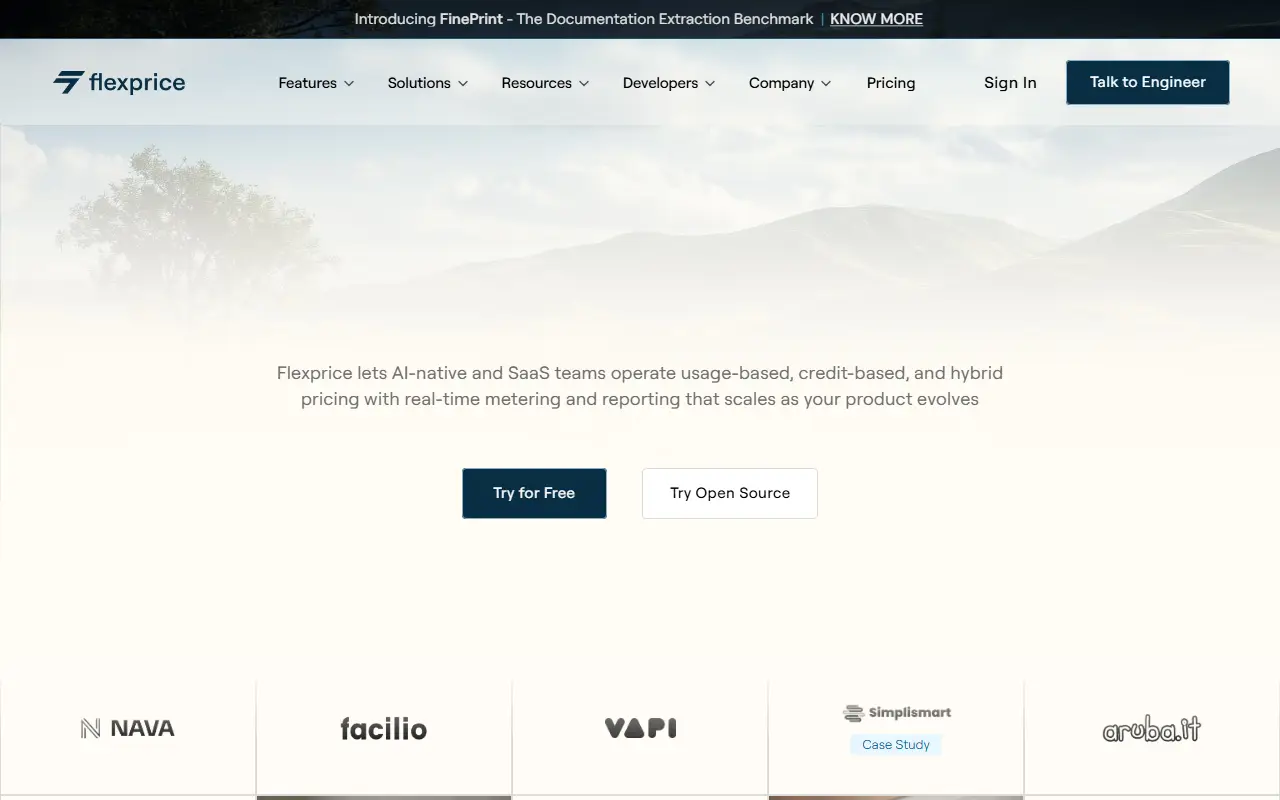
flexprice.ioFlexprice homepage screenshot

Flexprice is monetization infrastructure for AI-native and SaaS teams that charge by usage, credits or a mix of models. It handles metering, pricing, credits and billing so developers do not need to build custom billing logic for every pricing change.

Applications send usage data to Flexprice from backend APIs, AI agents or custom workflows, or stream it from data warehouses and analytics pipelines. Flexprice processes the data in real time, prices usage according to the customer's plan, deducts prepaid or promotional credits, applies feature limits and produces invoices. It then connects to existing payment, CPQ, CRM and accounting tools, such as Stripe, to push invoices and revenue data onward. A no-code interface is included.

The project is written in Go, uses ClickHouse, Kafka, PostgreSQL and Temporal according to its repository topics, and is licensed under AGPL-3.0. It can be used as a cloud service or self-hosted, and documentation, a demo and a Slack community are linked from the README.

Key features

  • Real-time usage metering
  • Usage-based, credit-based and hybrid pricing
  • Prepaid credits and top-ups
  • Feature access limits
  • Automatic invoice generation
  • Payment, CRM and accounting integrations
  • No-code user interface

Pricing: Free Basic cloud plan and a self-hosted open-source version. Build costs $500 and Scale $1000 per month, with 20% off yearly billing; Mission Critical is custom.

Kill Bill

An open-source subscription billing and payments platform written in Java, for online businesses that want to run and extend their own billing infrastructure.

GitHub stars
5.8k
Last commit
yesterday
Latest release
killbill-0.24.22
Licence
Apache-2.0
Self-hosted
Yes
killbill.ioKill Bill homepage screenshot

Kill Bill is an open-source platform for subscription billing and payment processing. It is meant for online businesses that want to manage plans, invoices and payments themselves rather than depend on a third-party billing service, which also keeps customer and financial data under their own control.

The platform provides real-time analytics and financial reports out of the box, supports experimenting with different subscription models, and makes it straightforward to run trials and short-lived promotional discounts. It is highly modular, so functionality that is not needed can be turned off or swapped for an existing system, and an extension framework lets teams add their own behavior.

Kill Bill is written in Java and licensed under Apache-2.0. It can run on your own premises or in the cloud, and a business can begin with one area and migrate others over time. Its documentation lives on docs.killbill.io, and the project describes its approach as SaaS-style billing combined with open-source ownership.

Key features

  • Subscription plan and trial management
  • Invoicing and payment processing
  • Real-time analytics and financial reports
  • Modular architecture with replaceable components
  • Extension framework for custom plugins
  • Support for short promotional discounts

Pricing: The self-hosted open-source edition is free. The AWS Marketplace option is about $40 per month plus AWS costs; the hosted platform and Aviate/support tiers are priced separately on request.

OpenMeter

Open-source usage metering and billing infrastructure that turns high-volume events into real-time usage, access limits, and usage-based invoices for AI and API products.

GitHub stars
2.4k
Last commit
today
Latest release
v1.0.0-beta.235
Licence
Apache-2.0
Self-hosted
Yes
Hosted version
Available
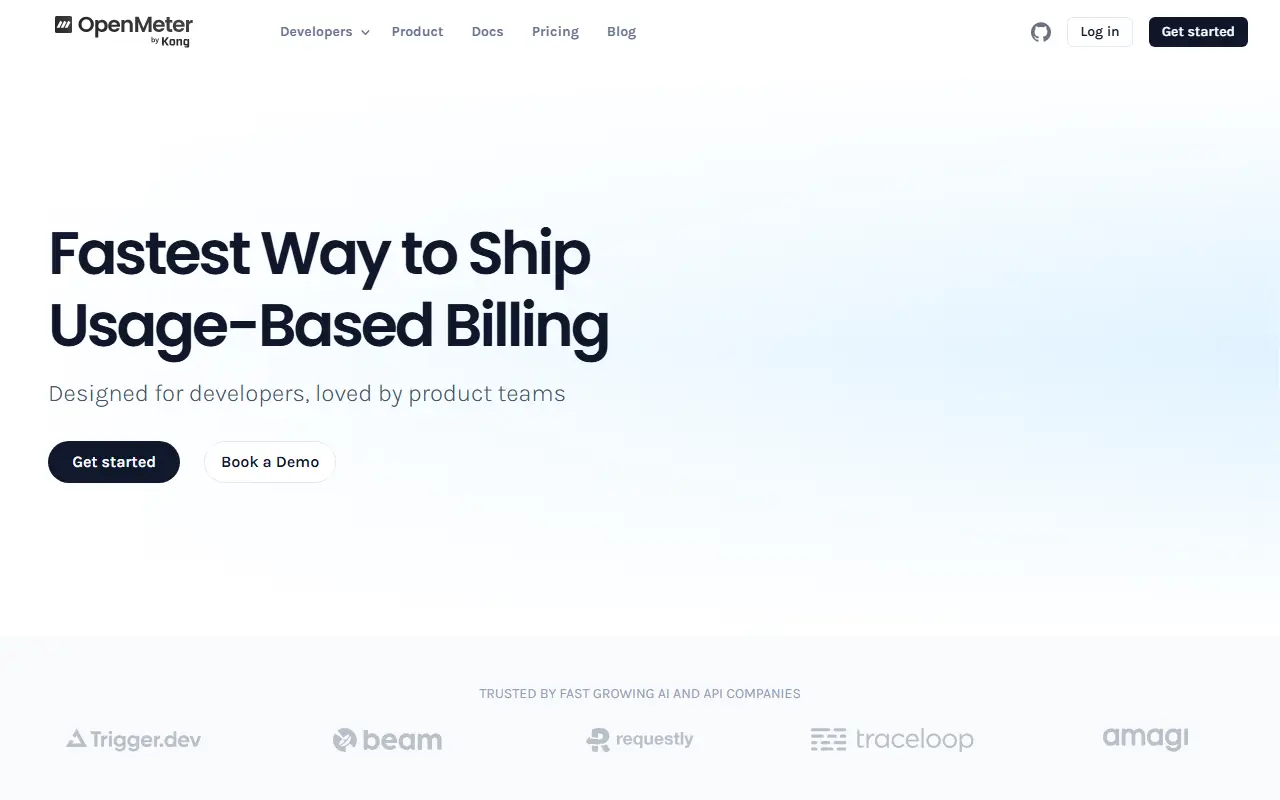
openmeter.ioOpenMeter homepage screenshot

OpenMeter is open-source monetization infrastructure for AI, API, and other usage-based products. It collects and aggregates high-volume usage events in real time, enforces access based on usage, and handles usage-based billing from pricing and subscriptions to credits and invoices. It is written in Go, uses ClickHouse and Kafka, and is released under the Apache-2.0 license.

The design is API-first and composable: it can own the entire path from raw usage to invoice, or only the pieces your stack lacks, and it works with payment and tax providers you already use, such as Stripe. The README describes it as best suited to products with usage-based or hybrid pricing, prepaid credits, or usage limits.

Documentation includes a quickstart and an API reference. OpenMeter suits product, finance, and platform engineers who need accurate metering and billing without building it from scratch, and who want to keep the billing stack under their control. A managed cloud version is offered by the project.

Key features

  • Real-time usage event aggregation
  • Usage-based billing and invoicing
  • Prepaid credits and subscriptions
  • Access enforcement based on usage
  • Stripe and other provider integrations
  • API-first, composable design

Pricing: The open-source Apache 2.0 edition is free. The hosted product is now Konnect Metering & Billing; the page refers pricing questions to sales.

Meteroid

Meteroid is open-source billing infrastructure for SaaS and AI companies, covering usage metering, subscriptions, invoicing, quotes and revenue analytics.

GitHub stars
1.2k
Last commit
15 days ago
Latest release
v1.0.0-rc7
Licence
AGPL-3.0
Self-hosted
Yes
Hosted version
Available
meteroid.comMeteroid homepage screenshot

Meteroid is a cloud-native pricing and billing platform aimed at SaaS, infrastructure and AI companies. It is designed for businesses moving to usage-based or product-led pricing, closing the gap between what customers use and what they are billed by connecting to your systems through an API.

Its capabilities include usage metering that turns raw events such as API requests, tokens or storage into billable metrics in real time, flexible pricing with flat, usage-based, tiered or hybrid models and versioned plans, and subscription management with upgrades, downgrades and mid-cycle changes. It also covers quotes (CPQ), invoicing, cost limits, grandfathering, experiments and revenue analytics. Topics mention Stripe, ClickHouse and payments.

Meteroid is built with Rust and TypeScript and licensed under AGPL-3.0, and it can be self-hosted. The README also offers a free workspace on Meteroid Cloud with no credit card required, so teams can try it without setup. The latest release is a 1.0 release candidate. It suits product and engineering teams that want ownership of their billing logic.

Key features

  • Real-time usage metering
  • Flat, tiered, usage-based, and hybrid pricing
  • Versioned plans with grandfathering
  • Subscription lifecycle management
  • Quotes and invoicing
  • Revenue analytics

Pricing: The open source version is free to self-host. Cloud billing is 0.5% of managed revenue on pay as you go, or $225 per month on a volume plan for up to €50k of monthly managed revenue; Enterprise is by quote.

Recurly alternatives: questions

What is the best open-source alternative to Recurly?
Lago is the top-ranked open-source alternative to Recurly on Enlisted: Open-source metering and usage-based billing infrastructure for subscriptions, credits, invoices and payments, with an API, CLI and MCP server for AI products. Other strong options are Flexprice, Kill Bill, OpenMeter and Meteroid.
Are these Recurly alternatives free?
All 5 are open source, so the code is free to use under its licence, and all of them can be self-hosted on your own server or computer. 4 also offer a paid or managed cloud version if you'd rather not host it yourself.
How is this list of Recurly alternatives ranked?
By a score built from GitHub stars, star growth over the last 30 days and how recently the code changed. 5 of these projects shipped code in the last 30 days. Data is refreshed daily, and nobody can pay to move up.

People also look for alternatives to…

View all