4 open-source alternatives ranked by real activity

Open-source Picktime alternatives

A curated, ranked list of the 4 best open-source alternatives to Picktime.

The best open-source alternative to Picktime is Cal.diy. If that doesn't suit you, other good options are OpenEMR, Easy!Appointments and Thunderbird Appointment.

Commercial alternatives to Picktime include SimplyBook.me, Setmore, Appointy and Schedulicity. See all 24.

Picktime alternatives are mainly scheduling tools, but some are also ERP tools. 4 of them shipped code in the last 30 days, 4 can be self-hosted, and 2 use a permissive licence.

Last updated November 11, 2026 · ranked by GitHub stars, growth and recent commits

Cal.diy

The community edition of Cal.com: an MIT-licensed, self-hosted scheduling platform with the enterprise features removed, intended for personal use.

GitHub stars
50k
Last commit
2 days ago
Latest release
v6.2.0
Licence
MIT
Self-hosted
Yes
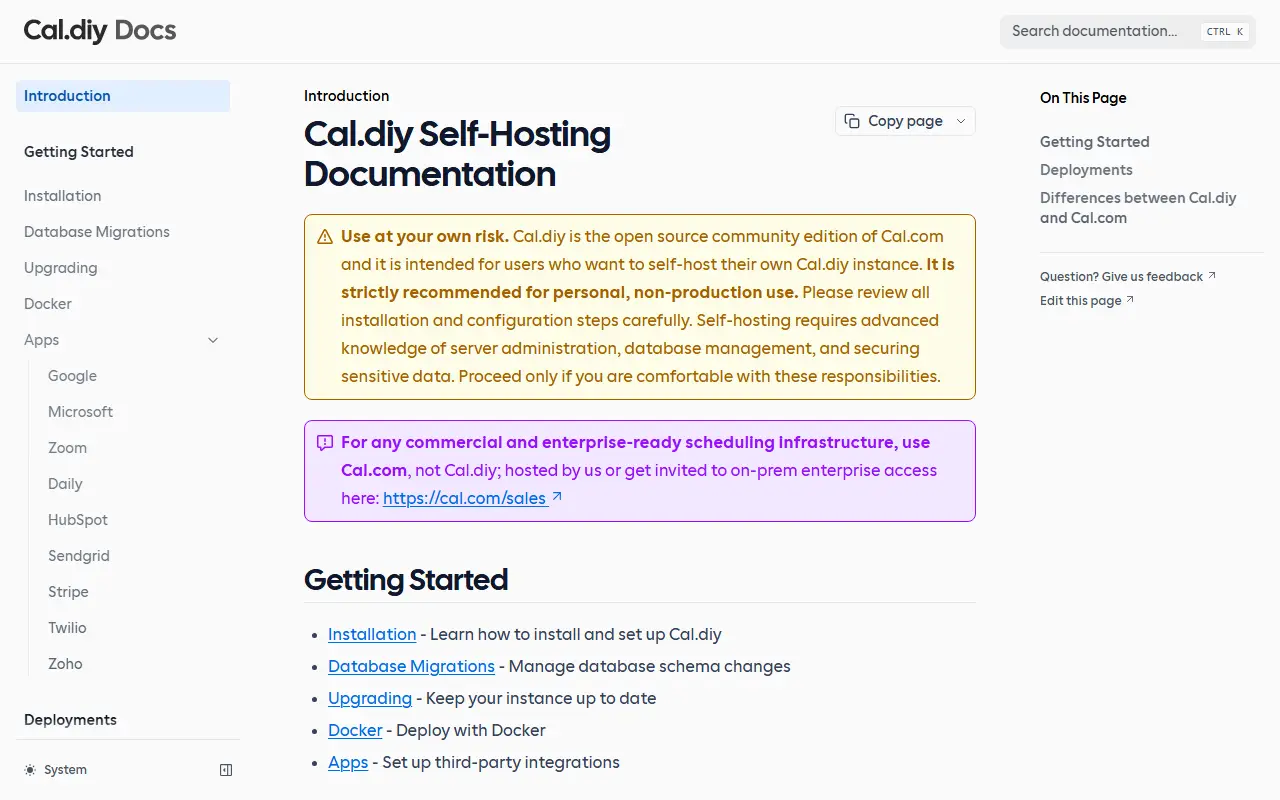
cal.diyCal.diy homepage screenshot

Cal.diy is a community edition of Cal.com, the scheduling platform, released as open source. It is a fork with all enterprise and commercial code removed, and the whole codebase is licensed under MIT with no proprietary Enterprise Edition split. It is built with TypeScript, Next.js, tRPC, Tailwind CSS and PostgreSQL through Prisma.

Compared with Cal.com, it drops enterprise features such as Teams, Organizations, Insights, Workflows and SSO/SAML, and it needs no license key or Cal.com account. Contributions go directly into this community-maintained project. No hosted service exists, so you run it yourself on infrastructure you control.

The maintainers warn that it is intended for personal, non-production use and that running it yourself demands solid skills in server administration, databases and protecting sensitive data. For commercial or enterprise needs they point to Cal.com instead. Cal.diy suits individuals and tinkerers who want complete control over their own scheduling setup.

Key features

  • Self-hosted scheduling platform
  • MIT-licensed with no enterprise edition
  • No license key or account required
  • Built on Next.js, tRPC and PostgreSQL
  • Community-maintained fork of Cal.com

Pricing: Free and open source under the MIT license; there is no hosted version.

OpenEMR

An open-source electronic health records and medical practice management application with scheduling, billing and FHIR support, for clinics and healthcare practices.

GitHub stars
5.6k
Last commit
yesterday
Latest release
v8_5_0
Licence
GPL-3.0
Self-hosted
Yes
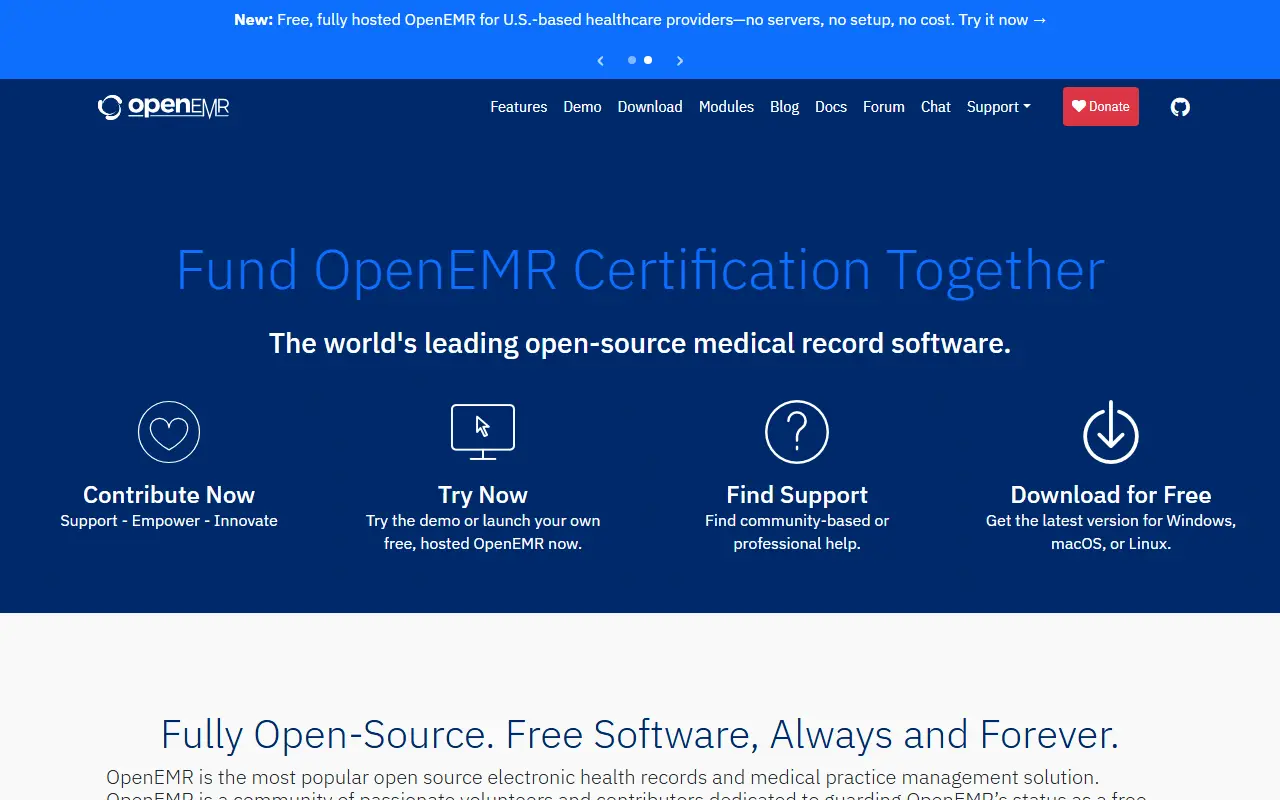
open-emr.orgOpenEMR homepage screenshot

OpenEMR is free, open-source software for managing electronic health records and the day-to-day running of a medical practice. It brings patient records, scheduling and electronic billing into one application, and it is used by medical providers and organizations looking for an alternative to proprietary systems.

Beyond the core record-keeping, OpenEMR supports internationalization for use in different countries, a documented REST API and FHIR interface for integrations, and a Docker setup for deployment. It runs on Windows, Linux, macOS and other platforms, is written in PHP, and has a community forum and professional support options.

The project is licensed under GPL-3.0, can be self-hosted, and welcomes contributions from developers, medical providers and educators. Security vulnerabilities are reported through a documented process, and building from the code repository requires a recent Node.js version.

Key features

  • Electronic health records
  • Medical practice management
  • Appointment scheduling
  • Electronic billing
  • REST and FHIR APIs
  • Internationalization for multiple countries
  • Docker-based deployment

Pricing: Free and open source under the GPL-3.0 licence; community and professional support are available.

Easy!Appointments

A self-hosted appointment scheduling platform built with PHP and MySQL, with customer and service management, Google Calendar sync and email notifications.

GitHub stars
4.5k
Last commit
11 days ago
Latest release
1.6.1
Licence
GPL-3.0
Self-hosted
Yes
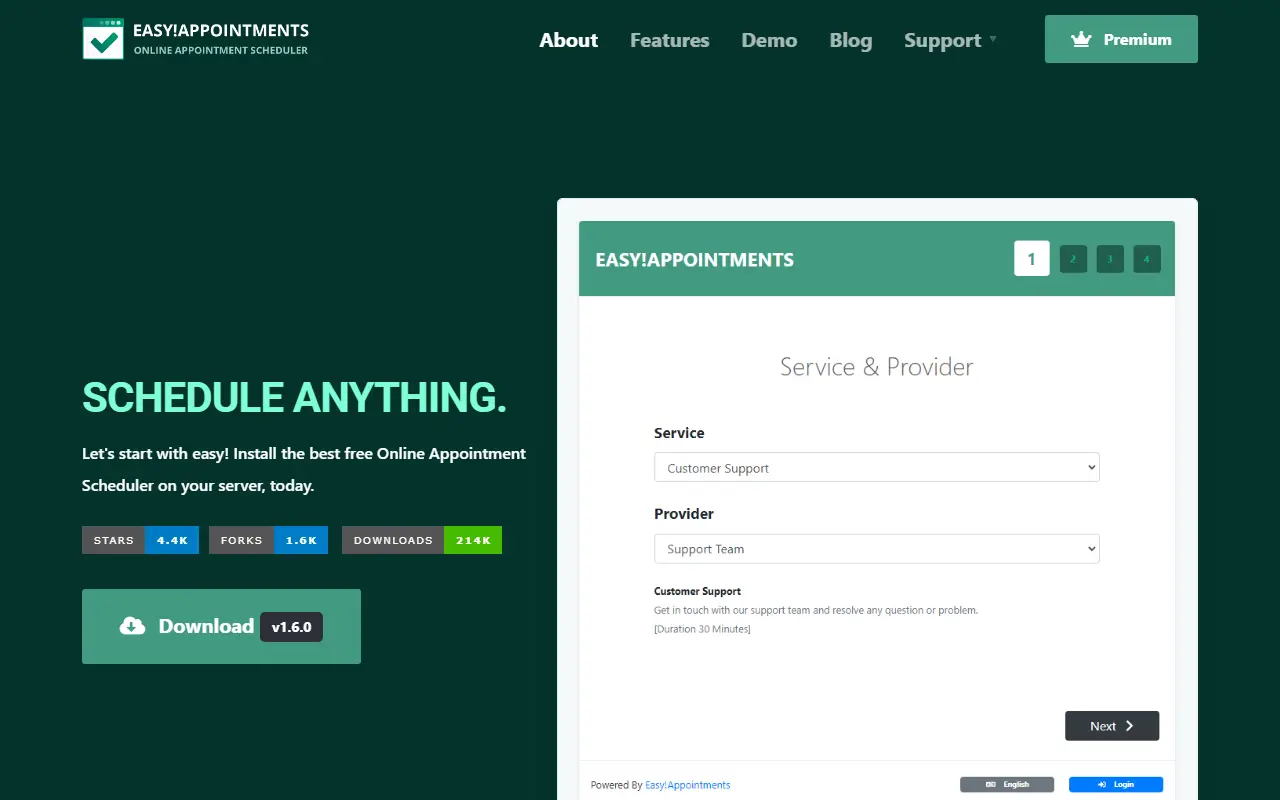
easyappointments.orgEasy!Appointments homepage screenshot

Easy!Appointments is an open-source appointment scheduling system that lets you run your own booking workflow. It is self-hosted, so your data stays under your control, and it can be customized and integrated with an existing website and database.

Features include appointment and customer management, organization of services and providers, working plans and booking rules, Google Calendar synchronization, an email notification system and a multi-language interface. Topics on the repository also point to a REST API for integrations.

Production installs need Apache or Nginx, PHP 8.2 or later and a MySQL database: upload the files, create the database, copy config-sample.php to config.php and update the settings. A Docker Compose environment is provided for development. It is licensed under GPL-3.0, free for personal and commercial use, with premium features and professional services offered separately.

Key features

  • Appointment and customer management
  • Services and providers organization
  • Working plans and booking rules
  • Google Calendar synchronization
  • Email notifications
  • Multi-language interface
  • REST API

Pricing: Free for personal and commercial use under GPL-3.0; premium features and services are offered separately.

Thunderbird Appointment

Thunderbird Appointment lets people book time on your calendar through a shareable booking page, with a dashboard for availability and bookings.

GitHub stars
557
Last commit
yesterday
Latest release
r-0954
Licence
MPL-2.0
Self-hosted
Yes
Hosted version
Available
appointment.tb.proThunderbird Appointment homepage screenshot

Thunderbird Appointment is an open-source scheduling tool for inviting others to grab times on your calendar. The goal is to make booking appointments as easy as possible: you set your availability, share a link, and attendees pick a slot on a bookers page. It is part of the Thunderbird Pro family of services.

Subscribers get a dashboard for setting up availability, managing bookings and adjusting general settings. The supported way to build and run it is with Docker, which starts five containers: the backend, the frontend, PostgreSQL, Redis and Mailpit for testing email, with OpenAPI documentation available from the backend. A flag controls whether first-time registration is allowed to create the initial admin user, and an allow list defines admin accounts. Simple password-based authentication is meant only for development and testing.

The backend is written in Python and the project is licensed under MPL-2.0. A hosted service is available at appointment.tb.pro, and feedback and support are handled through a mailing list called Topicbox.

Key features

  • Public booking page for attendees
  • Availability setup
  • Booking management dashboard
  • Docker-based installation
  • OpenAPI documentation
  • Admin allow list

Pricing: Free and open source under the MPL-2.0 license; a hosted service is offered at appointment.tb.pro.

Commercial Picktime alternatives

Hosted, closed-source products that compete with Picktime. Showing 12 of 24.

See every Picktime alternative on its tool page

Picktime alternatives: questions

What is the best open-source alternative to Picktime?
Cal.diy is the top-ranked open-source alternative to Picktime on Enlisted: The community edition of Cal.com: an MIT-licensed, self-hosted scheduling platform with the enterprise features removed, intended for personal use. Other strong options are OpenEMR, Easy!Appointments and Thunderbird Appointment.
What are the best commercial alternatives to Picktime?
SimplyBook.me, Setmore, Appointy, Schedulicity and Bookeo are among the hosted, closed-source alternatives to Picktime listed on Enlisted, which lists 24 in total. Compare their pricing and features on each tool page.
Are these Picktime alternatives free?
All 4 are open source, so the code is free to use under its licence, and all of them can be self-hosted on your own server or computer. 1 also offers a paid or managed cloud version if you'd rather not host it yourself.
How is this list of Picktime alternatives ranked?
By a score built from GitHub stars, star growth over the last 30 days and how recently the code changed. 4 of these projects shipped code in the last 30 days. Data is refreshed daily, and nobody can pay to move up.

People also look for alternatives to…

View all