7,363 open-source and SaaS tools, with GitHub stats refreshed every day.

10 alternatives ranked by real activity

Open-source Perplexity alternatives

A curated, ranked list of the 10 best open-source alternatives to Perplexity.

The best open-source alternative to Perplexity is GPT Researcher. If that doesn't suit you, other good options are Khoj, Vane, BrowserOS and Morphic.

Perplexity alternatives are mainly AI tools, but some are also search tools. 3 of them shipped code in the last 30 days, 10 can be self-hosted, and 6 use a permissive licence.

Last updated October 2, 2026 · ranked by GitHub stars, growth and recent commits

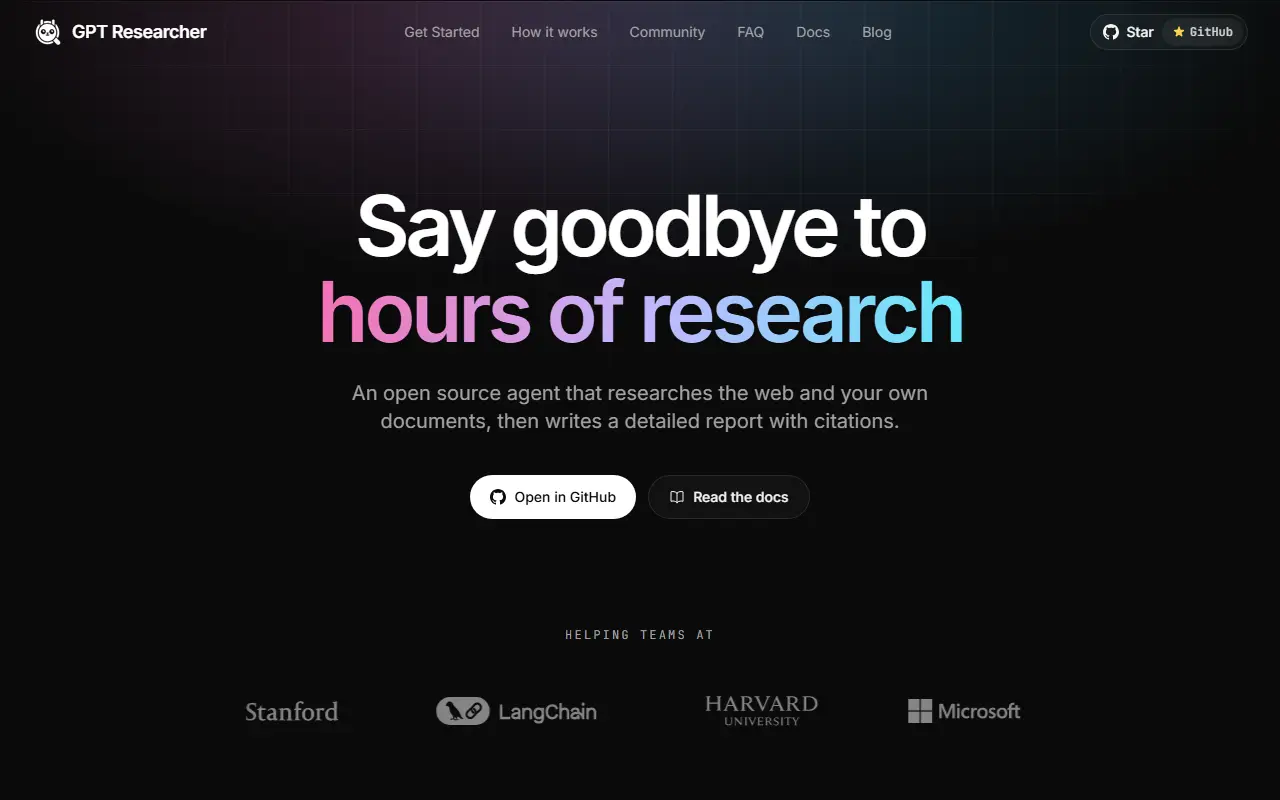
GPT Researcher

An autonomous research agent that searches the web and local documents using any LLM provider and writes detailed, cited research reports.

GitHub stars
30k
Last commit
yesterday
Latest release
v3.7.0
Licence
Apache-2.0
Self-hosted
Yes
gptr.devGPT Researcher homepage screenshot

GPT Researcher is an open-source autonomous agent that performs deep research on a given task and writes up a report with citations. It can work from web sources and from local documents, and it works with any LLM provider, aiming for factual, unbiased output rather than a quick chatbot answer.

The project positions itself against several limits of manual and LLM-only research: manual work can take weeks, models trained on old data may hallucinate, token limits make long reports hard, and a narrow source set leads to shallow or wrong conclusions. Drawing on Plan-and-Solve and RAG ideas, it splits research into planning and parallelized agent work to increase speed and keep behavior stable. Customization options let you tailor domain-specific research agents, and topics note MCP server support.

GPT Researcher is written in Python and Apache-2.0 licensed, with documentation in several languages and a website at gptr.dev. You run it yourself with your own model API keys, and it suits analysts, students and developers who want automated, source-backed reports on a topic.

Key features

  • Autonomous deep research on any topic
  • Reports with source citations
  • Web and local document research
  • Works with any LLM provider
  • Parallelized agent work for speed
  • MCP server support

Pricing: GPT Researcher is free under the MIT license with no SaaS subscription; you pay only your own LLM and search providers. Managed deployments are arranged by contacting the maintainer.

Khoj

A self-hostable personal AI app that chats with local or cloud LLMs, answers from the web and your documents, builds custom agents and automates research.

GitHub stars
38k
Last commit
2 mo ago
Latest release
2.0.0-beta.28
Licence
AGPL-3.0
Self-hosted
Yes
Hosted version
Available
khoj.devKhoj homepage screenshot

Khoj is a personal AI app that you can run on your own machine or scale up to an enterprise cloud deployment. You can chat with local or online models, such as Llama, Qwen, Gemma, Mistral, GPT, Claude, Gemini and DeepSeek, and get answers drawn from the internet and from your own documents, including images, PDFs, Markdown, org-mode files, Word documents and Notion pages.

It can be reached from a browser, Obsidian, Emacs, a desktop app, a phone or WhatsApp. Users create agents with their own knowledge, persona, chat model and tools, set up automations that deliver personal newsletters and smart notifications by email, and use advanced semantic search to find relevant documents. It can also generate images and speak responses aloud. The README highlights benchmark results for retrieval and reasoning and introduces Pipali, a separate open-source AI coworker for your own computer.

Khoj is written in Python and licensed under AGPL-3.0. You can self-host it, with offline models via llama.cpp, or use the hosted app. It suits individuals and teams who want an AI assistant grounded in their notes and files while keeping a choice of model.

Key features

  • Chat with local or online LLMs
  • Answers from the web and your documents
  • Access from Obsidian, Emacs, WhatsApp and browser
  • Custom agents with their own knowledge and tools
  • Scheduled automations and newsletters
  • Semantic search over personal documents
Read more about KhojWebsite GitHub

Vane

Vane is a privacy-focused, self-hosted AI answering engine that combines web search via SearxNG with local or cloud language models and cites sources.

GitHub stars
37k
Last commit
1 mo ago
Latest release
v1.12.2
Licence
MIT
Self-hosted
Yes

Vane is an AI answering engine that runs on your own hardware. It combines information from the internet with support for local language models through Ollama and cloud providers such as OpenAI, Anthropic Claude, Google Gemini and Groq, and returns answers with cited sources while keeping searches private. Repository topics also reference Perplexica.

Search modes trade speed for depth: Speed Mode for quick answers, Balanced Mode for everyday queries and Quality Mode for deeper research. Sources can be the web, discussions or academic papers, and web search is powered by SearxNG, which queries multiple search engines without exposing your identity. Image and video search, domain-restricted search and file uploads for questions about PDFs, text files and images are included.

Other features include widgets for quick lookups like weather, calculations and stock prices, search suggestions as you type, a Discover feed of articles, and a saved search history. Vane is written in TypeScript and released under the MIT license, and its architecture is documented for readers who want to understand how it works.

Key features

  • Cited AI answers from web search
  • Local models via Ollama or cloud providers
  • Speed, Balanced and Quality search modes
  • SearxNG-powered private web search
  • File uploads for document questions
  • Image and video search

Pricing: Free and open source under the MIT license.

Read more about VaneGitHub

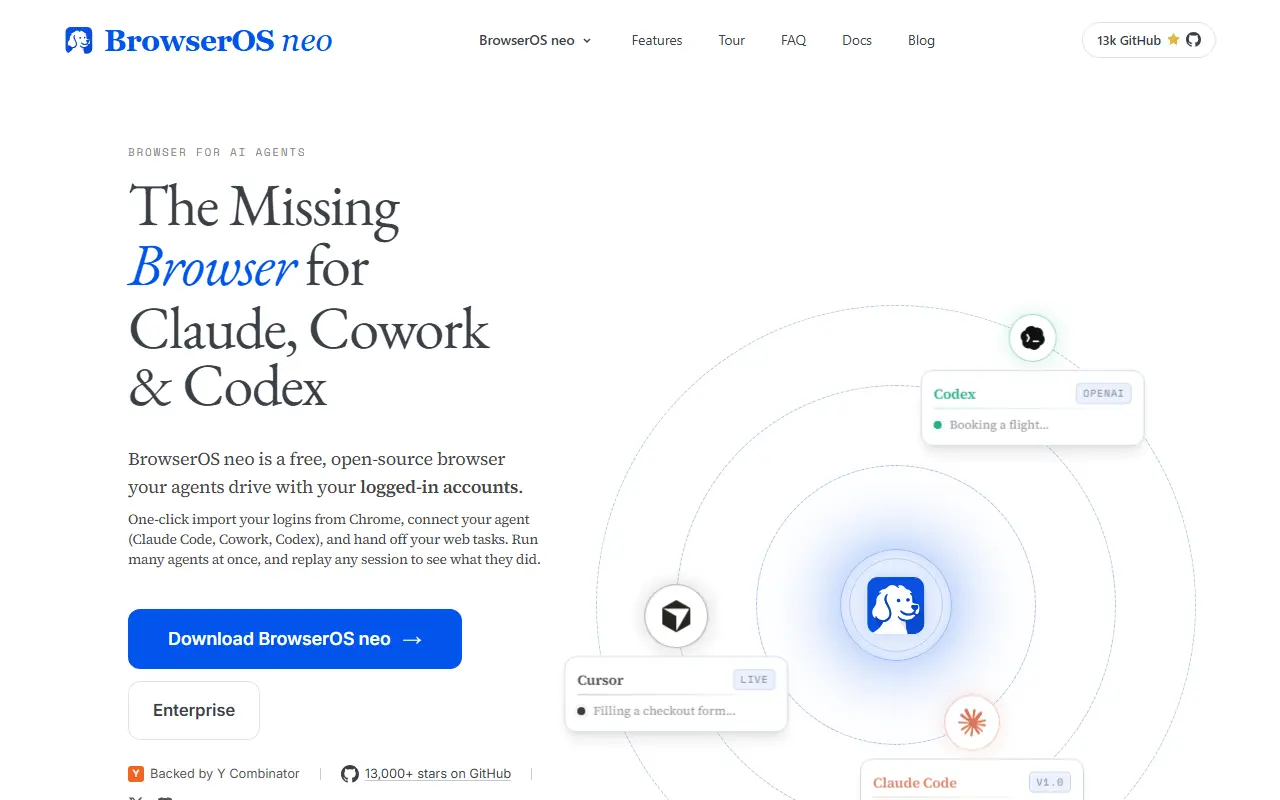
BrowserOS

An open-source, Chromium-based browser built for AI agents, letting tools like Claude Code and Codex run web tasks in parallel with your logged-in accounts on your own machine.

GitHub stars
14k
Last commit
yesterday
Latest release
v0.50.5
Licence
AGPL-3.0
Self-hosted
Yes
browseros.comBrowserOS homepage screenshot

BrowserOS is an open-source browser designed to be used by AI agents. It is positioned as a secondary browser that sits alongside Chrome rather than replacing it, giving agents a place to carry out web tasks while you keep browsing normally. The project presents itself as an alternative to AI browsers such as ChatGPT Atlas, Perplexity Comet and Dia.

You can import logins, bookmarks and extensions from Chrome in one click so agents work with your real accounts, then connect agents such as Claude Code, Codex, Cursor or VS Code, which BrowserOS detects on your machine. Agents run in parallel in their own tabs. A live dashboard on the new tab page shows which site each agent is on, and every session is saved as a replayable video with a step-by-step action timeline.

Everything runs locally on your machine and the project is free under the AGPL-3.0 licence. Its topics point to local model tooling such as Ollama and LM Studio and it exposes tools through the Model Context Protocol. Typical tasks include posting to social media, clearing an inbox, updating a CRM or filing expenses. An enterprise offering is linked from the repository.

Key features

  • Chromium-based browser for AI agents
  • One-click import of Chrome logins and extensions
  • Auto-connects to Claude Code, Codex and Cursor
  • Parallel agents in separate tabs
  • Live dashboard of running agent tasks
  • Replayable session recordings with action timeline
  • Runs locally with MCP tools

Pricing: Free and open source under AGPL-3.0; the project also links to an Enterprise offering.

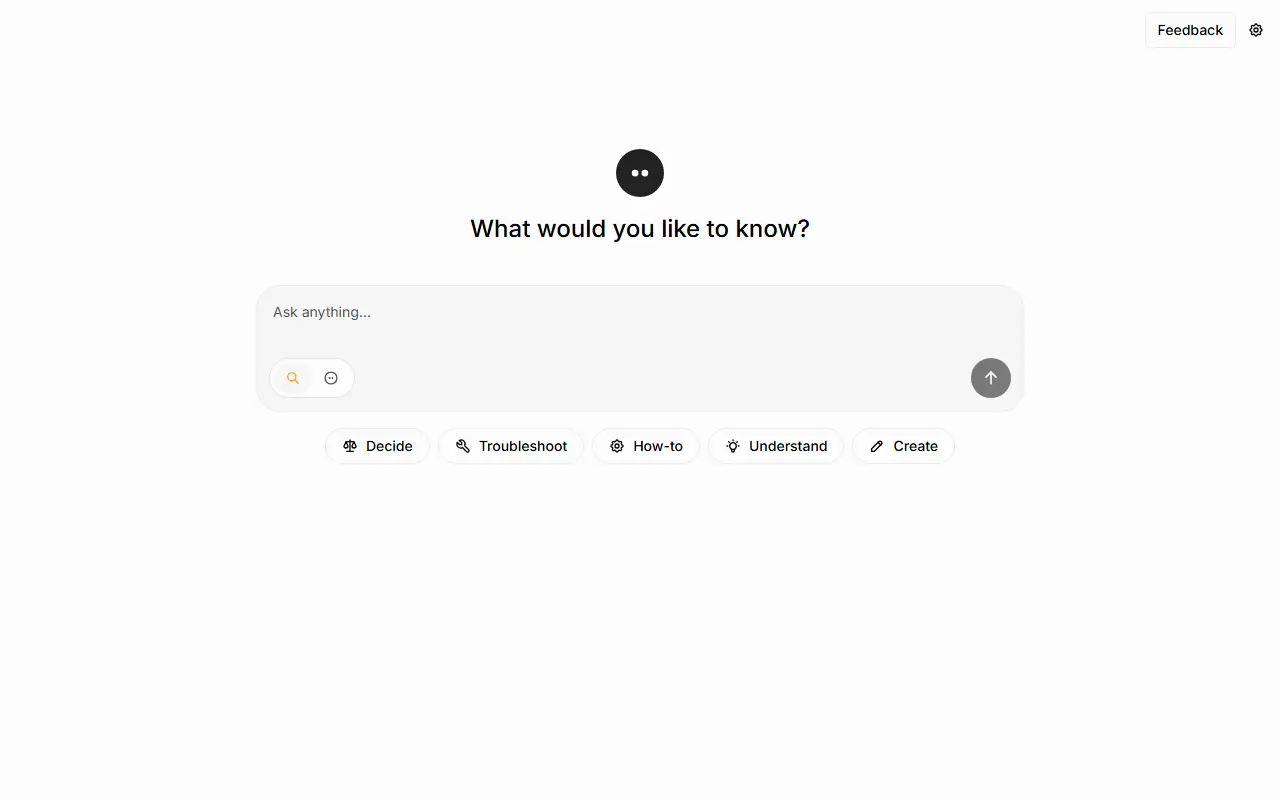
Morphic

Morphic is an open-source AI search engine that returns cited answers and renders them as rich, generated interface components instead of plain text.

GitHub stars
9.2k
Last commit
2 days ago
Latest release
v1.7.0
Licence
Apache-2.0
Self-hosted
Yes
Hosted version
Available
chat.morphic.shMorphic homepage screenshot

Morphic is an AI-powered search engine with a generative user interface. It answers questions with sources attached, and instead of returning plain markdown it renders richer inline components such as source-credited images, grids and headings built from a streamed specification.

It supports Quick and Adaptive search modes and lets you pick from several model providers, including OpenAI, Anthropic, Google and Ollama, as well as OpenAI-compatible endpoints. Search can run through Tavily, SearXNG, Brave or Exa. Chat history is stored in PostgreSQL, results can be shared through unique URLs, files can be uploaded, and Supabase Auth handles sign-in, with a guest mode for anonymous use.

Morphic is built with Next.js, React, TypeScript and Tailwind CSS under the Apache-2.0 licence. A Docker Compose setup starts PostgreSQL, Redis, SearXNG and the app together, so no separate search API key is required, although at least one AI provider key must be configured. It can also be deployed to Vercel.

Key features

  • Cited AI answers grounded in search results
  • Generative UI with rich inline components
  • Quick and Adaptive search modes
  • Selectable model providers including Ollama
  • Shareable search results by unique URL
  • Docker Compose deployment with bundled SearXNG

Pricing: Free and open source under Apache-2.0; self-hosting requires your own API key for at least one AI model provider.

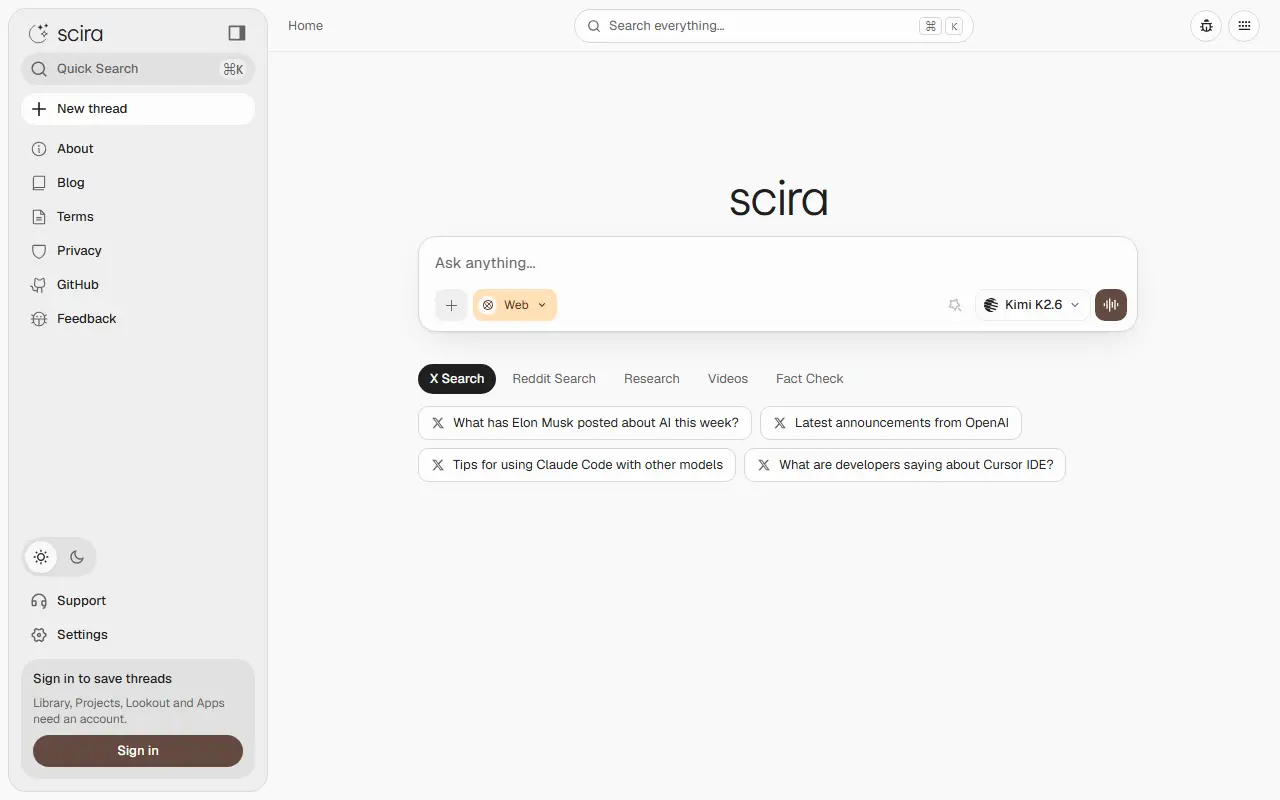
Scira

Scira is an open-source AI search and research tool that plans, retrieves and cites sources, accepting questions, PDFs and URLs.

GitHub stars
12k
Last commit
1 mo ago
Licence
AGPL-3.0
Self-hosted
Yes
Hosted version
Available
scira.aiScira homepage screenshot

Scira, formerly called MiniPerplx, is a minimalistic AI search tool that finds information online and cites where it came from. The project describes it as an agentic research platform that plans, retrieves and cites, and it is available as a hosted site at scira.ai.

You can start by asking a question, uploading a PDF or pasting a link. Behind it, the README credits the Vercel AI SDK for model integration and streaming, Exa AI for web search and content retrieval, and Upstash for serverless Redis and rate limiting. It is written in TypeScript as a web app you can run yourself with your own provider keys.

Scira is licensed under AGPL-3.0, so modified versions offered over a network must share their source. It suits developers who want a reference AI search app to run or adapt, and individuals who want a cited, minimalistic alternative to conventional search.

Key features

  • AI search with cited sources
  • Agentic research that plans and retrieves
  • PDF upload and URL input
  • Built on the Vercel AI SDK
  • Web search through Exa
  • Self-hostable TypeScript app

Pricing: Free plan allows 3 searches a day. Pro costs $15 per month ($9 with a student email) and Max $60 per month for higher model limits and image generation.

Read more about SciraWebsite GitHub

Browser Operator

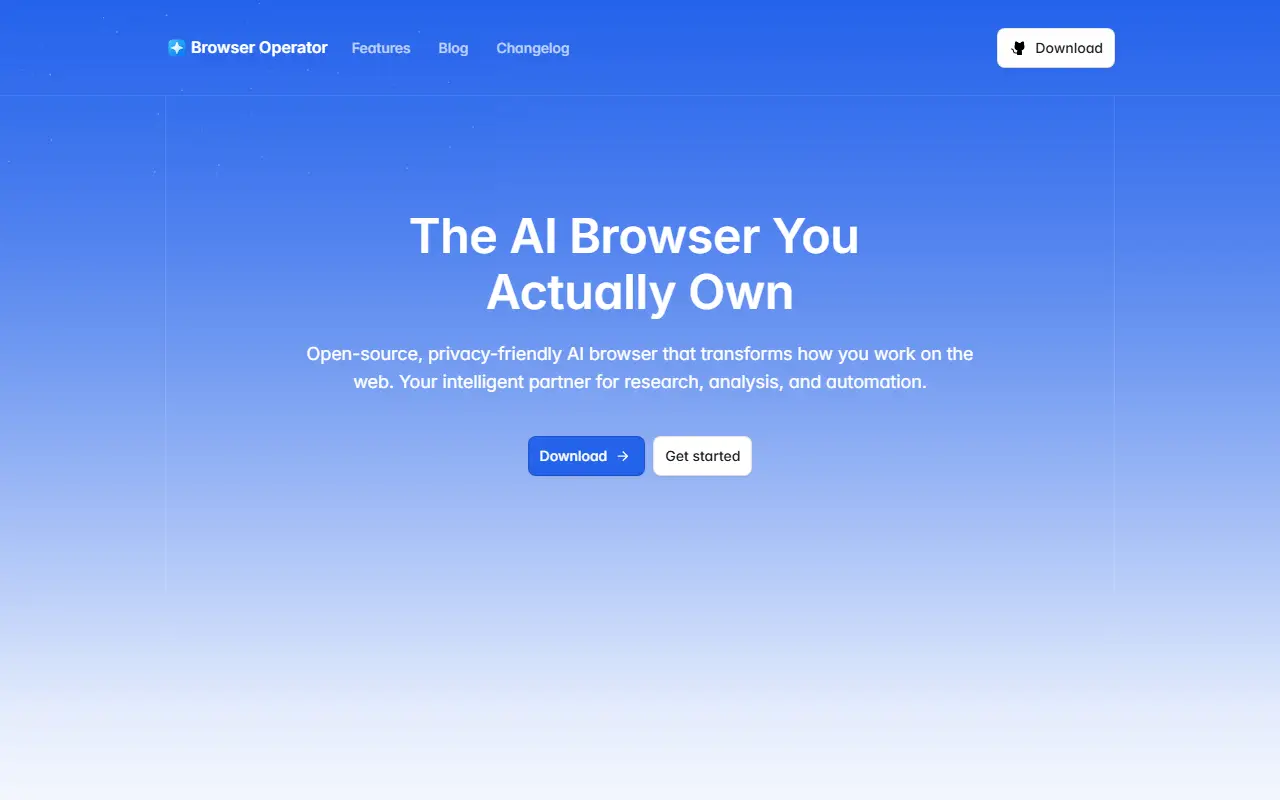
Browser Operator is an open-source, privacy-focused AI browser with a multi-agent platform that automates web research and tasks using cloud or local models.

GitHub stars
508
Last commit
6 mo ago
Latest release
v0.6.0
Licence
BSD-3-Clause
browseroperator.ioBrowser Operator homepage screenshot

Browser Operator is an open-source AI browser that runs agents on the web on your behalf. It is a desktop application for macOS and Windows built to support research, analysis and automation, with processing done locally on your machine. The project describes itself as an open alternative to AI browsers such as ChatGPT Atlas, Perplexity Comet, Dia and the Microsoft Copilot Edge browser.

Its multi-agent platform uses specialized agents that work together on complex web tasks. You choose an AI provider in the settings, including OpenRouter, OpenAI, Groq or LiteLLM, and local models through Ollama allow fully offline operation. Through LiteLLM it is compatible with more than 100 models from OpenAI, Claude, Gemini, Llama and others. The repository topics also mention MCP client support and LangGraph.

Listed use cases include literature reviews and market research, shopping comparison and price monitoring, and business automation such as talent sourcing, lead generation and compliance audits. The system requirements list macOS 10.15 or Windows 10 (64-bit), 8 GB of RAM and 2 GB of free disk space. It is released under the BSD-3-Clause license.

Key features

  • Multi-agent automation for web tasks
  • Privacy-first local processing
  • Works with OpenRouter, OpenAI, Groq and LiteLLM
  • Offline operation with local Ollama models
  • Desktop builds for macOS and Windows
  • MCP client support

Pricing: Free and open source under the BSD-3-Clause license; cloud AI providers bill separately, while local models need no provider account.

Farfalle

Farfalle is a free, Apache-licensed, self-hostable AI search engine that answers questions using local or cloud LLMs, positioned as an open alternative to Perplexity.

GitHub stars
3.5k
Last commit
2 yr ago
Licence
Apache-2.0
Self-hosted
Yes
Hosted version
Available

Farfalle is an open-source AI-powered search engine, described by its creator as a Perplexity clone, that lets you search the web and get synthesized answers. It is aimed at developers and privacy-minded users who want to self-host this kind of search experience and choose their own model provider rather than depend on a closed commercial service.

It supports local models through Ollama, such as Llama 3, Mistral, Gemma and Phi-3, custom models through LiteLLM, and cloud models including Groq-hosted Llama 3 and OpenAI's GPT-4o. Search results can come from multiple providers, including Tavily, SearXNG, Serper or Bing, and the project supports chat history, an agent mode that plans and executes a search for better results, and expert search.

The stack uses Next.js for the frontend and FastAPI for the backend, with Redis for rate limiting and shadcn/ui components. Running it locally requires Docker and, for local models, Ollama; API keys for search and cloud model providers are optional depending on which features are used. Farfalle is written in TypeScript and released under the Apache-2.0 license, with a cloud-model-only live demo available.

Key features

  • AI-generated answers from web search
  • Local LLM support via Ollama
  • Multiple search providers (Tavily, SearXNG, Serper, Bing)
  • Agent mode that plans multi-step searches
  • Chat history and expert search modes
  • Docker-based self-hosted deployment

Pricing: Free and open source under the Apache-2.0 license; cloud model and search providers used with it are billed separately, while local Ollama models require no provider account.

Open Deep Research

Open Deep Research is a Next.js web interface for an iterative AI research assistant that searches the web and writes sourced markdown reports.

GitHub stars
876
Last commit
1 yr ago
Licence
MIT
Self-hosted
Yes
Hosted version
Available
anotherwrapper.comOpen Deep Research homepage screenshot

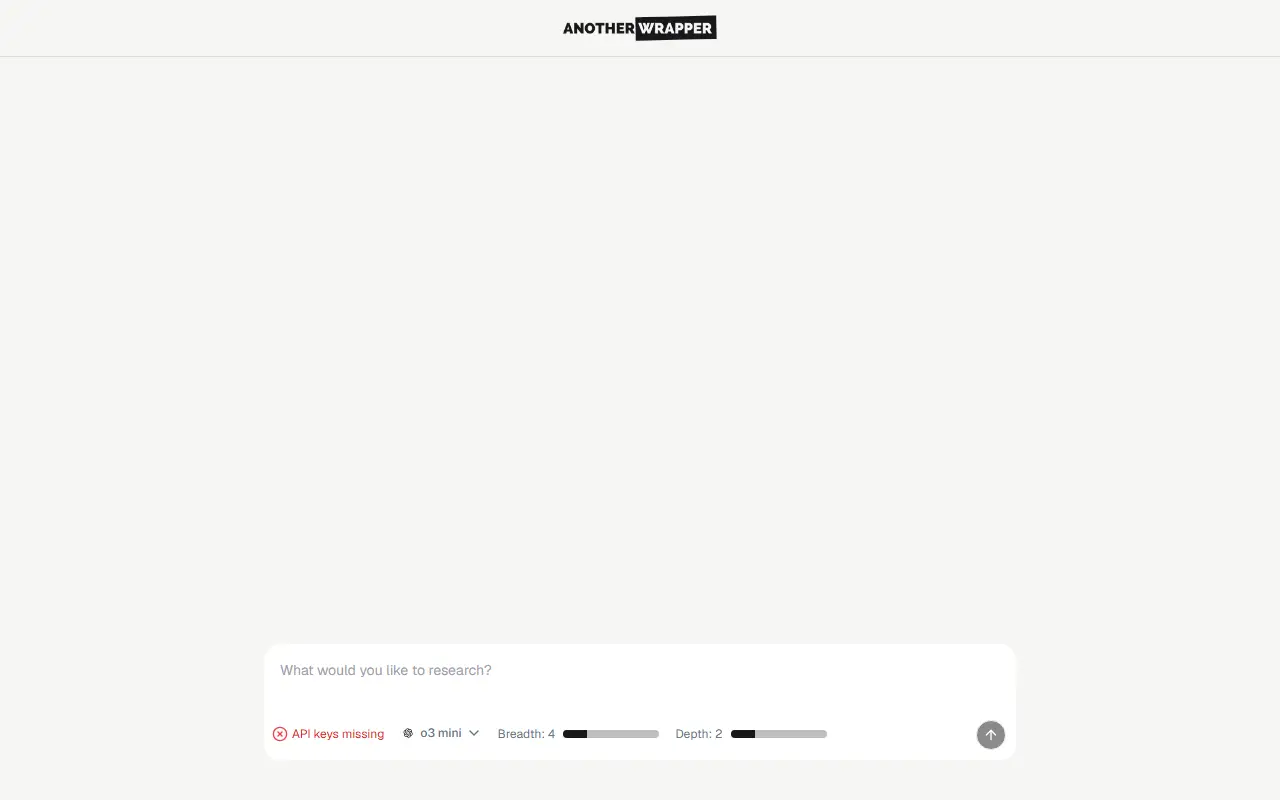
Open Deep Research is an open-source alternative to the deep research features offered by OpenAI and Gemini. It is a web interface built with Next.js and shadcn/ui on top of the original Deep Research command-line project, turning that CLI tool into a visual app for starting and monitoring research tasks.

The system combines search via FireCrawl, web scraping and language models through OpenAI. It researches iteratively and recursively, uses the model to generate targeted search queries and follow-up questions, and runs multiple searches in parallel. Depth and breadth parameters control scope. Output is a detailed markdown report with findings and sources, viewable in a built-in markdown viewer, shown with real-time progress, and downloadable.

API keys for OpenAI and FireCrawl are required and are stored in HTTP-only cookies. You can try a hosted version at anotherwrapper.com with your own keys or host it yourself with Node.js. The project is MIT licensed and sponsored by AnotherWrapper.

Key features

  • Iterative, recursive web research
  • LLM-generated search queries and follow-ups
  • Adjustable research depth and breadth
  • Markdown reports with cited sources
  • Real-time research progress display
  • API keys held in HTTP-only cookies

Pricing: Free and open source under the MIT license; you supply your own OpenAI and FireCrawl API keys.

Fyin

Fyin is an open-source, locally runnable alternative to Perplexity AI that searches the web, scrapes pages and generates answers with Ollama or OpenAI.

GitHub stars
235
Last commit
1 yr ago
Licence
AGPL-3.0
Self-hosted
Yes

Fyin is an open-source answer engine written in Rust, intended as an alternative to Perplexity AI that you can run on your own machine. Its stated motivation is a tool that runs locally, is open source, and delivers answers quickly. It is released under the AGPL-3.0 licence.

It can use a local model through Ollama or the OpenAI API, and it keeps a local vector database for fast search. Searching, scraping and answering run in parallel for speed, and websites are scraped locally. The number of search results to parse is configurable. For web search it needs a Bing API key, or the URL of a SearXNG or DuckDuckGo endpoint.

Fyin is run from the command line, either with cargo or in a Docker container built from the repository, with settings supplied through an environment file. The project lists a hosted version and a simple website as future ideas rather than existing features, so it is mainly for people who prefer to self-host their search assistant.

Key features

  • Runs locally with Ollama models
  • Optional OpenAI API backend
  • Local vector database for search
  • Parallel searching, scraping and answering
  • Configurable number of search results
  • Local website scraping
  • Docker container support

Pricing: Free and open source under the AGPL-3.0 licence; search and model API keys may carry their own costs.

Read more about FyinWebsite GitHub

Perplexity alternatives: questions

What is the best open-source alternative to Perplexity?
GPT Researcher is the top-ranked open-source alternative to Perplexity on Enlisted: An autonomous research agent that searches the web and local documents using any LLM provider and writes detailed, cited research reports. Other strong options are Khoj, Vane, BrowserOS and Morphic.
Are these Perplexity alternatives free?
All 10 are open source, so the code is free to use under its licence, and all of them can be self-hosted on your own server or computer. 5 also offer a paid or managed cloud version if you'd rather not host it yourself.
How is this list of Perplexity alternatives ranked?
By a score built from GitHub stars, star growth over the last 30 days and how recently the code changed. 3 of these projects shipped code in the last 30 days. Data is refreshed daily, and nobody can pay to move up.

People also look for alternatives to…

View all