7,363 open-source and SaaS tools, with GitHub stats refreshed every day.

5 alternatives ranked by real activity

Open-source Oracle Autonomous Database alternatives

A curated, ranked list of the 5 best open-source alternatives to Oracle Autonomous Database.

The best open-source alternative to Oracle Autonomous Database is PostgreSQL. If that doesn't suit you, other good options are MySQL, YugabyteDB, OceanBase and MariaDB.

Oracle Autonomous Database alternatives are mainly databases. 5 of them shipped code in the last 30 days, 5 can be self-hosted, and 1 uses a permissive licence.

Last updated October 3, 2026 · ranked by GitHub stars, growth and recent commits

PostgreSQL

PostgreSQL is an object-relational database management system supporting SQL features such as transactions, foreign keys and triggers.

GitHub stars
22k
Last commit
yesterday
Self-hosted
Yes
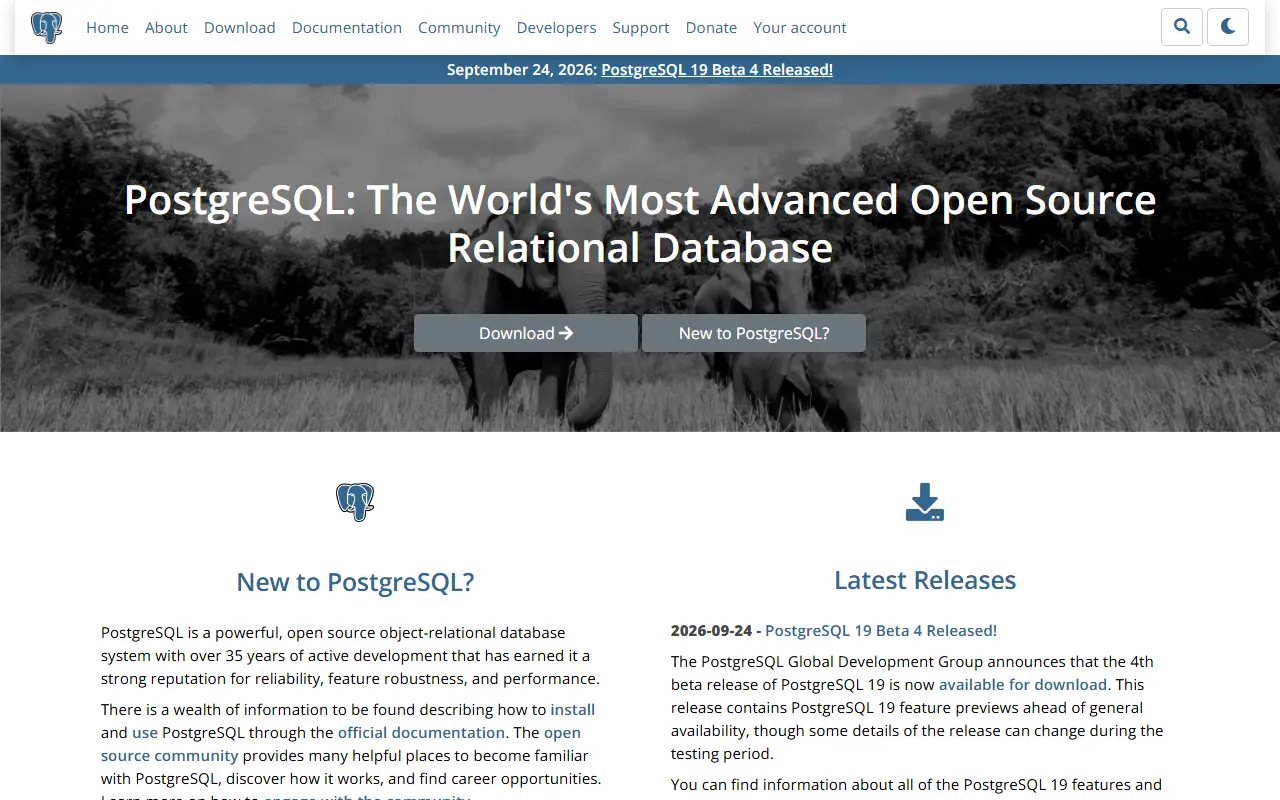
postgresql.orgPostgreSQL homepage screenshot

PostgreSQL is a feature-rich object-relational database management system covering a large part of the SQL standard. Its feature set includes transactions, foreign keys, subqueries, triggers, and user-defined types and functions, and the distribution also contains C language bindings. This GitHub repository is only a mirror of the official git repository, written in C, and the metadata lists the license as Other.

The project does not use GitHub pull requests; contributors submit patches through the process described on the PostgreSQL wiki. Copyright and license terms are in the COPYRIGHT file, general documentation for each version is published on the project site, and build instructions explain how to compile the server from source. The latest releases of the software and related software are available from the PostgreSQL website. Many hosting providers offer managed PostgreSQL, but the project itself is software you install and operate.

Key features

  • Object-relational database with SQL support
  • Transactions and foreign keys
  • Subqueries and triggers
  • User-defined types and functions
  • C language bindings
  • Documentation for building from source

Pricing: Free and open source; the repository lists the license as Other, so see the COPYRIGHT file for terms.

Read more about PostgreSQLWebsite GitHub

MySQL

Source repository of the MySQL relational database server, covering the open-source Community edition and the clustered MySQL Cluster variant.

GitHub stars
12k
Last commit
3 days ago
Self-hosted
Yes
Hosted version
Available
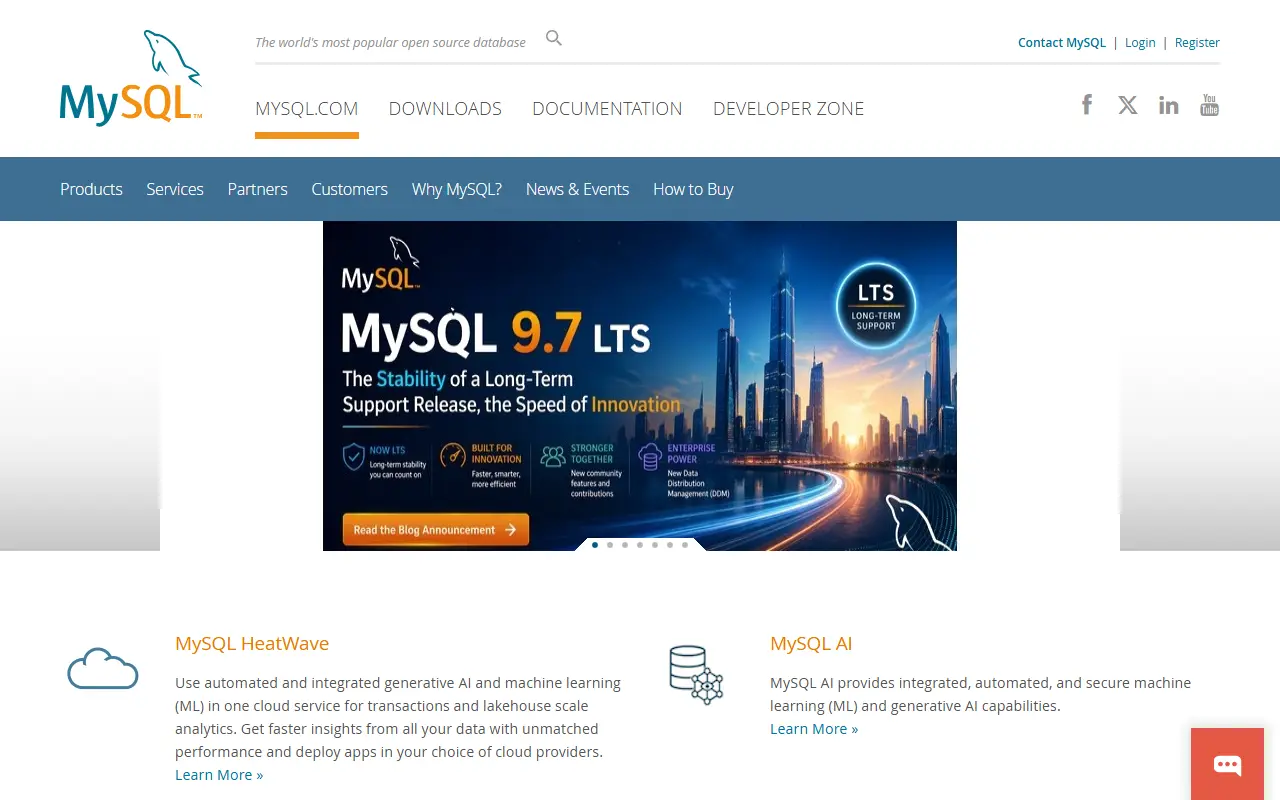
mysql.comMySQL homepage screenshot

MySQL is a widely used open-source relational database. This repository contains the MySQL Server source code along with MySQL Cluster, which the description presents as a real-time, open-source transactional database. Applications talk to it using SQL, and it is a common choice for web applications and embedded products.

The MySQL website describes several offerings built around the server: the Community Edition, with a published governance model and early access builds; MySQL Enterprise Edition for advanced features, management tools and technical support; MySQL HeatWave, a cloud service that combines transactions with analytics and machine learning; and MySQL Cluster CGE. A program for OEM and ISV vendors covers embedding the database in other products.

The server is written in C++ and distributed under licenses detailed in the repository. Organizations can run the Community Edition on their own infrastructure, buy a commercial edition from Oracle, which owns the project, or use a managed cloud offering. Documentation, downloads and a developer zone are available on mysql.com.

Key features

  • Open-source relational database server
  • SQL query interface
  • MySQL Cluster for transactional workloads
  • Community and Enterprise editions
  • HeatWave managed cloud option
  • Documentation and developer resources

Pricing: Community Edition is open source; Enterprise Edition and the HeatWave cloud service are commercial offerings.

Read more about MySQLWebsite GitHub

YugabyteDB

A PostgreSQL-compatible, cloud-native distributed SQL database for transactional workloads that need scale, fault tolerance or multi-region deployment.

GitHub stars
11k
Last commit
yesterday
Latest release
v2026.1.2.0
Self-hosted
Yes
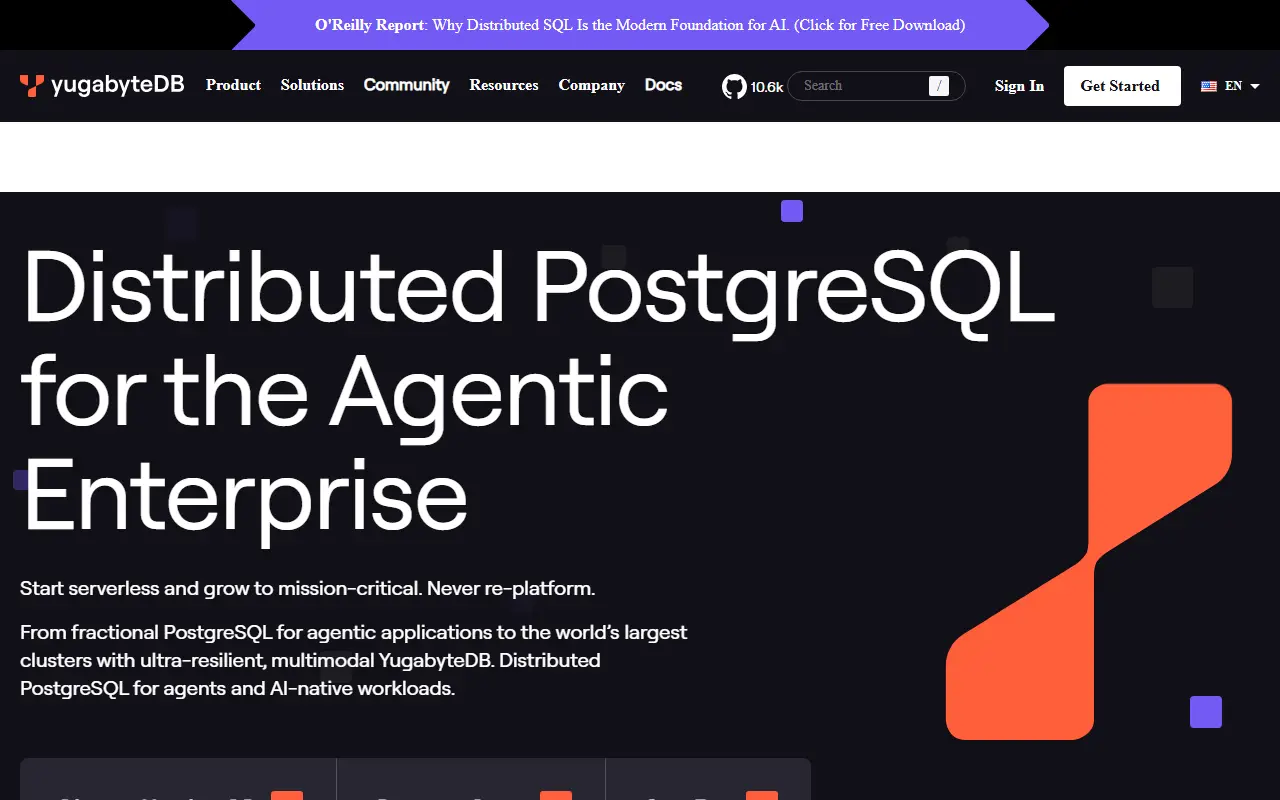
yugabyte.comYugabyteDB homepage screenshot

YugabyteDB is a distributed SQL database that is compatible with PostgreSQL. It combines the relational features of traditional databases with the scale-out design of NoSQL systems, and is intended for cloud-native OLTP applications that need correct data and at least one of scalability, tolerance to failures or global distribution.

Its SQL layer, YSQL, reuses the PostgreSQL query layer and so supports most PostgreSQL features, including data types, stored procedures, triggers and extensions. Its transaction model follows the design of Google Spanner, using Raft consensus for replication and hybrid logical clocks for distributed ACID transactions, with snapshot, serializable and read committed isolation. Reads are strongly consistent by default and can be tuned to read from followers and replicas.

The database can be configured to withstand failures at the level of a disk, rack, node, zone, region or whole cloud, recovering on its own, and the topics mention multi-region, multi-cloud and Kubernetes deployments. The project is written mainly in C and C++, the repository lists its license as Other, and documentation covers architecture, roadmap and how to build applications.

Key features

  • PostgreSQL-compatible SQL layer
  • Distributed ACID transactions
  • Replication using Raft consensus
  • Snapshot, serializable and read committed isolation
  • Automatic failover and repair
  • Multi-region and multi-cloud deployments
  • Kubernetes deployment support

Pricing: The open-source database is free. The managed Aeon service starts at $125 (Standard) or $167 (Professional) per vCPU per month plus storage and transfer, with a free trial; Enterprise is quoted.

Read more about YugabyteDBWebsite GitHub

OceanBase

A distributed relational database developed by Ant Group, MySQL-compatible and built on Paxos, supporting transactional, analytical and vector workloads.

GitHub stars
10k
Last commit
2 days ago
Latest release
v4.4.2_CE_BP3
Licence
Apache-2.0
Self-hosted
Yes
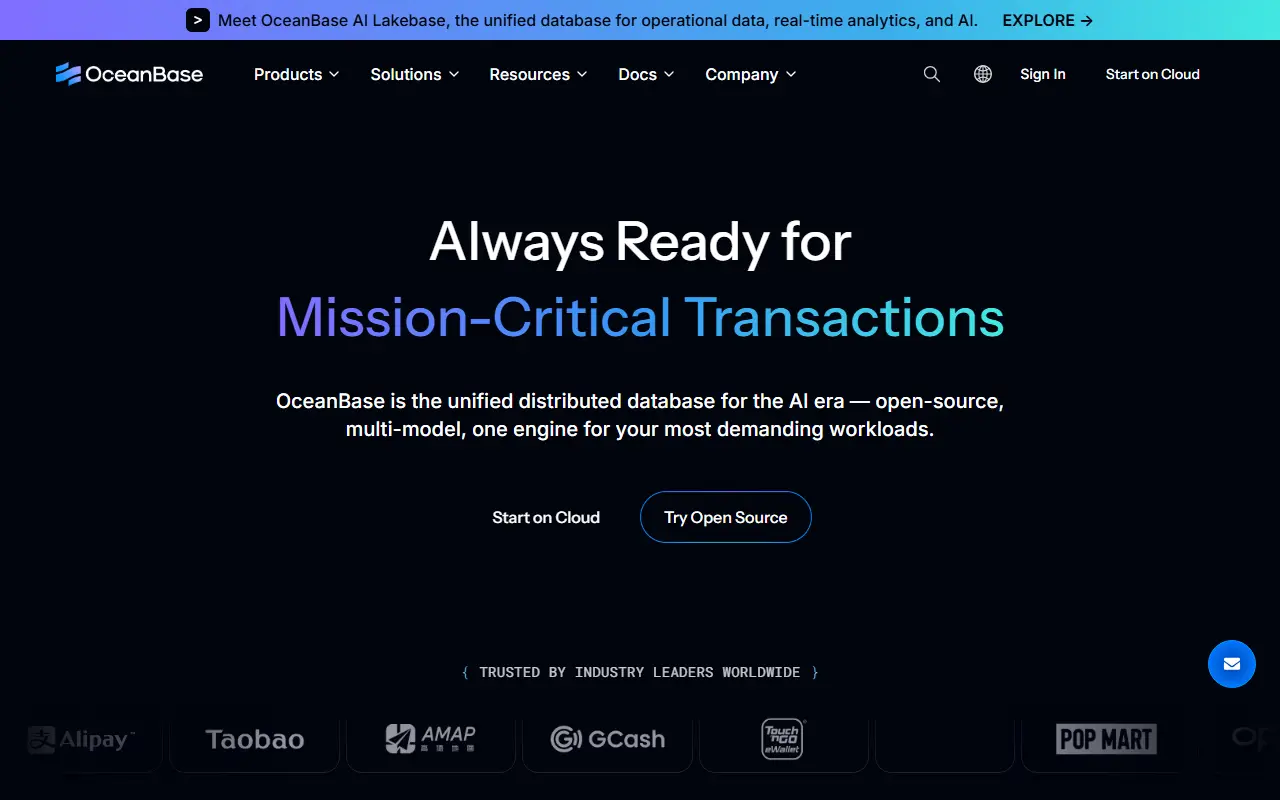
en.oceanbase.comOceanBase homepage screenshot

OceanBase is a distributed relational database developed by Ant Group. It runs on a cluster of commodity servers and uses the Paxos protocol and a distributed architecture to provide high availability and scalability, without depending on a specific hardware architecture.

It is compatible with MySQL, which eases migration from MySQL databases, and supports hybrid transactional and analytical processing, so one engine can serve both OLTP and OLAP workloads. The project now describes itself as a unified, multi-model database for the AI era, with topics that include vector search and full-text search. Cloud-native operation is supported through a Kubernetes operator.

You can try it by deploying a stand-alone instance with an all-in-one package on Linux, starting a Docker container from images on Docker Hub, quay.io or ghcr.io, or running it on Kubernetes with ob-operator. OceanBase is written in C++ and licensed under Apache-2.0, with a developer guide for compiling the observer yourself.

Key features

  • Distributed architecture on Paxos
  • Compatible with MySQL applications
  • Hybrid transactional and analytical processing
  • Vector and full-text search
  • Docker and Kubernetes deployment
  • All-in-one stand-alone installer

Pricing: Free and open source under the Apache-2.0 licence.

Read more about OceanBaseWebsite GitHub

MariaDB

MariaDB Server is an open-source relational database that began as a fork of MySQL, with vector search, pluggable storage engines and Galera clustering.

GitHub stars
8.3k
Last commit
today
Latest release
mariadb-13.0.2
Licence
GPL-2.0
Self-hosted
Yes
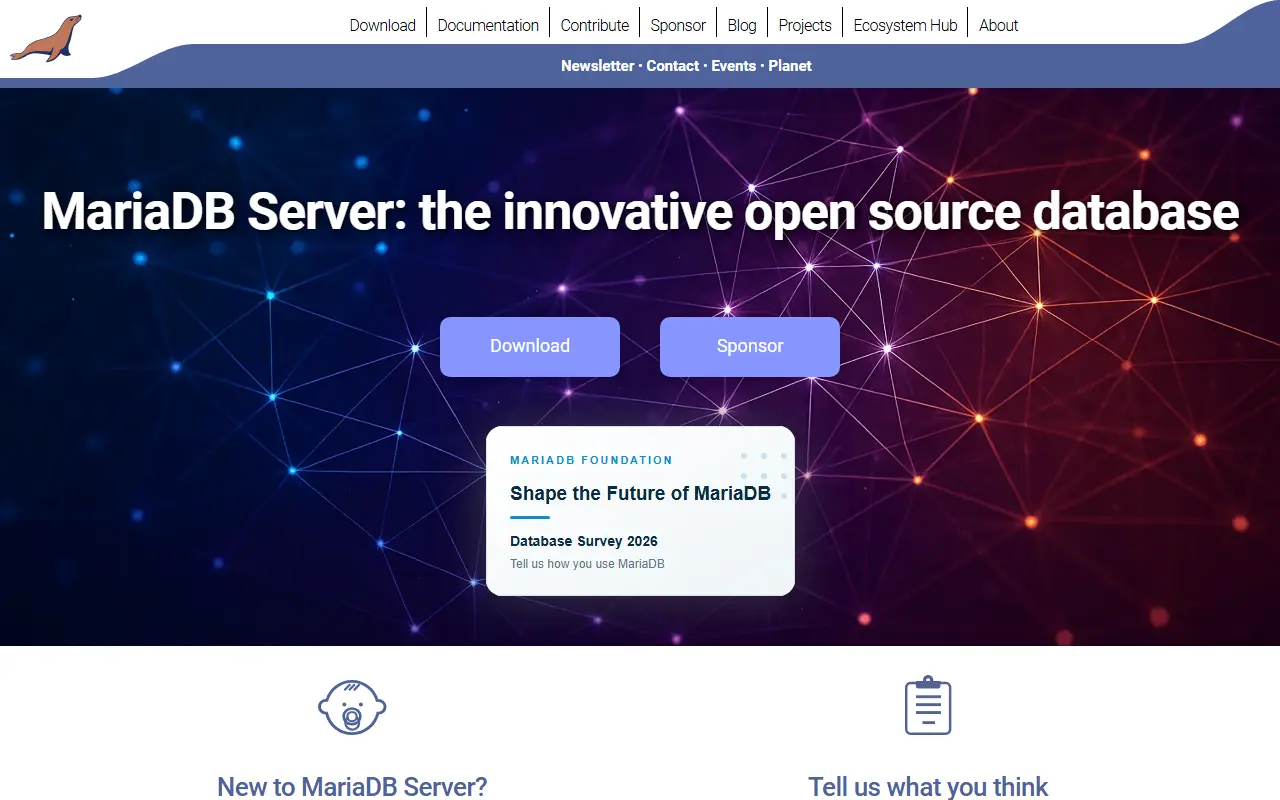
mariadb.orgMariaDB homepage screenshot

MariaDB Server is an open-source relational database built by a global community with the MariaDB Foundation and MariaDB plc. It started out as a MySQL fork driven by the people who created MySQL, keeps a high degree of MySQL compatibility, and is described as a straightforward migration target for existing MySQL deployments.

Since then it has gained its own capabilities. A native VECTOR data type with approximate nearest-neighbour HNSW indexing has been available since version 11.8. Pluggable storage engines include InnoDB, Aria and MyRocks, plus ColumnStore (analytics), Spider (sharding) and S3 (archiving). Replication options include async, semi-sync and parallel modes using global transaction IDs, and Galera provides synchronous multi-primary clustering. On the SQL side it offers common table expressions, window functions, temporal tables with system versioning, sequences and a range of JSON functions.

It also offers an Oracle SQL mode with PL/SQL-style routines, GIS data types and full-text indexing, and security features such as role-based access control, pluggable authentication, data-at-rest encryption and TLS. MariaDB is written in C++ and licensed under GPL-2.0, and you run it on your own servers or in the cloud.

Key features

  • Native vector search with HNSW indexing
  • Pluggable storage engines including InnoDB
  • Galera synchronous multi-primary clustering
  • Temporal tables and window functions
  • MySQL and Oracle compatibility modes
  • Spatial and full-text indexing
  • Role-based access and data-at-rest encryption

Pricing: Free and open source under the GPL-2.0 licence.

Read more about MariaDBWebsite GitHub

Oracle Autonomous Database alternatives: questions

What is the best open-source alternative to Oracle Autonomous Database?
PostgreSQL is the top-ranked open-source alternative to Oracle Autonomous Database on Enlisted: PostgreSQL is an object-relational database management system supporting SQL features such as transactions, foreign keys and triggers. Other strong options are MySQL, YugabyteDB, OceanBase and MariaDB.
Are these Oracle Autonomous Database alternatives free?
All 5 are open source, so the code is free to use under its licence, and all of them can be self-hosted on your own server or computer. 1 also offers a paid or managed cloud version if you'd rather not host it yourself.
How is this list of Oracle Autonomous Database alternatives ranked?
By a score built from GitHub stars, star growth over the last 30 days and how recently the code changed. 5 of these projects shipped code in the last 30 days. Data is refreshed daily, and nobody can pay to move up.

People also look for alternatives to…

View all