6 open-source alternatives ranked by real activity

Open-source Linnworks alternatives

A curated, ranked list of the 6 best open-source alternatives to Linnworks.

The best open-source alternative to Linnworks is ERPNext. If that doesn't suit you, other good options are Odoo, WooCommerce, PrestaShop and OpenCart.

Commercial alternatives to Linnworks include Extensiv, Brightpearl, Cin7 and Ordoro. See all 30.

Linnworks alternatives are mainly ERP tools, but some are also e-commerce tools. 5 of them shipped code in the last 30 days, 6 can be self-hosted, and 1 uses a permissive licence.

Last updated November 13, 2026 · ranked by GitHub stars, growth and recent commits

ERPNext

ERPNext, a free open-source ERP built on the Frappe framework, covering accounting, inventory, orders, manufacturing, assets and projects in one system.

GitHub stars
41k
Last commit
today
Latest release
v16.55.0
Licence
GPL-3.0
Self-hosted
Yes
Hosted version
Available
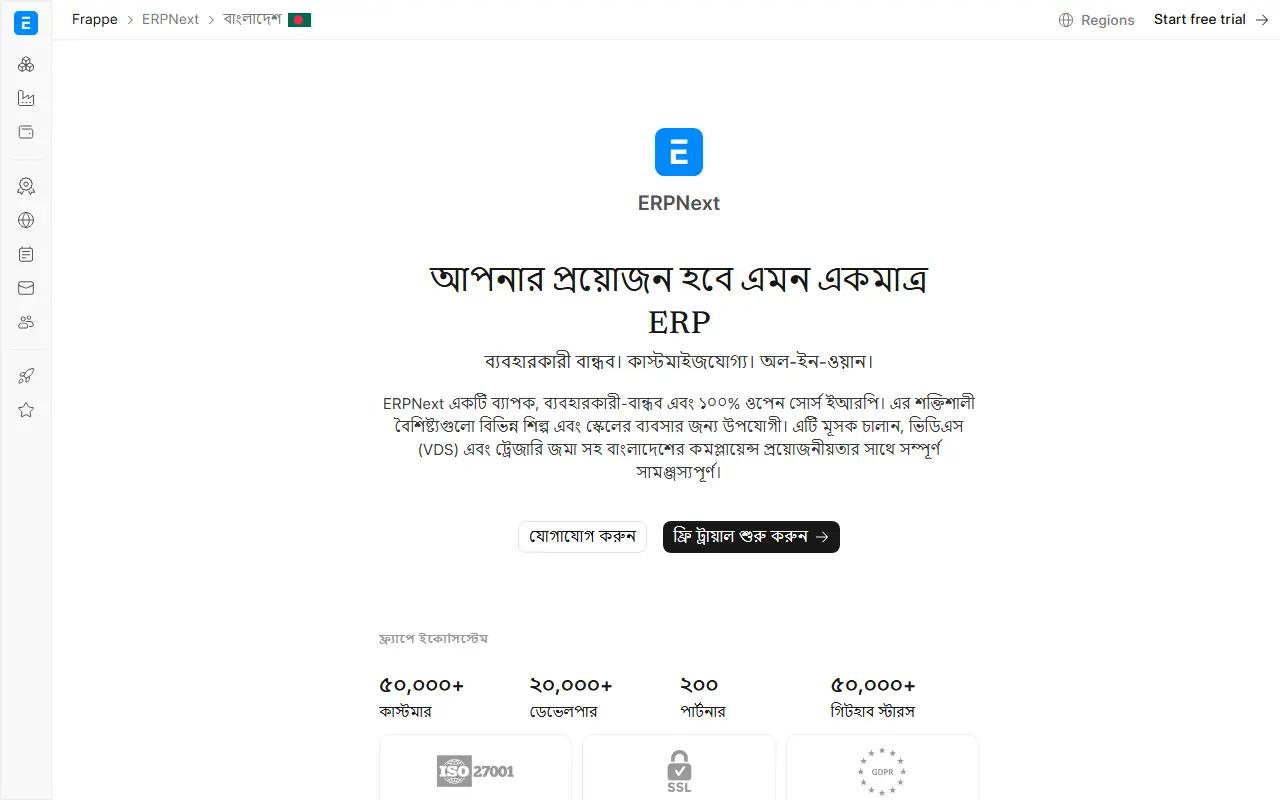
frappe.ioERPNext homepage screenshot

This entry points to ERPNext, the open-source enterprise resource planning system developed in the frappe/erpnext repository on top of the Frappe framework. It aims to replace the patchwork of separate programs a business often uses for invoices, stock, personnel and daily operations with a single integrated product.

Its modules include accounting for cash flow, transactions and financial reports; order management for inventory levels, replenishment, sales orders, customers, suppliers and shipments; manufacturing for production cycles, material consumption, capacity planning and subcontracting; asset management from purchase to disposal; and project delivery. Topics also list HR, CRM, procurement, retail, distribution, healthcare and support functions. It is written in Python, and a live demo is available.

ERPNext is GPL-3.0 licensed and can be self-hosted. The Frappe team also offers managed hosting, which suits companies that want the software without running servers. It is aimed at small and mid-size organizations that want an alternative to proprietary ERP suites.

Key features

  • Accounting and financial reporting
  • Inventory and order management
  • Manufacturing planning and subcontracting
  • Asset tracking across the organization
  • Project planning and delivery tracking
  • HR, CRM and procurement modules

Pricing: ERPNext software is free to self-host. Frappe Cloud hosting starts at $5 per month for a site and $20 per month for a server, not charged per user; a 14-day free trial is available.

Read more about ERPNextWebsiteGitHub#1 Linnworks alternative

Odoo

Odoo is an open source suite of business apps covering accounting, CRM, inventory, HR, websites and more on one platform.

GitHub stars
56k
Last commit
yesterday
odoo.comOdoo homepage screenshot

Odoo describes itself as open source ERP and CRM. The apps are grouped by area: finance, sales, websites, supply chain, human resources, marketing, services and productivity. Each one covers a single process, such as invoicing, point of sale, payroll, helpdesk or manufacturing, and apps can be added one at a time.

The site lists a large set of industry pages, from retail and restaurants to law firms, construction and nonprofits. A Studio app, third-party apps and an AI app are also listed. The pricing data shows a free plan limited to one app, plus Standard and Custom plans billed per seat each month, and the homepage offers a free start along with demos and an advisor.

Key features

  • Finance apps: accounting, invoicing, expenses
  • Sales apps including CRM, subscriptions and point of sale
  • Website, eCommerce, events and eLearning apps
  • Supply chain apps for inventory and manufacturing
  • HR apps for payroll, recruitment and time off
  • Marketing apps for email, SMS and automation
  • Service apps such as project, timesheets and helpdesk

Pricing: Published plans: One App Free at USD 0, Standard at USD 11.2 per month per seat, and Custom at USD 20.9 per month per seat.

Read more about OdooWebsiteGitHub#2 Linnworks alternative

WooCommerce

A customizable open-source ecommerce platform built as a plugin for WordPress; this repository is the monorepo for the core plugin and its extensions.

GitHub stars
11k
Last commit
today
Latest release
11.3.0
Self-hosted
Yes
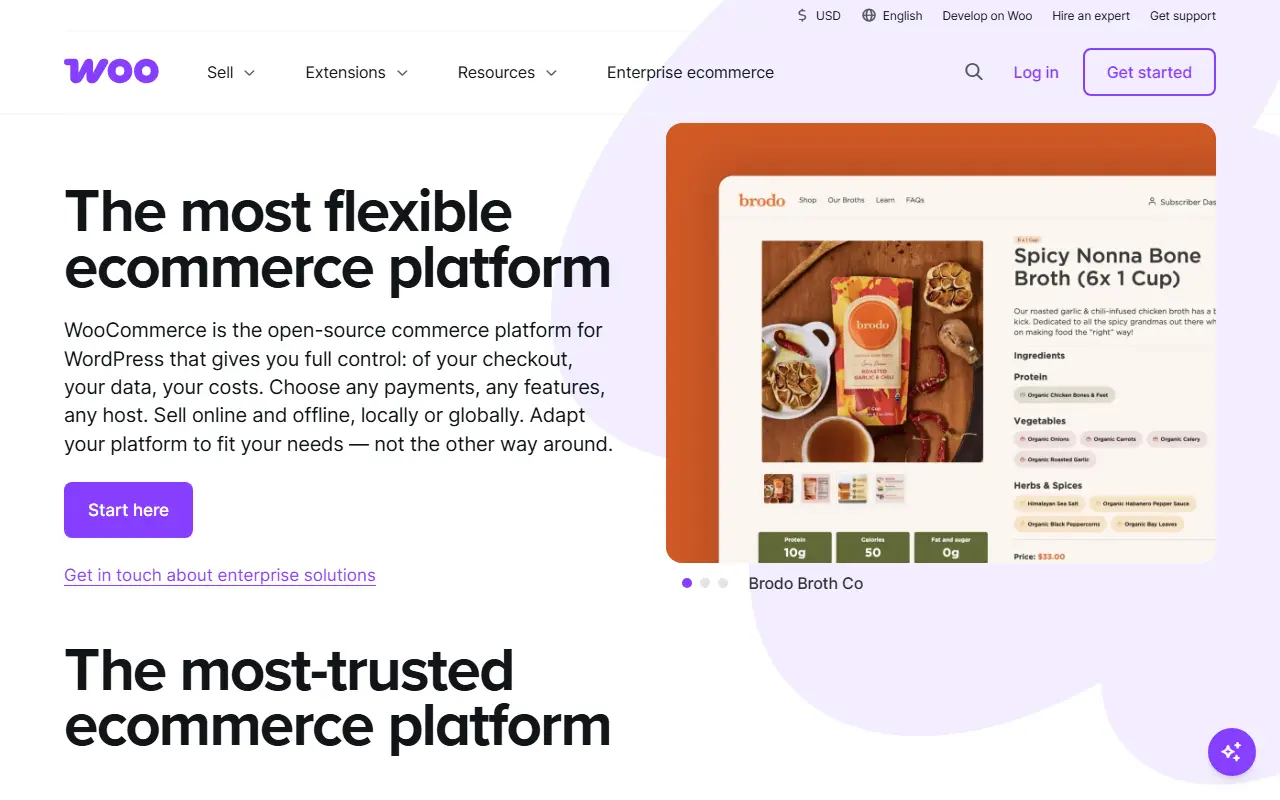
woocommerce.comWooCommerce homepage screenshot

WooCommerce is a customizable ecommerce platform that runs on WordPress, written mainly in PHP. The GitHub repository is a monorepo with the plugins, packages and tooling for developing the core WooCommerce plugin together with its extensions, so it is where the project's code, issues and development discussions live.

Developers working on it need Node.js, PNPM, PHP 7.4 or higher and Composer, and a POSIX-compliant operating system is assumed, with WSL recommended on Windows. The project maintains a development blog and a developer account on X for updates, and the topics reference React, since parts of its admin interface use it.

Because it is built on WordPress, merchants typically run WooCommerce on their own hosting, adding products, payments and shipping through extensions. The repository lists the license as Other, so check the licence terms in the repository. It suits small and mid-sized shops, agencies and developers who already work in the WordPress ecosystem.

Key features

  • Ecommerce functionality on WordPress
  • Extensions add features to the core
  • Monorepo of plugins and packages
  • PHP codebase with React-based admin parts
  • Developer blog and documentation
  • Large ecosystem of third-party extensions

Pricing: The core platform is free with no subscription or revenue share. You pay separately for hosting (about $25 to $350 a month) and optional extensions ($29 to $299 a year each).

PrestaShop

A PHP open-source e-commerce platform for building online stores, with payment integrations, translations, responsive front and back offices and a customizable architecture.

GitHub stars
9.3k
Last commit
yesterday
Latest release
9.2.1
Self-hosted
Yes
prestashop-project.orgPrestaShop homepage screenshot

PrestaShop is an e-commerce web application written in PHP and released as open source, built to give merchants and shoppers a solid shopping cart experience. It is described as highly customizable, supports the major payment services, is translated into many languages, is localized for many countries and has a responsive design for both the storefront and the back office.

The GitHub repository contains the source code for development and preview, while stable downloads come from the releases page. The stable line is PrestaShop 9.0, first released in June 2025, and the develop branch holds work in progress toward version 9.1. Installing it requires a web server with PHP 8.1 or newer and MySQL 5.6 or later, or a compatible fork such as MariaDB, plus a database tool such as phpMyAdmin. Apache or Nginx are recommended.

PrestaShop is a self-hosted platform, so merchants run it on their own hosting, and the repository lists the licence as Other. Its topics mention CMS and PHP framework use. It suits small and mid-sized merchants and agencies building custom shops with extensions and themes.

Key features

  • Full e-commerce storefront and back office
  • Support for major payment services
  • Translations and country localization
  • Responsive front and back office
  • Highly customizable modules and themes
  • PHP 8.1+ with MySQL or MariaDB

Pricing: Free open-source software; the repository lists the license as Other.

OpenCart

OpenCart is a free, open-source PHP e-commerce platform that online merchants install on their own hosting to run a web store.

GitHub stars
8.2k
Last commit
2 days ago
Latest release
4.1.0.4
Self-hosted
Yes
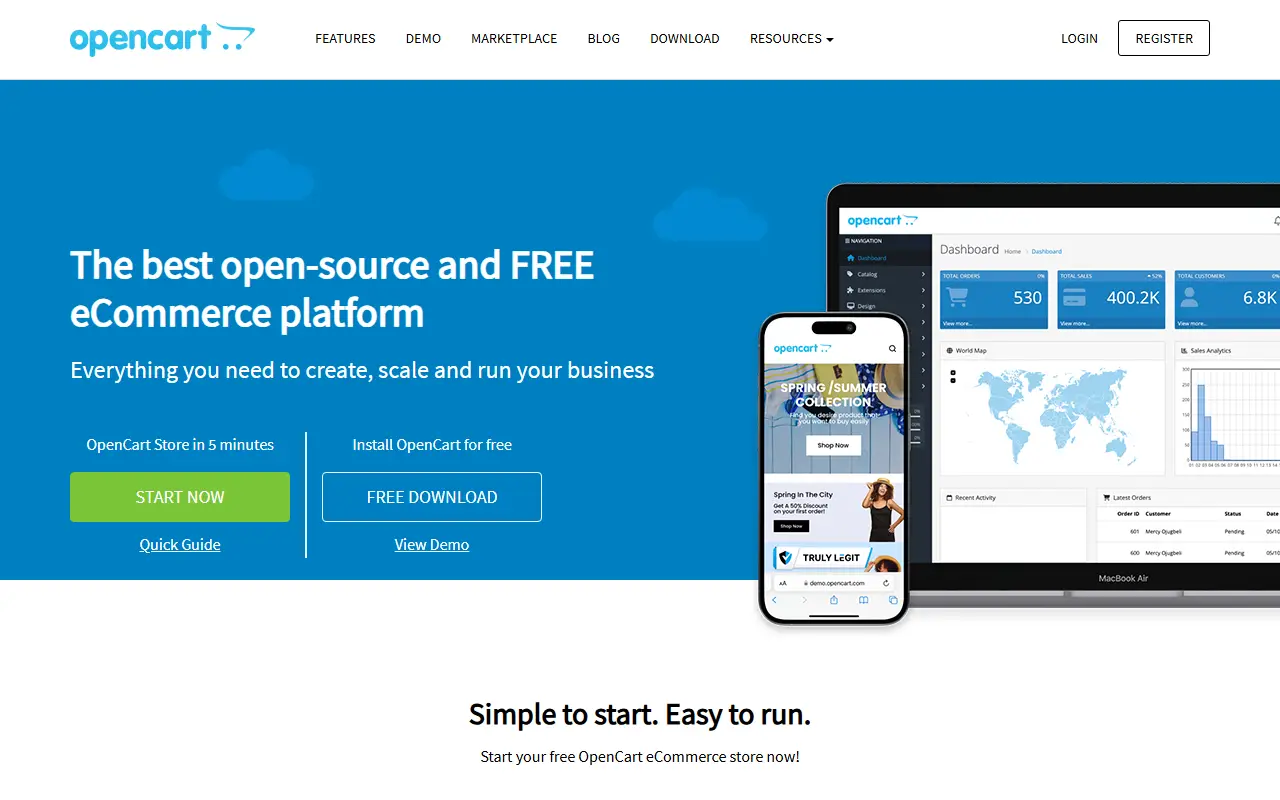
opencart.comOpenCart homepage screenshot

OpenCart is a free and open-source e-commerce platform for online merchants. It is a PHP-based shopping cart system that you install on your own web hosting and use as the foundation of an online store, with JavaScript and HTML on the storefront side.

The repository includes installation and upgrade instructions that ship with the download, and the project directs users to a community forum, a GitHub bug tracker and a changelog for the master branch. Bug reports must relate to the core code, since problems with third-party modules or server configuration are referred back to the extension developer, the forum or commercial partners. Security issues are handled through private messages to moderators instead of public posts.

Contributions follow a documented guide covering environment setup, coding standards and pull request expectations. The repository lists a licence of other, so check the project for its exact terms before redistributing. A hosted version of the store software is not described in the repository.

Key features

  • PHP-based shopping cart system
  • Self-installed on your own hosting
  • Documented upgrade path between versions
  • Community forum and bug tracker
  • Extension ecosystem from third-party developers

Pricing: Free and open source; installed on your own hosting.

OMS ERP

Open-source Java business platform combining order management, inventory and finance for merchants selling across Chinese e-commerce channels.

GitHub stars
1.9k
Last commit
10 mo ago
Latest release
PRE
Licence
Apache-2.0
Self-hosted
Yes
k8s9.comOMS ERP homepage screenshot

OMS-ERP is an omni-channel business middle-platform from the Chinese vendor Feiji Technology (Xiamen), with documentation in Chinese. It pulls orders from marketplaces such as JD, Taobao, Tmall, Douyin and Pinduoduo, converts them into internal orders, and links the order, procurement, inventory and finance centers so that order, stock and financial data stay consistent. It targets retailers and brands that want to replace scattered e-commerce and ERP tools with a platform they own.

Technically it is a Spring Cloud microservice system designed for Kubernetes, with multi-tenant support, Zeebe and Activiti workflow engines and customizable reports. Common components such as Redis, MyBatis, saga-based distributed transactions, distributed locks and search are packaged as reusable services so teams can extend the platform themselves. The repository lists topics including OMS, WMS, TMS, CRM and ERP.

The code is published under the Apache-2.0 license, though the README's installation and usage sections are still empty. The vendor's website describes its business model as full source code delivery, local or private cloud deployment, documentation, customization and training, with a commercial license certificate offered as an added service. Contact the vendor for editions and pricing.

Key features

  • Aggregates orders from major Chinese e-commerce platforms
  • Order, procurement, inventory and finance centers
  • Spring Cloud microservice architecture
  • Multi-tenant support
  • Zeebe and Activiti workflow engines
  • Customizable reports

Pricing: Code is on GitHub under Apache-2.0. The vendor also sells a commercial license certificate with source delivery, deployment and training; prices are not published.

Read more about OMS ERPWebsiteGitHub#6 Linnworks alternative

Commercial Linnworks alternatives

Hosted, closed-source products that compete with Linnworks. Showing 12 of 30.

See every Linnworks alternative on its tool page

Linnworks alternatives: questions

What is the best open-source alternative to Linnworks?
ERPNext is the top-ranked open-source alternative to Linnworks on Enlisted: ERPNext, a free open-source ERP built on the Frappe framework, covering accounting, inventory, orders, manufacturing, assets and projects in one system. Other strong options are Odoo, WooCommerce, PrestaShop and OpenCart.
What are the best commercial alternatives to Linnworks?
Extensiv, Brightpearl, Cin7, Ordoro and Unleashed are among the hosted, closed-source alternatives to Linnworks listed on Enlisted, which lists 30 in total. Compare their pricing and features on each tool page.
Are these Linnworks alternatives free?
All 6 are open source, so the code is free to use under its licence, and all of them can be self-hosted on your own server or computer. 1 also offers a paid or managed cloud version if you'd rather not host it yourself.
How is this list of Linnworks alternatives ranked?
By a score built from GitHub stars, star growth over the last 30 days and how recently the code changed. 5 of these projects shipped code in the last 30 days. Data is refreshed daily, and nobody can pay to move up.

People also look for alternatives to…

View all