7,363 open-source and SaaS tools, with GitHub stats refreshed every day.

12 alternatives ranked by real activity

Open-source Google Photos alternatives

A curated, ranked list of the 12 best open-source alternatives to Google Photos.

The best open-source alternative to Google Photos is Immich. If that doesn't suit you, other good options are PhotoPrism, Ente, LibrePhotos and Photoview.

Google Photos alternatives are mainly photo & image tools. 10 of them shipped code in the last 30 days, 12 can be self-hosted, and 3 use a permissive licence.

Last updated October 3, 2026 · ranked by GitHub stars, growth and recent commits

Immich

A self-hosted photo and video library with mobile auto-backup, face and object search, shared albums and multi-user support, often used in place of Google Photos.

GitHub stars
115k
Last commit
today
Latest release
v3.2.4
Licence
AGPL-3.0
Self-hosted
Yes
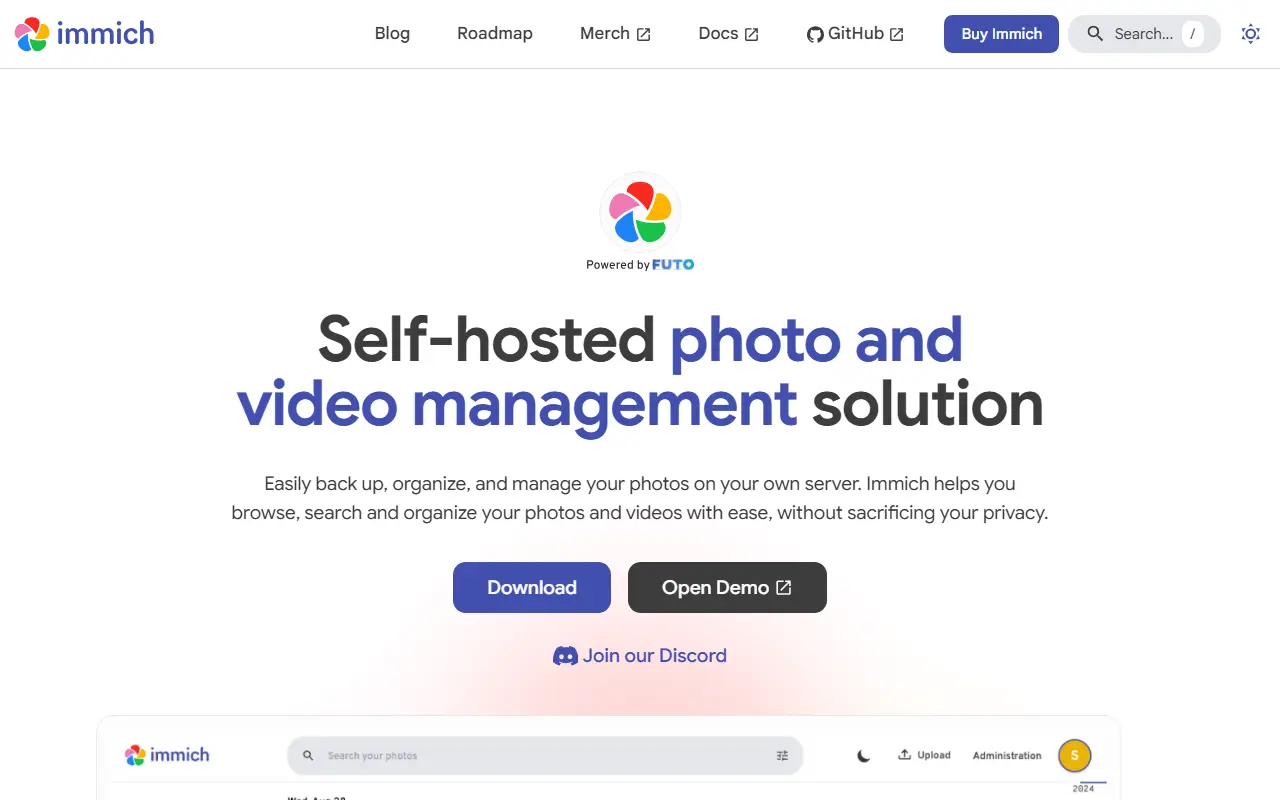
immich.appImmich homepage screenshot

Immich is a self-hosted photo and video management server with companion mobile apps and a web interface. Your media stays on hardware you control while you still get automatic phone backup, a timeline view, albums and sharing, which is the role many people otherwise hand to Google Photos.

Search works on metadata, recognized objects, faces and CLIP-based natural language queries, and face recognition groups people into clusters. Other features include shared albums and partner sharing, a global map, memories, archive and favorites, RAW format support, LivePhoto and MotionPhoto handling, duplicate prevention, OAuth login, API keys and a user-defined storage structure. Background backup and selective album backup keep the mobile app flexible.

Immich is released under AGPL-3.0, and its documentation includes installation guides, a roadmap and a public demo. The maintainers stress following a 3-2-1 backup plan, since a self-hosted library is only as safe as the backups behind it. It suits households and small groups who want private, searchable photo storage.

Key features

  • Automatic photo and video backup from mobile
  • Face recognition and people clustering
  • Search by metadata, objects and CLIP
  • Shared albums and partner sharing
  • Multi-user support with OAuth login
  • RAW, LivePhoto and MotionPhoto support
  • Global map and memories views

Pricing: Free and open source under AGPL-3.0; you run it on your own hardware.

Read more about ImmichWebsite GitHub

PhotoPrism

An AI-powered, privacy-first photo app for browsing, organizing and sharing pictures and videos, running self-hosted or in the cloud with a PWA interface.

GitHub stars
40k
Last commit
today
Latest release
260919-28c46a116
Self-hosted
Yes
Hosted version
Available
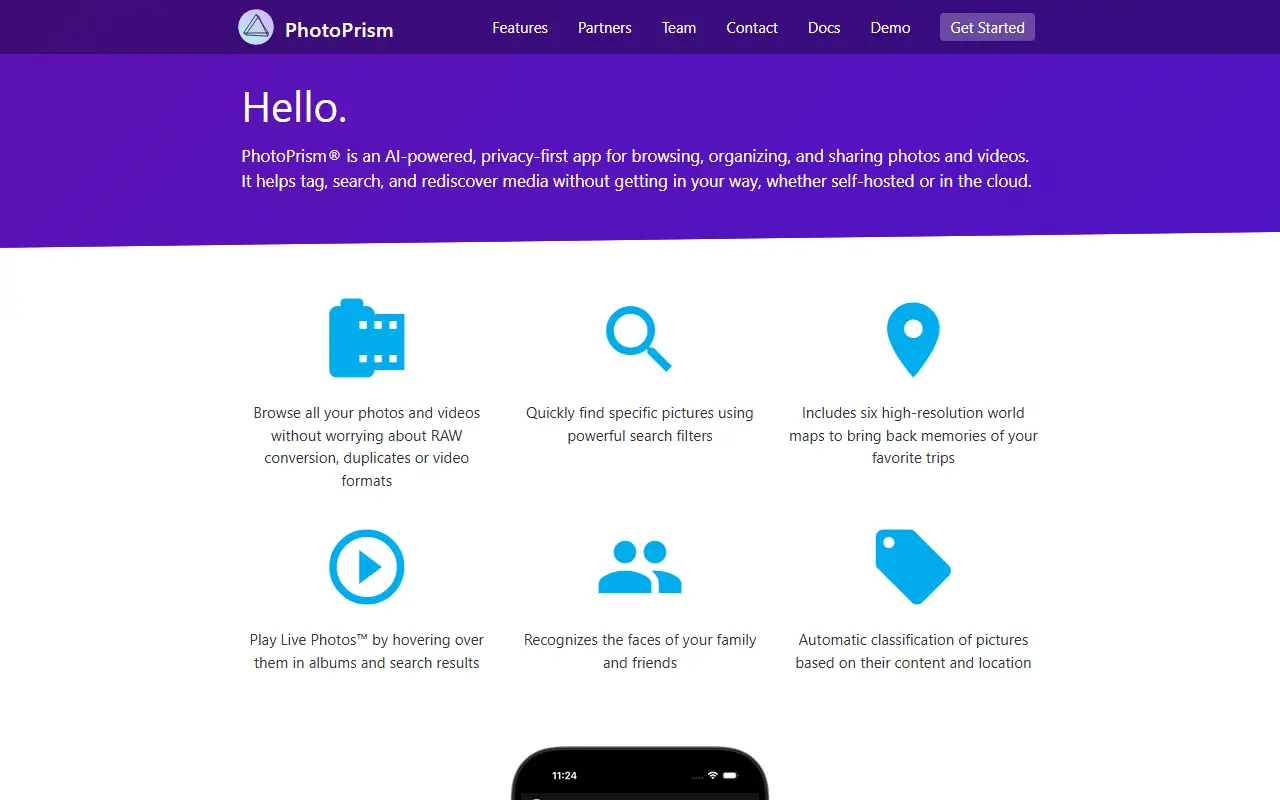
photoprism.appPhotoPrism homepage screenshot

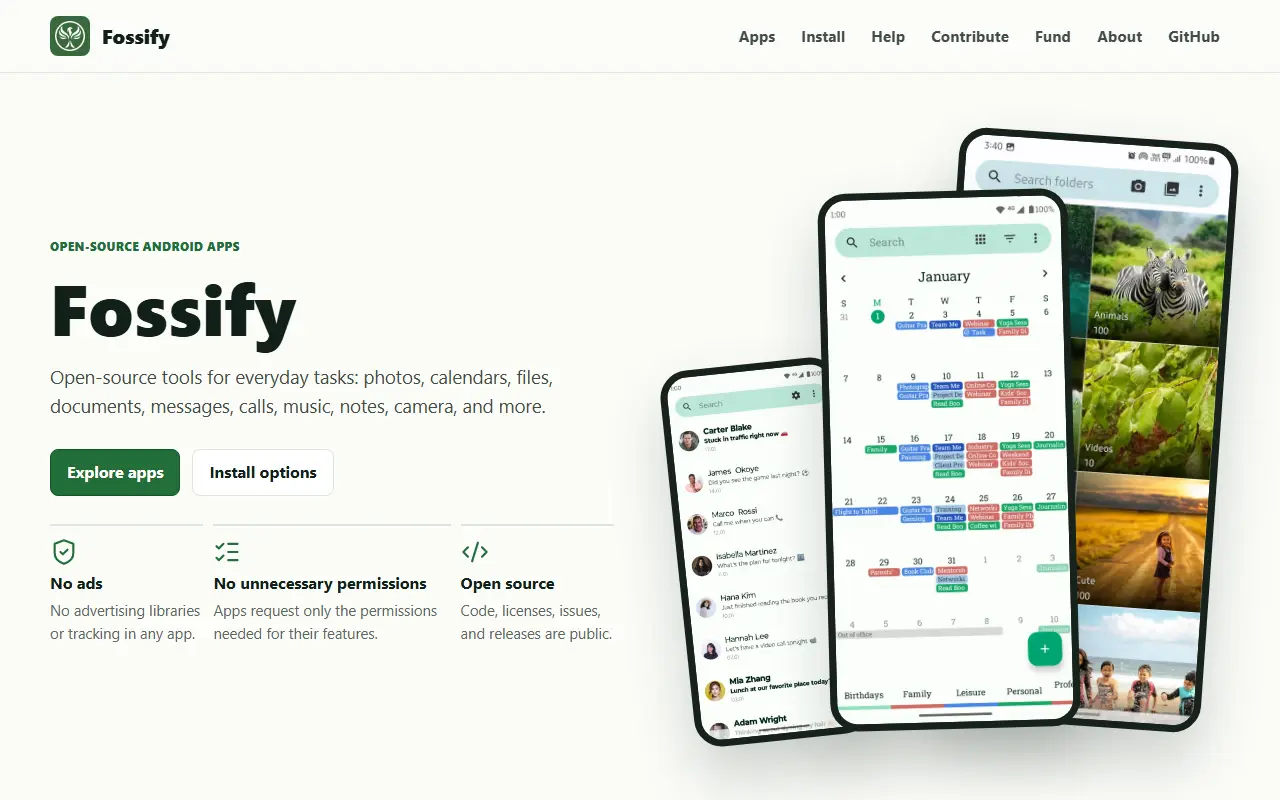
PhotoPrism is a photo management application that uses machine learning to help you browse, organize and share photos and videos. It tags and classifies media automatically, so you can search and rediscover pictures without sorting them by hand. The project says it was built to run wherever you need it without compromising privacy, and its topics place it as a Google Photos alternative.

The web interface is a progressive web app that can be installed on a phone, tablet or desktop home screen and feels like a native app. It handles RAW images and many video formats, and offers search filters that can be combined across many properties. A public demo lets you try it first, with a warning not to upload private material. PhotoPrism is written in Go and uses TensorFlow for image analysis.

You can self-host PhotoPrism or use a cloud-hosted setup. Its license is listed as 'Other' on GitHub, so check the terms if you plan to redistribute it. It suits photographers and families who want a private, searchable photo library on hardware they own.

Key features

  • AI-based tagging and classification
  • Support for RAW photos and video formats
  • Combinable search filters
  • Installable progressive web app
  • Albums, sharing and browsing by place
  • Self-hosted or cloud-hosted
Read more about PhotoPrismWebsite GitHub

Ente

Ente is an open-source, end-to-end encrypted cloud for photos, 2FA codes and documents, with apps for mobile, web and desktop.

GitHub stars
29k
Last commit
today
Latest release
photos-v1.3.64
Licence
AGPL-3.0
Self-hosted
Yes
Hosted version
Available
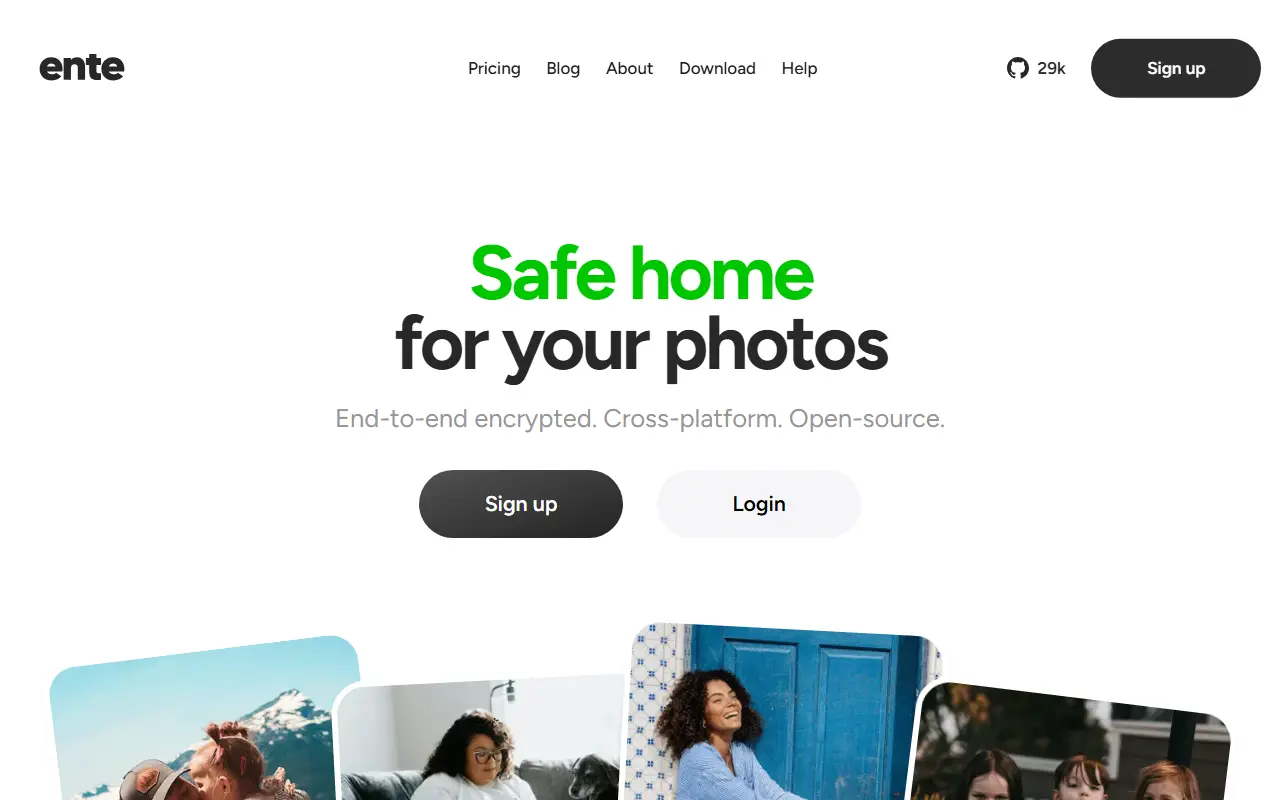
ente.comEnte homepage screenshot

Ente is a service built on an open-source, end-to-end encrypted platform that lets you keep data in the cloud without having to trust the provider. Three apps run on it: Ente Photos, an alternative to Google Photos and Apple Photos; Ente Locker, for important documents and credentials; and Ente Auth, a two-factor authentication app positioned as a replacement for Authy. The monorepo contains the clients and the server.

Ente Photos includes triple data replication, face detection, semantic search, private sharing, collaborative albums, family plans, background uploads and straightforward import and export, all encrypted across platforms. Clients exist for iOS, Android, F-Droid, web, Linux, macOS and Windows, built with Flutter, Go and TypeScript. The README says the source code and cryptography have had external audits. The server can be self-hosted, and the code is under the AGPL-3.0 license.

Key features

  • End-to-end encrypted photo storage and backup
  • Authenticator app for two-factor codes
  • Locker for documents and credentials
  • Face detection and semantic photo search
  • Private sharing and collaborative albums
  • Apps for mobile, web and desktop

Pricing: A free plan includes 10 GB. Paid storage plans cost $4.99 per month for 200 GB, $9.99 for 1000 GB and $19.99 for 2000 GB, with a smaller 50 GB Starter tier and annual billing also offered.

Read more about EnteWebsite GitHub

LibrePhotos

LibrePhotos is a self-hosted, open-source photo manager with face recognition, object detection, semantic search and timeline views for personal libraries.

GitHub stars
8.1k
Last commit
2 days ago
Latest release
1.2.1
Licence
MIT
Self-hosted
Yes
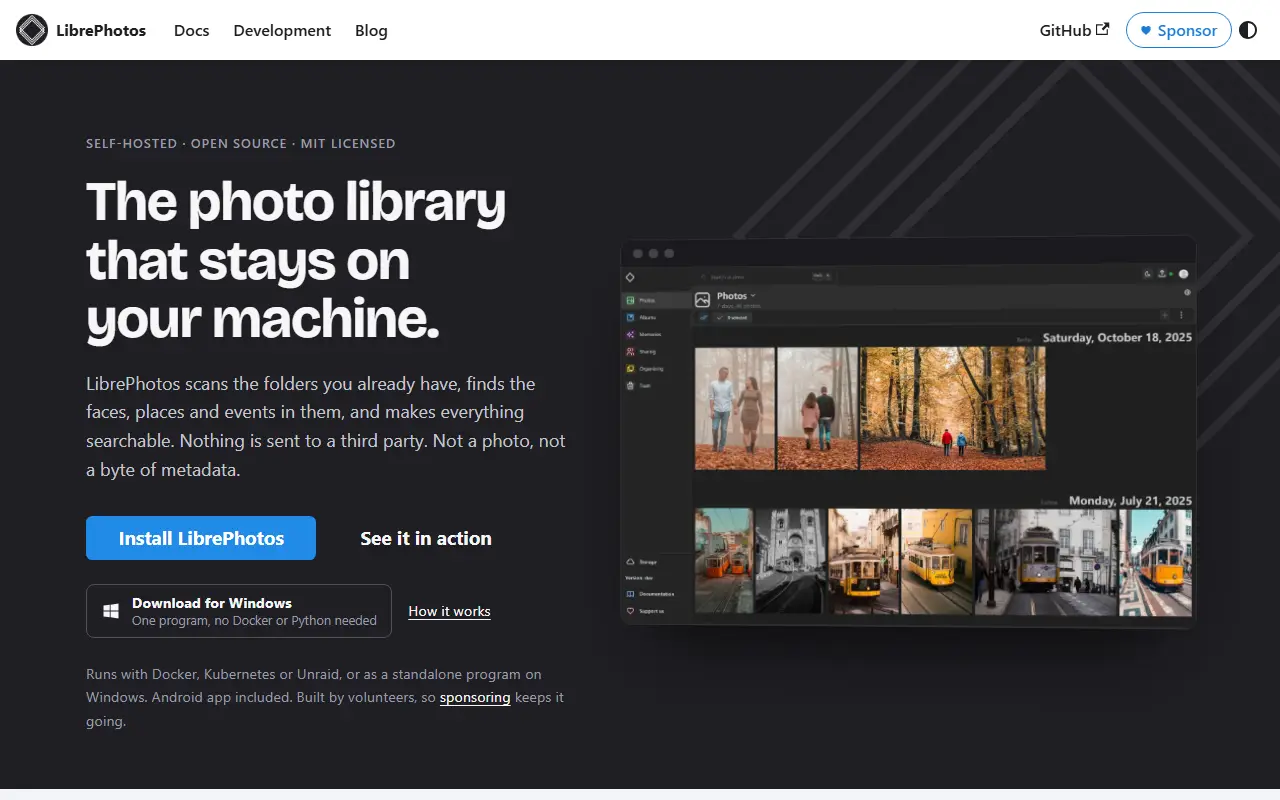
docs.librephotos.comLibrePhotos homepage screenshot

LibrePhotos is a self-hosted photo management service for people who want to organize a personal library on their own server. It scans pictures on the file system and adds machine-learning features such as automatic face recognition, object and scene detection and semantic image search.

It supports all kinds of photos, including raw files, as well as videos, and offers a timeline view, multiuser support, reverse geocoding and search by metadata. Albums can be generated automatically from events, for example a day spent in a particular city. The README warns that the machine-learning features use a lot of memory: it lists 4 GB of RAM as a minimum and recommends 8 GB or more.

The project is a monorepo containing a Django 5 backend, a React and Vite web client, an Expo mobile app for Android and iOS, a Docusaurus documentation site and deployment files for Docker Compose and Kubernetes. It is released under the MIT licence and runs on any Docker-compatible system, with Linux recommended.

Key features

  • Automatic face recognition and classification
  • Object and scene detection
  • Semantic image search
  • Support for raw photos and videos
  • Timeline view and event-based albums
  • Multiuser support
  • Reverse geocoding of photo locations

Pricing: Free and open source under the MIT licence.

Read more about LibrePhotosWebsite GitHub

Photoview

Photoview is a self-hosted photo gallery for photographers that scans folders on your server and builds fast, thumbnail-based browsing of large libraries.

GitHub stars
6.5k
Last commit
yesterday
Latest release
v2.4.0
Licence
AGPL-3.0
Self-hosted
Yes
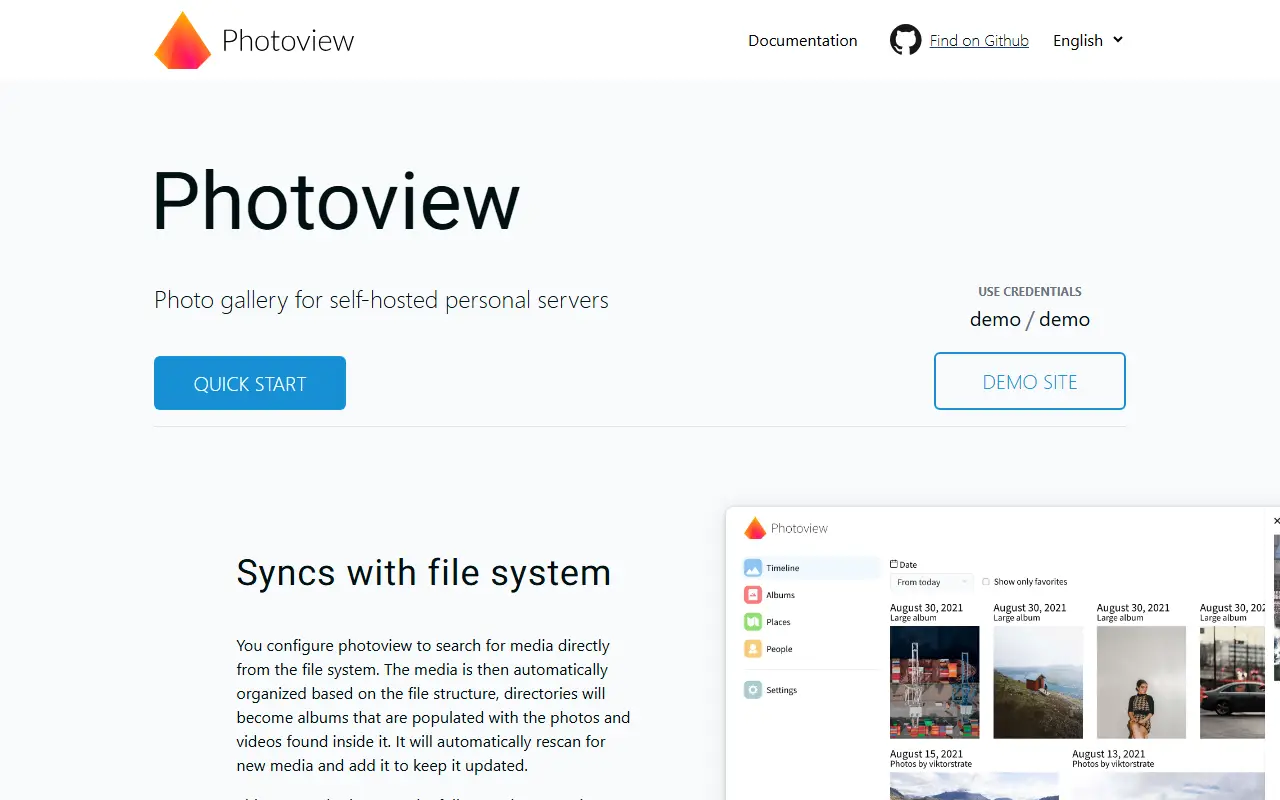
photoview.github.ioPhotoview homepage screenshot

Photoview is a photo gallery for self-hosted personal servers, made for photographers who need to navigate directories containing thousands of high-resolution images. You configure it to look for photos and videos in a folder on the file system, and it takes care of the rest.

A scanner picks up the media automatically and generates thumbnails so browsing stays fast. Once scanning finishes, the media appear on the website organized the same way they are on disk. Repository topics point to support for RAW files and EXIF metadata, and the project is distributed as a Docker image that is commonly deployed on NAS devices. The README gives migration notes about a new Docker registry and a move to PostgreSQL 18 on the master branch.

Photoview is written in Go and licensed under AGPL-3.0. It is meant to be run on your own hardware, there is a Discord server for setup and development questions, and its approach of mirroring the folder structure suits people who already keep photos neatly organized on disk.

Key features

  • Scans folders for photos and videos
  • Automatic thumbnail generation
  • Gallery mirrors the filesystem layout
  • RAW and EXIF handling
  • Docker deployment with PostgreSQL

Pricing: Free and open source under the AGPL-3.0 licence.

Read more about PhotoviewWebsite GitHub

Lychee

A self-hosted photo management and sharing system built with PHP and Vue, installed on your own server or web space.

GitHub stars
4.3k
Last commit
today
Latest release
v7.10.0
Licence
MIT
Self-hosted
Yes
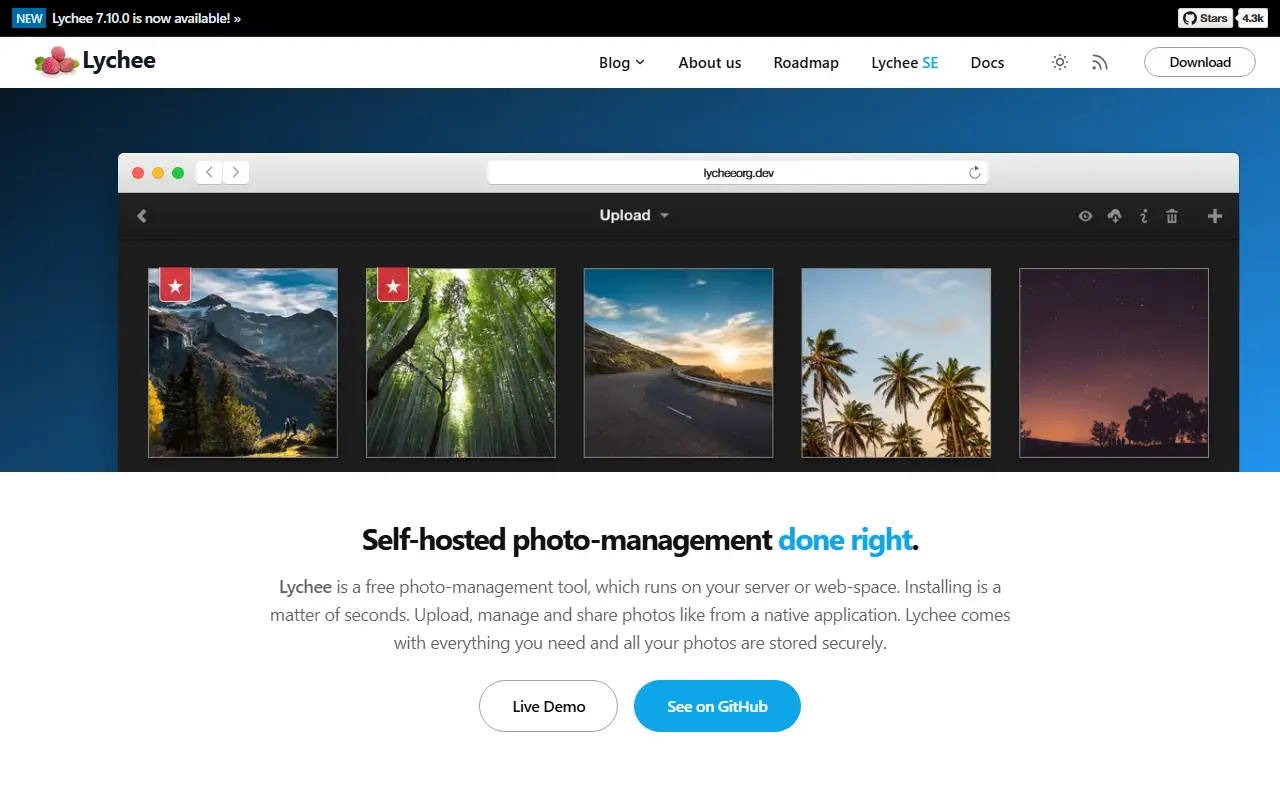
lycheeorg.devLychee homepage screenshot

Lychee is a free, open-source photo management tool that runs on your own server or web space. You can upload, manage and share photos through a web interface that is meant to feel like a native application, with the aim of keeping the photos stored securely.

Installation is described as quick, and the project provides Docker images, with version 7.0 bringing significant changes to the Docker image and an upgrade guide. Lychee requires PHP 8.4 or 8.5 and has documentation, a changelog and a Discord community. It is built with PHP, TypeScript and Vue.

Lychee is licensed under MIT. A Supporter Edition adds extra functionality for people who want more than the free version, and users can also support the team directly. Topics on the repository describe it as a photo gallery and photo management application.

Key features

  • Photo upload and management
  • Photo sharing from your own server
  • Gallery web interface
  • Docker image deployment
  • Supporter Edition with extra features

Pricing: Free and open source under MIT; a Supporter Edition adds extra functionality.

Read more about LycheeWebsite GitHub

Memories

A photo management app for Nextcloud with a timeline, albums, AI tagging, map view and video transcoding, designed to stay fast on large libraries.

GitHub stars
3.9k
Last commit
yesterday
Latest release
v9.0.1
Licence
AGPL-3.0
Self-hosted
Yes
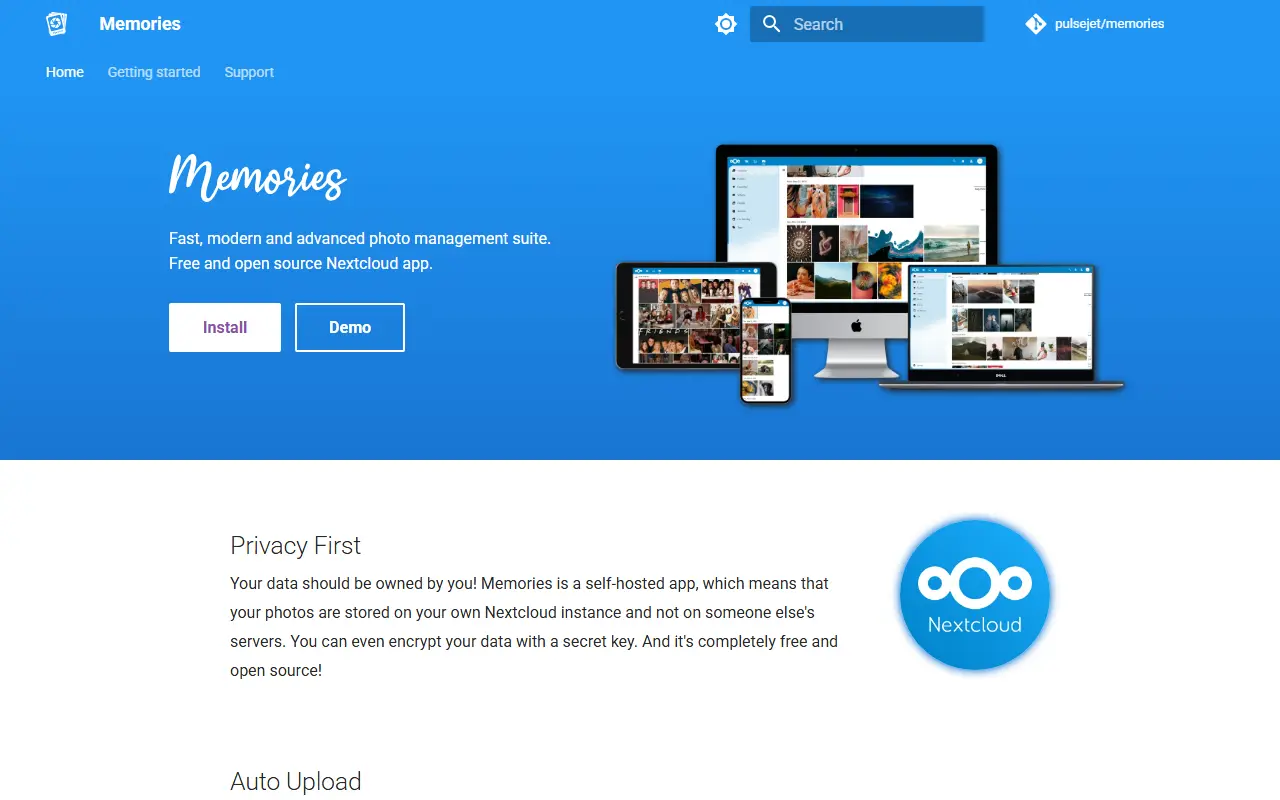
memories.galleryMemories homepage screenshot

Memories is a photo management app that runs inside Nextcloud. It sorts photos and videos on a timeline by the date taken from Exif data, and lets you jump to any point in the past instantly. It aims to be a batteries-included solution for self-hosted photo libraries.

Features include AI tagging that groups photos by people and objects using the recognize and facerecognition apps, albums that can be shared with others and with people outside your Nextcloud instance, bulk editing of dates and metadata, an archive folder, video transcoding with HLS, and a map view with reverse geocoding. It can migrate from Nextcloud Photos and Google Takeout and has been tested on instances with over a million photos.

Install it from the Nextcloud app store, follow the recommended configuration, run the occ memories:index command to build metadata indices, and select the directory containing your photos. An Android client is in early access, and automatic uploads can use the official Nextcloud mobile apps. Memories is written in PHP and licensed under AGPL-3.0.

Key features

  • Timeline sorted by Exif date taken
  • AI tagging of people and objects
  • Shareable albums, including external sharing
  • Bulk metadata and date editing
  • Video transcoding with HLS
  • Map view with reverse geocoding
  • Migration from Nextcloud Photos and Google Takeout

Pricing: Free and open source under AGPL-3.0; it requires a Nextcloud server.

Read more about MemoriesWebsite GitHub

Piwigo

Piwigo is a web photo gallery application, open source, with over 200 plugins and themes, built for individuals, teams and organizations.

GitHub stars
3.9k
Last commit
9 days ago
Latest release
16.4.0
Licence
GPL-2.0
Self-hosted
Yes
Hosted version
Available
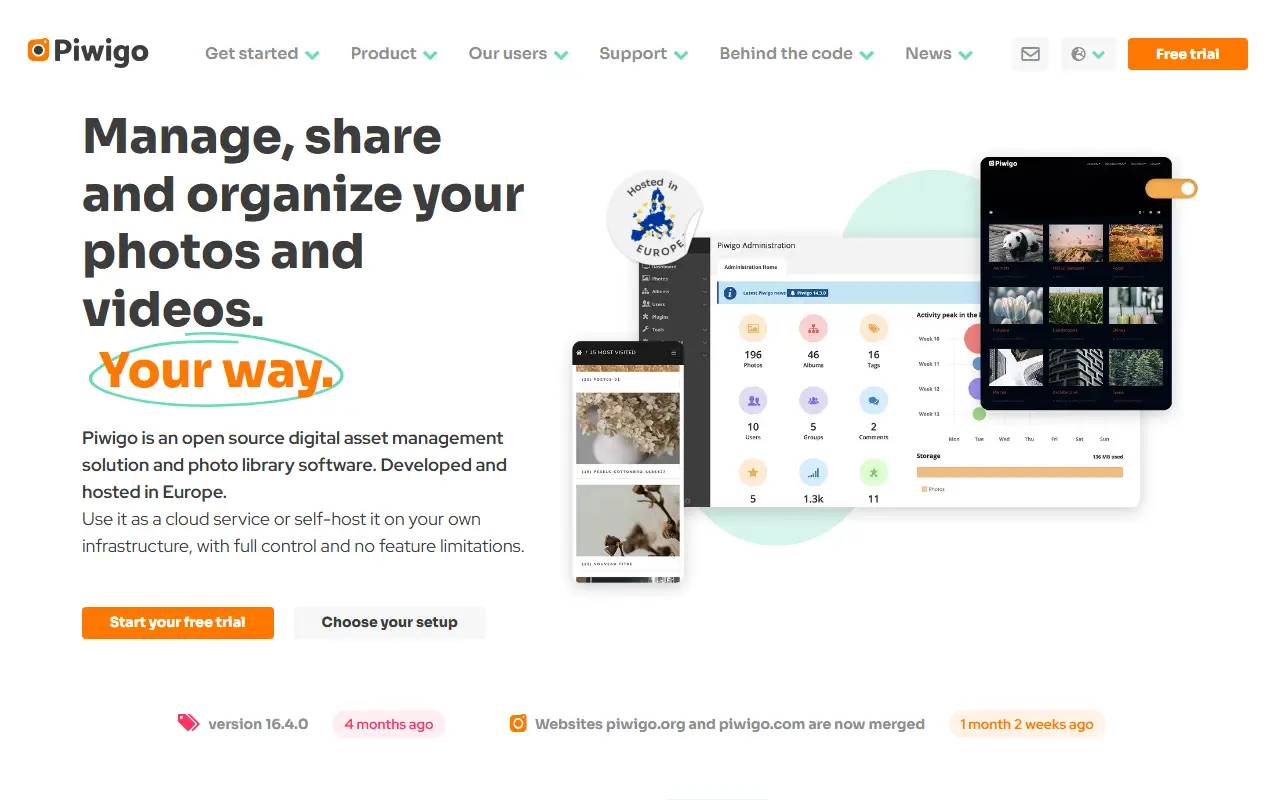
piwigo.orgPiwigo homepage screenshot

Piwigo is open-source photo gallery software for managing and sharing a photo library on the web. It is designed for individuals, teams and organizations that want to publish and organize pictures on their own site, and it is tagged with privacy, photography and self-hosting topics.

The project advertises more than 200 plugins and themes to extend and restyle the gallery, and its website provides feature lists, demos, forums, documentation and news. To install it you need a web server such as Apache or nginx, PHP 7.4 or later, MySQL 5 or MariaDB, and ImageMagick or the PHP GD library. The code is written in PHP.

Piwigo is licensed under GPL-2.0. You can install it on your own server, or choose the Piwigo Cloud ready-to-use hosted service if you do not have one. It suits photographers, families, clubs and companies that want a self-controlled alternative to commercial photo sharing sites.

Key features

  • Web photo gallery management
  • 200+ plugins and themes
  • Multi-user permissions for teams
  • Works with ImageMagick or PHP GD
  • Self-hosted or Piwigo Cloud
  • Demos, forums and documentation

Pricing: Self-hosting is free. Hosted plans cost €32 to €439 per month billed annually, excluding VAT, with a 30-day trial; support plans for self-hosters run €43 to €165 per month.

Read more about PiwigoWebsite GitHub

Lynavo Drive

Open-source app that backs up photos and videos from iOS and Android phones to a Mac or Windows computer over the local network, as a private alternative to iCloud and Google Photos.

GitHub stars
530
Last commit
2 days ago
Latest release
v1.0.2
Licence
AGPL-3.0
Self-hosted
Yes
drive.lynavo.ioLynavo Drive homepage screenshot

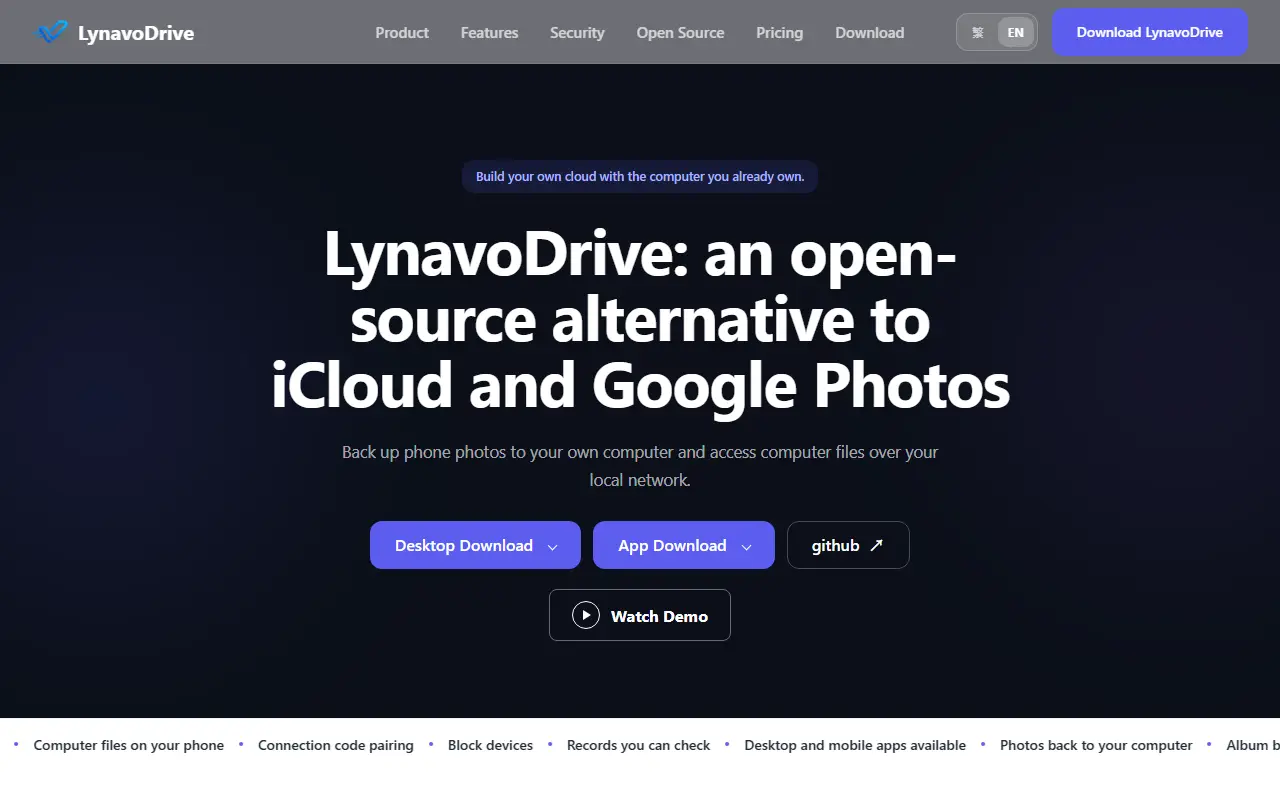
Lynavo Drive is an open-source tool for keeping your phone's photos and videos on a computer you own instead of in a third-party cloud. A mobile app on iOS or Android syncs new media incrementally to a desktop app on macOS or Windows over the same local network, which makes it a private alternative to iCloud and Google Photos.

The repository covers the desktop and mobile application runtimes for the local-network core, with foreground sync between devices that share a LAN. Linux is supported only through local source builds and package verification. The project is written in TypeScript and published under the AGPL-3.0 licence.

The maintainers distinguish an open-source edition from an official commercial edition. The open-source repository provides source builds and unsigned verification files, while signed installers, official mobile builds, account services, remote access and billing are built and operated outside the repository and may follow different terms.

Key features

  • Incremental photo and video sync from phone to computer
  • Transfers over the local network between devices
  • Mobile apps for iOS and Android
  • Desktop apps for macOS and Windows
  • Community source builds with local package verification
  • Foreground sync between devices on the same LAN

Pricing: The Basic edition is free forever. The Subscription edition, which adds remote and uninterrupted transfers, costs $0.99 per month or $9.99 per year; an open-source edition is also available.

Read more about Lynavo DriveWebsite GitHub

2 more Google Photos alternatives

Google Photos alternatives: questions

What is the best open-source alternative to Google Photos?
Immich is the top-ranked open-source alternative to Google Photos on Enlisted: A self-hosted photo and video library with mobile auto-backup, face and object search, shared albums and multi-user support, often used in place of Google Photos. Other strong options are PhotoPrism, Ente, LibrePhotos and Photoview.
Are these Google Photos alternatives free?
All 12 are open source, so the code is free to use under its licence, and all of them can be self-hosted on your own server or computer. 3 also offer a paid or managed cloud version if you'd rather not host it yourself.
How is this list of Google Photos alternatives ranked?
By a score built from GitHub stars, star growth over the last 30 days and how recently the code changed. 10 of these projects shipped code in the last 30 days. Data is refreshed daily, and nobody can pay to move up.

People also look for alternatives to…

View all