7,363 open-source and SaaS tools, with GitHub stats refreshed every day.

5 alternatives ranked by real activity

Open-source Everything alternatives

A curated, ranked list of the 5 best open-source alternatives to Everything.

The best open-source alternative to Everything is NocoBase. If that doesn't suit you, other good options are Node-RED, Klipper, Rowy and Orange.

Everything alternatives are mainly low-code & internal tools, but some are also workflow automation tools and home automation & IoT tools. 3 of them shipped code in the last 30 days, 5 can be self-hosted, and 1 uses a permissive licence.

Last updated October 2, 2026 · ranked by GitHub stars, growth and recent commits

NocoBase

An open-source AI and no-code platform for building business systems such as CRMs, internal tools and workflows, where people and coding agents build together.

GitHub stars
24k
Last commit
2 days ago
Latest release
v2.2.20
Self-hosted
Yes
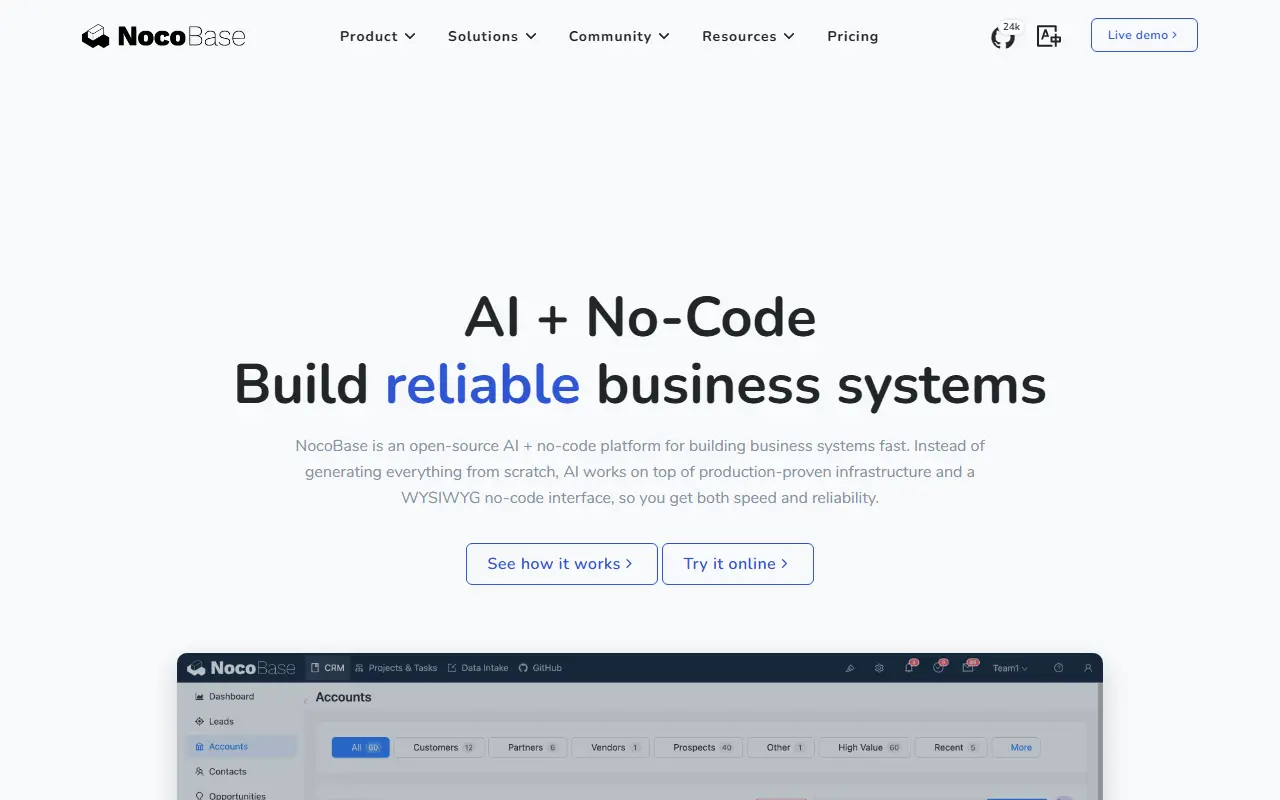
nocobase.comNocoBase homepage screenshot

NocoBase is an open-source platform that combines AI with no-code tooling to build business systems quickly. Rather than having AI generate everything from scratch, it has AI build on infrastructure already proven in production and on a visual WYSIWYG no-code editor, which the project says delivers both speed and reliability.

Its approach is collaborative: coding agents are given a complete CLI plus skills, and people use a visual interface, so both can contribute to the same system. Topics show typical uses such as internal tools, admin dashboards, CRUD apps, CRM, ERP and project management, with workflows included. An online demo, documentation, a forum and customer stories are available, and release notes are published on the blog with weekly summaries. It is written in TypeScript.

NocoBase can be installed on your own infrastructure, and its license is listed as 'Other' on GitHub, so review the terms for commercial or enterprise use. It suits teams that want flexible internal systems without maintaining a large custom codebase, and who want to use AI assistance on a stable foundation.

Key features

  • WYSIWYG no-code interface
  • CLI and skills for coding agents
  • Workflows and CRUD apps
  • Suitable for CRM, ERP and project management
  • Online demo and documentation
  • Install on your own infrastructure

Pricing: The Community Edition is free and open source. Standard is a one-time $800 lifetime license and Professional a one-time $8,000 license, each with one year of upgrades; Enterprise is by contact.

Node-RED

A low-code, flow-based programming tool for event-driven applications, where you wire together devices, APIs and services in a browser-based editor.

GitHub stars
24k
Last commit
yesterday
Latest release
5.0.7
Licence
Apache-2.0
Self-hosted
Yes
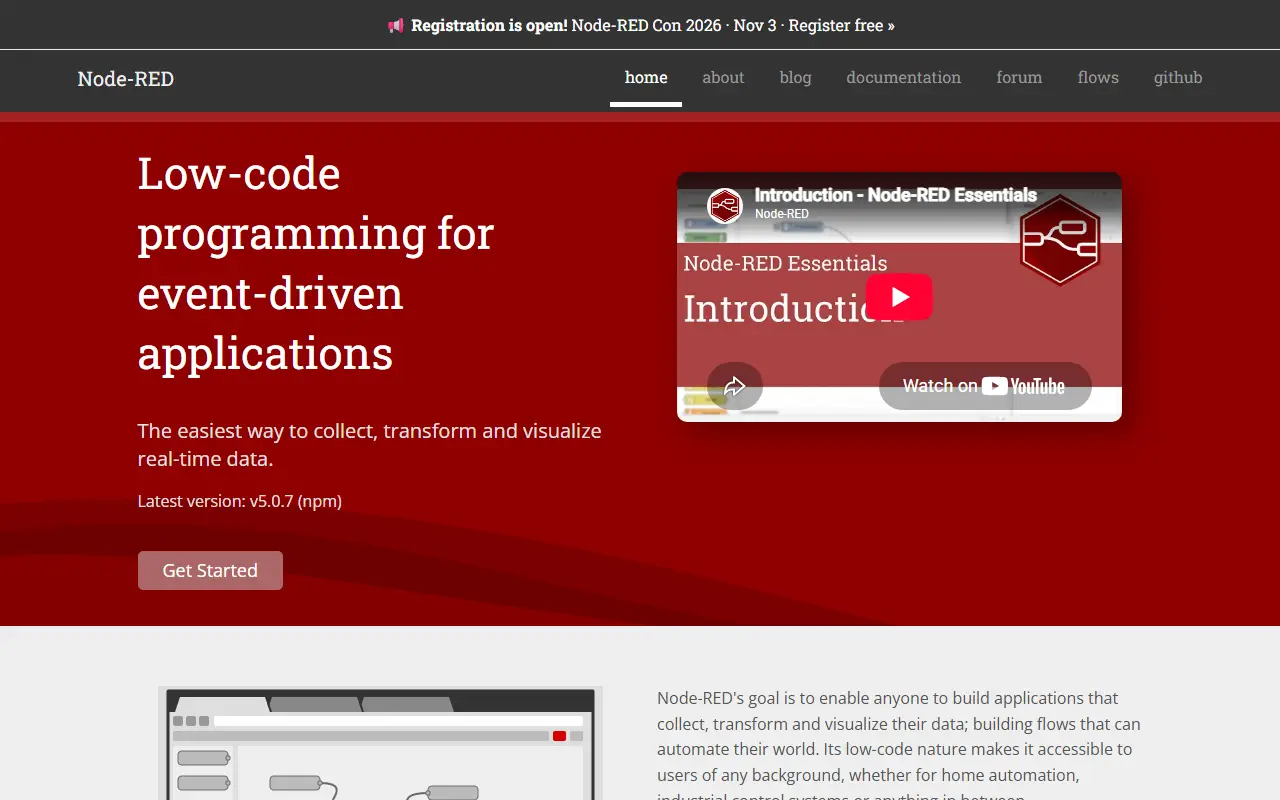
nodered.orgNode-RED homepage screenshot

Node-RED is a low-code programming tool for event-driven applications built on flow-based, visual programming. Instead of writing everything as code, you connect nodes that represent inputs, processing steps and outputs, which makes it popular for IoT projects, home automation and wiring together APIs and online services. It is a project of the OpenJS Foundation.

Getting started takes a couple of commands: install it globally with npm, start it with the node-red command, and open it in your browser. A large ecosystem sits around it, with a library of custom nodes and integrations, shared flows and node collections, plus documentation, a forum and a Slack community. Developers can also run the latest code from git by cloning the repository, installing dependencies and building it.

Node-RED is written in JavaScript on Node.js and licensed under Apache-2.0. You run it on your own computer, a Raspberry Pi, a server or in a container, so there is no hosted service to depend on. It suits makers, integrators and engineers who want to prototype and automate event-driven logic quickly.

Key features

  • Flow-based visual programming
  • Browser-based visual editor
  • Large library of community nodes
  • Shareable flows and node collections
  • Install with npm in one command
  • Runs on small devices and servers

Pricing: Free and open source under the Apache-2.0 license.

Klipper

Open-source 3D printer firmware that pairs a general-purpose computer with one or more microcontrollers to control the machine.

GitHub stars
12k
Last commit
2 days ago
Licence
GPL-3.0

Klipper is firmware for controlling 3D printers. Instead of running everything on the printer's own microcontroller, it combines a general-purpose computer with one or more microcontrollers, using the extra processing capacity of the computer to drive the printer.

The project website at klipper3d.org provides installation instructions, documentation, a features document explaining why people choose it, and a list of sponsors whose support funds development. Klipper is free software written mainly in C and distributed under the GPL-3.0 license, and the repository points to the full license text alongside the documentation.

Key features

  • 3D printer firmware
  • Pairs a computer with microcontrollers
  • Detailed online documentation
  • Free software under GPL-3.0

Pricing: Free software under the GPL-3.0 license.

Read more about KlipperGitHub

Rowy

Rowy is a low-code backend platform that gives Firebase and Google Cloud a spreadsheet-like UI for managing Firestore data and building cloud function workflows in JS or TS.

GitHub stars
6.8k
Last commit
1 yr ago
Latest release
v3.0.0
Self-hosted
Yes
Hosted version
Available
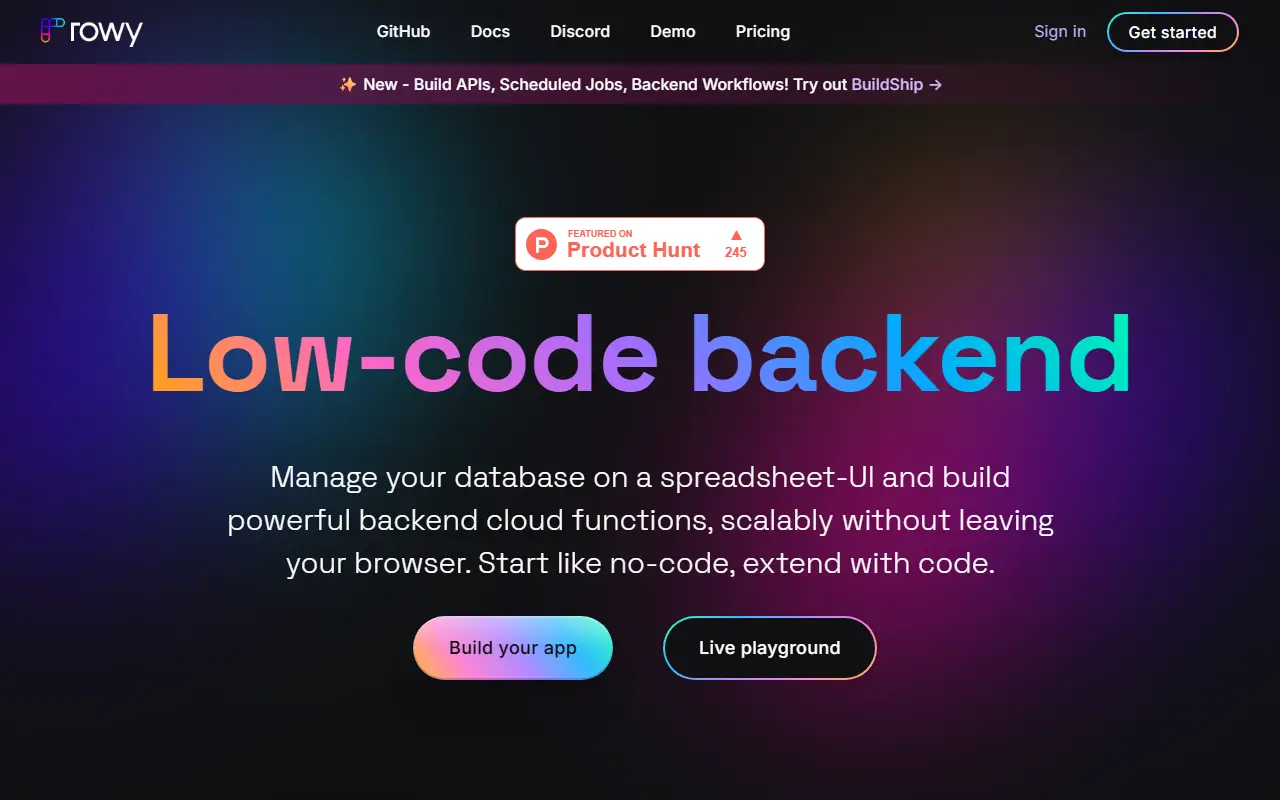
rowy.ioRowy homepage screenshot

Rowy is a low-code backend platform built on Firebase and Google Cloud. It gives developers and teams an Airtable-style spreadsheet interface over their Firestore database, so they can manage data and automate backend logic from the browser instead of writing everything by hand in the Firebase console.

Its spreadsheet interface supports full CRUD, bulk import and export in CSV, JSON or TSV, sorting and filtering, and column locking, freezing, resizing, hiding and renaming, with multiple saved views per collection. Automation is handled through Cloud Functions triggered by field-level data changes, using any npm module or API, with ready-made code blocks for services such as SendGrid, Algolia, Twilio and BigQuery. More than 30 field types are supported, including rich editors, uploaders and connector fields that pull in data from other collections or HTTP endpoints. Team features include role-based access control, built-in user management and audit logs.

Rowy is written in TypeScript and React and is released under a license listed as Other in the repository metadata, so check the license file for exact terms. It can be self-hosted on your own Google Cloud project through a guided install, and a live demo playground is available for trying it without setup.

Key features

  • Spreadsheet-like UI for Firestore
  • Bulk CSV, JSON and TSV import and export
  • Cloud Functions triggered by field changes
  • 30-plus field types including rich editors
  • Role-based access control and audit logs
  • Prebuilt integrations with SendGrid, Twilio and more

Pricing: The Base plan is free and Rowy is open source and self-hostable. Pro costs $12 per seat per month with a one-month trial; Business is custom priced.

Read more about RowyWebsite GitHub

Orange

Orange is a free, GPL-licensed, cross-platform desktop application for fast local file search, built in Rust with Tauri and the Tantivy search engine.

GitHub stars
1.8k
Last commit
2 yr ago
Latest release
orange-v0.6.5
Licence
GPL-3.0
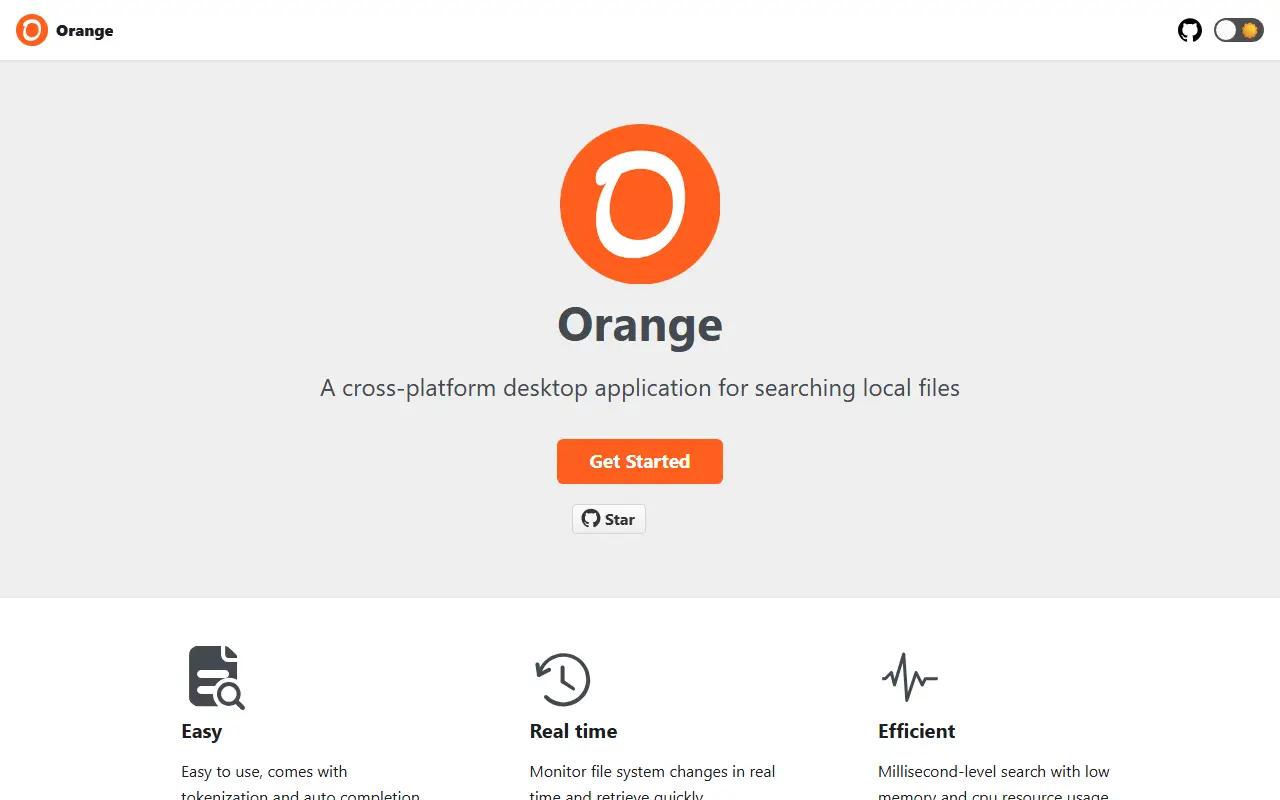
0-range.github.ioOrange homepage screenshot

Orange is a desktop application dedicated to searching local files quickly. It is aimed at users who want a fast, lightweight alternative to operating-system file search, especially on machines where built-in search tools feel slow or resource-heavy.

It offers fast search response times with low memory and CPU usage, built-in tokenization and auto-completion for queries, real-time monitoring of file system changes so the index stays current, and a simple, elegant interface, all packaged in a lightweight installer. Internally it combines Tauri for the lightweight desktop shell, the notify library for watching file system changes, React for the UI, Tantivy as the full-text search engine, and a small key-value store for data persistence.

Orange is written in Rust, documented in both English and Chinese, and released under the GPL license. Prebuilt downloads are available from the project's GitHub releases page, and developers can build it themselves after setting up a Tauri development environment.

Key features

  • Fast local file search with low resource usage
  • Real-time file system change monitoring
  • Query tokenization and auto-completion
  • Lightweight Tauri-based desktop app
  • Tantivy full-text search engine

Pricing: Free and open source under the GPL license.

Read more about OrangeWebsite GitHub

Everything alternatives: questions

What is the best open-source alternative to Everything?
NocoBase is the top-ranked open-source alternative to Everything on Enlisted: An open-source AI and no-code platform for building business systems such as CRMs, internal tools and workflows, where people and coding agents build together. Other strong options are Node-RED, Klipper, Rowy and Orange.
Are these Everything alternatives free?
All 5 are open source, so the code is free to use under its licence, and all of them can be self-hosted on your own server or computer. 1 also offers a paid or managed cloud version if you'd rather not host it yourself.
How is this list of Everything alternatives ranked?
By a score built from GitHub stars, star growth over the last 30 days and how recently the code changed. 3 of these projects shipped code in the last 30 days. Data is refreshed daily, and nobody can pay to move up.

People also look for alternatives to…

View all