6 open-source alternatives ranked by real activity

Open-source Amazon Web Services alternatives

A curated, ranked list of the 6 best open-source alternatives to Amazon Web Services.

The best open-source alternative to Amazon Web Services is Kubernetes. If that doesn't suit you, other good options are Apache Spark, Ceph, Sealos and Ubicloud.

Commercial alternatives to Amazon Web Services include Microsoft Azure, Oracle Cloud Infrastructure, Google Cloud Platform and Huawei Cloud. See all 22.

Amazon Web Services alternatives are mainly infrastructure & container tools, but some are also hosting & PaaS tools and data pipeline & ETL tools. 6 of them shipped code in the last 30 days, 6 can be self-hosted, and 3 use a permissive licence.

Last updated November 12, 2026 · ranked by GitHub stars, growth and recent commits

Kubernetes

An open-source system for deploying, scaling and managing containerized applications across clusters of hosts, hosted by the CNCF.

GitHub stars
129k
Last commit
yesterday
Latest release
v1.37.2
Licence
Apache-2.0
Self-hosted
Yes
Hosted version
Available
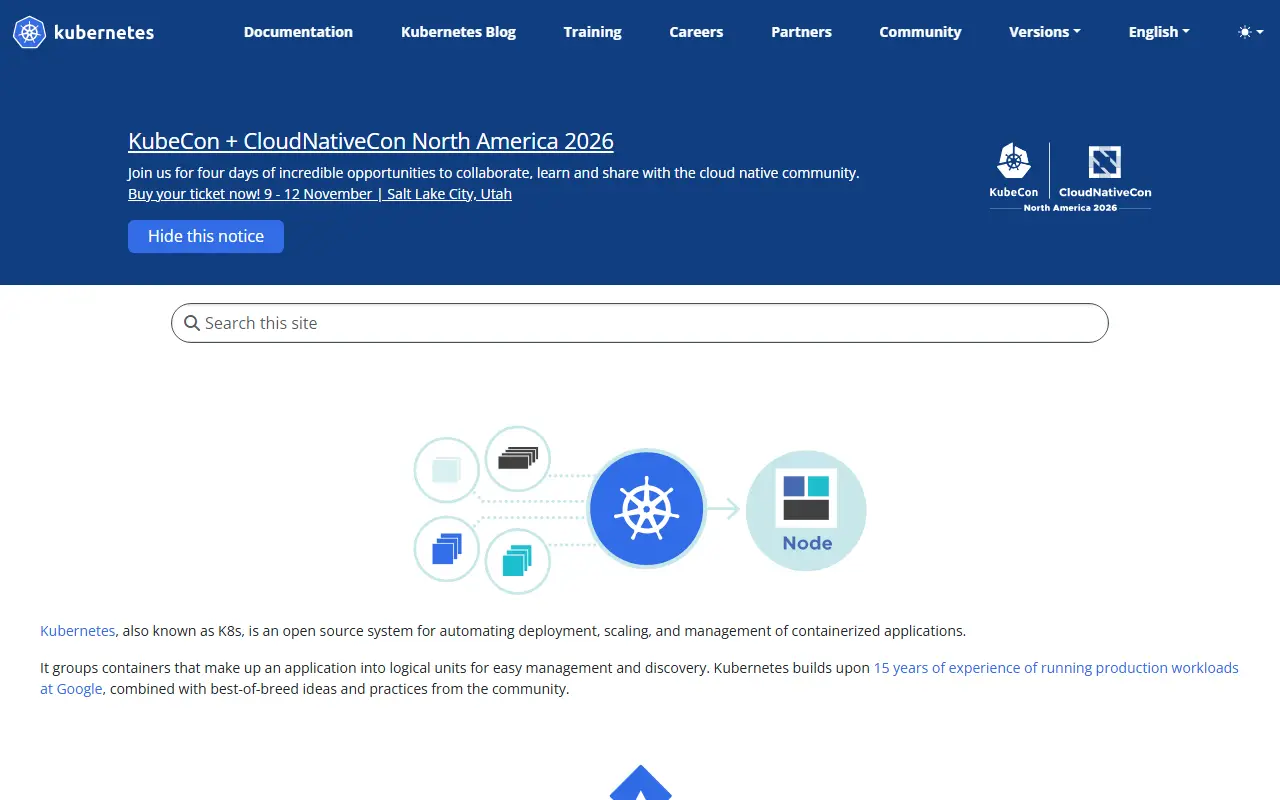
kubernetes.ioKubernetes homepage screenshot

Kubernetes, also written K8s, is an open-source system that manages containerized applications across multiple hosts. It provides the basic mechanisms for deploying, maintaining and scaling applications, so teams can run containers reliably without scheduling each one by hand. It is written in Go and released under the Apache-2.0 license.

The project builds on years of experience running production workloads at Google with an internal system called Borg, combined with practices from the wider community. The Cloud Native Computing Foundation hosts the project. Users interact with it through declarative configuration and the documentation on kubernetes.io, which includes tutorials and a free course on scalable microservices.

Kubernetes can be run on your own infrastructure, and major cloud providers also offer managed Kubernetes services. The README adds that the k8s.io/kubernetes module is not supported for use as a library. It suits platform and DevOps teams running microservices that need scheduling, scaling and automatic recovery.

Key features

  • Container scheduling across multiple hosts
  • Automated application deployment and rollouts
  • Scaling of containerized workloads
  • Maintenance and self-healing of applications
  • Declarative configuration of desired state
  • CNCF-hosted with extensive documentation

Pricing: Free and open source under the Apache-2.0 license; cloud providers sell managed services built on it.

Read more about KubernetesWebsiteGitHub#1 Amazon Web Services alternative

Apache Spark

An analytics engine for processing large datasets, with APIs in Scala, Java, Python and R and libraries for SQL, machine learning, graphs and streaming.

GitHub stars
44k
Last commit
yesterday
Licence
Apache-2.0
Self-hosted
Yes
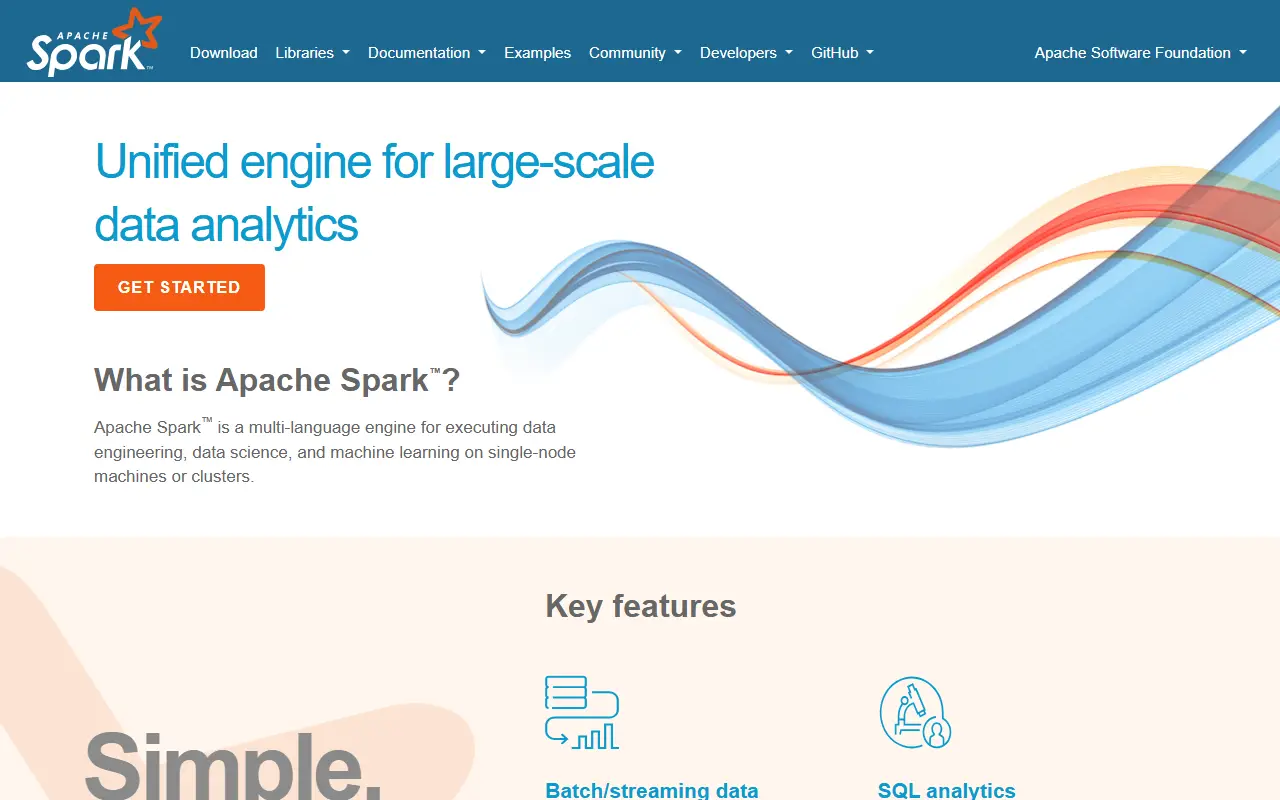
spark.apache.orgApache Spark homepage screenshot

Apache Spark is an analytics engine that brings batch, SQL, machine learning, graph and streaming workloads together for processing data at scale. It is maintained by the Apache Software Foundation under the Apache-2.0 license. It is written mainly in Scala and offers high-level APIs in Scala, Java and Python, with an R API that is now deprecated, on top of an engine optimized to execute general computation graphs.

A set of higher-level tools is included: Spark SQL for queries and DataFrames, MLlib for machine learning, GraphX for graphs, Structured Streaming for streams, and a pandas-style API for existing pandas workloads. Together they let teams run batch analytics, machine learning and streaming jobs on a single engine and share code between them.

The README points to the project website for full documentation and programming guides, and it contains only basic setup and build instructions. Spark suits data engineers and data scientists who process datasets too large for a single machine, and organizations that want one framework for ETL, analytics and machine learning on clusters.

Key features

  • High-level APIs in Scala, Java and Python
  • Optimized engine for computation graphs
  • Spark SQL and DataFrames
  • MLlib for machine learning
  • GraphX for graph analytics
  • Structured Streaming for stream processing
  • Pandas API on Spark

Pricing: Free and open source under the Apache-2.0 license.

Read more about Apache SparkWebsiteGitHub#2 Amazon Web Services alternative

Ceph

Ceph is a scalable, distributed storage system that provides object, block and file storage from a single software-defined platform.

GitHub stars
17k
Last commit
yesterday
Self-hosted
Yes
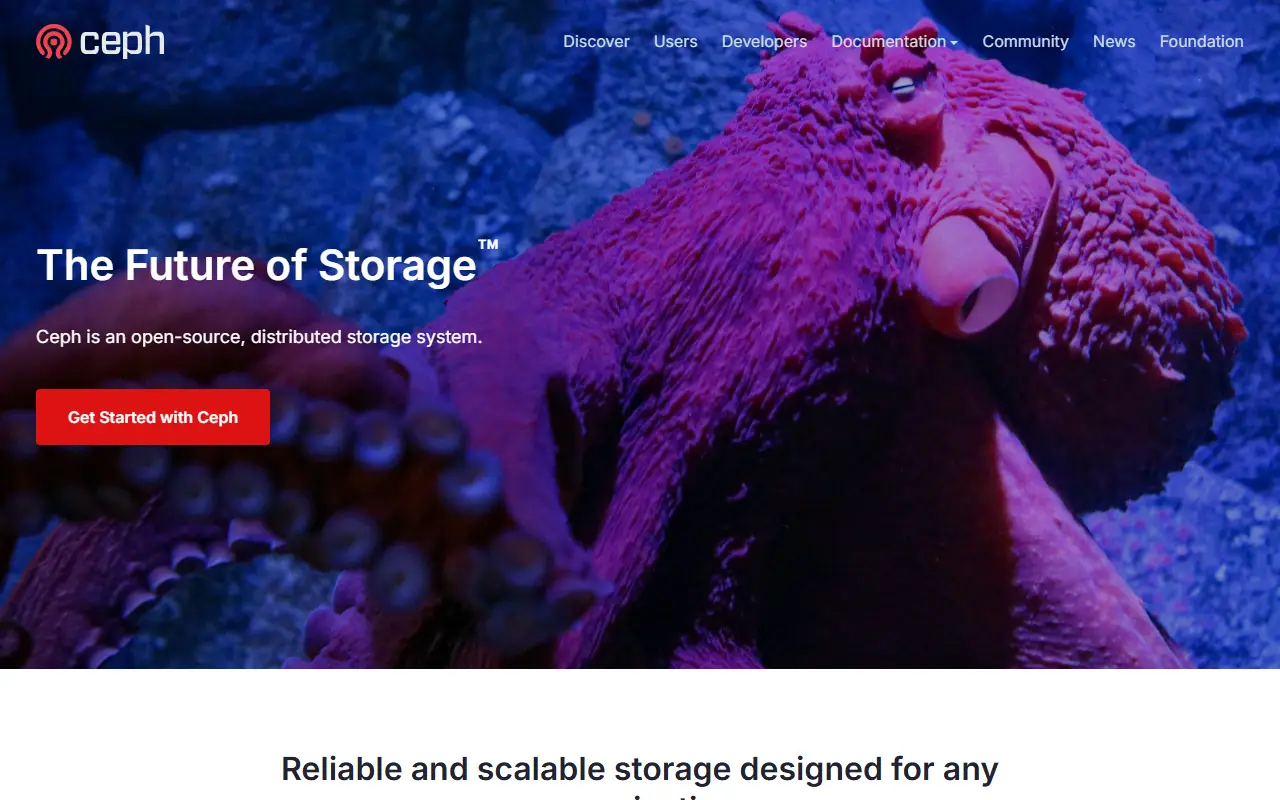
ceph.ioCeph homepage screenshot

Ceph is a distributed storage platform that offers object, block and file storage from one software-defined system. It is designed to scale across many servers and provide highly available storage, and it is written mainly in C++.

Repository topics show the range of protocols and features it covers: S3-compatible object storage, block storage, a POSIX distributed file system with FUSE access, protocols such as NFS, SMB, iSCSI and NVMe over Fabrics, and replication and erasure coding for data protection. The topics also mention Kubernetes and HDFS.

Most of Ceph is dual-licensed under the LGPL version 2.1 or 3.0, with some code in the public domain or under BSD-style licenses, which is why the repository lists the license as 'Other'. The documentation uses CC-BY-SA-3.0, and contributions need a Signed-off-by line without copyright assignment. Ceph is deployed on your own hardware or cloud infrastructure.

Key features

  • Unified object, block and file storage
  • S3-compatible object storage
  • POSIX distributed file system
  • Replication and erasure coding
  • NFS, SMB and iSCSI access
  • Scales across many servers

Pricing: Free and open source, mostly dual-licensed under LGPL 2.1 or 3.0.

Read more about CephWebsiteGitHub#3 Amazon Web Services alternative

Sealos

Sealos is an open-source, Kubernetes-based cloud operating system for developing, deploying and running apps, databases and cloud IDEs.

GitHub stars
18k
Last commit
yesterday
Latest release
v5.1.1
Self-hosted
Yes
Hosted version
Available
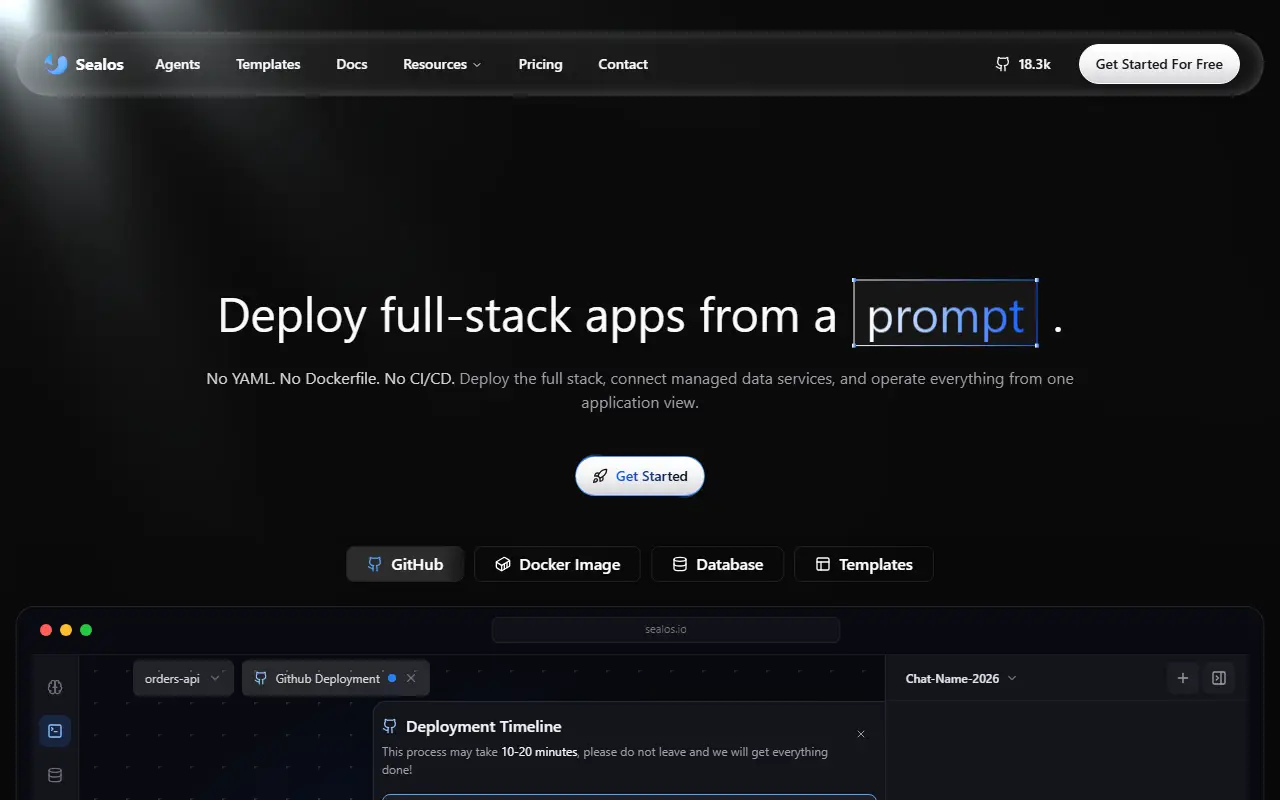
sealos.ioSealos homepage screenshot

Sealos describes itself as an AI-native cloud operating system built on Kubernetes. It aims to cover the whole application lifecycle in one platform, from development in cloud IDEs to production deployment and day-to-day management, and it targets teams building AI applications, SaaS platforms, managed databases and microservice architectures.

Core pieces include Devbox cloud development environments that can be opened from editors such as VS Code and Cursor, managed MySQL, PostgreSQL, MongoDB and Redis databases, S3-compatible object storage, and an App Launchpad for deploying Docker images. An app store offers one-click deployment of larger applications, and workspace-based multi-tenancy supports enterprise use. Full Kubernetes remains accessible underneath.

Sealos is written mainly in TypeScript and Go and runs on Kubernetes. Repository topics point to cluster installation features such as high-availability Kubernetes through kubeadm, and the project offers a hosted cloud at sealos.io. The repository lists the license as 'Other', so check the license file for the exact terms.

Key features

  • Cloud IDE environments through Devbox
  • Managed PostgreSQL, MySQL, MongoDB and Redis
  • S3-compatible object storage
  • App store with one-click deployment
  • Docker image deployment via App Launchpad
  • Workspace-based multi-tenancy

Pricing: A 7-day free trial, then fixed monthly resource packages: Starter $34, Hobby $70, Standard $128, scaling up to $12,451 for Enterprise. New users get a lower first-plan price; custom plans via sales.

Read more about SealosWebsiteGitHub#4 Amazon Web Services alternative

Ubicloud

An open-source cloud platform that turns bare-metal Linux servers into an AWS-style cloud with compute, storage, networking, managed Postgres, Kubernetes and AI inference.

GitHub stars
12k
Last commit
today
Licence
AGPL-3.0
Self-hosted
Yes
Hosted version
Available
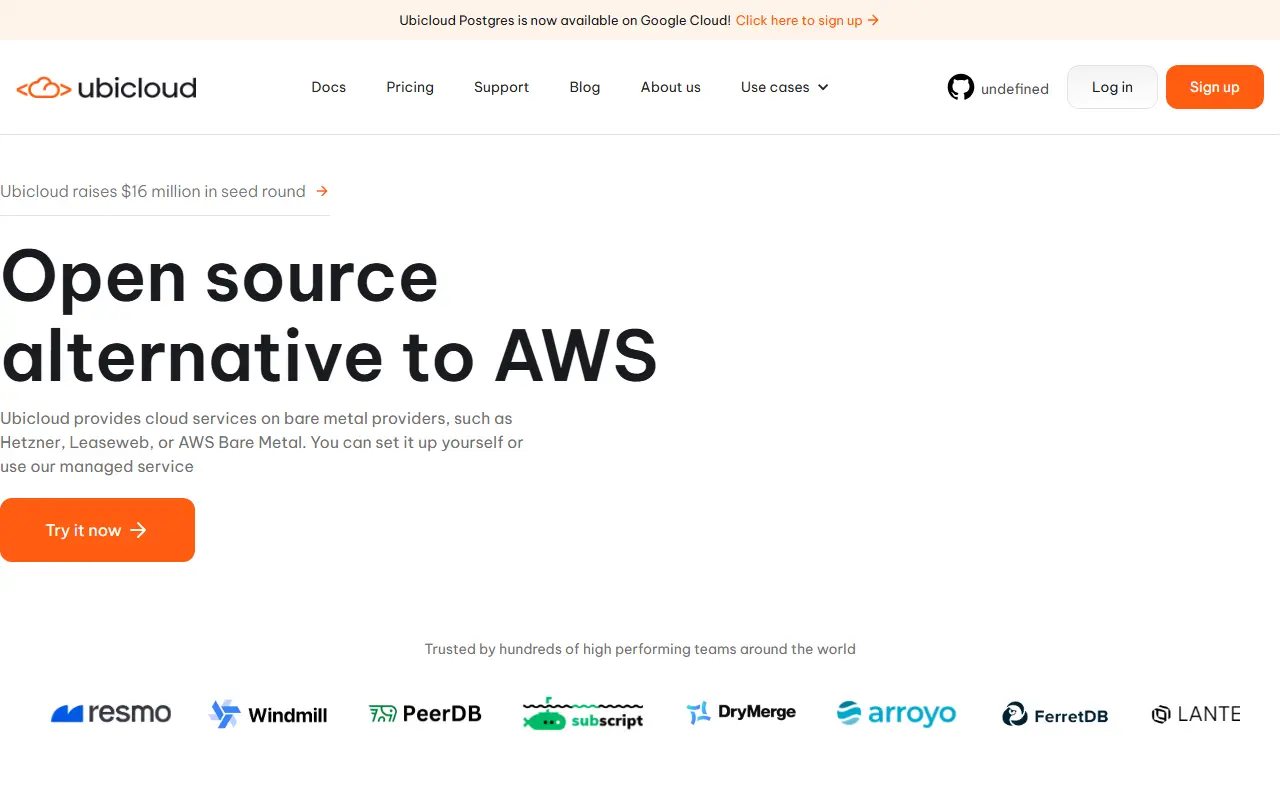
ubicloud.comUbicloud homepage screenshot

Ubicloud is an open-source cloud platform designed to run on any infrastructure, described by its authors as an open alternative to cloud providers in the way Linux is to proprietary operating systems. It delivers infrastructure-as-a-service capabilities on top of bare-metal hosts, for example Hetzner, Leaseweb and AWS Bare Metal.

Its services include elastic compute, non-replicated block storage, firewalls and load balancers, managed Postgres, Kubernetes, AI inference and IAM. A control plane takes leased bare-metal Linux machines, prepares them for cloud use, and then lets you provision and manage resources through a cloud console. The project is written in Ruby and topics also mention GitHub Actions runners.

You can use the managed platform at console.ubicloud.com without installing anything, where the underlying provider's price and location benefits are passed on to you, or build your own cloud by leasing servers and running the control plane yourself. Ubicloud is licensed under AGPL-3.0. The quick-start flow is currently described for Hetzner machines running Ubuntu 24.04.

Key features

  • Elastic compute on bare-metal servers
  • Block storage, firewalls and load balancers
  • Managed PostgreSQL databases
  • Managed Kubernetes clusters
  • AI inference services
  • IAM and cloud console

Pricing: Pay-as-you-go, billed per minute: runners from $0.00125 a minute, burstable VMs from $10.47 a month, managed PostgreSQL from $19.54 and Kubernetes from $71.82 a month. You can also self-host.

Read more about UbicloudWebsiteGitHub#5 Amazon Web Services alternative

Apache CloudStack

Apache CloudStack is an open-source infrastructure-as-a-service platform for deploying and managing large networks of virtual machines.

GitHub stars
3.1k
Last commit
yesterday
Latest release
4.23.0.0
Licence
Apache-2.0
Self-hosted
Yes
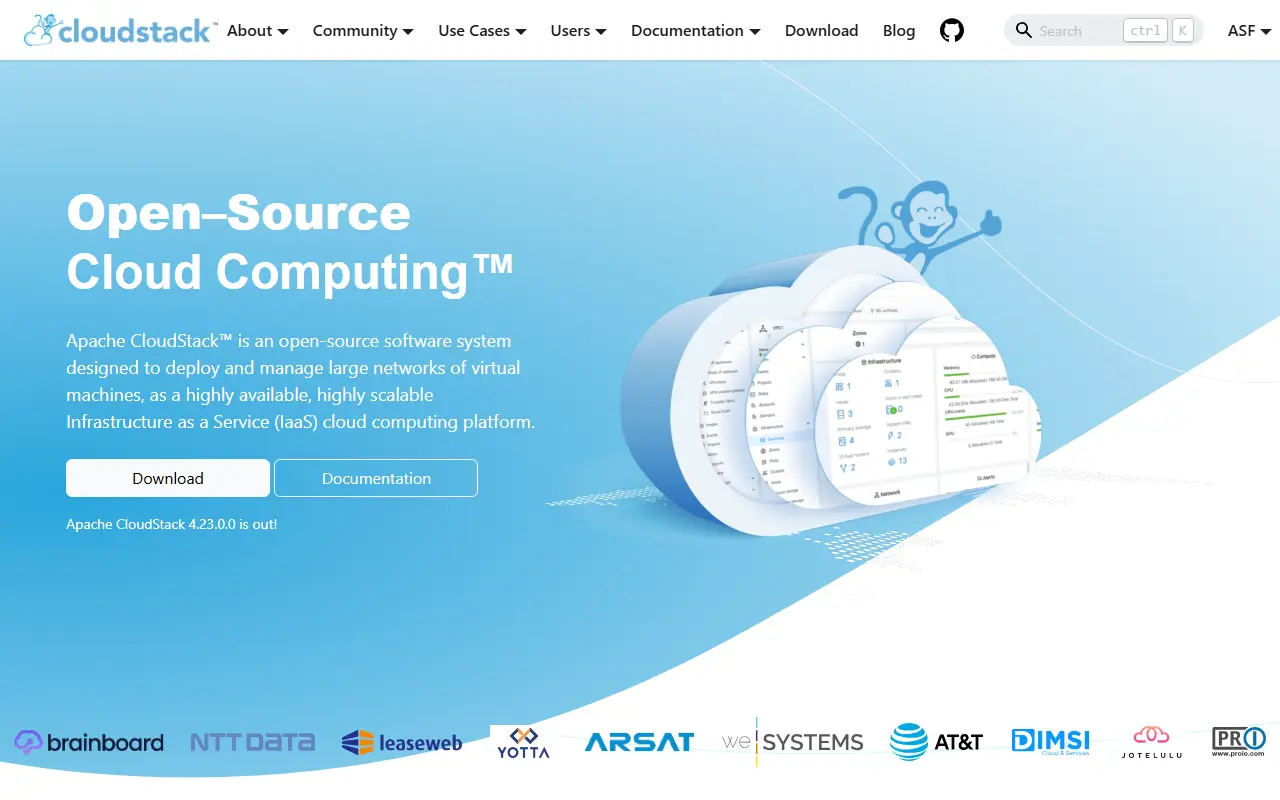
cloudstack.apache.orgApache CloudStack homepage screenshot

Apache CloudStack is open source software for deploying and managing large networks of virtual machines as a highly available, scalable infrastructure-as-a-service cloud. Service providers use it to offer public cloud services, while companies use it for private on-premises clouds or as part of a hybrid setup. It is written mainly in Java and Python.

The project describes it as a turnkey solution that includes the full stack most organizations want from an IaaS cloud: compute orchestration, network-as-a-service, user and account management, resource accounting, a complete native API and a user interface. Administrators can manage the cloud through a web interface, command-line tools or a query-based API.

CloudStack supports a range of hypervisors, including VMware vSphere, KVM, XenServer, XenProject and Hyper-V, as well as OVM and LXC containers. Topics also mention Kubernetes, XCP-ng and libvirt. It is an Apache Software Foundation project licensed under Apache-2.0, with documentation, a demo, news and events pages and security reporting procedures on its website.

Key features

  • Infrastructure-as-a-service cloud orchestration
  • Supports VMware, KVM, XenServer and Hyper-V
  • Network-as-a-service capabilities
  • User and account management
  • Web interface, command line and native API
  • Resource accounting

Pricing: Free and open source under the Apache-2.0 license.

Read more about Apache CloudStackWebsiteGitHub#6 Amazon Web Services alternative

Commercial Amazon Web Services alternatives

Hosted, closed-source products that compete with Amazon Web Services. Showing 12 of 22.

See every Amazon Web Services alternative on its tool page

Amazon Web Services alternatives: questions

What is the best open-source alternative to Amazon Web Services?
Kubernetes is the top-ranked open-source alternative to Amazon Web Services on Enlisted: An open-source system for deploying, scaling and managing containerized applications across clusters of hosts, hosted by the CNCF. Other strong options are Apache Spark, Ceph, Sealos and Ubicloud.
What are the best commercial alternatives to Amazon Web Services?
Microsoft Azure, Oracle Cloud Infrastructure, Google Cloud Platform, Huawei Cloud and Civo are among the hosted, closed-source alternatives to Amazon Web Services listed on Enlisted, which lists 22 in total. Compare their pricing and features on each tool page.
Are these Amazon Web Services alternatives free?
All 6 are open source, so the code is free to use under its licence, and all of them can be self-hosted on your own server or computer. 3 also offer a paid or managed cloud version if you'd rather not host it yourself.
How is this list of Amazon Web Services alternatives ranked?
By a score built from GitHub stars, star growth over the last 30 days and how recently the code changed. 6 of these projects shipped code in the last 30 days. Data is refreshed daily, and nobody can pay to move up.

People also look for alternatives to…

View all