7,363 open-source and SaaS tools, with GitHub stats refreshed every day.

5 alternatives ranked by real activity

Open-source WaveMaker alternatives

A curated, ranked list of the 5 best open-source alternatives to WaveMaker.

The best open-source alternative to WaveMaker is JeecgBoot. If that doesn't suit you, other good options are Oinone Pamirs, Structr, Skyve and Joget.

WaveMaker alternatives are mainly low-code & internal tools. 4 of them shipped code in the last 30 days, 5 can be self-hosted, and 1 uses a permissive licence.

Last updated October 3, 2026 · ranked by GitHub stars, growth and recent commits

JeecgBoot

JeecgBoot is an enterprise Java low-code platform with AI-assisted code generation, online forms and workflow designers, and a built-in AI application and knowledge base layer.

GitHub stars
48k
Last commit
10 days ago
Latest release
v3.9.5
Licence
Apache-2.0
Self-hosted
Yes
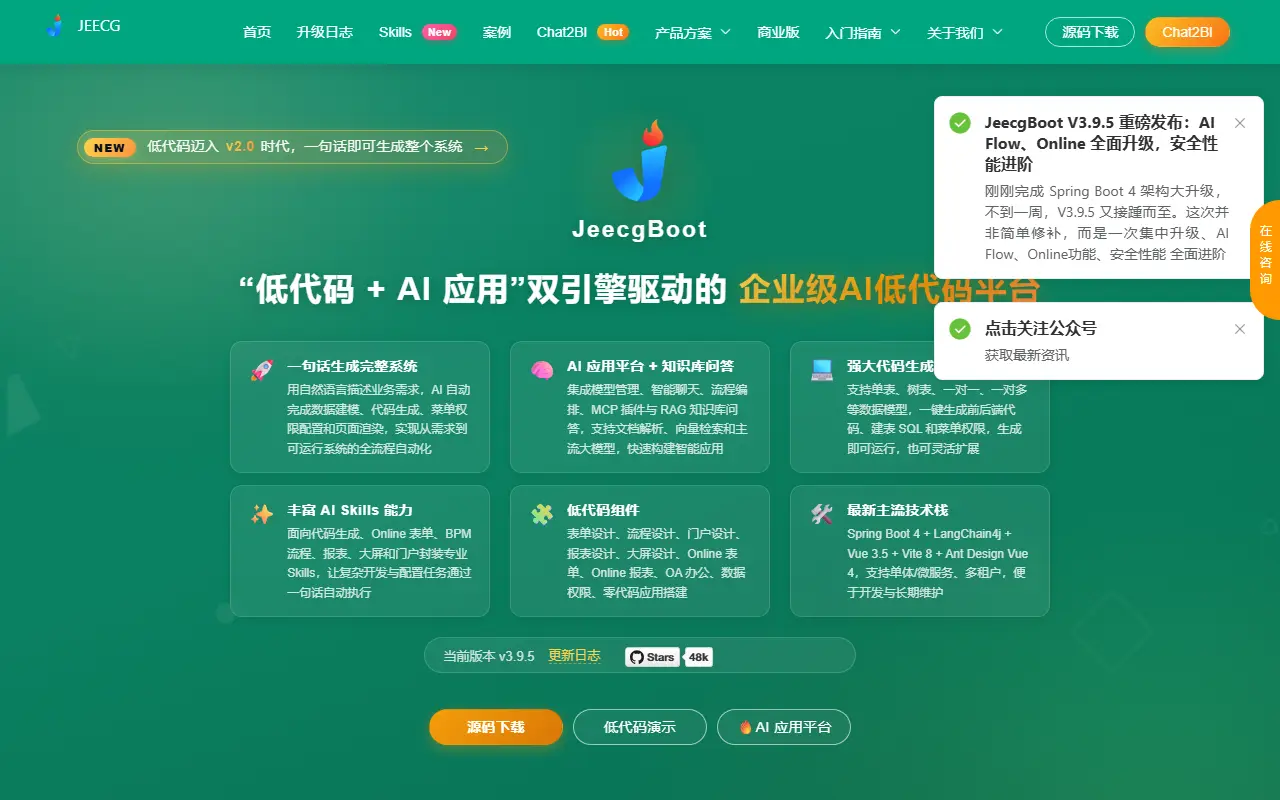
jeecg.comJeecgBoot homepage screenshot

JeecgBoot is an enterprise-grade low-code development platform for Java projects, with low-code tooling, an AI application platform and an AI knowledge base at its core. Its documentation is mainly in Chinese, with English and Japanese versions available. Version 2.0 of its low-code approach lets developers describe a system in natural language and have AI generate the front-end and back-end code, database tables and menu permissions.

The platform includes a code generator that handles single-table, tree, one-to-one and one-to-many data models, along with online forms, a form designer, a workflow designer, a portal designer, report and big-screen designers and OA office features. Its AI layer provides a chat assistant, a knowledge base, flow orchestration, MCP and plugins, and works with mainstream models such as ChatGPT, DeepSeek and Ollama. Fine-grained permissions cover buttons and data.

The stack pairs a Vue 3, TypeScript, Vite and Ant Design Vue front end with a Spring Boot, Spring Cloud Alibaba and MyBatis-Plus back end. JeecgBoot is Apache-2.0 licensed and aimed at Java teams that want to cut repetitive CRUD work while keeping source-level control.

Key features

  • AI-assisted generation of full systems from prompts
  • Code generator for single, tree and one-to-many models
  • Online form, workflow and report designers
  • AI chat, knowledge base and flow orchestration
  • Works with ChatGPT, DeepSeek and Ollama models
  • Button-level and data-level permissions
  • Vue 3 front end with Spring Boot back end

Pricing: Free and open source under the Apache-2.0 license.

Oinone Pamirs

Metadata-driven, AI-powered low-code framework for Java that builds enterprise applications around a shared model that developers and AI can both work with.

GitHub stars
2.4k
Last commit
29 days ago
Licence
AGPL-3.0
Self-hosted
Yes
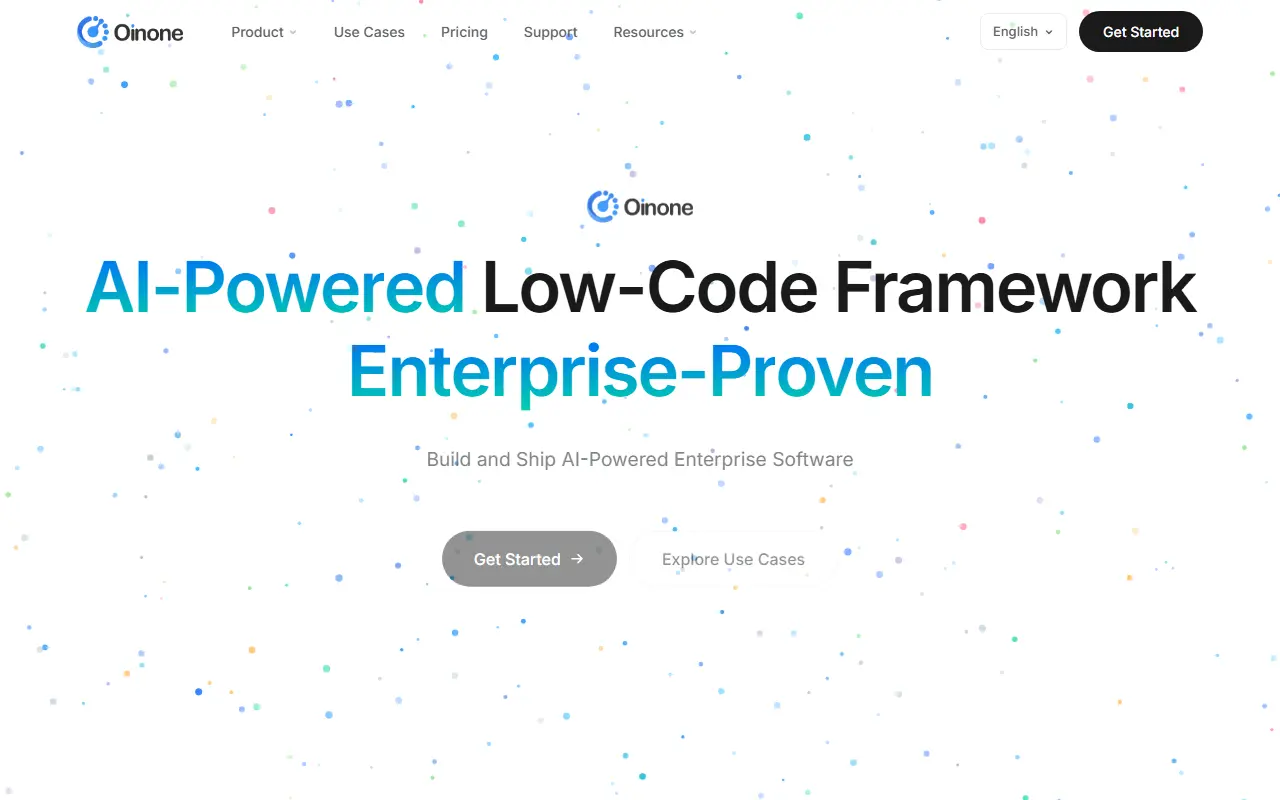
oinone.aiOinone Pamirs homepage screenshot

Oinone is a low-code framework positioned as infrastructure for AI-native enterprise applications. It is fully metadata-driven: a shared metadata model is the common ground for AI and developers, so applications stay maintainable and can evolve. This repository, Oinone Pamirs, holds the Java back end. It is released under the AGPL-3.0 license, and the project uses the slogan about AI giving speed and Oinone giving rigor.

The project promotes AI coding and so-called vibe coding on top of a structured model rather than free-form generated code. A one-command quickstart using Docker brings up a backend, and the first boot takes a few minutes. Documentation is available through a website, with a Chinese mirror on Gitee.

Oinone is aimed at Java teams building internal systems and enterprise software, such as business management applications, who want low-code productivity without giving up control of the code. Treat the README's claims about AI-native development as vendor positioning, and check the repository for licensing and edition details.

Key features

  • 100% metadata-driven framework
  • Shared model for AI and developers
  • Java back end repository (Pamirs)
  • One-command Docker quickstart
  • AI-assisted coding support
  • Documentation in English and Chinese

Pricing: The Community edition is free. Seed costs $40 per seat per month plus a $40 deployment fee; Standard and Professional use $480 per seat per year plus a deployment fee; Enterprise is quoted.

Structr

Structr is an open-source low-code development and runtime platform built on the Neo4j graph database for custom web apps, backends and integrations.

GitHub stars
828
Last commit
3 days ago
Self-hosted
Yes
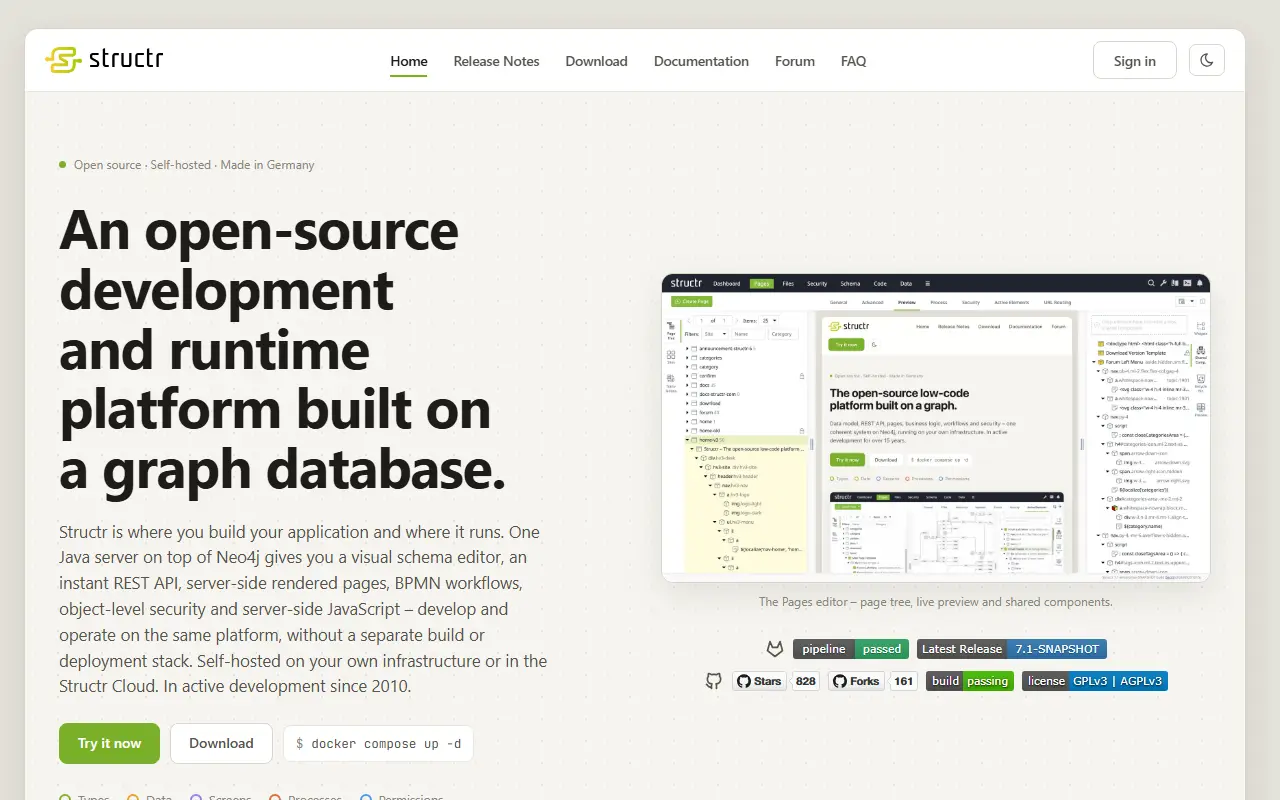
structr.orgStructr homepage screenshot

Structr is a generic low-code development and runtime platform built on graph technology. It is not tied to one use case and is meant for building fully custom applications, including web applications, graph-database-backed back ends, data-centric systems, middleware and integration components.

At its core Structr keeps both application components, such as schema, UI definitions, templates, scripts and workflows, and the application data in a graph database (Neo4j). That gives schema flexibility and expressive data modeling without join-heavy queries, and the schema can be represented as JSON Schema with import and export. A virtual file system manages files with custom metadata and can store binary content on external providers such as S3. Development happens in a web-based developer and admin UI that works as an integrated IDE.

The README is explicit about what Structr is not: it is not a prebuilt CMS, CRM or ERP, a website builder, or an industry template collection, but a set of building blocks for your own applications. The GitHub repository is a clone, and development and issue tracking have moved to gitlab.structr.com. The license is listed as Other, and the topics mention GraalVM polyglot programming.

Key features

  • Graph database storage with Neo4j
  • Web-based developer and admin IDE
  • Schema export and import as JSON Schema
  • Virtual file system with S3 support
  • Low-code builder for backends and web apps
  • Polyglot scripting with GraalVM

Skyve

Open-source low-code Java platform where enterprise applications are declared in XML metadata and the runtime handles security, UI, persistence and schema changes.

GitHub stars
504
Last commit
yesterday
Licence
LGPL-2.1
Self-hosted
Yes
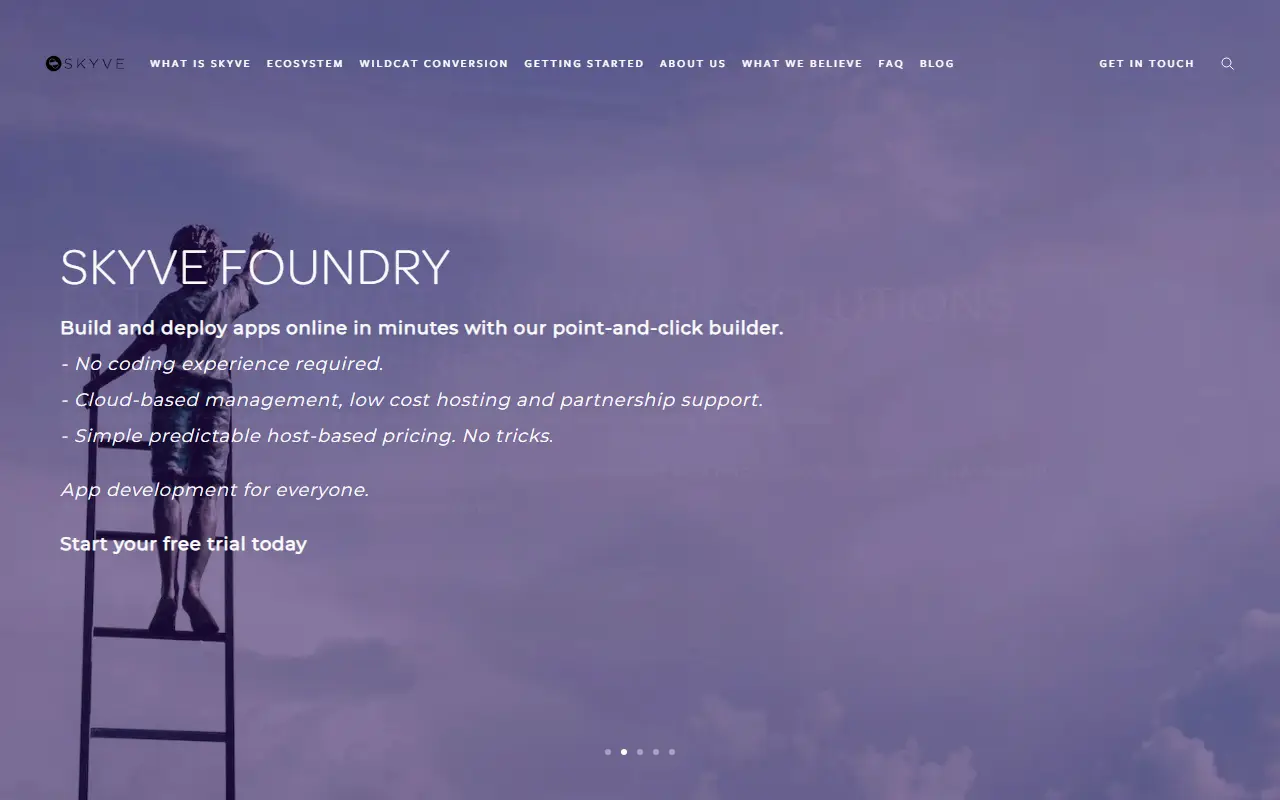
skyve.orgSkyve homepage screenshot

Skyve is an open-source low-code platform for building secure, scalable enterprise applications. Rather than generating large amounts of code, applications are described in concise XML metadata, and the platform interprets those declarations at runtime to enforce security, render user interfaces, manage persistence and evolve the database schema.

Security is declarative: permissions are set per document with role-based create, read, update and delete rules and row-level scoping, and are enforced across persistence, queries and the UI. REST and UI responses only include fields a user may see, unpermitted input is ignored, access paths are computed from roles, and REST access is blocked unless it has been explicitly allowed. The whole metadata model is validated statically on every build.

This repository is the Java implementation of the Skyve framework specification, with Maven commands for creating, building and updating projects and a tutorial, user guide, development guide and cookbook. The project presents the metadata approach as well suited to AI-assisted development, and it is licensed under LGPL-2.1.

Key features

  • Applications declared in XML metadata
  • Role-based CRUD with row-level scoping
  • Payload shaping to prevent over-posting
  • Forced-browsing prevention and fail-closed defaults
  • Static validation of the metadata model on build
  • Automatic schema evolution and persistence

Pricing: Free and open source under the LGPL-2.1 licence.

Read more about SkyveWebsite GitHub

Joget

Open-source no-code and low-code platform for building business apps, workflows and process automation visually, with community and commercial editions.

GitHub stars
618
Last commit
1 mo ago
Self-hosted
Yes
Hosted version
Available
joget.orgJoget homepage screenshot

Joget is an application platform that combines rapid application development, business process automation and workflow management in a visual, web-based builder. Business and technical teams can use it together to build full enterprise applications without much hand coding, aiming to shorten delivery from months to weeks or days. Apps built on it are mobile ready and cloud ready, and the platform offers APIs for integration and a plugin architecture for extension.

The README describes a marketplace where ready-made apps, plugins and templates can be downloaded, along with a community Q&A forum, a knowledge base, video tutorials, an online academy and translations in more than twenty languages. Deployment is flexible: on-premise, on-demand cloud, Docker, Kubernetes, Cloud Foundry, OpenShift and several cloud marketplaces are listed.

Licensing is split. Joget Community Edition is released under GPL version 3, while the Professional, Enterprise and Large Enterprise editions are covered by a commercial end-user license agreement. The core is written in Java. It suits organizations that want to digitize processes such as approvals and forms with a platform they can run themselves.

Key features

  • Visual no-code and low-code app builder
  • Workflow and business process automation
  • APIs and plugin architecture
  • Marketplace of ready-made apps and plugins
  • Docker, Kubernetes and on-premise deployment
  • Mobile-ready apps

Pricing: Community Edition is free under GPL-3.0. Professional, Enterprise and Large Enterprise editions are commercial; see the vendor for pricing.

Read more about JogetWebsite GitHub

WaveMaker alternatives: questions

What is the best open-source alternative to WaveMaker?
JeecgBoot is the top-ranked open-source alternative to WaveMaker on Enlisted: JeecgBoot is an enterprise Java low-code platform with AI-assisted code generation, online forms and workflow designers, and a built-in AI application and knowledge base layer. Other strong options are Oinone Pamirs, Structr, Skyve and Joget.
Are these WaveMaker alternatives free?
All 5 are open source, so the code is free to use under its licence, and all of them can be self-hosted on your own server or computer. 1 also offers a paid or managed cloud version if you'd rather not host it yourself.
How is this list of WaveMaker alternatives ranked?
By a score built from GitHub stars, star growth over the last 30 days and how recently the code changed. 4 of these projects shipped code in the last 30 days. Data is refreshed daily, and nobody can pay to move up.

People also look for alternatives to…

View all