6,598 open-source and SaaS tools, with GitHub stats refreshed every day.

3 alternatives ranked by real activity

Open-source Sortly alternatives

A curated, ranked list of the 3 best open-source alternatives to Sortly.

The best open-source alternative to Sortly is InvenTree. If that doesn't suit you, other good options are Homebox and Shelf.nu.

Sortly alternatives are mainly ERP tools, but some are also Productivity. 3 of them shipped code in the last 30 days, 3 can be self-hosted, and 1 uses a permissive licence.

Last updated October 2, 2026 · ranked by GitHub stars, growth and recent commits

InvenTree

InvenTree is an open-source inventory management system for stock control and part tracking, with a Django backend, REST API and plugin system.

GitHub stars
7.7k
Last commit
yesterday
Latest release
1.5.6
Licence
MIT
Self-hosted
Yes
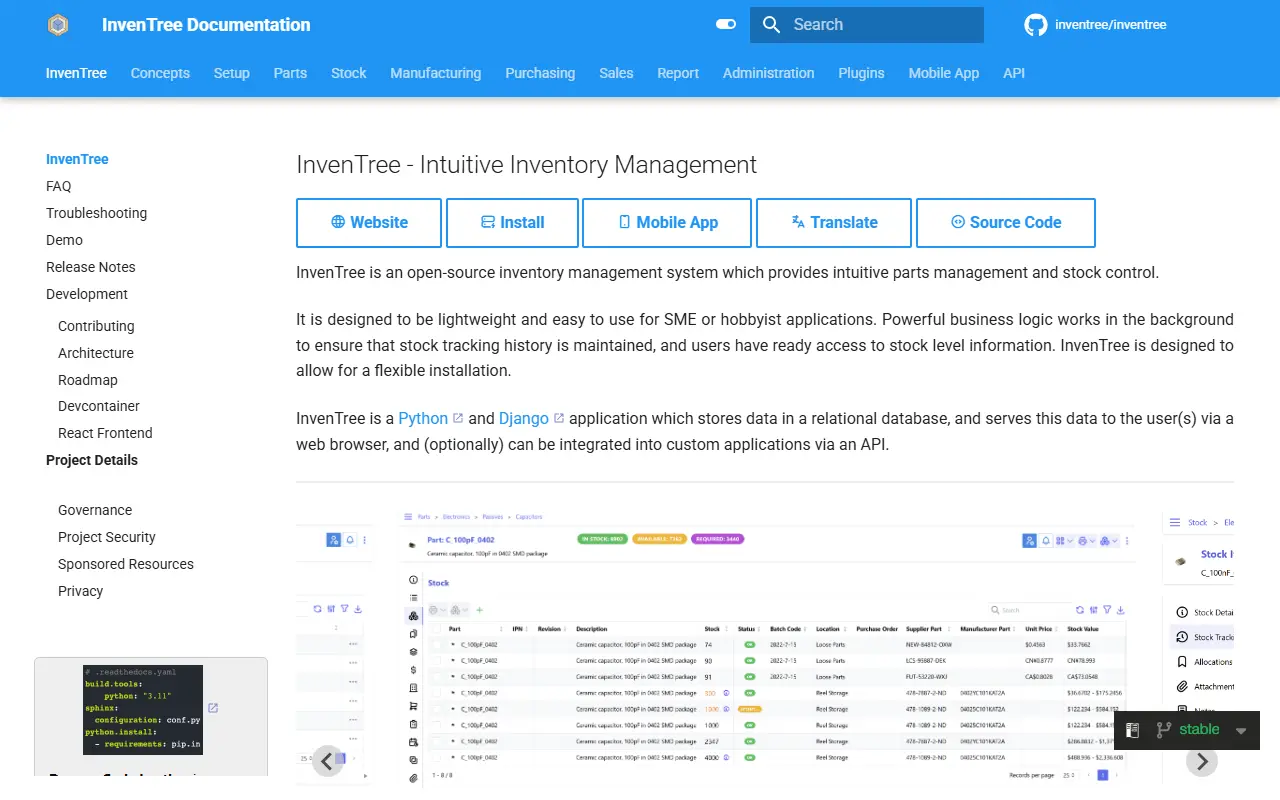
docs.inventree.orgInvenTree homepage screenshot

InvenTree is an open-source inventory management system that provides low-level stock control and part tracking. It targets organizations such as makers, electronics teams and small manufacturers that need to know which parts they have, where they are stored and how they are used.

The core is a Python and Django database backend that offers a web-based admin interface and a REST API for interaction with other applications. A plugin system supports custom applications and extensions, and integration options include the API, a Python module and third-party tools. The client is built with React, and the server supports PostgreSQL, MySQL, MariaDB and SQLite databases with Redis for caching.

InvenTree is licensed under MIT and deployed with Docker. A demo instance, documentation, a roadmap and issue tracker are linked from the repository, and translations are handled through Crowdin.

Key features

  • Low-level stock control
  • Part tracking
  • REST API for integrations
  • Plugin system for custom extensions
  • React web client
  • PostgreSQL, MySQL, MariaDB and SQLite support

Pricing: Free and open source under the MIT licence.

Homebox

A self-hosted home inventory and organization app with categories, locations, tags, custom fields, images, warranty tracking and maintenance records.

GitHub stars
7.4k
Last commit
yesterday
Latest release
v0.26.2
Licence
AGPL-3.0
Self-hosted
Yes
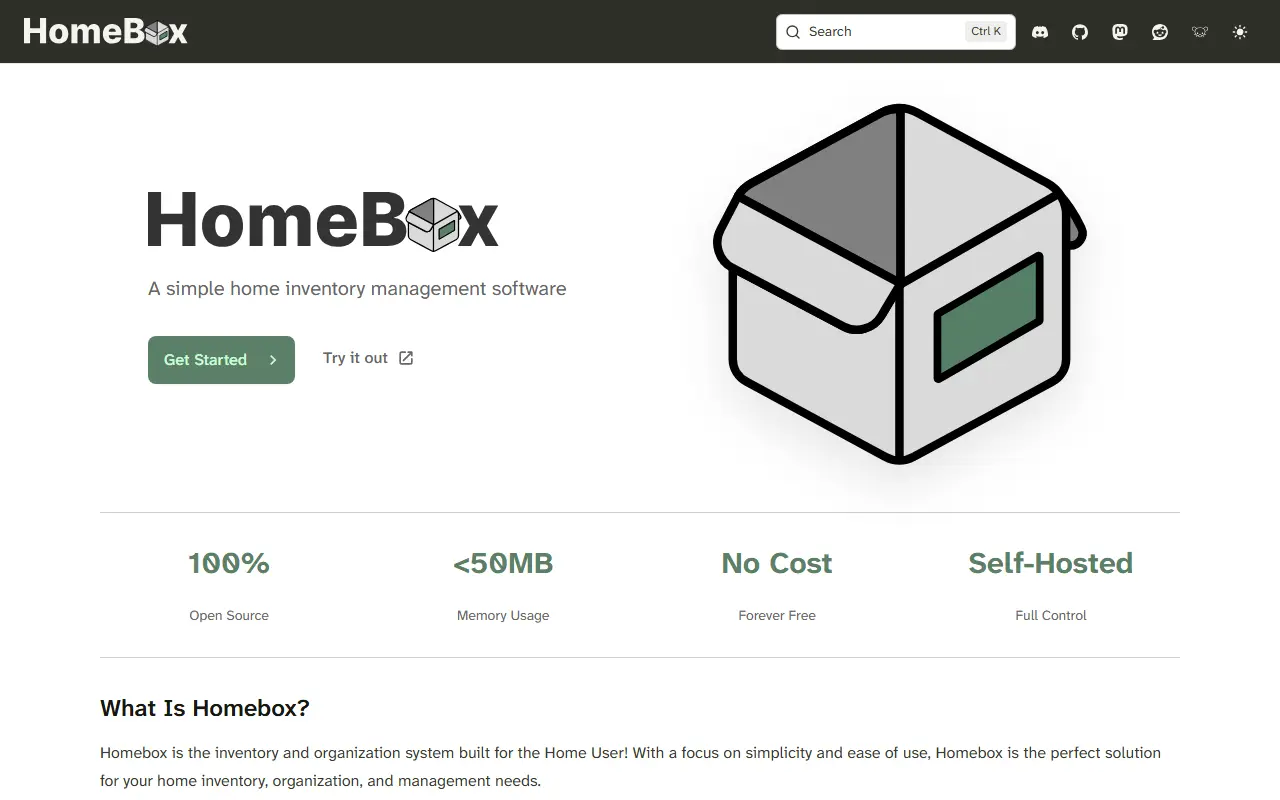
homebox.softwareHomebox homepage screenshot

HomeBox is an inventory and organization system built for home users, hosted by you. The project is a continuation of the original HomeBox maintained by sysadminsmedia, and its guiding principles are simplicity with room to expand, light resource use and portability.

You organize items into categories, locations and tags and can add custom fields for extra details. A search feature helps find items quickly, images can be uploaded to identify things, and documents and warranties can be tracked alongside purchase dates, prices and maintenance schedules. The interface is responsive, so it works on desktops, tablets and phones.

HomeBox is written in Go, ships with an embedded web interface and uses SQLite, which keeps deployment and backup simple, and it is typically run with Docker Compose. It is licensed under AGPL-3.0, and demo and nightly demo instances are available. It suits households that want a record of belongings for insurance, moving or maintenance.

Key features

  • Categories, locations and tags
  • Custom fields for items
  • Search across the whole inventory
  • Image upload for items
  • Warranty and document tracking
  • Purchase and maintenance records
  • Responsive web interface

Pricing: Free and open source under the AGPL-3.0 licence.

Shelf.nu

Shelf is an open-source asset management system for tracking equipment and inventory with QR tags, bookings, custody records and locations.

GitHub stars
3k
Last commit
today
Latest release
shelf@2.3.0
Self-hosted
Yes
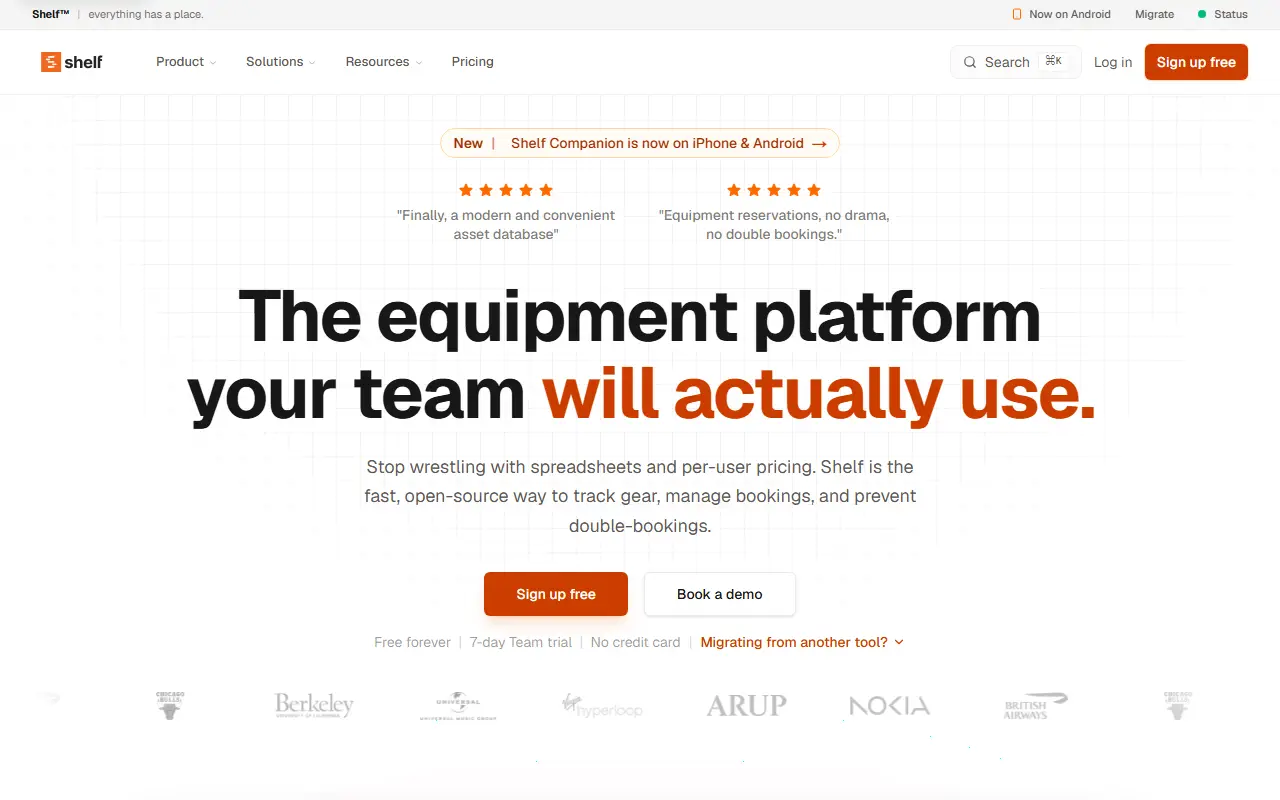
shelf.nuShelf.nu homepage screenshot

Shelf is an open-source platform for tracking physical assets such as equipment, devices, tools, vehicles, props and inventory. It is built for teams that need to know what they own, where each item is and who is currently using it. Organizations can manage large numbers of assets across several locations, with role-based access for their staff.

Each asset can carry a printed QR tag that anyone can scan with a phone to view it, check it out or report a problem. Bookings and reservations help schedule equipment and avoid double-booking, and custody tracking assigns items to team members. Locations are hierarchical, covering buildings, floors, rooms and shelves, with GPS tagging available. Custom fields hold details such as serial numbers, warranty data and condition.

Further tools include categories and tags, kits that bundle items like a laptop and charger, full-text search with saved filters, CSV import and export, reminders for maintenance or warranty expiry, an audit trail, multiple workspaces and a built-in QR and barcode scanner with bulk actions. Team roles include Owner, Admin, Base and Self Service. The project is built with TypeScript.

Key features

  • QR asset tags scannable from any phone
  • Bookings and reservations without double-booking
  • Custody tracking for team members
  • Hierarchical locations with GPS tagging
  • Custom fields, categories and tags
  • Kits that bundle related assets
  • CSV import and export
  • Maintenance and warranty reminders

Pricing: A free Personal plan covers one user. Plus costs $34 and Team $67 per workspace per month, with a 7-day Team trial; Enterprise is custom and add-ons are priced separately.

Sortly alternatives: questions

What is the best open-source alternative to Sortly?
InvenTree is the top-ranked open-source alternative to Sortly on Enlisted: InvenTree is an open-source inventory management system for stock control and part tracking, with a Django backend, REST API and plugin system. Other strong options are Homebox and Shelf.nu.
Are these Sortly alternatives free?
All 3 are open source, so the code is free to use under its licence, and 3 of them can be self-hosted on your own server.
How is this list of Sortly alternatives ranked?
By a score built from GitHub stars, star growth over the last 30 days and how recently the code changed. 3 of these projects shipped code in the last 30 days. Data is refreshed daily, and nobody can pay to move up.

People also look for alternatives to…

View all