#1
Dub is an open-source tool that ties marketing results to links, covering short links, conversion tracking and partner programs, with a self-hosting option.
- GitHub stars
- 25k
- Last commit
- 17 days ago
- Self-hosted
- Yes
- Hosted version
- Available
dub.co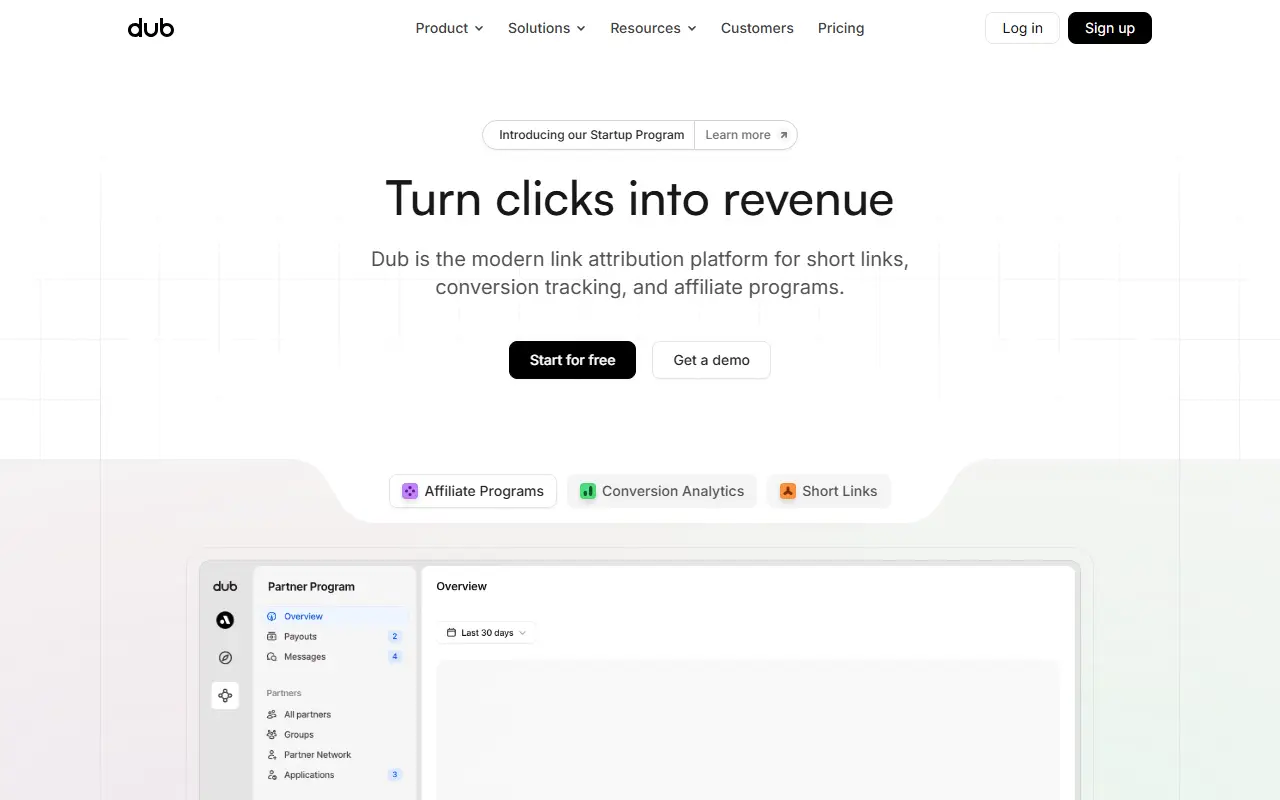
Dub is an open-source platform for attributing results to links, aimed at marketing teams. It handles short links, tracking of conversions and affiliate programs, so teams can see which campaigns and partners drive results. It is written in TypeScript with Next.js, and the repository metadata lists the license as Other, so check the repository for the exact terms before reuse.
The README documents a stack that includes Tailwind CSS, Prisma, Upstash for Redis, Tinybird for analytics, PlanetScale for the database, NextAuth.js, BoxyHQ for SAML SSO, Turborepo, Stripe, Resend for email and Vercel for deployment. A self-hosting guide is provided for people who want more control over their data and design. Contributors can follow the local development guide, which lists recommended Node.js and pnpm versions and common fixes for build problems. The topics also mention ClickHouse and MySQL.
Key features
- Short links with branded domains
- Conversion tracking for campaigns
- Affiliate program management
- Analytics powered by Tinybird
- SAML SSO support through BoxyHQ
- Self-hosting guide in the documentation
Pricing: Dub Partners plans start at $90 a month (Business) and $300 a month (Advanced), both with a 14-day trial and Dub Links included. Enterprise is custom-priced with a demo.
#2
Self-hosted PHP URL shortener that gives you your own short links, click statistics, analytics and a plugin system.
- GitHub stars
- 12k
- Last commit
- 2 days ago
- Latest release
- 1.10.6
- Licence
- MIT
- Self-hosted
- Yes
yourls.org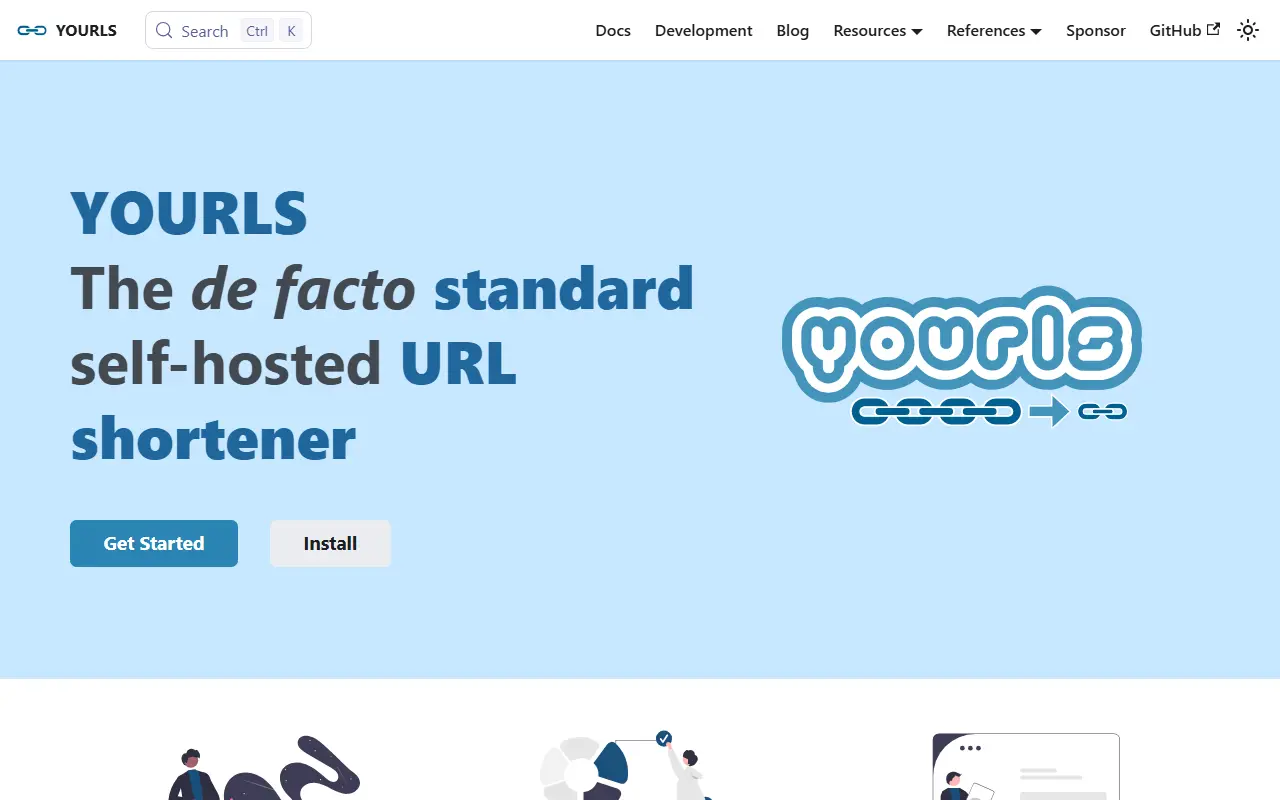
YOURLS, short for Your Own URL Shortener, is a set of PHP scripts that lets you run a link shortening service on your own server. Because you host it yourself, you keep full control over the data rather than depending on a third-party shortener, and you can serve short links from your own domain.
The software provides detailed statistics and analytics for each link, and a plugin system lets the community extend it. Beginners and experts alike are pointed to the documentation at docs.yourls.org, an official blog, an Awesome YOURLS list of plugins and tools, and community discussions on GitHub. Support from backers and sponsors is handled through Open Collective.
YOURLS is written in PHP and released under the MIT license. It is free and open source, and contributors are asked to search existing issues and read the contributing guidelines before opening a new one. It is a good fit for marketing teams and developers who want branded short links without sending click data elsewhere.
Key features
- Self-hosted URL shortening service
- Detailed click statistics and analytics
- Plugin system for extensions
- Full control over your link data
- Simple PHP installation
Pricing: Free and open source under the MIT license.
#3
Self-hostable URL shortener with custom domains, password-protected and expiring links, private statistics and a REST API.
- GitHub stars
- 11k
- Last commit
- 25 days ago
- Latest release
- v3.2.6
- Licence
- MIT
- Self-hosted
- Yes
- Hosted version
- Available
kutt.to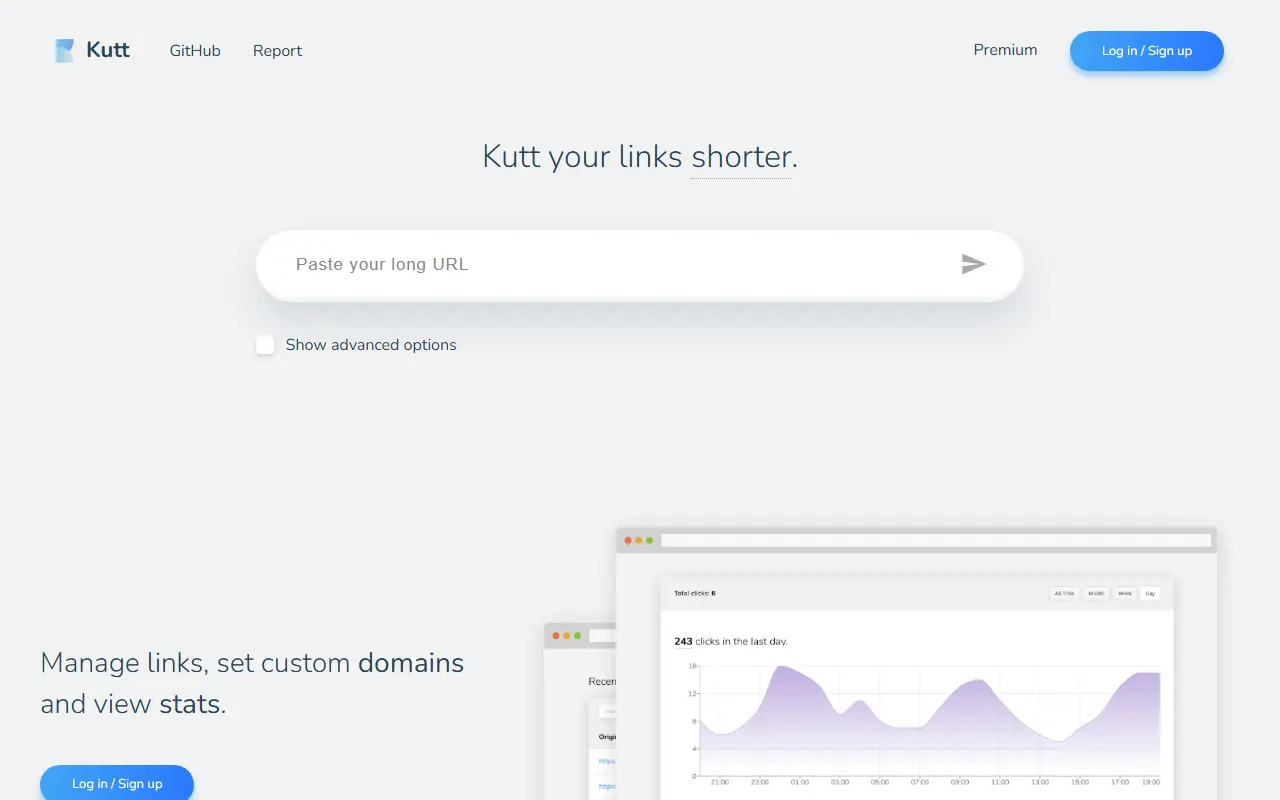
Kutt is a modern URL shortener that supports custom domains. Users can create and edit links, view statistics and manage their accounts, while administrators get a page for managing users and links. It is built with self-hosting in mind and needs no configuration to get started.
Individual links can have a custom address, a password, a description and an expiration time, and the click statistics for shortened URLs are private. The app supports SQLite, Postgres and MySQL, with Redis available as an optional cache. Registration and anonymous link creation can be turned off, OpenID Connect login is supported, and a RESTful API plus themes and customization options are included.
Kutt runs on Node.js 20 or above with no build step, and it can also be started with Docker. The code is JavaScript under the MIT license, with browser extensions and integrations listed in the README. The maintainers warn that the kutt.it domain is no longer theirs, so the official hosted site is kutt.to.
Key features
- Custom domain support for short links
- Passwords and expiry dates on links
- Private statistics for shortened URLs
- Admin page for users and links
- OpenID Connect login and REST API
- SQLite, Postgres or MySQL storage
Pricing: Free and open source under the MIT license.
#4
A self-hosted URL shortener written in PHP that serves short links under your own domain, with a REST API and a Docker image.
- GitHub stars
- 5.4k
- Last commit
- 2 days ago
- Latest release
- v5.1.8
- Licence
- MIT
- Self-hosted
- Yes
shlink.io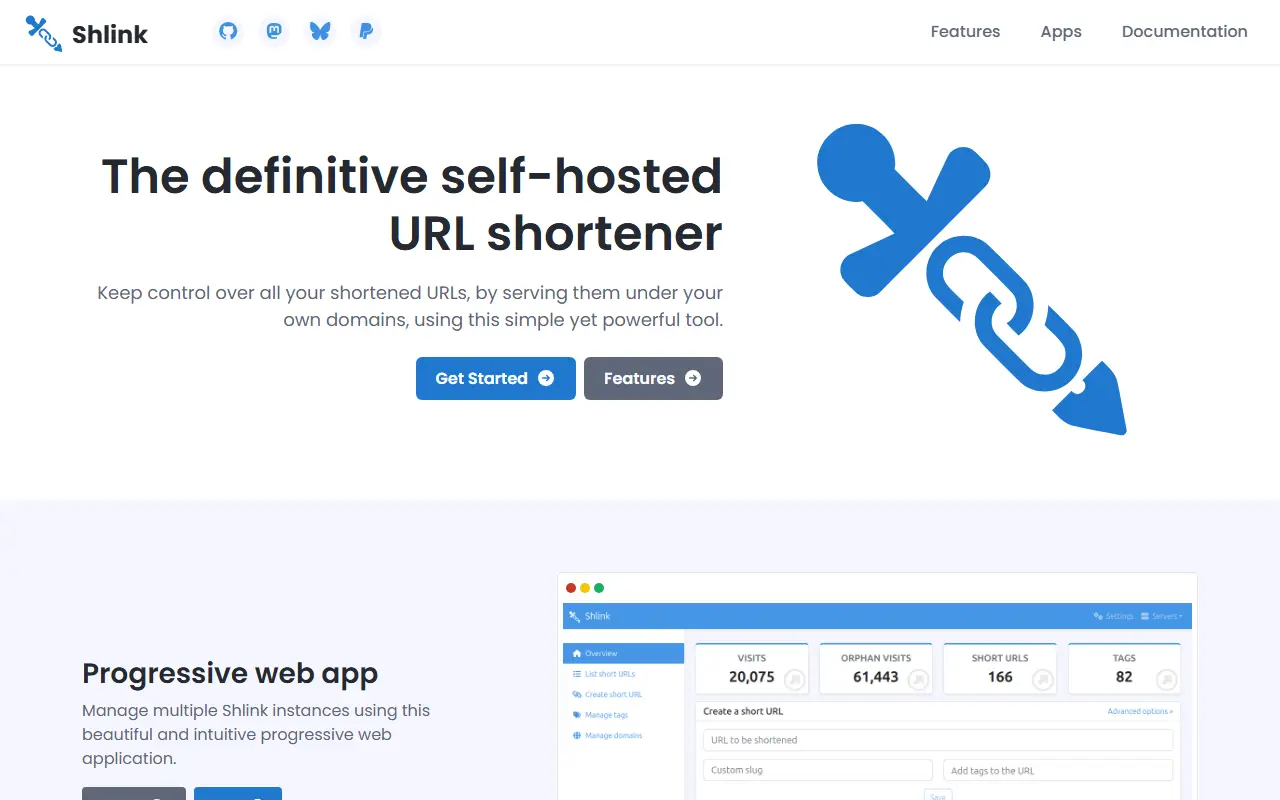
Shlink is a self-hosted URL shortener that serves shortened links under a domain you control. Because you run it yourself, the link data stays on your own infrastructure instead of a third-party shortening service, and short URLs carry your own branding.
It is built in PHP and exposes a REST API for creating and managing short URLs. It runs on PHP 8.4 or 8.5 with a database of your choice among MySQL, MariaDB, PostgreSQL, Microsoft SQL Server and SQLite, and it can integrate with RabbitMQ. Users can deploy a pre-bundled dist package, build from source, or use the official Docker image configured through environment variables.
Shlink is released under the MIT licence and written in PHP. The README covers only the basics, while the full searchable documentation on shlink.io explains configuration and everything else the tool can do once it is running. Contributions are welcome.
Key features
- Short links on your own domain
- REST API for managing URLs
- Official Docker image
- Choice of MySQL, PostgreSQL, SQLite and more
- Optional RabbitMQ integration
- Pre-built distributable packages
Pricing: Free and open source under the MIT licence.
#5
A serverless link shortener with analytics that runs entirely on Cloudflare, with custom slugs, expiry, passwords, device and country routing, and QR codes.
- GitHub stars
- 7.3k
- Last commit
- 17 days ago
- Latest release
- v0.3.1
- Licence
- AGPL-3.0
- Self-hosted
- Yes
sink.cool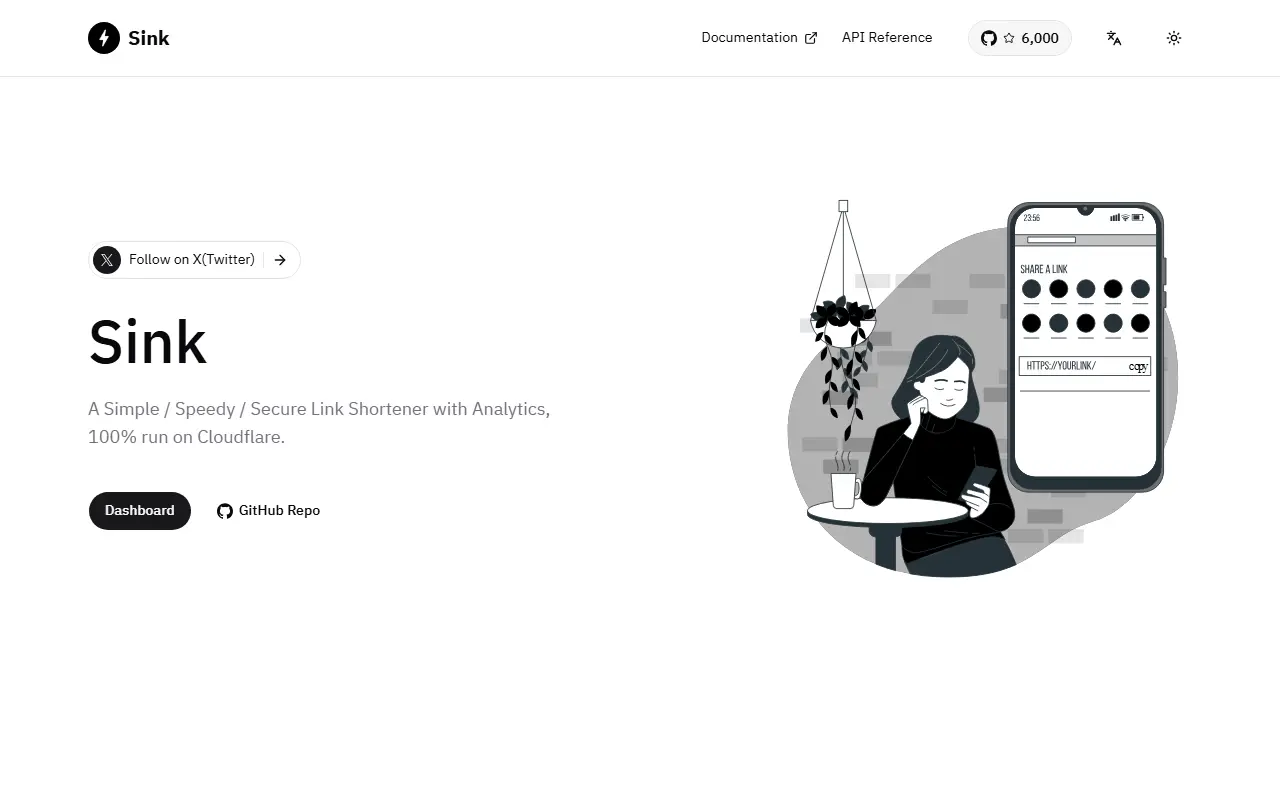
Sink is a link shortener with built-in analytics that runs entirely on Cloudflare's serverless platform, so there are no traditional servers to manage. Its topics describe it as an alternative to Bitly, built with Nuxt, Tailwind CSS and shadcn-ui, and it is intended for individuals and small teams that want a simple, self-hosted shortener.
Links can have customizable slugs, UTM parameters and optional case-sensitive matching, with expirations, passwords and unsafe-link warning pages for control. Smart routing redirects visitors by device or country, social previews can be customized, QR codes are generated, and links can be imported and exported as JSON with analytics export as CSV. An optional AI assistant on Cloudflare Workers AI can suggest slugs and OpenGraph metadata. Analytics show a live 3D globe and event logs using short polling intervals, and the interface is available in many languages.
Sink is licensed under AGPL-3.0. A sibling project called Slite shares the same features but runs as a local Node.js or Docker process. For professional needs such as a managed service, multiple users and an SLA, the README points to a separate product, S.EE.
Key features
- Serverless deployment on Cloudflare
- Custom slugs and UTM parameters
- Link expiry, passwords and warning pages
- Device and country based redirects
- Near-real-time analytics with a 3D globe
- QR codes for short links
- JSON import and CSV analytics export
Pricing: Free and open source under the AGPL-3.0 licence; it runs on your own Cloudflare account.
#6
LinkStack is a self-hosted, open-source alternative to Linktree that lets you publish a customizable page with all your important links.
- GitHub stars
- 3.9k
- Last commit
- 18 days ago
- Latest release
- v4.8.8
- Licence
- AGPL-3.0
- Self-hosted
- Yes
linkstack.org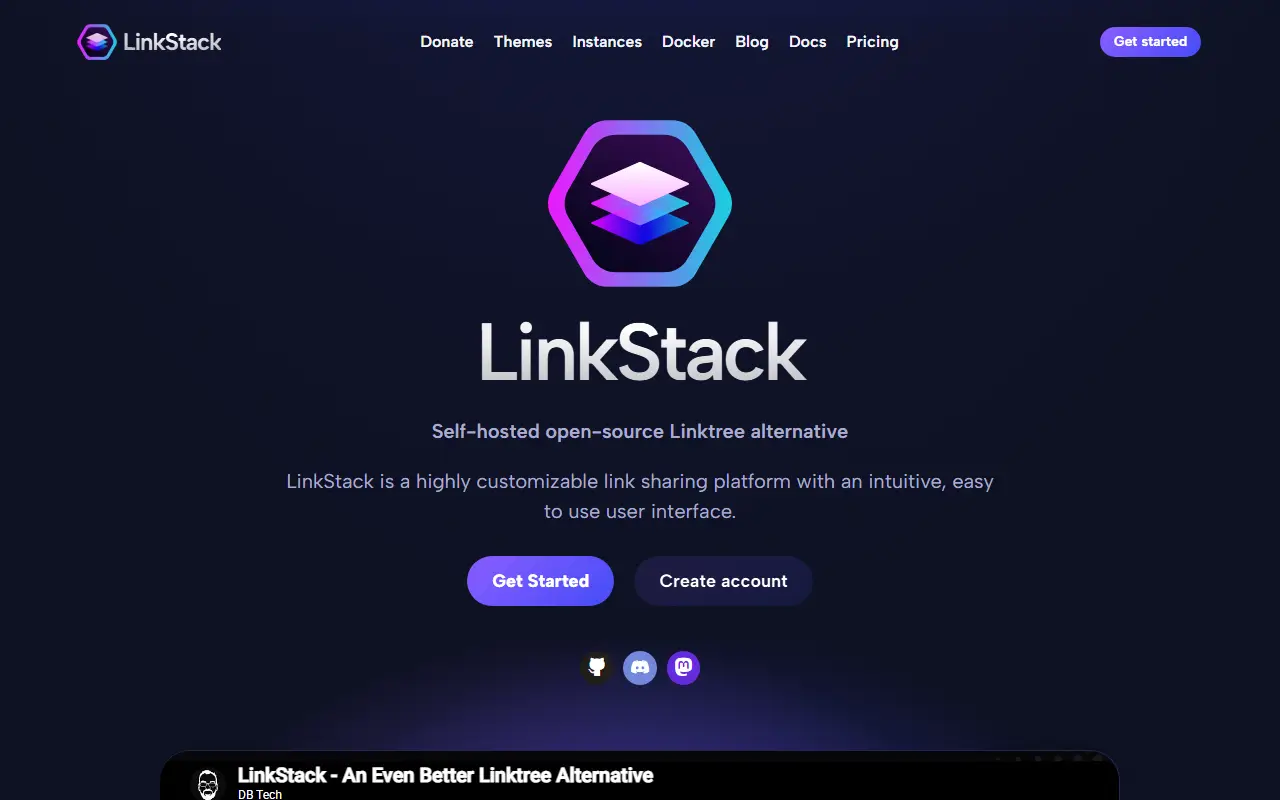
LinkStack is an open-source, self-hosted link sharing platform and an alternative to Linktree. It addresses the limitation of social media profiles that allow only one link: you build a custom page that gathers all your important links in one place, and you host it on your own server or web hosting account for complete control over the page and its data.
The platform lets other users register and create their own link pages, which makes it useful for businesses and organizations that manage links for several people. An admin panel is available for managing and accessing other users' links. The README describes the user interface as intuitive and the platform as highly customizable, and its mission centers on a free and privacy-focused solution.
It is built with PHP and the Laravel framework and licensed under AGPL-3.0. Installation options include a standard setup and a Docker version, and the project documents updating, themes, public instances and its fork structure. A Discord community is available. Topics highlight privacy, personal websites and its role as a Linktree replacement.
Key features
- Customizable personal link page
- Open registration for multiple user pages
- Admin panel for managing users and links
- Themes for customizing appearance
- Docker version available
- Built on PHP and Laravel
Pricing: Hosted instances run from $1 per month for a single user to $30 per month for up to 1000 users, with tiers at $5, $8, $10, $15, $20 and $25 in between.
Polr is an open-source link shortener written in PHP that you host on your own domain, with a REST API and admin interface.
- GitHub stars
- 5.1k
- Last commit
- 2 yr ago
- Latest release
- 2.3.0b
- Licence
- GPL-2.0
- Self-hosted
- Yes
polrproject.org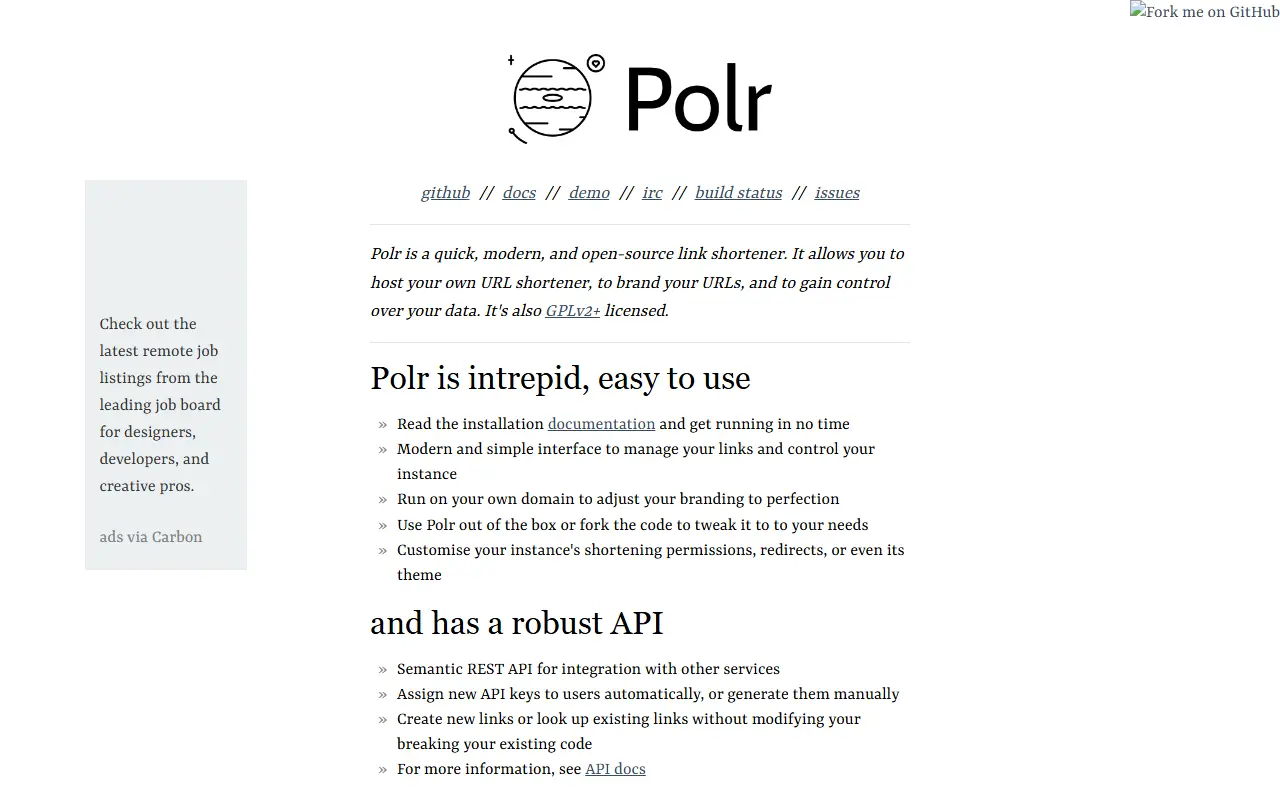
Polr lets you run your own URL shortener on a domain you control, so links carry your branding and the data stays with you. It has an interface for managing links and for administering the instance.
Behind the interface sits a REST API. API keys can be assigned to users automatically or generated by hand, and the API can create new links or look up existing ones. You can also adjust who may shorten links, how redirects behave, and the theme.
The project is written in PHP on the Lumen microframework with Blade templating and an MVC layout. It uses the Eloquent ORM with MySQL, PostgreSQL or SQLite. A public demo instance lets you try the interface, admin panel and API.
Key features
- Self-hosted shortener on your own domain
- REST API for other services
- API keys issued automatically or by hand
- Adjustable permissions, redirects and theme
- Works with MySQL, PostgreSQL or SQLite

Pygmy is an open-source URL shortener written in Python with link analytics, custom short URLs, expiring links and a user dashboard.
- GitHub stars
- 731
- Last commit
- 2 yr ago
- Latest release
- 1.2
- Licence
- MIT
- Self-hosted
- Yes
demo.pygy.co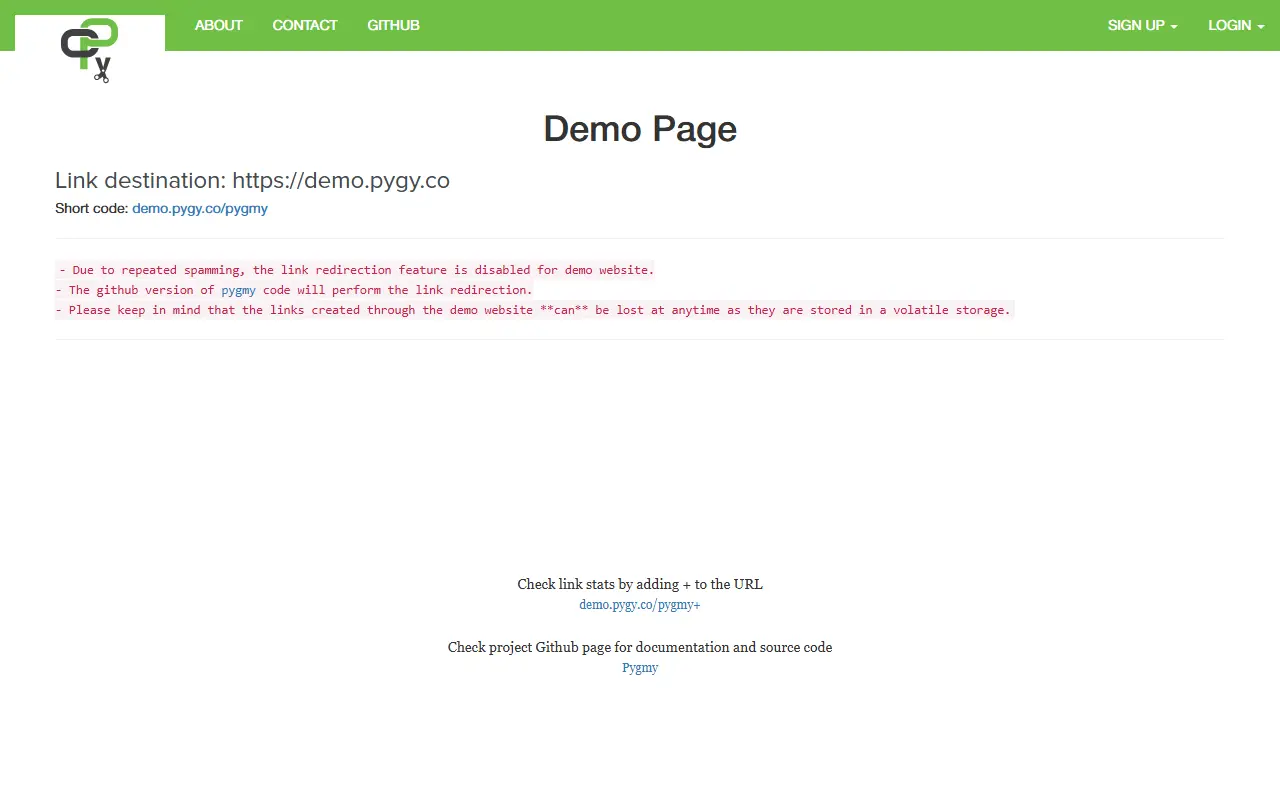
Pygmy is a URL shortener and analytics tool written in Python, designed to be easy to host and run as your own custom shortener. Its architecture is loosely coupled so custom integrations can be added without much effort.
The project has three parts: the core shortening code, a REST API built with Flask, and a Django-based user interface. Features include custom short URLs, links that expire automatically, secret key protected URLs, user sign-up and login, a dashboard for tracked links, and link statistics that you reach by adding a plus sign to the short URL.
It supports PostgreSQL, MySQL and SQLite through SQLAlchemy, uses JWT for API authentication, and can be run with Docker using the published image or set up manually from source. Pygmy is MIT licensed, and a public demo shows how it works. It suits individuals and small teams who want their own branded short links.
Key features
- URL shortening with custom aliases
- Auto-expiring short links
- Secret key protected URLs
- Link analytics via plus-sign suffix
- User accounts and dashboard
- REST API built on Flask
- PostgreSQL, MySQL or SQLite storage
Pricing: Free and open source under the MIT license.
Short.io alternatives: questions
- What is the best open-source alternative to Short.io?
- Dub is the top-ranked open-source alternative to Short.io on Enlisted: Dub is an open-source tool that ties marketing results to links, covering short links, conversion tracking and partner programs, with a self-hosting option. Other strong options are YOURLS, Kutt, Shlink and Sink.
- What are the best commercial alternatives to Short.io?
- Rebrandly, Beckli, biolink.page, Bitly and Digily Link are among the hosted, closed-source alternatives to Short.io listed on Enlisted, which lists 34 in total. Compare their pricing and features on each tool page.
- Are these Short.io alternatives free?
- All 8 are open source, so the code is free to use under its licence, and all of them can be self-hosted on your own server or computer. 2 also offer a paid or managed cloud version if you'd rather not host it yourself.
- How is this list of Short.io alternatives ranked?
- By a score built from GitHub stars, star growth over the last 30 days and how recently the code changed. 6 of these projects shipped code in the last 30 days. Data is refreshed daily, and nobody can pay to move up.
 TrackMedia
 TrackRev