6,598 open-source and SaaS tools, with GitHub stats refreshed every day.

6 alternatives ranked by real activity

Open-source OpenRouter alternatives

A curated, ranked list of the 6 best open-source alternatives to OpenRouter.

The best open-source alternative to OpenRouter is LiteLLM. If that doesn't suit you, other good options are New API, Helicone, One API and Portkey AI Gateway.

OpenRouter alternatives are mainly AI Infrastructure tools. 4 of them shipped code in the last 30 days, 6 can be self-hosted, and 3 use a permissive licence.

Last updated October 3, 2026 · ranked by GitHub stars, growth and recent commits

LiteLLM

An open-source AI gateway and Python SDK that lets you call 100+ LLM providers through one OpenAI-style interface, with spend tracking and load balancing.

GitHub stars
60k
Last commit
today
Latest release
v1.103.2
Self-hosted
Yes
Hosted version
Available
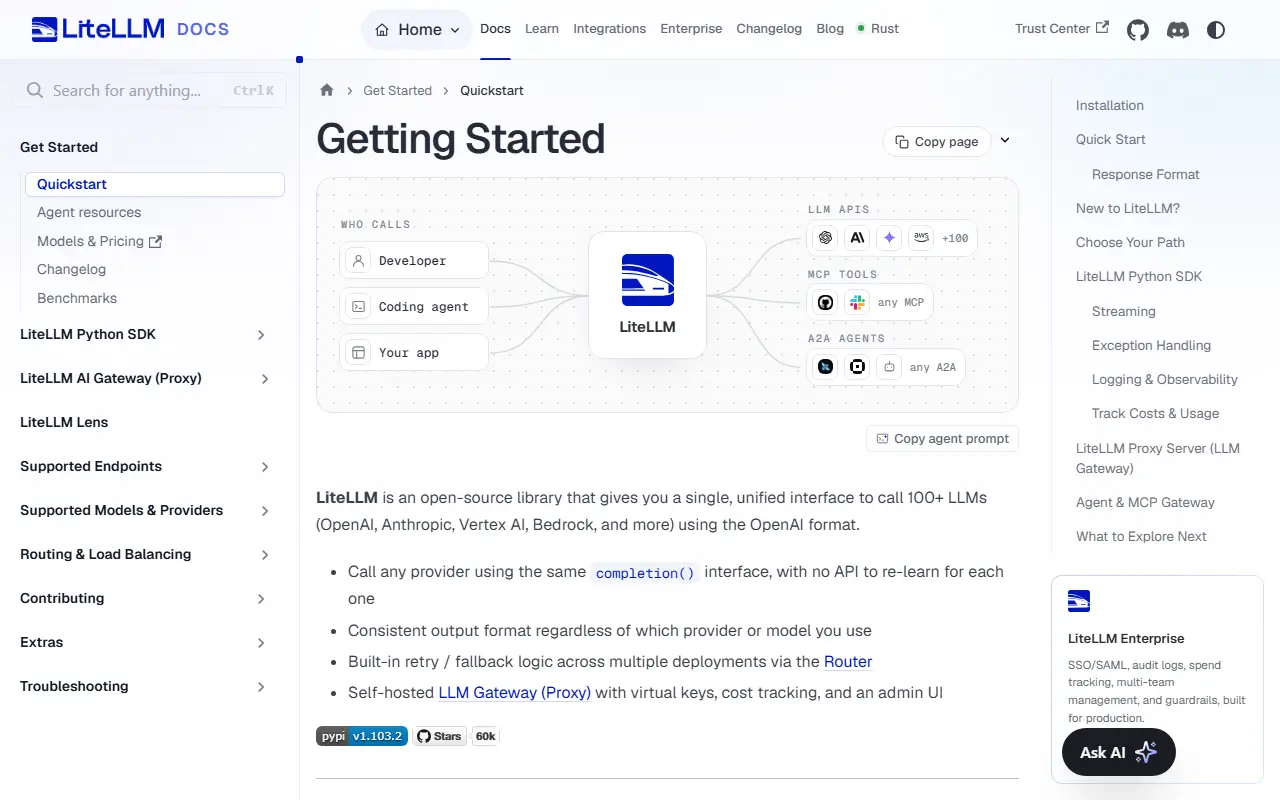
docs.litellm.aiLiteLLM homepage screenshot

LiteLLM is an AI gateway, open source, offering one unified interface for calling more than 100 LLM providers, including OpenAI, Anthropic, Gemini, Bedrock and Azure, using the OpenAI request format. It can be used as a Python SDK inside an application or deployed as a proxy server that serves a whole team or organization. The core is Python with a Rust component, and GitHub lists the license as 'Other'.

The project aims to remove the hassle of handling a separate SDK, login scheme, request format and set of errors for each model. On top of that the gateway provides load balancing, guardrails, spend tracking, virtual keys and an admin dashboard, and it exposes endpoints for chat completions, responses, embeddings, images, audio, batches and reranking.

Because requests keep the OpenAI format, teams can swap providers without rewriting application code. It is self-hosted, with hosted-proxy and enterprise tier options linked in the README, and its topics also reference an MCP gateway and LLMOps. It suits platform and AI engineering teams that need central control over model access, budgets and logging.

Key features

  • Unified OpenAI-format interface for 100+ LLMs
  • Python SDK and proxy server modes
  • Virtual keys and spend tracking
  • Guardrails and load balancing
  • Built-in admin dashboard
  • Endpoints for chat, embeddings, images and audio

Pricing: The open-source gateway can be self-hosted; the README also links hosted proxy and enterprise tier offerings.


New API

A self-hosted AI gateway that connects many upstream model services and exposes one consistent API, with routing, access control, usage tracking and a web console.

GitHub stars
49k
Last commit
yesterday
Latest release
v1.0.0-rc.41
Licence
AGPL-3.0
Self-hosted
Yes
newapi.aiNew API homepage screenshot

New API is an AI gateway you host yourself, built for apps, agents and teams. It lets you plug in upstream model services, present one consistent API to clients, and handle routing, access, usage and cost management centrally. It is written in Go and released under the AGPL-3.0 license.

It can convert between formats so that various LLMs are reachable through OpenAI-compatible, Claude-compatible or Gemini-compatible interfaces. Supported upstreams range from OpenAI, Anthropic and Gemini to Azure OpenAI, AWS Bedrock, Vertex AI, DeepSeek and Qwen, plus other compatible services, and a web console is used for administration.

Typical uses are sharing authorized model access across a team, switching providers without reconfiguring every client, and operating a private multi-model service. The README stresses lawful, authorized use: users must obtain upstream keys legitimately, follow upstream terms, and meet any regulatory obligations if they offer AI services to the public. It suits teams and organizations that need centralized model management.

Key features

  • Unified gateway for multiple upstream model services
  • OpenAI, Claude and Gemini compatible formats
  • Routing, access control and usage tracking
  • Cost accounting and usage analytics
  • Web console for administration
  • Self-hosted private deployment

Pricing: Free and open source under the AGPL-3.0 license.

Helicone

Helicone is an open-source LLM observability platform and AI gateway that logs requests, tracks cost and latency, and routes traffic across models.

GitHub stars
6.2k
Last commit
16 days ago
Latest release
v2025.08.21-1
Licence
Apache-2.0
Self-hosted
Yes
Hosted version
Available
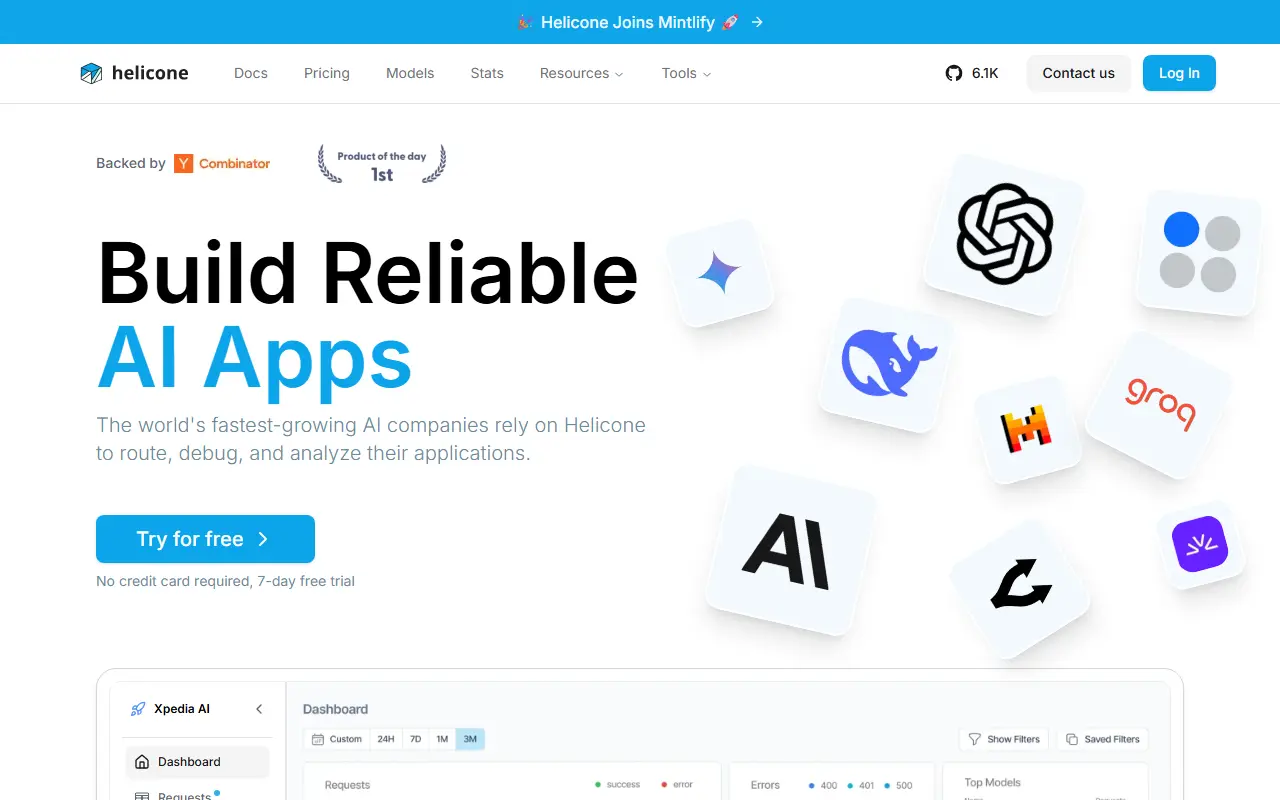
helicone.aiHelicone homepage screenshot

Helicone is an open-source platform for AI engineers that combines LLM observability with an AI gateway. It records the requests your application sends to model providers so you can trace agents, chatbots and document-processing pipelines, debug sessions, and see how much each call costs and how long it takes.

Integration is meant to be quick: a single line of code can log requests made through OpenAI, Anthropic, LangChain, Gemini, the Vercel AI SDK and similar tools. The gateway side offers access to many models through the OpenAI API format, with intelligent routing and automatic fallbacks. Other features listed in the README and repository topics include cost and latency tracking, datasets and fine-tuning support, prompt management, evaluation and a playground.

Helicone is licensed under Apache-2.0 and written in TypeScript. It can be self-hosted, and the vendor also runs a hosted cloud version. It suits teams that want visibility into LLM spend and quality without building their own logging pipeline.

Key features

  • One-line request logging for LLM providers
  • Agent and session tracing
  • Cost and latency tracking
  • AI gateway with routing and fallbacks
  • Prompt management and evaluation
  • Datasets for fine-tuning workflows

Pricing: Free Hobby plan with 10,000 requests. Pro costs $79 and Team $799 per month plus usage, each with a 7-day trial; Enterprise is custom.

One API

One API is an open-source LLM API gateway that unifies many model providers behind the OpenAI API format, with key management and redistribution.

GitHub stars
37k
Last commit
8 mo ago
Latest release
v0.6.10
Licence
MIT
Self-hosted
Yes
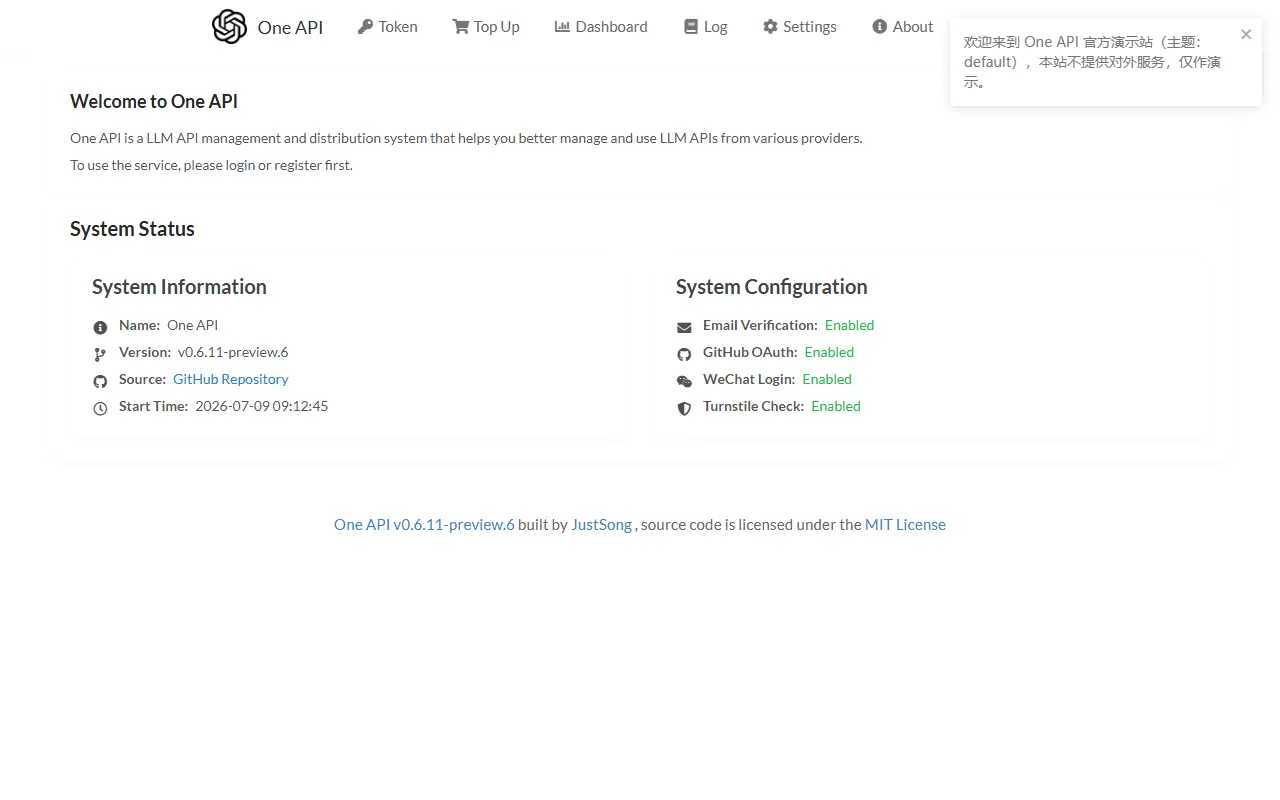
oneapi.justsong.cnOne API homepage screenshot

One API is an LLM API management and key redistribution system that lets you reach many large language models through the standard OpenAI API format. It is distributed as a single executable and a Docker image, and the repository description is written in both Chinese and English with an English interface available.

It supports a long list of providers, including OpenAI and Azure OpenAI, Anthropic Claude, Google Gemini, Mistral, DeepSeek, Groq, Ollama, Cohere, xAI and many Chinese model services. Administrators can load balance across several channels, use stream mode, deploy on multiple machines, manage tokens with expiry, quotas, IP ranges and allowed models, generate redemption codes, group users and channels with different rates, retry failed requests and customize branding. A management API allows extension without code changes.

One API is licensed under MIT. The README warns that users must follow OpenAI's terms of use and applicable laws, and must not offer unregistered generative AI services to the public in China. It also instructs administrators to change the default root password after the first login.

Key features

  • OpenAI-format API for many model providers
  • Load balancing across channels
  • Token management with quotas and expiry
  • Redemption codes and user groups
  • Multi-machine deployment
  • Automatic retry on failed requests
  • Single binary and Docker image

Pricing: Free and open source under the MIT licence.

Portkey AI Gateway

Portkey's AI Gateway routes requests to many language and multimodal models through a single API, with guardrails and several deployment options.

GitHub stars
13k
Last commit
4 mo ago
Latest release
v1.15.2
Licence
MIT
Self-hosted
Yes
Hosted version
Available
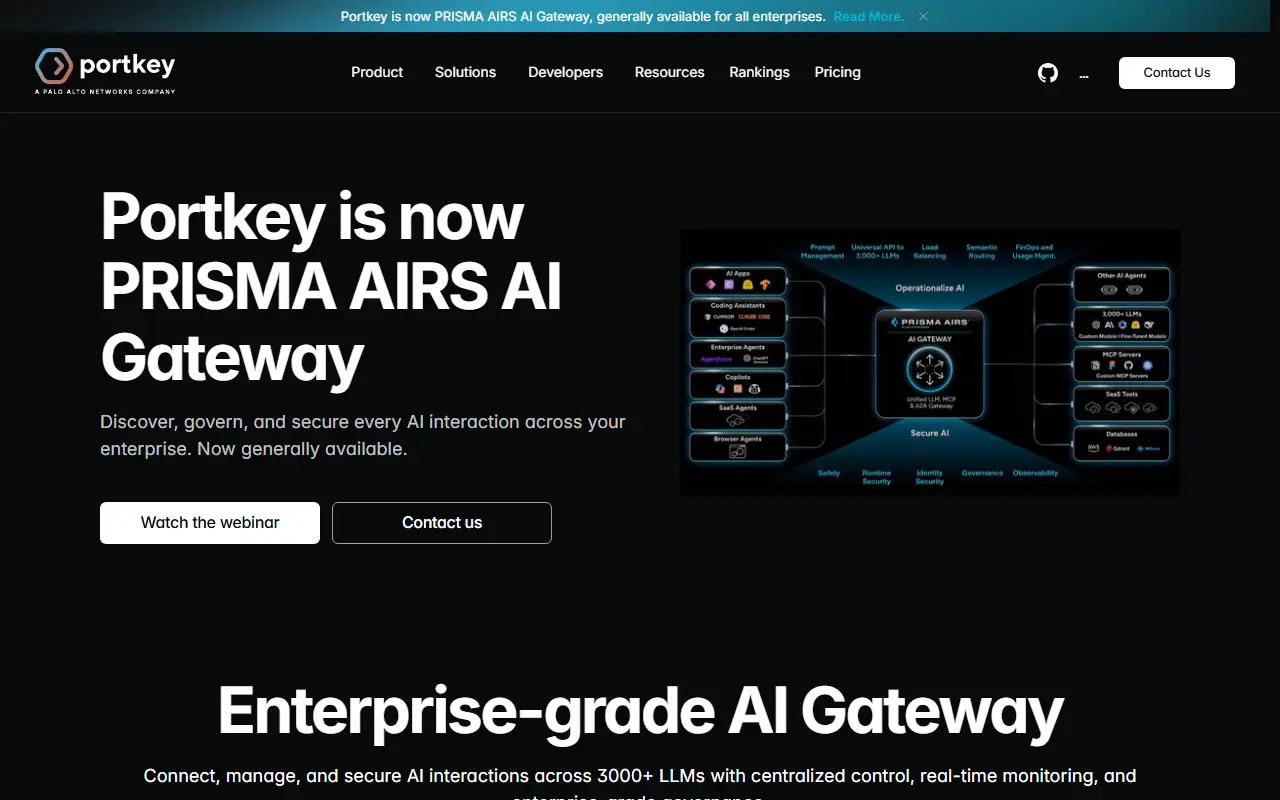
portkey.aiPortkey AI Gateway homepage screenshot

Gateway is Portkey's open-source AI gateway, a lightweight service for routing requests to a large catalog of language, vision, audio and image models through one API. It is designed to be fast, reliable and enterprise-ready, and the project says you can integrate with any language model quickly. It also bundles AI guardrails and, per its topics, supports MCP gateway use. It is written in TypeScript under the MIT license.

A quickstart runs the gateway locally, serving the API on port 8787 along with a console. Deployment guides cover Portkey Cloud, Docker, Node.js, Cloudflare, Replit and other targets. Libraries and SDKs listed include JavaScript, Python, REST, the OpenAI SDKs, LangChain and LlamaIndex, so existing applications can point at the gateway with small changes.

The README announces a Gateway 2.0 pre-release in which Portkey's core enterprise gateway merges into open source, and it mentions an open-source model pricing dataset called Portkey Models. A hosted gateway and enterprise offering exist from the vendor, so the project suits both teams who want to self-host routing and those who prefer a managed service.

Key features

  • Single API for routing to many LLMs
  • Integrated AI guardrails
  • Local console for monitoring requests
  • Deploys via Docker, Node.js and Cloudflare
  • Works with OpenAI SDKs and LangChain
  • MCP gateway support

Pricing: The gateway is free to self-host and the hosted Developer plan is free forever. Production costs $49 per month with $9 overage per extra 100K requests; Enterprise is custom.

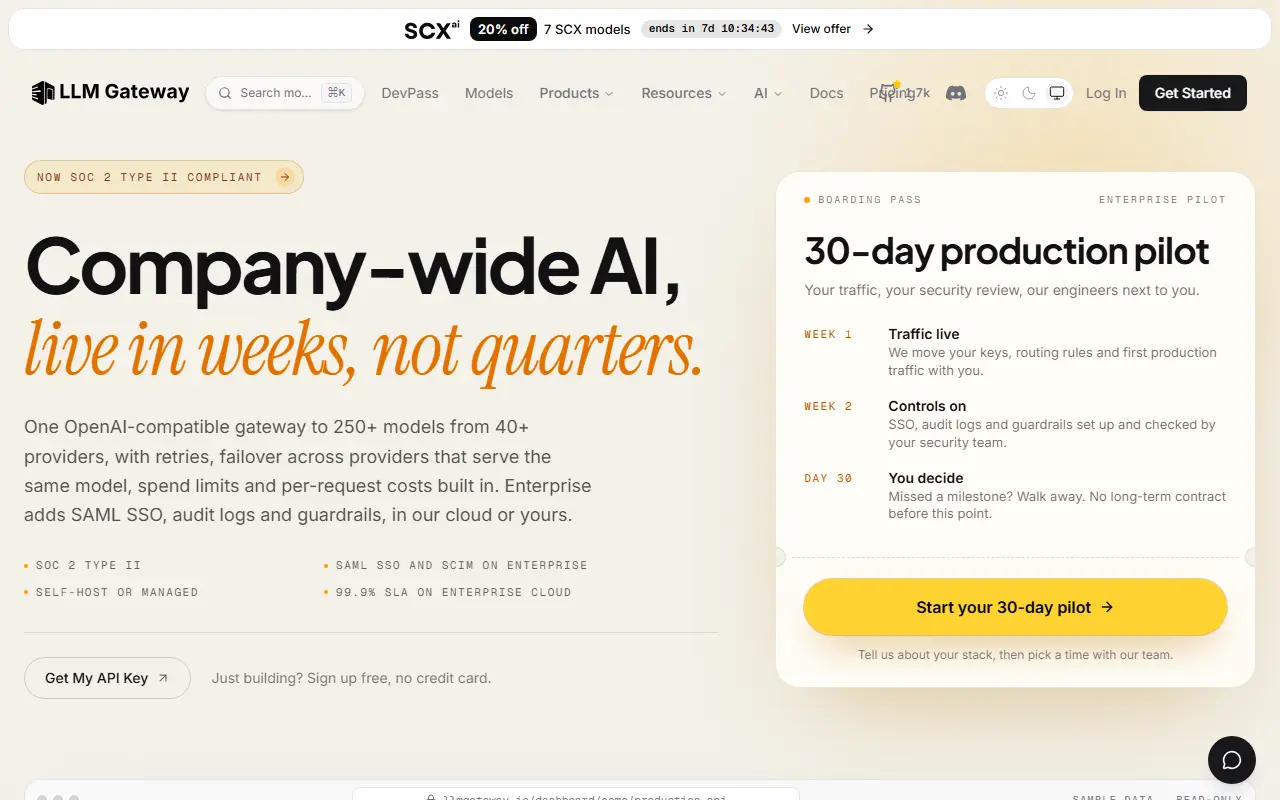
LLM Gateway

An open-source API gateway that routes requests to many LLM providers through one OpenAI-compatible interface, with usage analytics and key management.

GitHub stars
1.7k
Last commit
today
Latest release
v1.19.0
Self-hosted
Yes
Hosted version
Available
llmgateway.ioLLM Gateway homepage screenshot

LLM Gateway is an open-source API gateway for large language models. It sits between your applications and multiple providers such as OpenAI, Anthropic and Google Vertex AI, so your code talks to one interface while the gateway decides where each request goes. Its API follows the OpenAI format, which keeps migration from existing code straightforward.

Beyond routing, it centralizes the management of provider API keys and tracks requests, token usage, response times and costs so teams can see what their LLM usage is doing. Performance monitoring lets you compare models on speed and cost-effectiveness. Topics on the repository also mention guardrails, rate limiting, observability and enterprise use.

You can use LLM Gateway in two ways: a hosted version at llmgateway.io where you create an account and get an API key, or a self-hosted deployment on your own infrastructure using a unified Docker image with PostgreSQL. The code is written in TypeScript and its licence is listed as other, so check the repository terms. It suits developers and platform teams who juggle several model vendors.

Key features

  • Unified OpenAI-compatible API
  • Routing across multiple LLM providers
  • Central management of provider API keys
  • Token usage and cost tracking
  • Model performance comparison
  • Docker image for self-hosting

Pricing: A free plan has no subscription: you pay provider token rates plus a 5% fee on credit purchases, or nothing extra with your own keys. Enterprise is custom, and the gateway can be self-hosted.

OpenRouter alternatives: questions

What is the best open-source alternative to OpenRouter?
LiteLLM is the top-ranked open-source alternative to OpenRouter on Enlisted: An open-source AI gateway and Python SDK that lets you call 100+ LLM providers through one OpenAI-style interface, with spend tracking and load balancing. Other strong options are New API, Helicone, One API and Portkey AI Gateway.
Are these OpenRouter alternatives free?
All 6 are open source, so the code is free to use under its licence, and 6 of them can be self-hosted on your own server. 4 also offer a paid or managed cloud version if you'd rather not host it yourself.
How is this list of OpenRouter alternatives ranked?
By a score built from GitHub stars, star growth over the last 30 days and how recently the code changed. 4 of these projects shipped code in the last 30 days. Data is refreshed daily, and nobody can pay to move up.

People also look for alternatives to…

View all