7,363 open-source and SaaS tools, with GitHub stats refreshed every day.

8 alternatives ranked by real activity

Open-source MediaFire alternatives

A curated, ranked list of the 8 best open-source alternatives to MediaFire.

The best open-source alternative to MediaFire is Nextcloud. If that doesn't suit you, other good options are Cloudreve, Seafile, Zipline and Kodbox.

MediaFire alternatives are mainly file storage & sharing tools. 7 of them shipped code in the last 30 days, 8 can be self-hosted, and 2 use a permissive licence.

Last updated October 2, 2026 · ranked by GitHub stars, growth and recent commits

Nextcloud

A self-hosted file sync, sharing and collaboration platform that stores files, contacts and calendars on a server you choose, extensible with hundreds of apps.

GitHub stars
37k
Last commit
today
Latest release
v35.0.1
Licence
AGPL-3.0
Self-hosted
Yes
Hosted version
Available
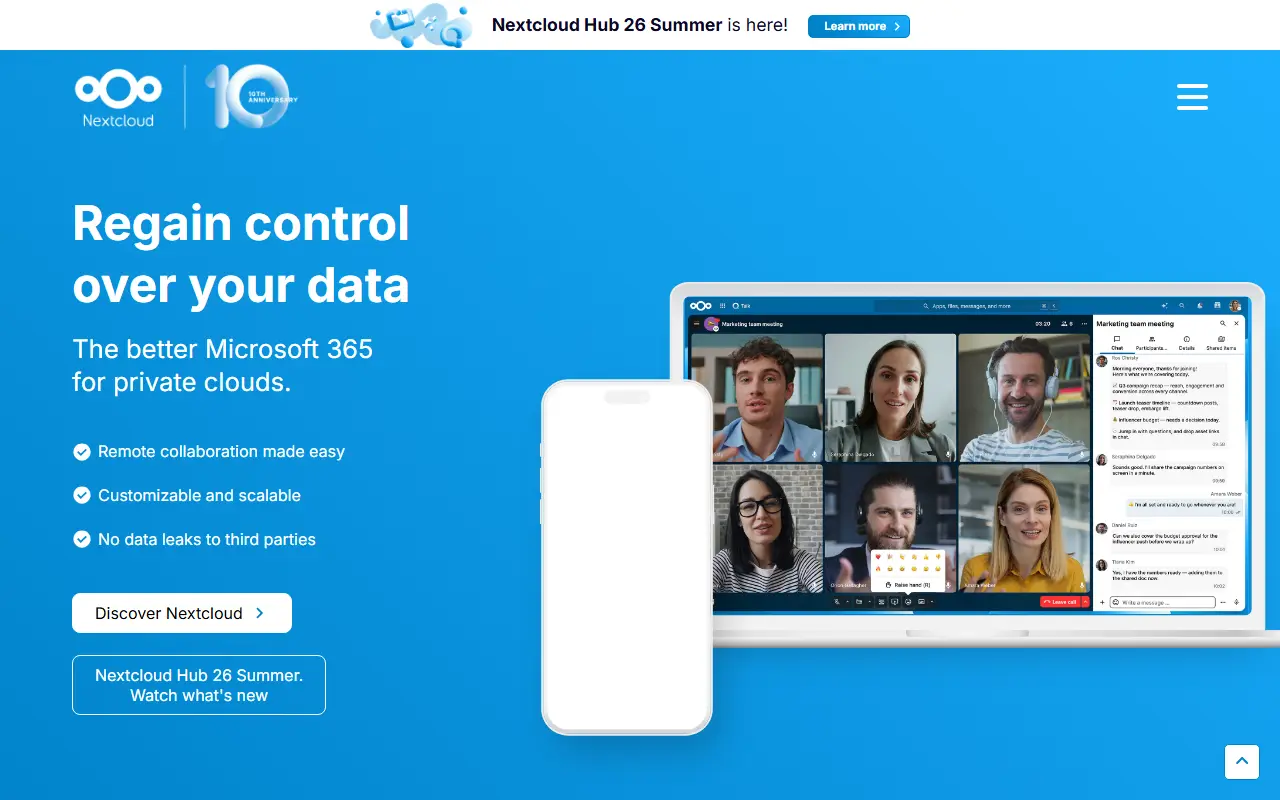
nextcloud.comNextcloud homepage screenshot

Nextcloud Server is a platform for keeping your files, contacts, calendars and other data on a server of your choosing. Content is synchronized across your devices, can be shared with other people for viewing or collaboration, and stays under your control rather than with a large cloud provider. It grew out of the ownCloud lineage.

Functionality can be expanded through hundreds of apps in its App Store, including Calendar, Contacts, Mail and Video Chat. Security measures include encryption mechanisms, a public bug bounty program and two-factor authentication. There are several ways to get a Nextcloud: sign up with a provider, install the server yourself on your own hardware or with a ready-to-use appliance, buy a device that comes with it preinstalled, or find a service provider to host it for you.

The server is written in PHP and JavaScript under the AGPL-3.0 license. Nextcloud GmbH also offers an Enterprise edition aimed at public sector, education and company users. It suits households, schools and organizations that want to replace commercial cloud storage and office suites with something they run themselves.

Key features

  • File storage and sync across devices
  • Contacts and calendar hosting
  • Sharing and collaboration controls
  • App Store with hundreds of apps
  • Two-factor authentication and encryption
  • Self-install, appliance or provider-hosted options

Pricing: Nextcloud Enterprise Standard starts at 42€ per user per year, with subscriptions from 100 users and 31.50€ from 250 users. Nextcloud One managed hosting is offered for smaller teams.

Cloudreve

A self-hosted file management and sharing system that stores files across local disks and many cloud storage providers, with WebDAV, previews and share links.

GitHub stars
29k
Last commit
12 days ago
Latest release
4.19.1
Licence
GPL-3.0
Self-hosted
Yes
cloudreve.orgCloudreve homepage screenshot

Cloudreve is a self-hosted file management and sharing system with support for multiple storage backends. You can keep files on local disk, on a remote node, or with providers including OneDrive, S3-compatible services and several Chinese clouds such as Aliyun, Tencent, Huawei and Qiniu, and clients transfer data directly to the provider.

Everyday file features include drag-and-drop upload of files and folders with parallel, resumable transfers, batch download, compressing and extracting archives, WebDAV access across all storage providers, and background downloads through Aria2 or qBittorrent using one or more download nodes. Media metadata can be extracted so files can be searched by metadata or tag. Multiple users and groups are supported, and share links for files and folders can carry an expiry date. Videos, images, audio and ePub files preview online, and text, Markdown, diagrams and Office documents can be edited.

Cloudreve is written in Go and licensed under GPL-3.0, with a project homepage, online demo, documentation and Telegram and Discord communities. It suits individuals and small organizations that want a private, Chinese-ecosystem-friendly alternative to commercial cloud drives.

Key features

  • Multiple storage backends including S3 and OneDrive
  • Direct client-to-provider transfers
  • WebDAV access to storage
  • Resumable parallel uploads
  • Share links with expiry dates
  • Online preview and editing of documents
  • Multi-user and group management

Pricing: Free and open source under the GPL-3.0 license.

Seafile

A file sync and sharing platform with desktop and mobile clients that also lets teams organize files with extensible properties and flexible views.

GitHub stars
15k
Last commit
14 days ago
Latest release
v9.0.5
Self-hosted
Yes
Hosted version
Available
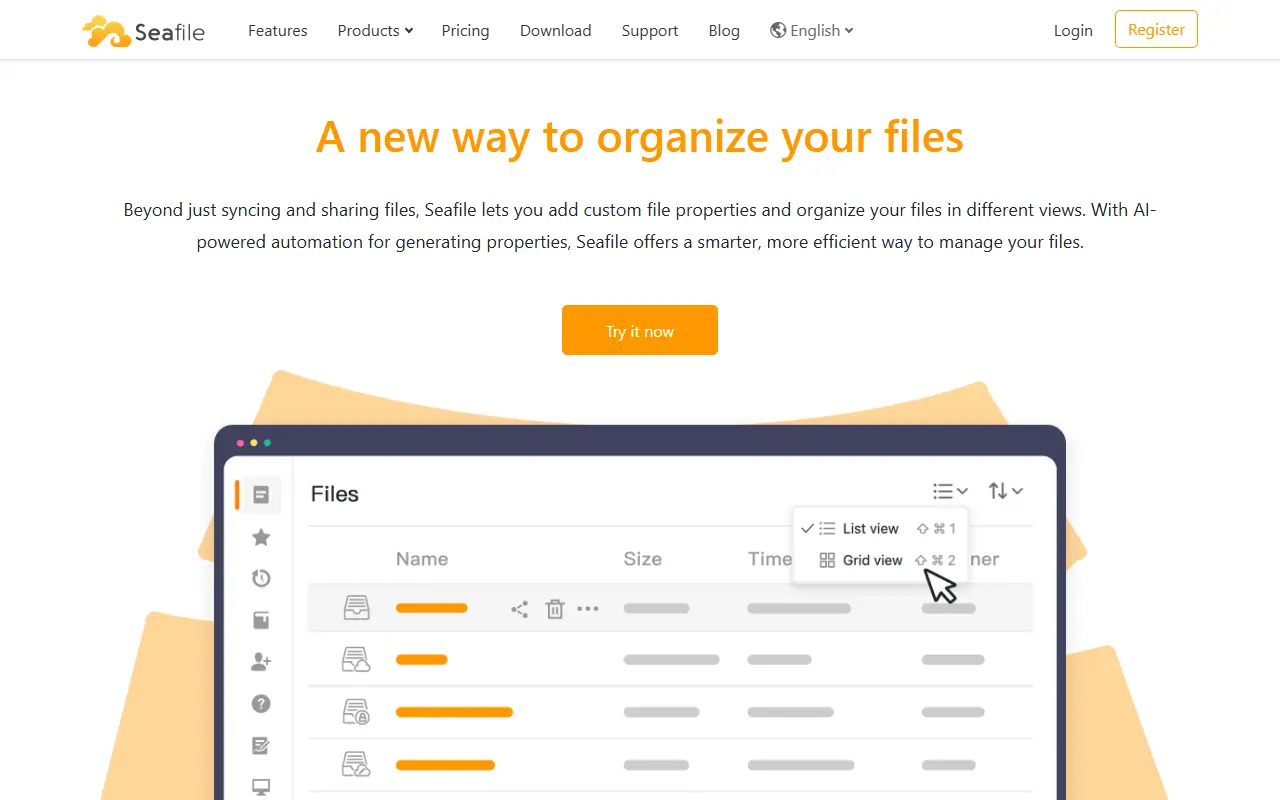
seafile.comSeafile homepage screenshot

Seafile is a file synchronization and sharing platform written mainly in C. Beyond keeping folders in sync across devices and sharing them with others, it describes a newer way of organizing files using extensible file properties and flexible views. Topics also tie it to wikis, Markdown, knowledge management and document management.

The project's homepage could not be fetched while preparing this entry, so the details here come from the repository description, its topics and general knowledge of the product. Seafile is known for client apps on desktop and mobile, libraries as the unit of syncing and sharing, and an emphasis on reliable syncing of large numbers of files.

The core server is open source, with its license listed as 'Other' on GitHub, and the vendor also sells a professional edition and offers hosted service. You can run it on your own servers, which suits teams and organizations that want private cloud storage under their control.

Key features

  • File synchronization across devices
  • File and folder sharing
  • Extensible file properties
  • Flexible views for organizing files
  • Wiki and Markdown document features

Pricing: The Community Edition is free to self-host. Pro Edition is $48 per user per year (free for 3 users); the hosted Plus Team plan is $8 per user per month with a 30-day trial.

Zipline

Self-hosted file upload server built around ShareX, with short URLs, folders, tags, and sharing controls for people who want to run their own screenshot and file host.

GitHub stars
3.4k
Last commit
5 days ago
Latest release
v4.8.0
Licence
MIT
Self-hosted
Yes
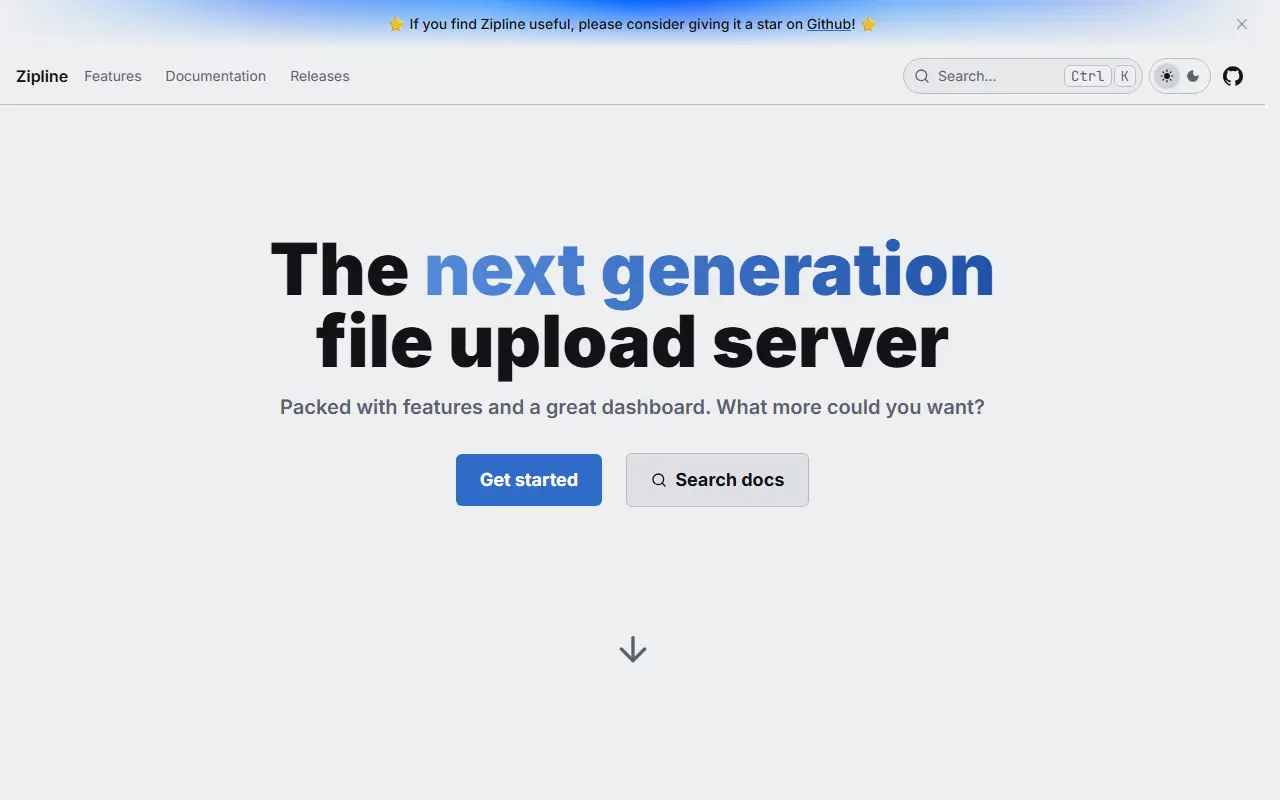
zipline.diced.shZipline homepage screenshot

Zipline is an open-source file upload server that you run yourself. It began as a destination for ShareX screenshot and file uploads and has grown into a general personal or team file host with a web interface, an API, and a gallery view for uploaded media. It is released under the MIT license.

Uploads can be organized into folders and tags, shortened into compact URLs, and shared with embeds that preview cleanly in chat apps. Access can be tightened with password-protected links, invite-only registration, per-user quotas, OAuth2 sign-in, two-factor authentication, and passkeys. Image compression, video thumbnails, and partial uploads help with larger files, and webhooks can notify Discord or any HTTP endpoint.

Deployment is Docker-based: you mount volumes for uploads, public assets, and custom themes, and set a secret value before the first start. The host CPU must support AVX instructions, because the project does not publish builds for older processors. Zipline suits individuals, communities, and small teams who want a private alternative to public image and file hosts.

Key features

  • ShareX-compatible upload endpoint
  • Folders and tags for organizing uploads
  • URL shortening for shared files
  • Password-protected links and invite-only signups
  • OAuth2, two-factor authentication, and passkeys
  • Image compression and video thumbnails
  • Discord and HTTP webhooks
  • Custom themes and per-user quotas

Pricing: Free and open source under the MIT license; you run it on your own server.

Kodbox

Self-hosted web file manager and private cloud drive with online preview and editing, multi-storage support, sharing, and a built-in web code editor.

GitHub stars
3.3k
Last commit
3 days ago
Latest release
1.69.03
Self-hosted
Yes
kodcloud.comKodbox homepage screenshot

Kodbox is a web-based file manager that can act as a private cloud disk for individuals or an enterprise network drive. It is a redesign of the earlier KodExplorer project and also includes a web code editor, so websites can be edited directly in the browser. The operating experience is modeled on a desktop file explorer, including drag and drop, keyboard selection, and quick search.

A key capability is multi-storage support: files can live on a local disk, FTP, WebDAV, or object storage such as Alibaba Cloud OSS, Tencent Cloud COS, Qiniu, MinIO, or any S3-compatible service. It previews, edits, and plays many office and media formats online, and supports sharing links, collaboration, and fine-grained permission control.

Kodbox runs on Linux, Windows, or macOS and, according to the README, needs only PHP. Clients are available through the web, mobile browsers, iOS, Android, desktop, and WebDAV mounting. The input does not state a license or pricing model, so check the vendor site for current terms. It suits teams and individuals who want to keep documents on their own infrastructure.

Key features

  • Desktop-style web file manager
  • Multi-storage backends including S3-compatible services
  • Online preview and editing of many file formats
  • Built-in web code editor
  • Sharing links with permission controls
  • WebDAV mounting and mobile clients

Chibisafe

Chibisafe is a self-hosted file uploader written in TypeScript that returns shareable links, with albums, quotas and S3 storage.

GitHub stars
2.8k
Last commit
today
Latest release
v6.5.5
Licence
MIT
Self-hosted
Yes
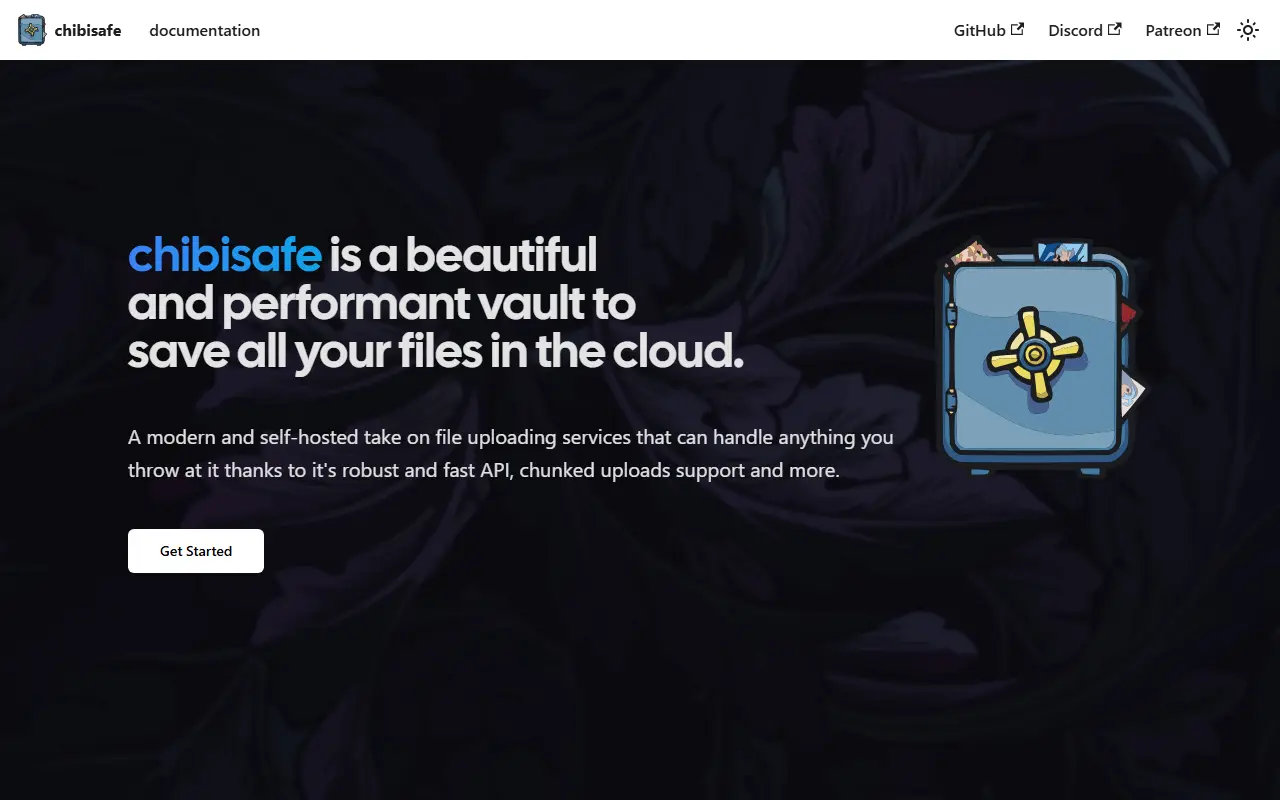
chibisafe.appChibisafe homepage screenshot

Chibisafe is a file uploader service written in TypeScript. You send it files, photos or documents and it gives back a shareable link. It is described as easy to use and deploy, and it can run in public mode, user accounts mode or invite-only mode, depending on how open you want your instance to be.

Large files are uploaded in chunks to reduce failures from network problems, and users can create API keys to use the service programmatically. An admin dashboard exposes most instance settings, including the name, rate limit, maximum file size and accepted extensions, so you rarely need to edit configuration files by hand.

Version 6 adds S3 storage support, a masonry layout for browsing media, albums and folders with direct links, snippets, file management and tagging, user management with quotas and a built-in URL shortener. ShareX support, an iOS shortcut and a browser extension help with uploading from desktops, phones and websites. It is open source under the MIT license, runs without ads, and logs IP addresses of requests.

Key features

  • Shareable links for uploaded files
  • Public, accounts or invite-only modes
  • Chunked uploads for large files
  • Albums, folders and snippets
  • S3 storage and user quotas
  • Admin dashboard for instance settings
  • ShareX, iOS shortcut and browser extension

Pricing: Free and open source under the MIT license.

Quickshare

Quickshare is a self-hosted file sharing and management server written in Go and React, with multi-user support, quotas and shareable folders.

GitHub stars
637
Last commit
14 days ago
Latest release
v0.11.4
Licence
LGPL-3.0
Self-hosted
Yes
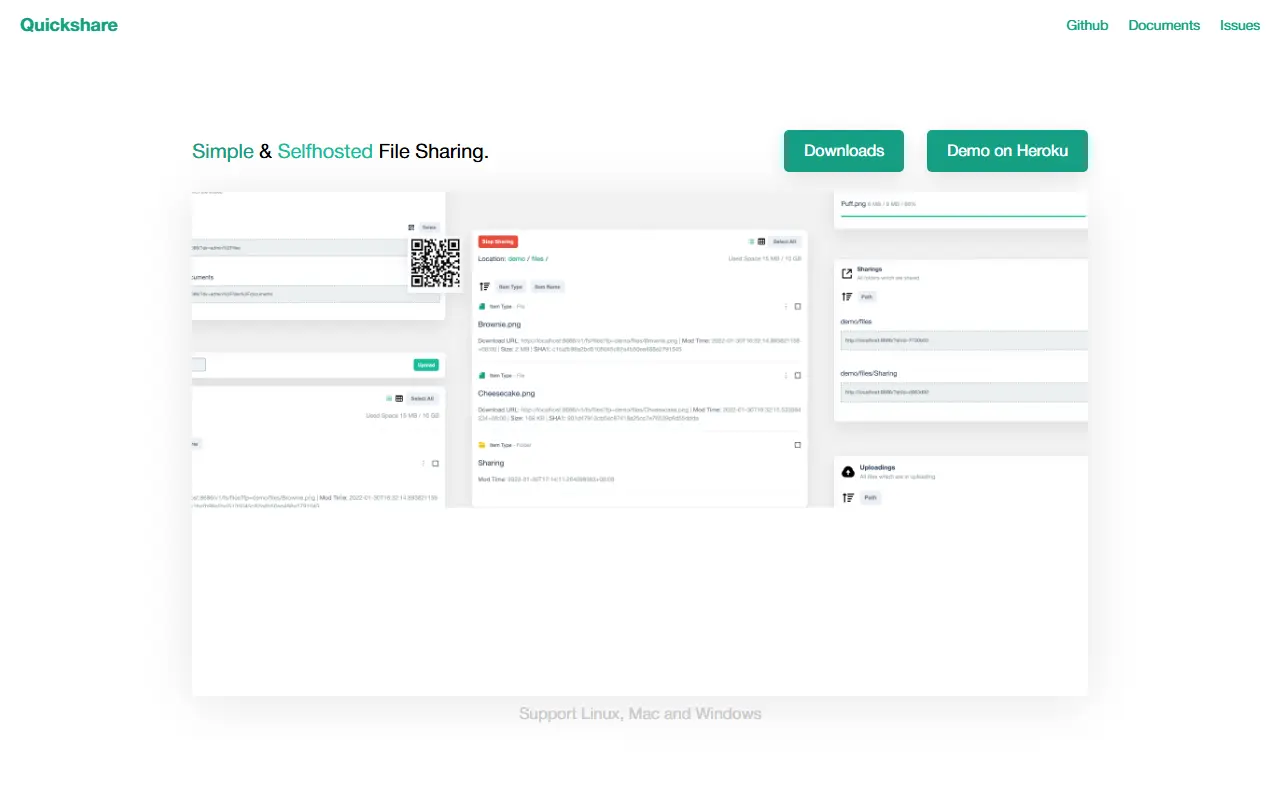
ihexxa.github.ioQuickshare homepage screenshot

Quickshare, published by ihexxa, is a quick and simple file sharing tool for moving files between different devices. It is a Go server with a React and TypeScript web interface that stores files on the machine where it runs, and it is described as still under active development, so full backward compatibility is not guaranteed.

File management covers uploading, downloading, creating, deleting and moving files and folders in the browser, fuzzy search, resumable uploads and downloads, uploading hundreds of files at once, QR codes to open shared folders, sharing directories with others including anonymous visitors, and streaming uploads that work behind a CDN or reverse proxy. Files can also be managed from the operating system. User management supports multiple users with user or admin roles, home directories, per-user upload and download speed limits and space quotas. The interface is adaptive, translated and supports wallpaper customization.

Quickshare can be run in Docker, built from source with Go, Node.js and Yarn, or started from a prebuilt executable on Linux, macOS and Windows. It is licensed under LGPL-3.0 and uses SQLite for its data.

Key features

  • Browser-based file management
  • Resumable uploads and downloads
  • Share folders with QR codes
  • Multi-user roles and home directories
  • Per-user speed limits and quotas
  • Docker and single-binary installs

Pricing: Free and open source under the LGPL-3.0 license.

Uguu

Lightweight PHP file host for quick temporary or permanent uploads, with drag-and-drop, an upload API, rate limiting and file-type controls.

GitHub stars
1.2k
Last commit
10 mo ago
Latest release
v.1.9.9
Licence
GPL-3.0
Self-hosted
Yes
Hosted version
Available
uguu.seUguu homepage screenshot

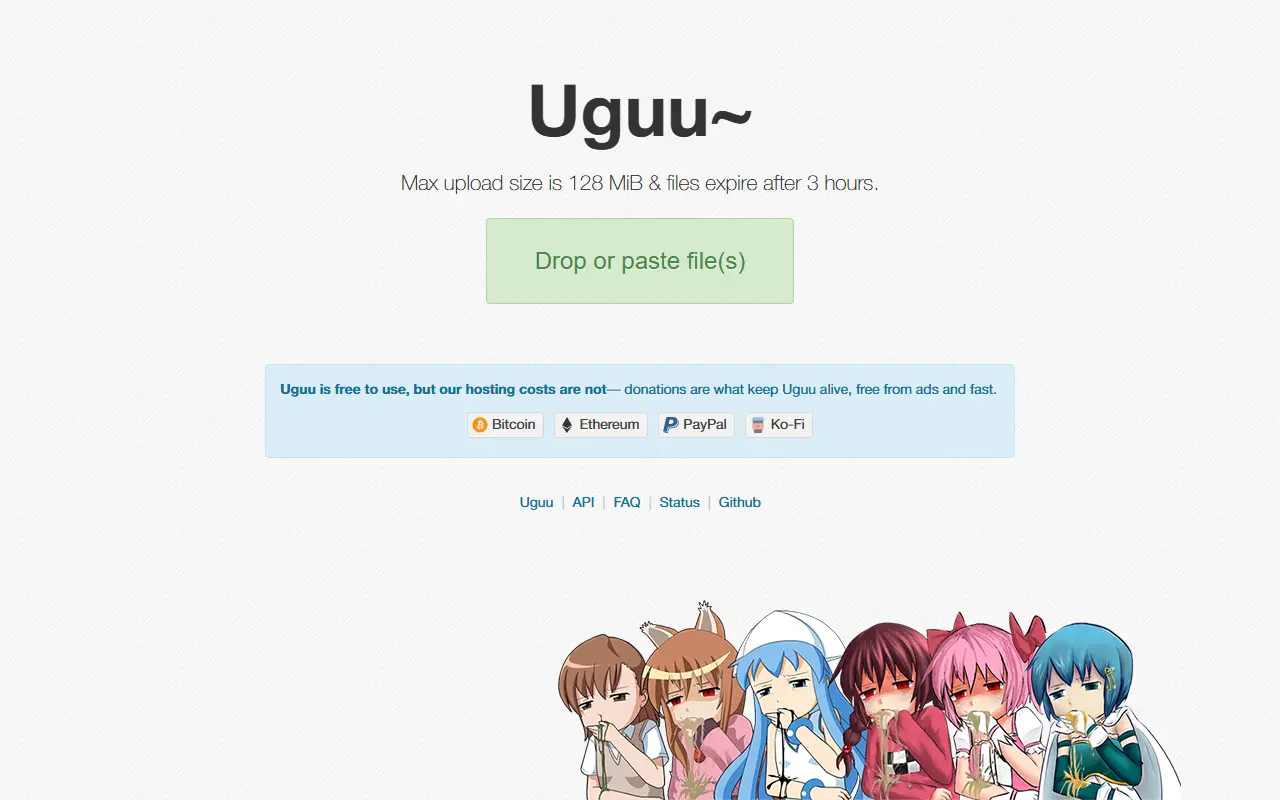
Uguu is a simple, lightweight platform for temporary file hosting and sharing that can also serve as a permanent file host. Uploading takes one click and needs no registration, and the web interface is minimal and modern, supporting drag and drop, paste and click-to-select. It is aimed at anyone who wants to run their own quick-share service, and a public instance runs at uguu.se.

An upload API can return responses in JSON, HTML, plain text or CSV, and the service works with ShareX and other screenshot tools. Administrators can restrict files by extension or MIME type with black or whitelists, apply upload rate limiting, and blacklist files by hash. The README lists tested requirements of Nginx with PHP 8.3 and SQLite, MySQL or PostgreSQL; Bun is used to compile front-end assets before the app runs on PHP.

Installation and configuration are covered in the project documentation. Uguu is based on the earlier Pomf project, follows the PSR-12 coding standard enforced with PHPCS, and is licensed under GPL-3.0.

Key features

  • One-click uploads without registration
  • Drag and drop and clipboard paste
  • Upload API with JSON, HTML, text and CSV responses
  • ShareX support
  • Extension and MIME allow and block lists
  • Rate limiting and file hash blacklisting

Pricing: Free and open source under the GPL-3.0 license.

Read more about UguuWebsite GitHub

MediaFire alternatives: questions

What is the best open-source alternative to MediaFire?
Nextcloud is the top-ranked open-source alternative to MediaFire on Enlisted: A self-hosted file sync, sharing and collaboration platform that stores files, contacts and calendars on a server you choose, extensible with hundreds of apps. Other strong options are Cloudreve, Seafile, Zipline and Kodbox.
Are these MediaFire alternatives free?
All 8 are open source, so the code is free to use under its licence, and all of them can be self-hosted on your own server or computer. 3 also offer a paid or managed cloud version if you'd rather not host it yourself.
How is this list of MediaFire alternatives ranked?
By a score built from GitHub stars, star growth over the last 30 days and how recently the code changed. 7 of these projects shipped code in the last 30 days. Data is refreshed daily, and nobody can pay to move up.

People also look for alternatives to…

View all