7,363 open-source and SaaS tools, with GitHub stats refreshed every day.

4 alternatives ranked by real activity

Open-source HYPR alternatives

A curated, ranked list of the 4 best open-source alternatives to HYPR.

The best open-source alternative to HYPR is Pocket ID. If that doesn't suit you, other good options are Hanko, Authgear and privacyIDEA.

HYPR alternatives are mainly auth & identity tools. 4 of them shipped code in the last 30 days, 4 can be self-hosted, and 2 use a permissive licence.

Last updated October 2, 2026 · ranked by GitHub stars, growth and recent commits

Pocket ID

A simple self-hosted identity provider for OpenID Connect and OAuth 2.0 that signs users in to your apps with passkeys only, without passwords.

GitHub stars
9.4k
Last commit
yesterday
Latest release
v2.17.0
Licence
BSD-2-Clause
Self-hosted
Yes
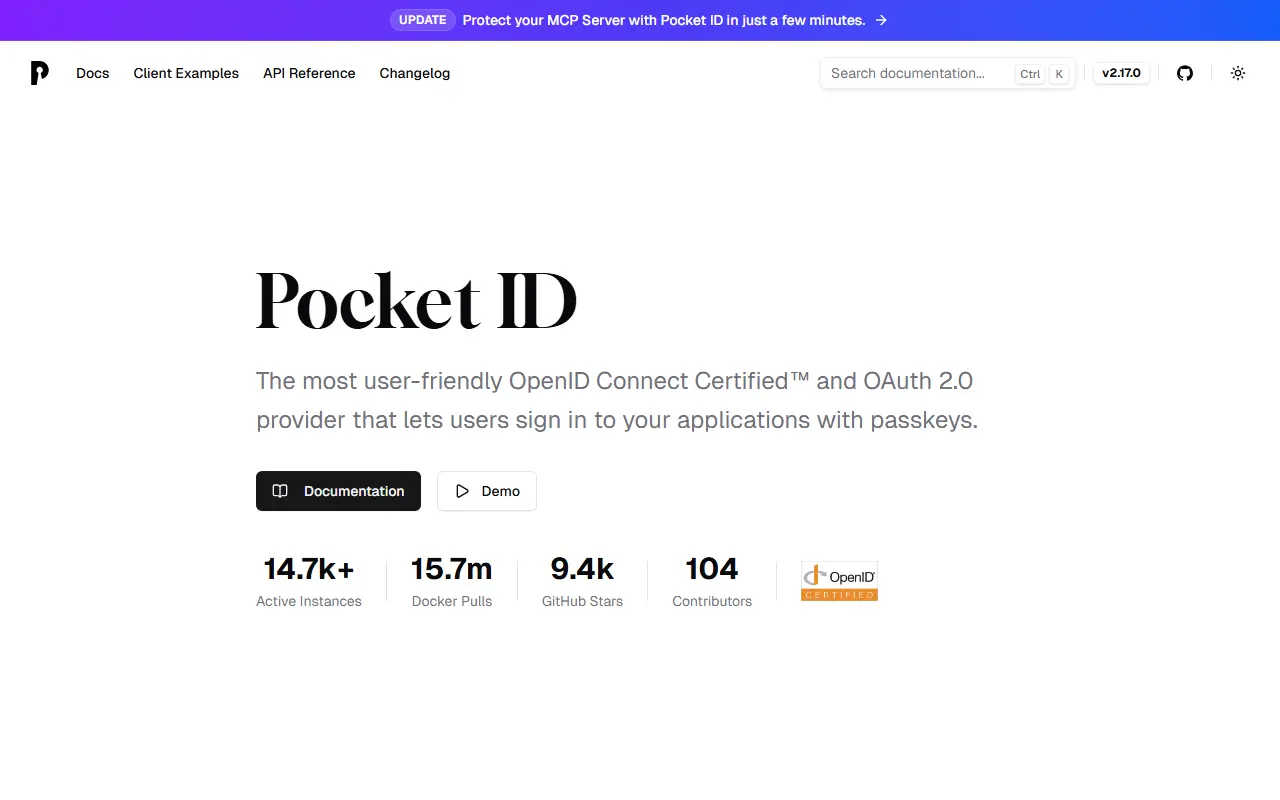
pocket-id.orgPocket ID homepage screenshot

Pocket ID is a self-hosted identity provider that speaks OpenID Connect and OAuth 2.0 and is described as OpenID Connect certified. Users sign in to your applications with passkeys, so there are no passwords to store, reset or leak, and a hardware key such as a YubiKey can unlock all of your self-hosted services.

Its goal is simplicity. The author notes that existing self-hosted providers like Keycloak or ORY Hydra are often too complex for simple use cases, and Pocket ID aims to be easy to set up and use. The distinctive design choice is that it supports only passkey authentication, which the project argues is the future, and a demo is available to try it.

The recommended installation is Docker, with a setup guide in the documentation. Pocket ID is written in Go and released under the BSD 2-Clause licence. It suits homelab users and small teams who want single sign-on across self-hosted applications without administering a heavyweight identity system.

Key features

  • OpenID Connect and OAuth 2.0 provider
  • Passkey-only sign-in for users
  • No passwords to manage
  • Hardware key sign-in such as YubiKey
  • Recommended setup with Docker
  • Lightweight Go server

Pricing: Free and open source under the BSD 2-Clause licence.

Hanko

An open-source authentication and user management service built around passkeys, with MFA, social login, SAML SSO and web components, self-hosted or on Hanko Cloud.

GitHub stars
9k
Last commit
today
Latest release
backend/v3.1.0
Self-hosted
Yes
Hosted version
Available
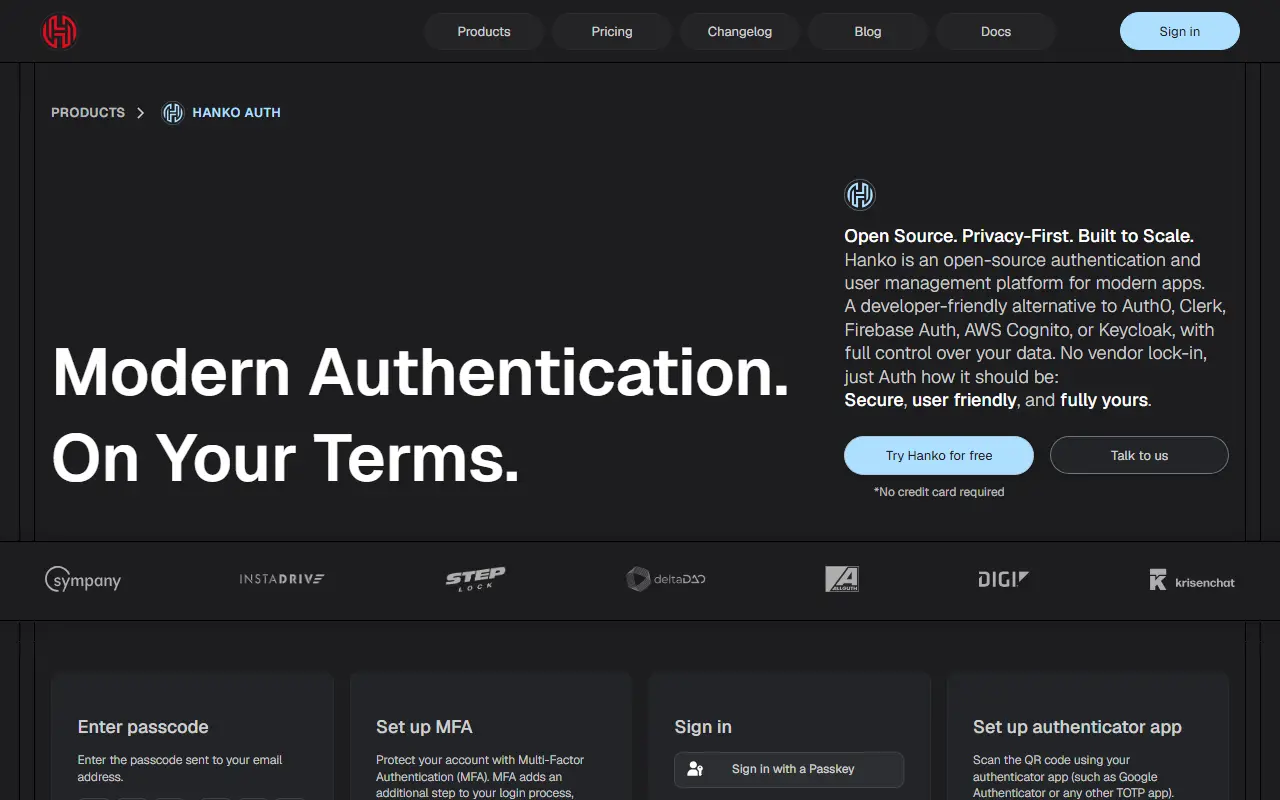
hanko.ioHanko homepage screenshot

Hanko is an authentication and user management solution released as open source, framework-agnostic and designed around privacy-first principles such as data minimalism and phishing resistance. It is presented as an alternative to Auth0, Clerk, WorkOS and Stytch, written in Go, with an API-first and lightweight design.

It supports modern sign-in methods including passwords, email passcodes, passkeys, MFA with TOTP and security keys, social logins such as Apple, Google and GitHub, custom OIDC and OAuth connections and SAML enterprise SSO. Configuration is flexible, for example passkey-only or OAuth-only setups, and passwords can be deletable by users. Hanko Elements web components make integration quick, a JS SDK is available, webhooks and server-side sessions with remote revocation are included, and a full API supports custom front ends. Organizations, roles and permissions plus mobile SDKs are on the roadmap.

You can self-host Hanko or use it as a fully managed service on Hanko Cloud. The repository lists the licence as Other, so review the licence file for the terms. It suits developers who want to own their authentication stack without building it from scratch.

Key features

  • Passkeys, passwords and email passcodes
  • MFA with TOTP and security keys
  • Social login and custom OIDC connections
  • SAML enterprise SSO
  • Hanko Elements web components
  • Webhooks and server-side sessions
  • JS SDK and API-first design

Pricing: Free Starter plan covers 10,000 monthly active users. Pro is $29 per month plus $0.01 per user above 10,000; Enterprise is custom. The code is open source for self-hosting.

Authgear

Open-source customer authentication platform offering passkeys, SSO, MFA, passwordless login, and biometric sign-in, available self-hosted or as Authgear Cloud.

GitHub stars
2.1k
Last commit
today
Latest release
2026-09-23.0
Licence
Apache-2.0
Self-hosted
Yes
Hosted version
Available
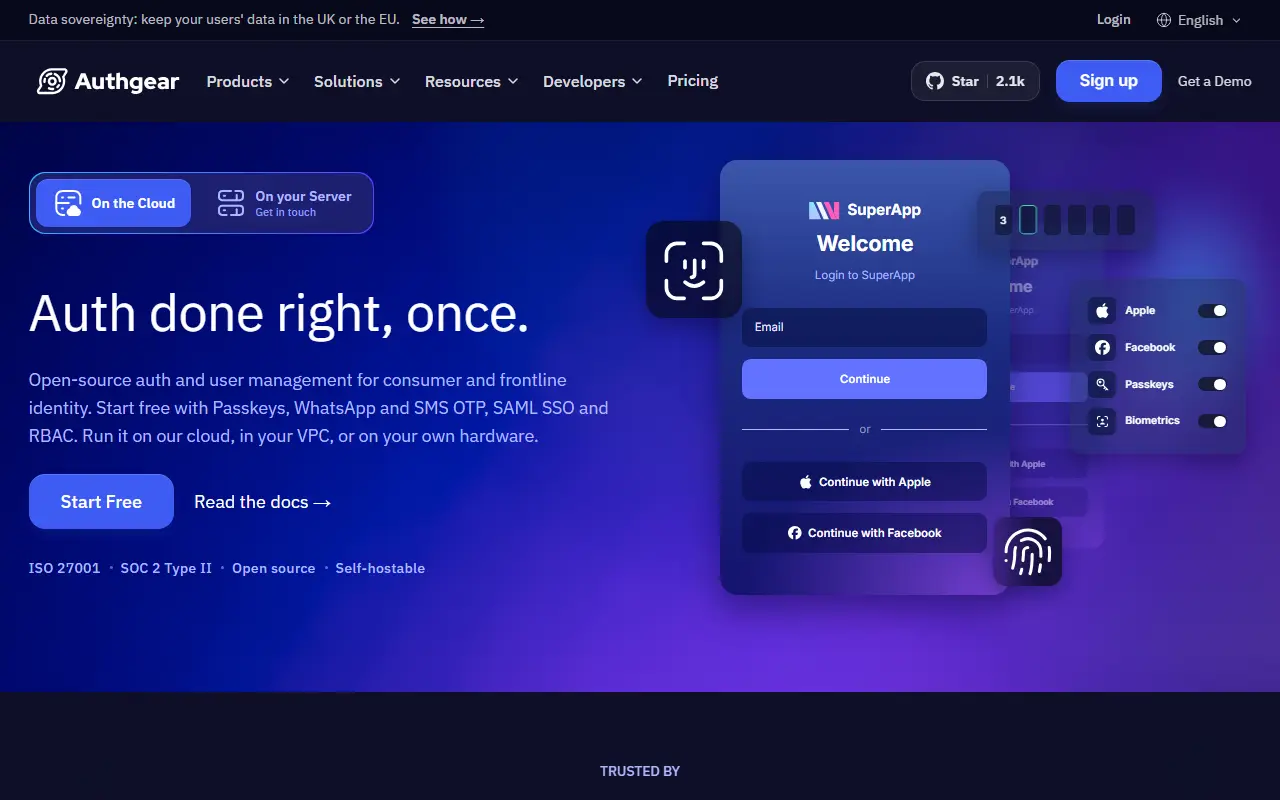
authgear.comAuthgear homepage screenshot

Authgear is an open-source authentication solution for consumer-facing applications, presented as an alternative to Auth0, Keycloak, Clerk, and Firebase Auth. It is written in Go and released under the Apache-2.0 license, and can be self-hosted or used on Authgear Cloud. SDKs and a management portal help developers get started in a few minutes.

Out-of-the-box features include passwordless login through magic link or one-time codes over email, SMS, and WhatsApp, passkeys, pre-built sign-up, login, and account settings pages, biometric login on iOS and Android, and two-factor authentication with TOTP, SMS, or email. It supports OIDC, OAuth 2.0, and SAML for SSO, enterprise connections such as ADFS and LDAP, and security features like audit logs, brute-force protection, and rate limits.

The Authgear Portal provides a web interface for user management and configuration, and an Admin API in GraphQL manages resources programmatically. It suits SaaS products and multi-app ecosystems that need flexible authentication without building it themselves.

Key features

  • Passkeys and passwordless login
  • Pre-built login, signup, and account pages
  • Biometric login on iOS and Android
  • TOTP, SMS, and email two-factor authentication
  • OIDC, OAuth 2.0, and SAML single sign-on
  • Admin portal and GraphQL Admin API
  • Audit logs and brute-force protection

Pricing: A free plan includes unlimited MAUs. Developers costs $50 and Business $500 per month, with a 30-day money-back guarantee; Enterprise is custom and the software can also be self-hosted.

privacyIDEA

An open-source authentication server for managing two-factor and multi-factor logins with OTP tokens, push, FIDO2 keys and passkeys across an organization.

GitHub stars
1.8k
Last commit
today
Latest release
v3.14
Licence
AGPL-3.0
Self-hosted
Yes
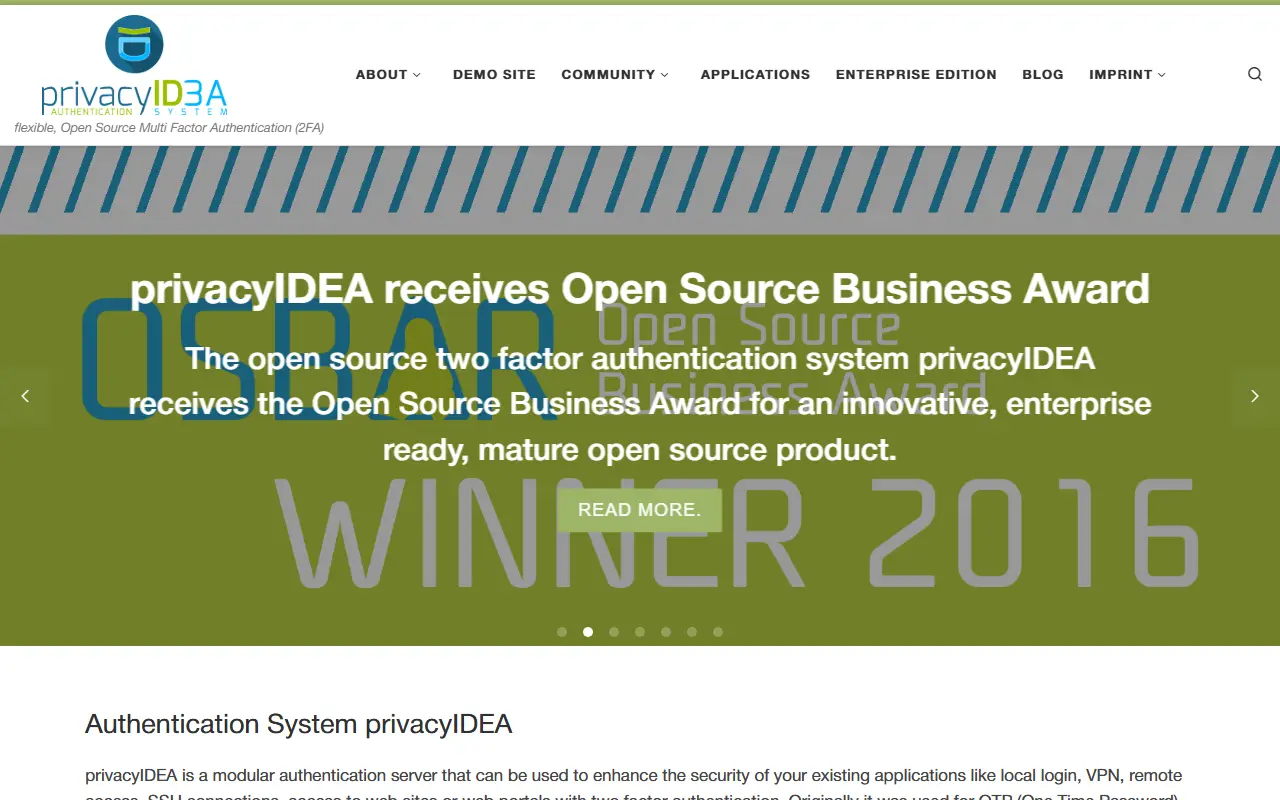
privacyidea.orgprivacyIDEA homepage screenshot

privacyIDEA is an open-source authentication server that manages multi-factor authentication for an organization. It issues and verifies second factors such as one-time passwords, hardware tokens, push notifications and FIDO2 or WebAuthn security keys, so applications and servers can add two-factor login without each building its own token handling.

The server is written in Python and exposes an API that other systems can call to check a login attempt. Its topics point to support for OTP, passkeys, push authentication and certificates, and administrators enroll and manage tokens centrally rather than configuring every service by hand. The project documentation includes how-tos for running it behind Apache2 with MySQL and for protecting a whole server farm.

privacyIDEA is released under the AGPL-3.0 licence and can be self-hosted, which keeps token data and user policies on infrastructure you control. The project website also lists an Enterprise Edition next to the community version, along with a demo site, screenshots and community resources for anyone evaluating it.

Key features

  • OTP, push, and hardware token support
  • FIDO2, WebAuthn, and passkey authentication
  • REST API for application integration
  • Central web interface for token enrollment
  • Policy-based control of authentication rules
  • Certificate and CA related features

Pricing: The community edition is free and open source under AGPL-3.0; an Enterprise Edition is also listed on the project website.

HYPR alternatives: questions

What is the best open-source alternative to HYPR?
Pocket ID is the top-ranked open-source alternative to HYPR on Enlisted: A simple self-hosted identity provider for OpenID Connect and OAuth 2.0 that signs users in to your apps with passkeys only, without passwords. Other strong options are Hanko, Authgear and privacyIDEA.
Are these HYPR alternatives free?
All 4 are open source, so the code is free to use under its licence, and all of them can be self-hosted on your own server or computer. 2 also offer a paid or managed cloud version if you'd rather not host it yourself.
How is this list of HYPR alternatives ranked?
By a score built from GitHub stars, star growth over the last 30 days and how recently the code changed. 4 of these projects shipped code in the last 30 days. Data is refreshed daily, and nobody can pay to move up.

People also look for alternatives to…

View all