4 open-source alternatives ranked by real activity

Open-source Recorded Future alternatives

A curated, ranked list of the 4 best open-source alternatives to Recorded Future.

The best open-source alternative to Recorded Future is OpenCTI. If that doesn't suit you, other good options are MISP, Yeti and CRITs.

Commercial alternatives to Recorded Future include Mandiant, isMalicious, Censys and CrowdStrike. See all 18.

Recorded Future alternatives are mainly security tools. 3 of them shipped code in the last 30 days, 4 can be self-hosted, and 1 uses a permissive licence.

Last updated November 12, 2026 · ranked by GitHub stars, growth and recent commits

OpenCTI

Open-source cyber threat intelligence platform for storing, structuring and visualizing threat knowledge on a STIX2-based schema.

GitHub stars
10k
Last commit
yesterday
Latest release
7.261109.0
Self-hosted
Yes
opencti.ioOpenCTI homepage screenshot

OpenCTI is an open source platform for managing cyber threat intelligence knowledge and observables. It structures, stores, organizes and visualizes technical and non-technical information about cyber threats, using a knowledge schema based on the STIX2 standards. It is designed and developed by the company Filigran.

The platform is a web application with a GraphQL API and a frontend focused on user experience. Each piece of information can be linked to its primary source, such as a report or a MISP event, with first and last seen dates and levels of confidence. Relations can be inferred from existing ones, and data can be exported as CSV or STIX2 bundles.

OpenCTI has a Community Edition under Apache 2.0 and an Enterprise Edition under a separate license, which can be enabled in the platform settings. Installation options are Docker, a manual install, and community-maintained Terraform and Helm charts. A public demo instance is reset every night.

Key features

  • Structures and visualizes threat information
  • Knowledge schema based on STIX2
  • GraphQL API and web frontend
  • Integrates with MISP, TheHive and MITRE ATT&CK
  • Links each fact to its primary source
  • Infers new relations from existing ones
  • Exports to CSV and STIX2 bundles

Read more about OpenCTIWebsiteGitHub#1 Recorded Future alternative

MISP

MISP is an open-source threat intelligence platform for collecting, storing and sharing cyber security indicators between analysts and security teams.

GitHub stars
6.7k
Last commit
2 days ago
Latest release
v2.5.51
Licence
AGPL-3.0
Self-hosted
Yes
Hosted version
Available
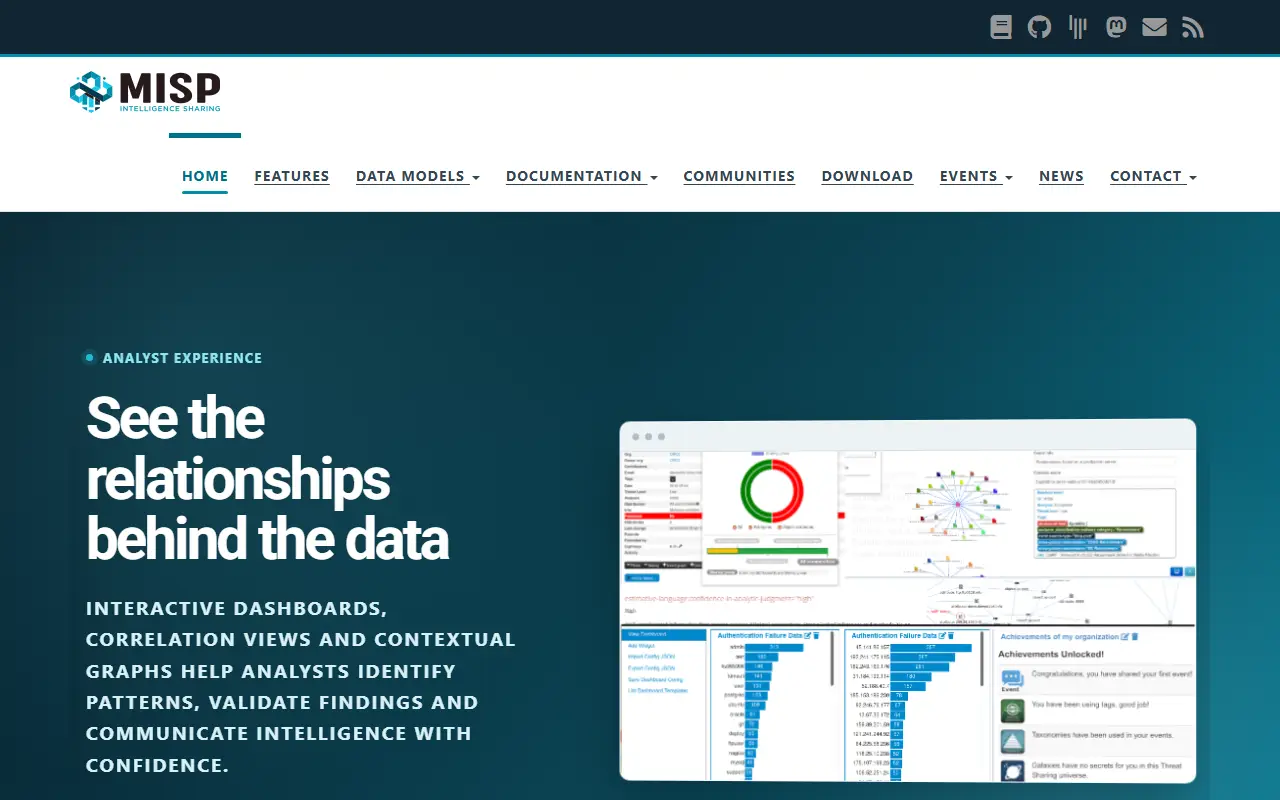
misp-project.orgMISP homepage screenshot

MISP is open-source software for gathering, storing, distributing and sharing cyber security indicators and details from incident and malware analysis. It is aimed at incident analysts, security and ICT staff and malware reverse engineers, who use it to exchange structured information efficiently.

Beyond sharing, MISP supports the consumption of that information by network intrusion detection systems, log analysis tools and SIEMs. Threat intelligence from indicators through techniques to tactics can be described in a machine-readable form or as detailed reports in Markdown, and the integrated reporting system cross-references the structured data. Repository topics point to STIX, threat hunting and fraud detection use cases.

The core software is written in PHP and licensed under AGPL-3.0. The README says it can be deployed on premises, in the cloud or as a SaaS solution, so organizations of different sizes can run their own instance and choose which partners to share data with. Installation guides, documentation and a support site are linked from the repository.

Key features

  • Collect and store threat indicators
  • Share structured intelligence with communities
  • Machine-readable and Markdown reports
  • Export to IDS, log analysis tools and SIEMs
  • STIX-related threat intelligence formats
  • On-premise, cloud or SaaS deployment

Pricing: Free and open source under the AGPL-3.0 licence.

Read more about MISPWebsiteGitHub#2 Recorded Future alternative

Yeti

Yeti is a platform that stores and manages forensics intelligence, enabling bulk search of observables and threat-focused analysis.

GitHub stars
2k
Last commit
15 days ago
Latest release
2.12.0
Licence
Apache-2.0
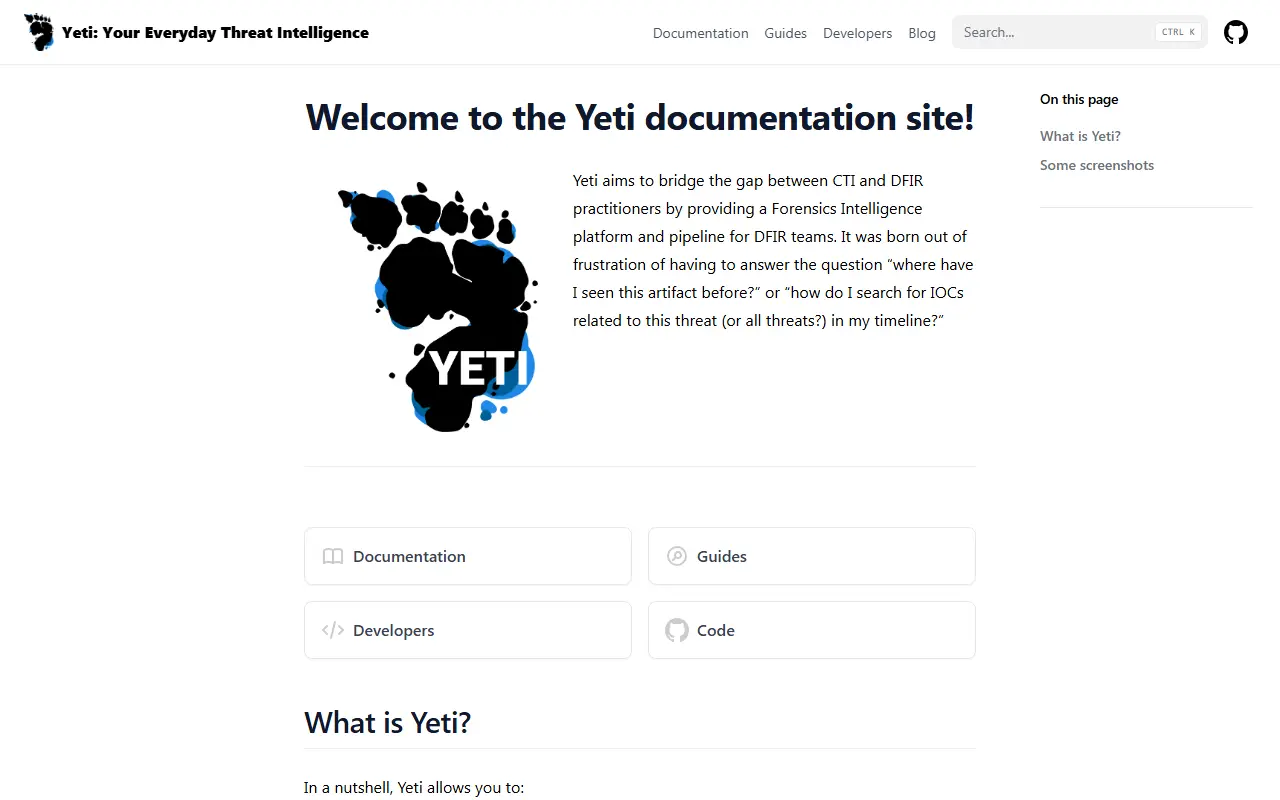
yeti-platform.ioYeti homepage screenshot

Yeti is a forensics intelligence platform and pipeline designed for DFIR teams. It stores technical and tactical CTI data such as observables, TTPs, and campaigns from internal or external systems.

The platform allows users to bulk search observables to assess threat nature and find it on a system, or focus on a threat to list TTPs, malware, and forensic artifacts. It provides a web API for automating queries and enrichment, and exports data in user-defined formats for ingestion by third-party applications.

Key features

  • Store and manage forensics intelligence including DFIQ objects, forensic artifact definitions, Sigma and Yara rules, and reusable queries
  • Bulk search observables to get a guess on the nature of a threat and how to find it on a system
  • Focus on a threat to list all TTPs, malware, and related forensic artifacts
  • Incorporate own data sources, analytics, and logic
  • Provide a web API to automate queries and enrichment
  • Export data in user-defined formats for ingestion by third-party applications
Read more about YetiWebsiteGitHub#3 Recorded Future alternative

CRITs

CRITs is an open source malware and threat repository that provides a unified platform for analysts to manage, interpret, and collaborate on threat data.

GitHub stars
910
Last commit
7 yr ago
Self-hosted
Yes
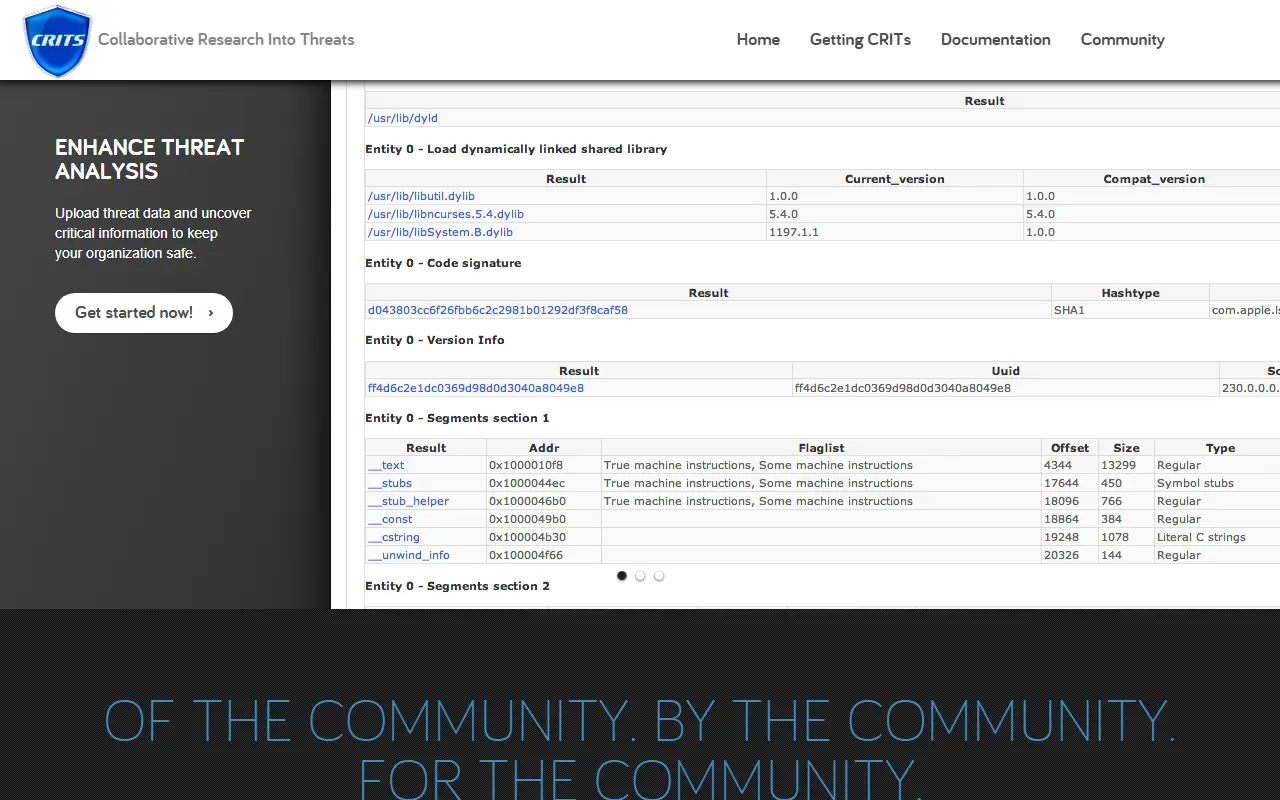
crits.github.ioCRITs homepage screenshot

CRITs is an open source malware and threat repository that leverages other open source software to create a unified tool for analysts and security experts engaged in threat defense. It has been in development since 2010 with the goal of providing a flexible and open platform for analyzing and collaborating on threat data.

The platform can be installed locally for a private isolated instance or shared among trusted organizations as a collaborative defense mechanism. It includes a Services Framework for extending capabilities with third-party and home-grown intelligence systems.

Key features

  • Upload threat data and uncover critical information
  • Manage and interpret vast quantities of intelligence data in a single repository
  • Extend CRITs with Services using the Services Framework
  • Collaborative features for sharing among trusted organizations
  • Community support via mailing lists, IRC, and Slack
Read more about CRITsWebsiteGitHub#4 Recorded Future alternative

Commercial Recorded Future alternatives

Hosted, closed-source products that compete with Recorded Future. Showing 12 of 18.

See every Recorded Future alternative on its tool page

Recorded Future alternatives: questions

What is the best open-source alternative to Recorded Future?
OpenCTI is the top-ranked open-source alternative to Recorded Future on Enlisted: Open-source cyber threat intelligence platform for storing, structuring and visualizing threat knowledge on a STIX2-based schema. Other strong options are MISP, Yeti and CRITs.
What are the best commercial alternatives to Recorded Future?
Mandiant, isMalicious, Censys, CrowdStrike and Rapid7 are among the hosted, closed-source alternatives to Recorded Future listed on Enlisted, which lists 18 in total. Compare their pricing and features on each tool page.
Are these Recorded Future alternatives free?
All 4 are open source, so the code is free to use under its licence, and all of them can be self-hosted on your own server or computer. 1 also offers a paid or managed cloud version if you'd rather not host it yourself.
How is this list of Recorded Future alternatives ranked?
By a score built from GitHub stars, star growth over the last 30 days and how recently the code changed. 3 of these projects shipped code in the last 30 days. Data is refreshed daily, and nobody can pay to move up.

People also look for alternatives to…

View all