7,363 open-source and SaaS tools, with GitHub stats refreshed every day.

5 alternatives ranked by real activity

Open-source Fortinet alternatives

A curated, ranked list of the 5 best open-source alternatives to Fortinet.

The best open-source alternative to Fortinet is BunkerWeb. If that doesn't suit you, other good options are ModSecurity, Suricata, OPNsense and pfSense.

Fortinet alternatives are mainly security tools. 4 of them shipped code in the last 30 days, 5 can be self-hosted, and 3 use a permissive licence.

Last updated October 2, 2026 · ranked by GitHub stars, growth and recent commits

BunkerWeb

Open-source web application firewall built on NGINX that acts as a reverse proxy with a web UI and a plugin system.

GitHub stars
11k
Last commit
today
Latest release
v1.6.15
Licence
AGPL-3.0
Self-hosted
Yes
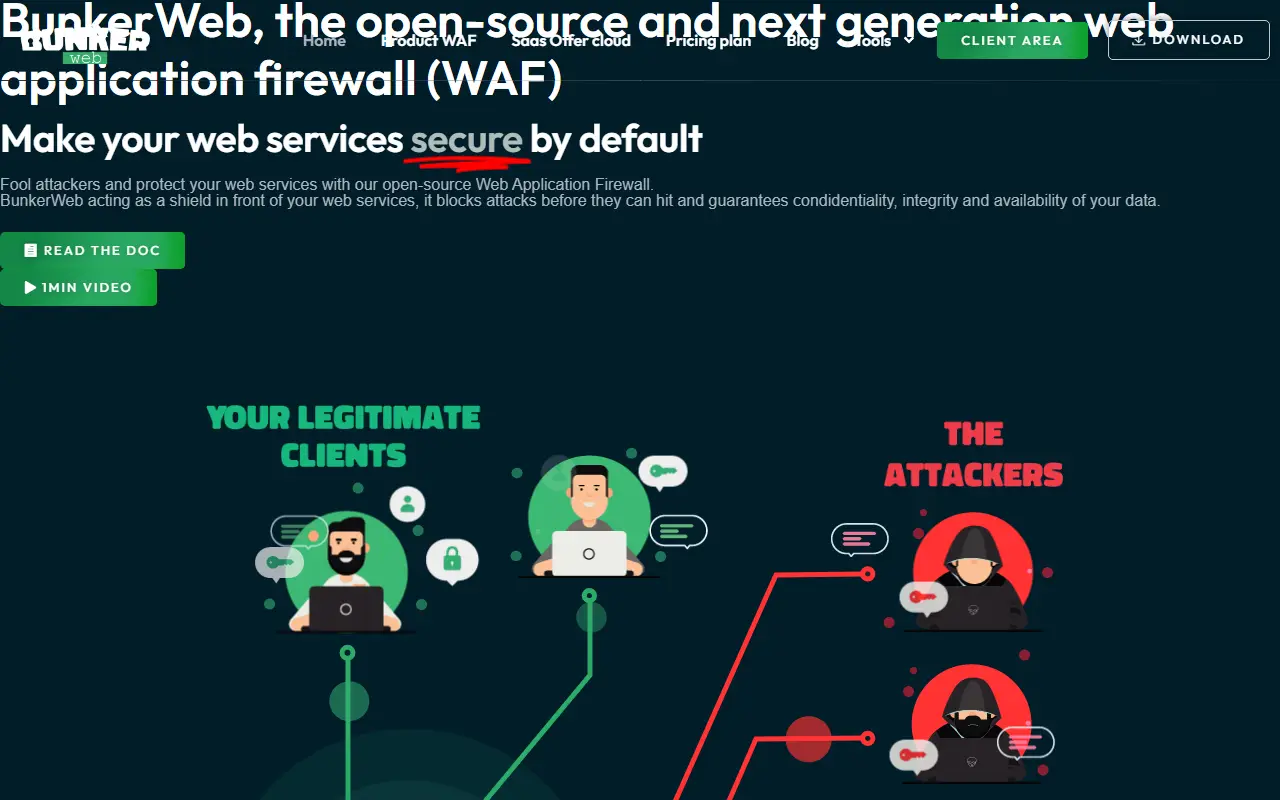
bunkerweb.ioBunkerWeb homepage screenshot

BunkerWeb is an open-source web application firewall that protects web services and aims to make them secure by default. It is a complete web server based on NGINX that sits in front of your applications as a reverse proxy, filtering traffic before it reaches them.

It can be deployed in Linux, Docker, Swarm and Kubernetes environments and is configurable through a command line or a web user interface. Core security features ship in the box, and additional ones can be added with a plugin system. Related topics in the repository include ModSecurity, anti-bot protection, DNS blocklists and Let's Encrypt certificate handling.

The software is written mainly in Python and released under the AGPL-3.0 license. The project provides documentation, a demo, community templates, examples and a forum. Its goal is for administrators to get a reasonable level of protection with minimal configuration while keeping room to tune individual settings for their own use cases.

Key features

  • NGINX-based reverse proxy and WAF
  • Secure-by-default configuration
  • Web UI for managing settings
  • Plugin system for extra protections
  • Deploys on Linux, Docker, Swarm and Kubernetes
  • Anti-bot and DNS blocklist options

Pricing: A free open-source edition is available. Paid self-hosted plans are 49 euros (Shield) and 149 euros (Fortress) a month with a 30-day trial; managed Cloud starts from 639 euros a month and Sentinel is custom.

ModSecurity

Cross-platform web application firewall engine for Apache, IIS and Nginx that inspects HTTP traffic with SecRules-based rule sets.

GitHub stars
9.8k
Last commit
2 days ago
Latest release
v3.0.17
Licence
Apache-2.0
Self-hosted
Yes
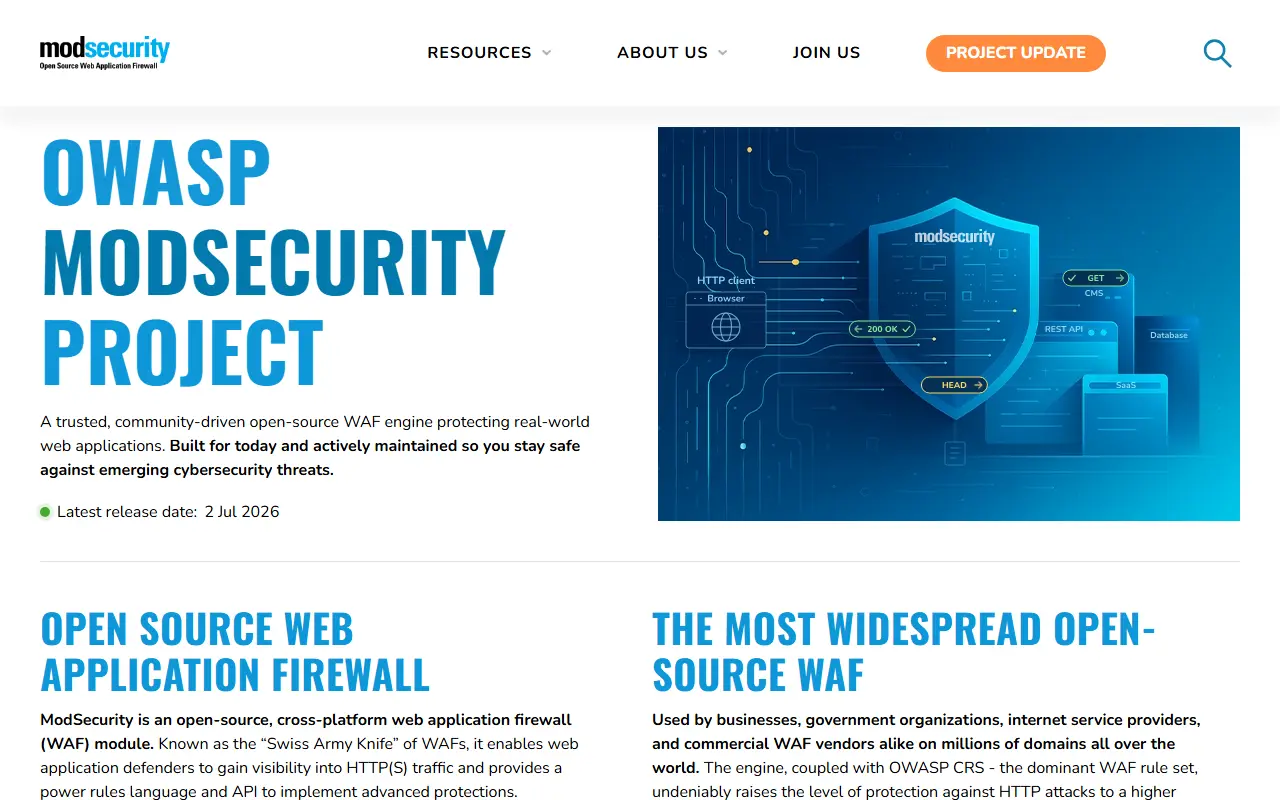
modsecurity.orgModSecurity homepage screenshot

ModSecurity is an open-source, cross-platform web application firewall engine. It started as an Apache module and now serves Apache, IIS and Nginx, protecting web applications from a range of attacks while also allowing HTTP traffic monitoring, logging and real-time analysis through an event-based rule language.

This repository contains libmodsecurity, the ModSecurity v3 library. It acts as an interface to connectors that pass web traffic in, loads and interprets rules written in the SecRules format, and applies them to HTTP content from your application. Version 3 is a full rewrite that removes the Apache dependencies, aims for higher performance and a new architecture, and plans native JSON audit logs.

The older ModSecurity v2.x for Apache is still maintained in its own repository. The code is written in C++ and released under the Apache-2.0 license, under the OWASP organization. Rule sets such as the OWASP Core Rule Set are typically used alongside it.

Key features

  • WAF engine for Apache, IIS and Nginx
  • SecRules rule language
  • HTTP traffic monitoring and logging
  • Connector-based architecture in v3
  • Rewrite without Apache dependencies

Pricing: Free and open source under the Apache-2.0 license.

Suricata

Suricata is an open-source network intrusion detection, intrusion prevention and network security monitoring engine developed by OISF and its community.

GitHub stars
6.7k
Last commit
yesterday
Latest release
suricata-8.0.7
Licence
GPL-2.0
Self-hosted
Yes
suricata.ioSuricata homepage screenshot

Suricata is an engine for network intrusion detection (IDS), intrusion prevention (IPS) and network security monitoring (NSM), developed by the Open Information Security Foundation and the Suricata community. It inspects network traffic to detect threats, can block them when run inline as an intrusion prevention system, and supports network security monitoring and threat hunting.

The README stresses why the software is built so carefully. It processes mostly untrusted input and often sits directly reachable by an attacker, so a crash in IPS mode could knock a network offline, a compromise in passive mode could expose confidential data, and missed detections could hide an intrusion. For that reason contributions go through a long QA process that includes GitHub CI checks, peer review and private QA runs with build tests, static analysis, runtime analysis with valgrind and sanitizers, and regression tests.

Suricata is written in C and licensed under GPL-2.0. The project provides a user guide, an installation guide, a developer guide, a bug tracker and a user support forum for administrators who deploy it on their own networks.

Key features

  • Network intrusion detection (IDS)
  • Inline intrusion prevention (IPS)
  • Network security monitoring
  • Extensive QA and regression testing
  • User, installation and developer guides

Pricing: Free and open source under the GPL-2.0 licence.

OPNsense

An open-source firewall and routing platform; this repository holds its web GUI, API and system backend, licensed under BSD-2-Clause.

GitHub stars
4.7k
Last commit
yesterday
Licence
BSD-2-Clause
Self-hosted
Yes
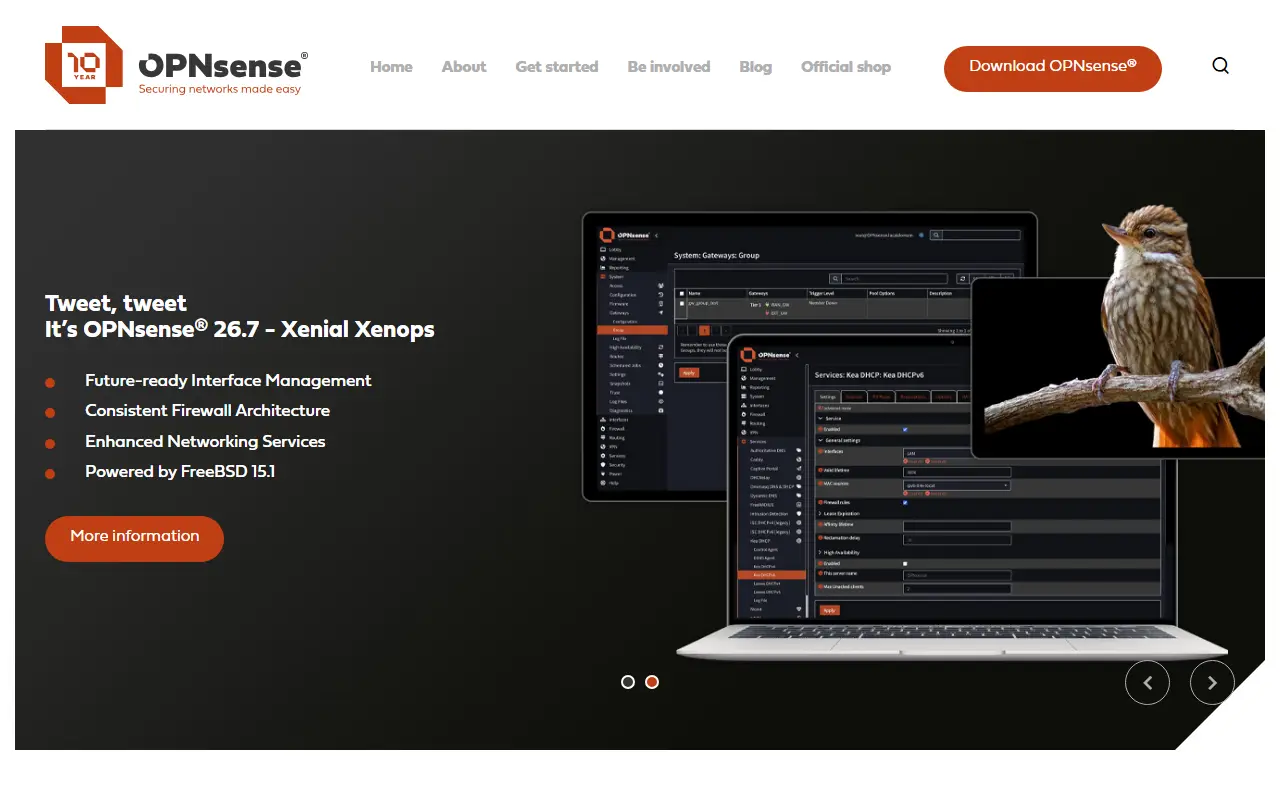
opnsense.orgOPNsense homepage screenshot

OPNsense is an open-source firewall project, and this repository contains its web GUI, API and systems backend. Its topics point to a broad feature set that includes a firewall, intrusion prevention, proxy, VPN, traffic shaping, a captive portal and routing, built on a BSD base.

The project invites developers to contribute and has designed its build process so that anyone can build and write code. Build tools are freely available in a separate tools repository, an architecture overview is on docs.opnsense.org, and the repository offers Makefile targets such as make package for assembling a package from the current state of the code. The team aims to evolve toward a new codebase gradually rather than in one big switch.

OPNsense is written mostly in PHP and is committed to staying available under the 2-clause BSD license, with every contribution required to carry the same terms. Contributions can be as simple as testing functionality, filing bug reports or sending pull requests.

Key features

  • Web GUI for firewall management
  • API and system backend
  • Intrusion prevention and proxy
  • VPN and traffic shaping
  • Captive portal and routing
  • BSD-based platform

Pricing: Free and open source under the BSD-2-Clause licence.

pfSense

Free firewall and router distribution based on FreeBSD, managed through a web interface and extendable with packages.

GitHub stars
5.7k
Last commit
6 mo ago
Licence
Apache-2.0
Self-hosted
Yes
pfsense.orgpfSense homepage screenshot

pfSense is a network firewall distribution built on the FreeBSD operating system. It uses a custom kernel and bundles third-party free software to cover routing and security tasks. The project began in 2004 as a fork of the m0n0wall project and has since diverged significantly.

All components are configured through a web interface, so the project says no UNIX knowledge or command-line work is needed and rule sets never have to be edited by hand. A package system adds functionality, and the project states that with packages it can match or exceed the functionality of common commercial firewalls, without artificial limits. It lists products from Check Point, Cisco, Juniper, Sonicwall, Netgear and Watchguard among those it has replaced.

pfSense is copyright Rubicon Communications (Netgate) and published under an open source license, listed as Apache-2.0 on GitHub. Netgate sells bundled hardware appliances and commercial support, which is the main way the team funds development. Administrators used to commercial firewalls may find the interface familiar, though others face a learning curve.

Key features

  • FreeBSD-based firewall and router distribution
  • Web interface for all configuration tasks
  • Package system for extra functionality
  • No command-line work required for setup
  • Hardware appliances and commercial support available

Pricing: Free open-source software; Netgate sells bundled hardware appliances and commercial support.

Fortinet alternatives: questions

What is the best open-source alternative to Fortinet?
BunkerWeb is the top-ranked open-source alternative to Fortinet on Enlisted: Open-source web application firewall built on NGINX that acts as a reverse proxy with a web UI and a plugin system. Other strong options are ModSecurity, Suricata, OPNsense and pfSense.
Are these Fortinet alternatives free?
All 5 are open source, so the code is free to use under its licence, and all of them can be self-hosted on your own server or computer.
How is this list of Fortinet alternatives ranked?
By a score built from GitHub stars, star growth over the last 30 days and how recently the code changed. 4 of these projects shipped code in the last 30 days. Data is refreshed daily, and nobody can pay to move up.

People also look for alternatives to…

View all