6 open-source alternatives ranked by real activity

Open-source Corbado alternatives

A curated, ranked list of the 6 best open-source alternatives to Corbado.

The best open-source alternative to Corbado is Keycloak. If that doesn't suit you, other good options are Hanko, Supabase Auth, Ory Hydra and WSO2 Identity Server.

Commercial alternatives to Corbado include Authsignal, Stytch, Transmit Security and Clerk. See all 16.

Corbado alternatives are mainly auth & identity tools. 4 of them shipped code in the last 30 days, 6 can be self-hosted, and 5 use a permissive licence.

Last updated November 13, 2026 · ranked by GitHub stars, growth and recent commits

Keycloak

Keycloak is an open-source identity and access management server that adds single sign-on, user management and authorization to applications.

GitHub stars
38k
Last commit
yesterday
Latest release
26.8.2
Licence
Apache-2.0
Self-hosted
Yes
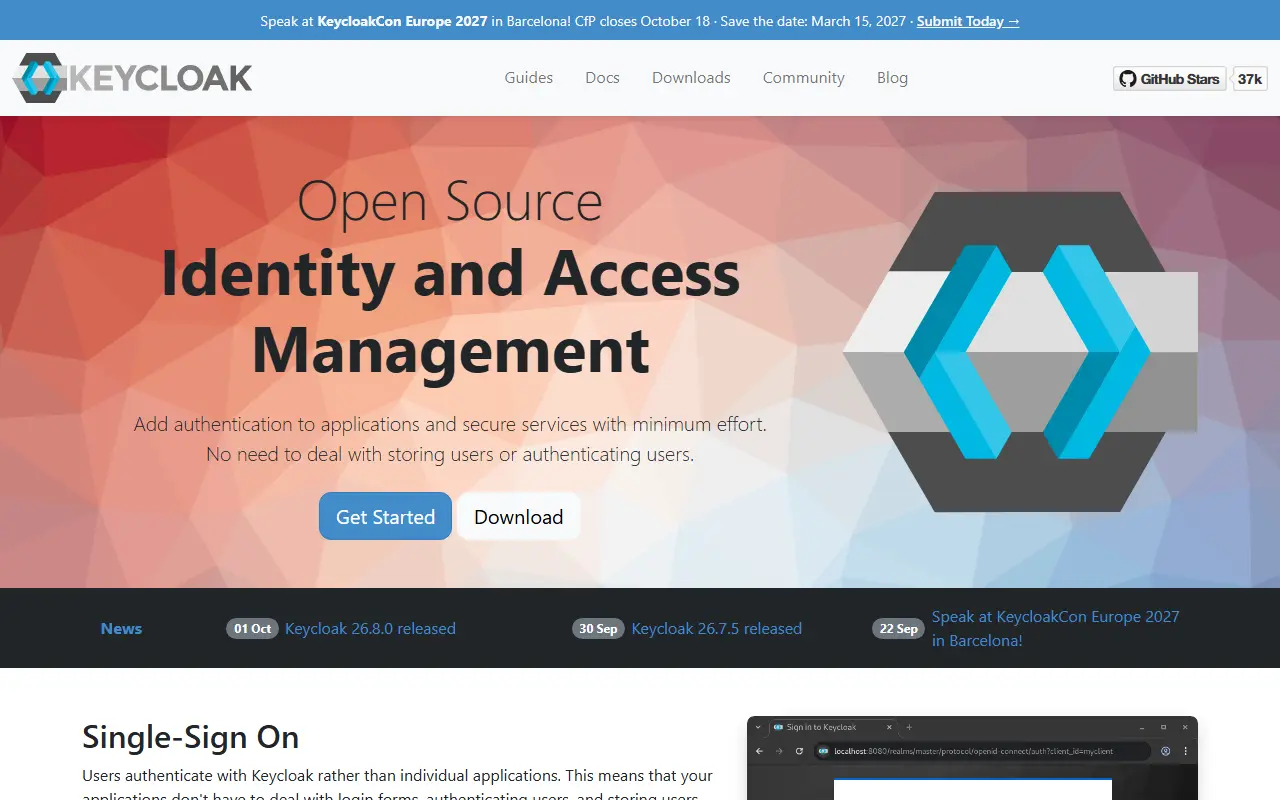
keycloak.orgKeycloak homepage screenshot

Keycloak is an open-source identity and access management server. It lets application teams add authentication and secure services without building their own login system, since Keycloak handles storing users and authenticating them. The project is written in Java, released under the Apache-2.0 license and governed under the Cloud Native Computing Foundation code of conduct.

Keycloak supports standard protocols such as OpenID Connect and SAML, and offers user federation, strong authentication, user management and fine-grained authorization. You can run it from the downloadable distribution using a start-dev command, or use the official Docker image published on Quay for containers and Kubernetes setups. The project provides documentation, a user mailing list and community channels for help, along with guidance for building and testing from source.

Key features

  • Single sign-on with OpenID Connect and SAML
  • User federation with external directories
  • Strong and multi-step authentication options
  • Central user and account management
  • Fine-grained authorization policies
  • Docker image and standalone distribution

Pricing: Free and open source under the Apache-2.0 license; you host and operate it yourself.

Hanko

An open-source authentication and user management service built around passkeys, with MFA, social login, SAML SSO and web components, self-hosted or on Hanko Cloud.

GitHub stars
9.1k
Last commit
today
Latest release
backend/v3.1.0
Self-hosted
Yes
Hosted version
Available
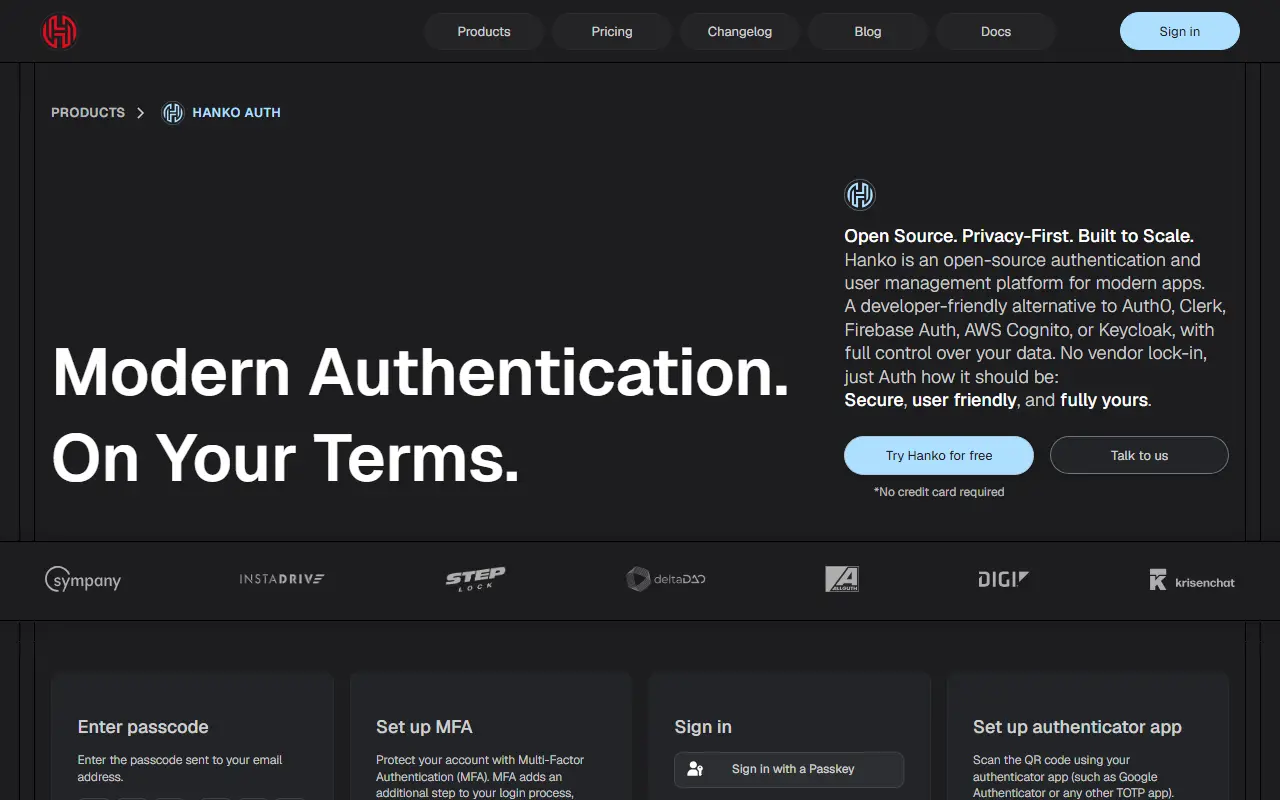
hanko.ioHanko homepage screenshot

Hanko is an authentication and user management solution released as open source, framework-agnostic and designed around privacy-first principles such as data minimalism and phishing resistance. It is presented as an alternative to Auth0, Clerk, WorkOS and Stytch, written in Go, with an API-first and lightweight design.

It supports modern sign-in methods including passwords, email passcodes, passkeys, MFA with TOTP and security keys, social logins such as Apple, Google and GitHub, custom OIDC and OAuth connections and SAML enterprise SSO. Configuration is flexible, for example passkey-only or OAuth-only setups, and passwords can be deletable by users. Hanko Elements web components make integration quick, a JS SDK is available, webhooks and server-side sessions with remote revocation are included, and a full API supports custom front ends. Organizations, roles and permissions plus mobile SDKs are on the roadmap.

You can self-host Hanko or use it as a fully managed service on Hanko Cloud. The repository lists the licence as Other, so review the licence file for the terms. It suits developers who want to own their authentication stack without building it from scratch.

Key features

  • Passkeys, passwords and email passcodes
  • MFA with TOTP and security keys
  • Social login and custom OIDC connections
  • SAML enterprise SSO
  • Hanko Elements web components
  • Webhooks and server-side sessions
  • JS SDK and API-first design

Pricing: Free Starter plan covers 10,000 monthly active users. Pro is $29 per month plus $0.01 per user above 10,000; Enterprise is custom. The code is open source for self-hosting.

Supabase Auth

Go-based user management and authentication server from Supabase that issues JWTs and supports email, passwordless, phone, and social sign-in.

GitHub stars
2.6k
Last commit
yesterday
Latest release
v2.197.0
Licence
MIT
Self-hosted
Yes
Hosted version
Available
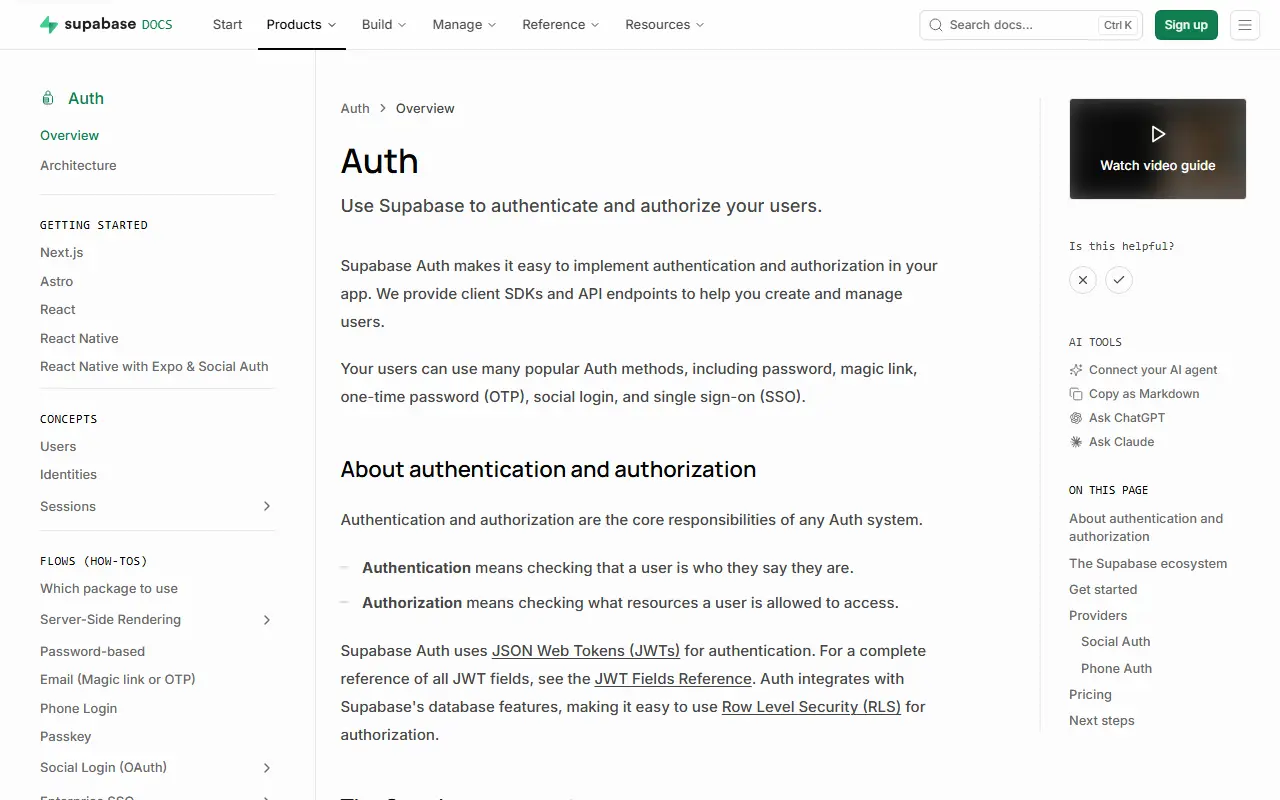
supabase.comSupabase Auth homepage screenshot

Supabase Auth is an authentication and user management server written in Go. It powers Supabase's sign-in features by issuing JSON Web Tokens that downstream services, such as PostgREST with Row Level Security, can trust. It started from Netlify's GoTrue codebase, but both projects have diverged significantly. It is released under the MIT license.

Supported sign-in methods include email and password, magic links, phone numbers, and external providers such as Google, Apple, Facebook, and Discord. The server exposes an HTTP API for managing users and sessions, and its configuration is handled through environment variables in a .env file, with an example file provided.

The README walks through a quick start using a local Postgres database and has sections on running in production, configuration, and endpoints. The service can be used as part of the Supabase hosted platform or run on its own, which suits teams that want an open-source JWT-based identity service they can host themselves.

Key features

  • JWT issuing for application sessions
  • Email and password sign-in
  • Magic link and phone number login
  • OAuth providers such as Google and Apple
  • User management API
  • Row Level Security integration with PostgREST

Pricing: Free and open source under the MIT license; it is also available through the hosted Supabase platform.

Ory Hydra

Ory Hydra is a certified OAuth 2.0 and OpenID Connect server that plugs into your existing user management through headless APIs, self-hosted or hosted.

GitHub stars
18k
Last commit
3 mo ago
Latest release
v26.2.0
Licence
Apache-2.0
Self-hosted
Yes
Hosted version
Available
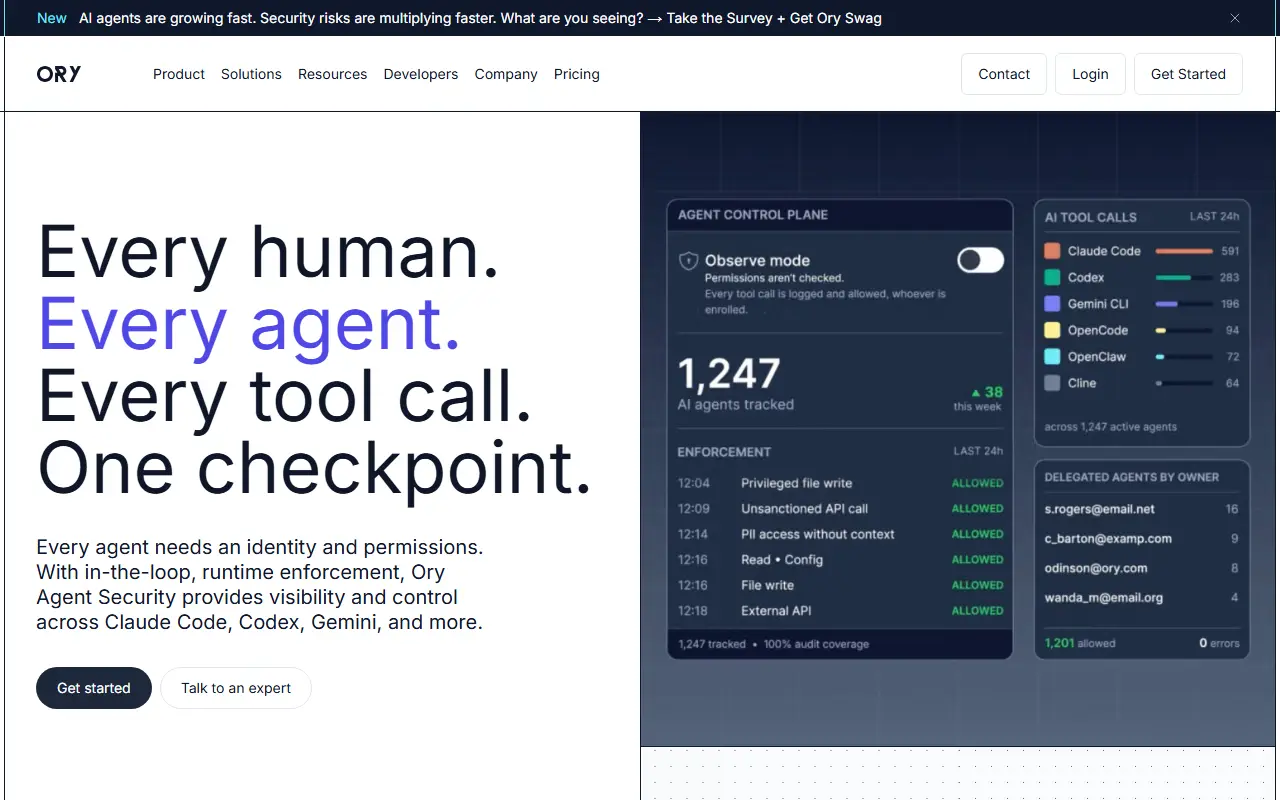
ory.comOry Hydra homepage screenshot

Ory Hydra is an OAuth 2.0 authorization server and an implementation of OpenID Connect Core 1.0. It is designed as a standalone server without user management, so it connects to whatever identity provider you already use through a login and consent app, leaving you in control of the user interface.

It handles OAuth 2.0 and OpenID Connect flows, issues and validates tokens, manages clients, orchestrates login and consent flows and manages JWKS. The project says it is tuned for low latency and high throughput with modest resource use, and it is OpenID Certified. It works with any authentication endpoint, including Ory Kratos, and belongs to an ecosystem that also includes Oathkeeper for access proxying and Keto for access control policies.

Hydra is written in Go and licensed under Apache-2.0. You can consume it as a managed service on Ory Network or self-host it, and a quickstart, documentation and telemetry notes are provided in the repository.

Key features

  • OAuth 2.0 and OpenID Connect server
  • Token issuance and validation
  • Client management
  • Login and consent flow orchestration
  • JWKS management
  • Headless APIs for any identity provider

Pricing: Ory Network has a free Developer plan. Production is $770 and Growth $9350 per year plus usage fees; Enterprise and the self-hosted license are quoted.

WSO2 Identity Server

WSO2 Identity Server is an open-source identity and access management platform for single sign-on, federation and API access control, deployable on-premises or in the cloud.

GitHub stars
889
Last commit
2 days ago
Latest release
v7.3.0
Licence
Apache-2.0
Self-hosted
Yes
Hosted version
Available
wso2.github.ioWSO2 Identity Server homepage screenshot

WSO2 Identity Server is an identity and access management solution that organizations can run on premises or in their own cloud environment. It is meant to secure applications for external consumers, an internal workforce, business customers and partners, and API access.

Standards support includes OAuth 2.0, OpenID Connect and SAML 2.0, with single sign-on, multi-factor and adaptive authentication. Recent versions add a visual designer for authentication flows, templates for configuring apps and login methods, simplified role-based access control for API policies, and a new authentication API for in-app login. AI-assisted features can generate flows from natural language descriptions and match branding. B2B capabilities include delegated administration and per-customer login options.

The code is Java and Apache-2.0 licensed. For teams that prefer not to operate it, WSO2 points to Asgardeo, a public identity cloud service built on the same technology core, which it says can be tried free of charge.

Key features

  • SSO with OAuth 2.0, OIDC and SAML 2.0
  • Multi-factor and adaptive authentication
  • Visual designer for login flows
  • Fine-grained role-based API access
  • B2B delegated administration
  • AI-assisted authentication flow generation
  • Templates for app configuration

Pricing: Open source under Apache-2.0; the hosted Asgardeo service is described by WSO2 as free to try.

Webauthn.io

WebAuthn.io is a demo site from Duo Labs for trying WebAuthn and passkey registration and authentication with adjustable settings.

GitHub stars
747
Last commit
3 mo ago
Licence
BSD-3-Clause
webauthn.ioWebauthn.io homepage screenshot

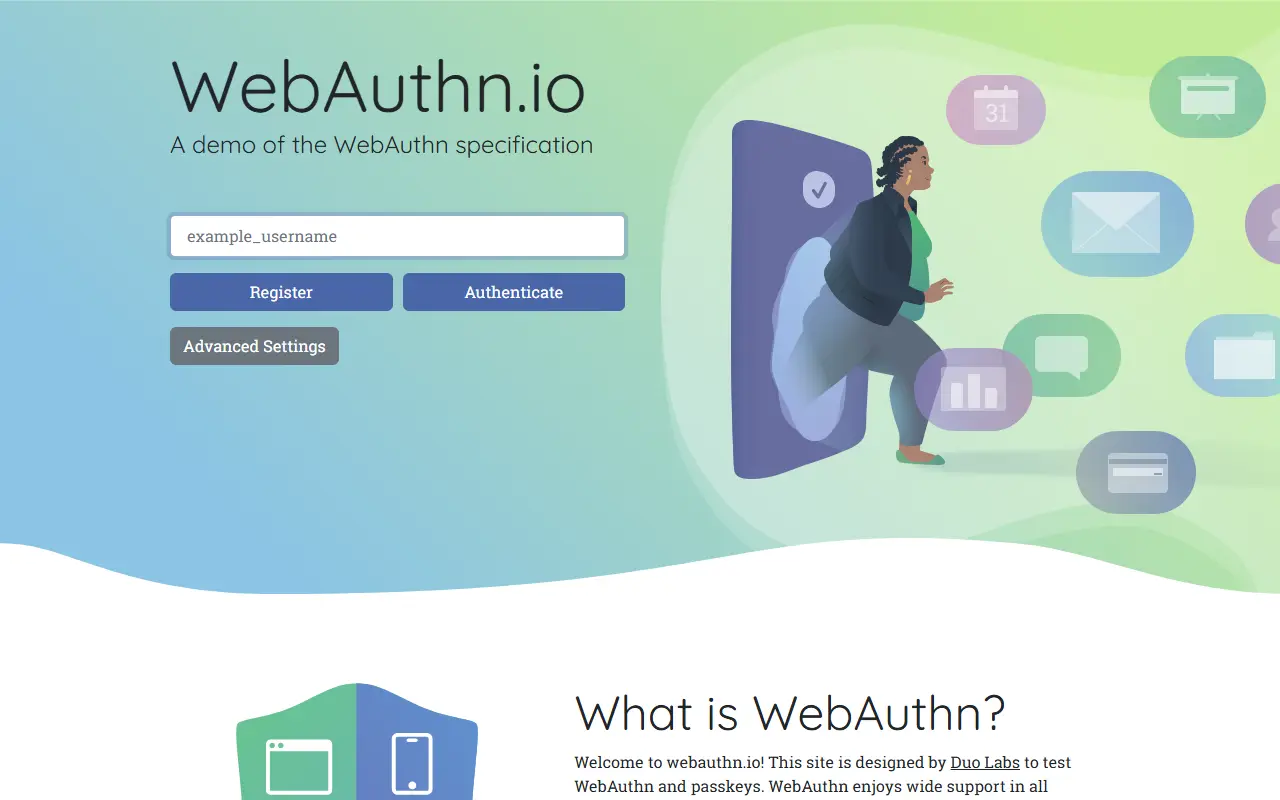
WebAuthn.io is a test site for the WebAuthn specification and passkeys, designed by Duo Labs. You register a credential and then authenticate, and an Advanced Settings panel exposes options such as user verification, attachment, discoverable credentials, attestation, and the order of public key algorithms.

A few conveniences are built in. Changes made in Advanced Settings are carried in the address bar URL, so sharing it lets others open the site with the same configuration. Authenticating without a username tests usernameless sign-in, and adding ?debug=true to the URL shows lower-level information on the profile page after login.

The page also collects pointers for people adding WebAuthn to their own sites: libraries for Python, TypeScript, Ruby, Java, .NET, Go, and Swift, plus other demos. The code for this demo is published on GitHub and the licence is listed as BSD-3-Clause.

Key features

  • Register and authenticate flows for testing passkeys
  • Shareable settings through the page URL
  • Usernameless authentication testing
  • Debug mode for lower-level information
  • Remembers usernames across page loads
  • Links to WebAuthn libraries in several languages

Commercial Corbado alternatives

Hosted, closed-source products that compete with Corbado. Showing 12 of 16.

See every Corbado alternative on its tool page

Corbado alternatives: questions

What is the best open-source alternative to Corbado?
Keycloak is the top-ranked open-source alternative to Corbado on Enlisted: Keycloak is an open-source identity and access management server that adds single sign-on, user management and authorization to applications. Other strong options are Hanko, Supabase Auth, Ory Hydra and WSO2 Identity Server.
What are the best commercial alternatives to Corbado?
Authsignal, Stytch, Transmit Security, Clerk and HYPR are among the hosted, closed-source alternatives to Corbado listed on Enlisted, which lists 16 in total. Compare their pricing and features on each tool page.
Are these Corbado alternatives free?
All 6 are open source, so the code is free to use under its licence, and all of them can be self-hosted on your own server or computer. 4 also offer a paid or managed cloud version if you'd rather not host it yourself.
How is this list of Corbado alternatives ranked?
By a score built from GitHub stars, star growth over the last 30 days and how recently the code changed. 4 of these projects shipped code in the last 30 days. Data is refreshed daily, and nobody can pay to move up.

People also look for alternatives to…

View all